
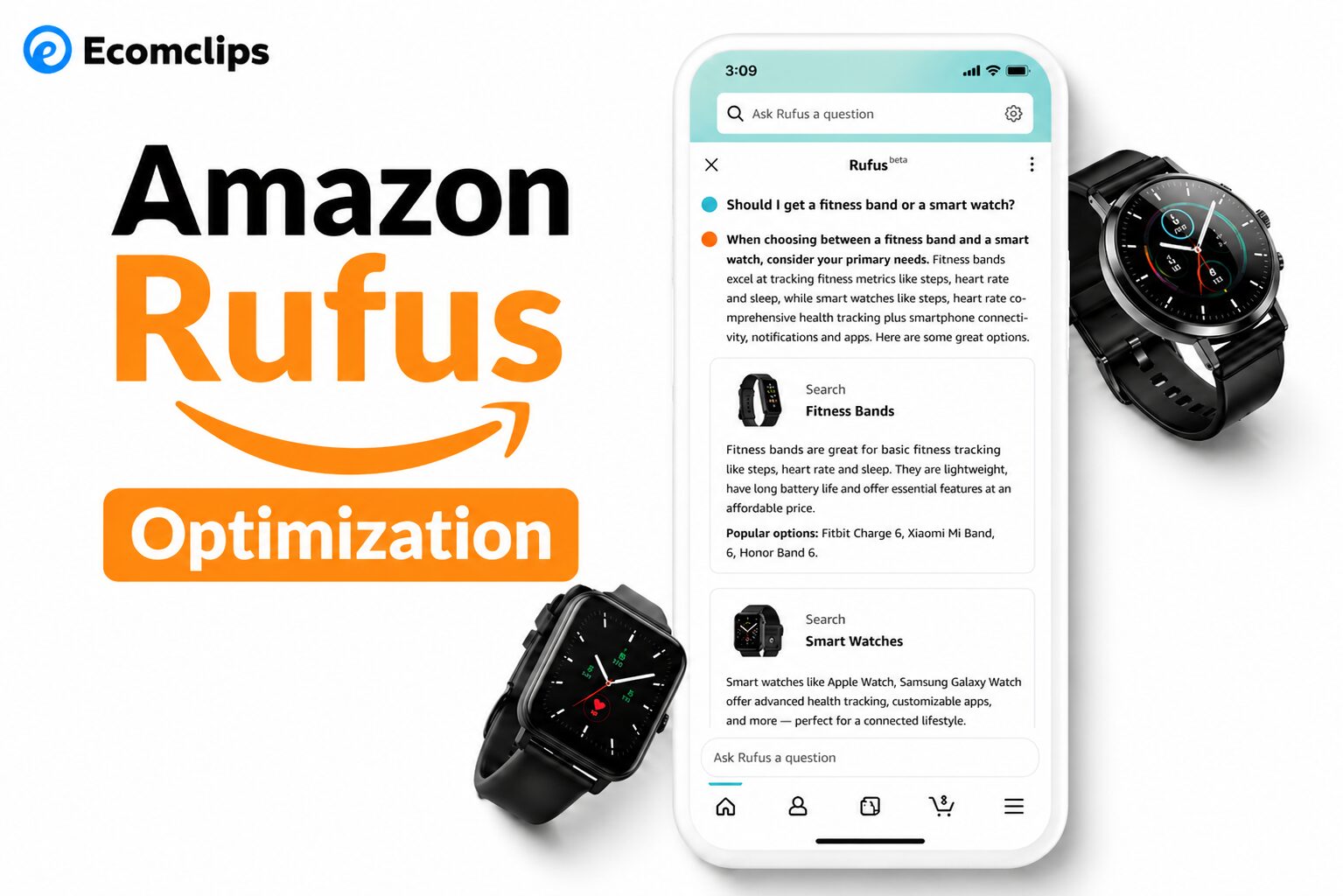
You can rank on page one and still lose the sale.That is the reality many Amazon sellers are facing in 2026.
Your listing may be filled with keywords, your product may appear in search results, and your price may even be competitive. But if Amazon Rufus cannot clearly understand who your product is for, what problem it solves, and why a shopper should choose it, your product can still be overlooked.
Traditional Amazon SEO is no longer enough on its own. Amazon Rufus is changing how products are discovered. Instead of looking only at keyword placement, Rufus works more like an AI shopping assistant. It reads your title, bullet points, product attributes, A+ Content, reviews, Q&A, and other listing signals to decide whether your product actually answers the shopper’s question.
This means keyword rank still matters, but it is no longer the full story. A listing can rank well in traditional search and still lose visibility inside Rufus if the content is thin, vague, or missing the context shoppers care about.
In this blog, we will break down what Amazon Rufus is really doing, why old-school Amazon SEO is not enough anymore, and how to optimise your listings so they are not just searchable, but understandable, useful, and recommendation-ready.
Table of contents:
1. What Is Amazon Rufus?
2. What Rufus Is Actually Doing?
3. Why Your Traditional SEO Efforts Aren’t Enough for Rufus
4. What Amazon Rufus Actually Reads Before Recommending a Product?
5. Before Editing Your Listing – Ask Rufus These Questions
6. Why Rufus Optimization Is Part of Generative Engine Optimization
7. The Competitive Window for Amazon Rufus Optimization
8. Why Amazon Rufus Doesn’t Care About Your Keyword Rank
9. Why Thin Listings Lose in Amazon Rufus SEO?
10. Amazon Rufus Optimization Starts with Better Questions
11. Ask Rufus About Your Own Product
12. What Sellers Should Do To Make Your Listings Rufus Ready
13. The New SEO Reality: Ranking Is Not Enough
What Is Amazon Rufus?
Amazon Rufus is an AI-powered shopping assistant that reshapes how products are discovered on Amazon. Unlike traditional Amazon SEO systems, which were based mostly on keywords and ranking algorithms like A9 or A10, Rufus takes a more sophisticated approach by analyzing the context of queries and the user intent behind searches.
For example, when a shopper searches for a product, Rufus doesn’t just look for matching keywords. Instead, it analyzes various signals, including reviews, product details, A+ content, and even Q&A sections, ultimately aiming to deliver results that match the shopper’s needs.
What Rufus Is Actually Doing?
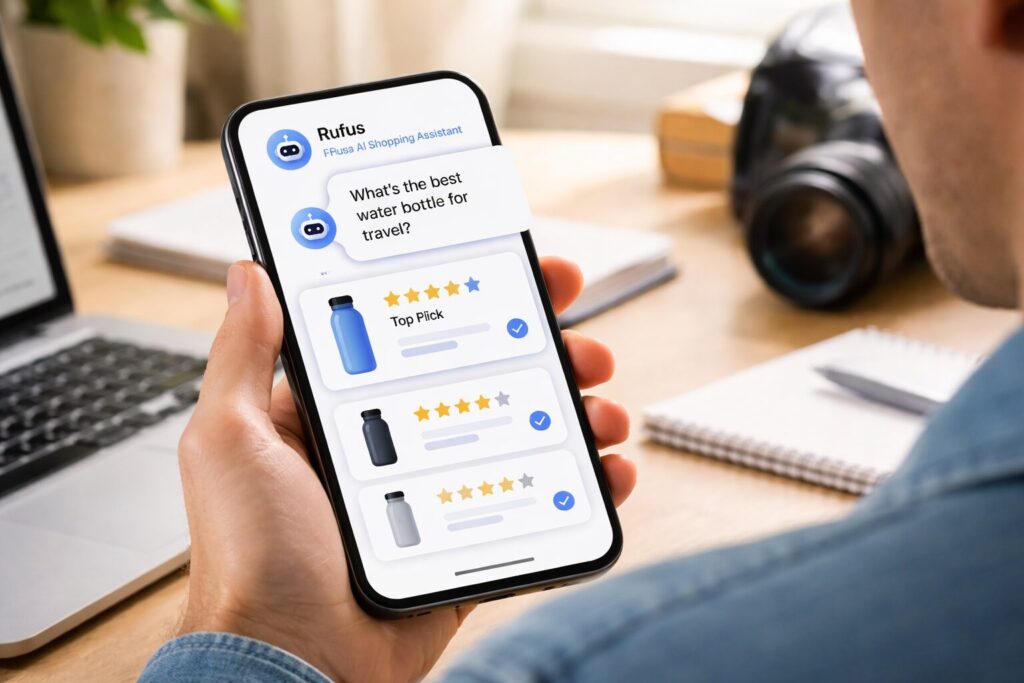
Tired of your product not showing up in Rufus recommendations? That’s because Rufus goes beyond simple keyword matching. It prioritizes context and buyer intent, analyzing product details, reviews, and Q&A sections to ensure it effectively answers shopper queries.
Amazon’s Rufus AI was launched in early 2024, and by Q3 2025, over 250 million customers had interacted with it. With monthly active users up by 149% year-over-year and interactions increasing by 210%, it’s clear that Rufus is driving shopper behavior.
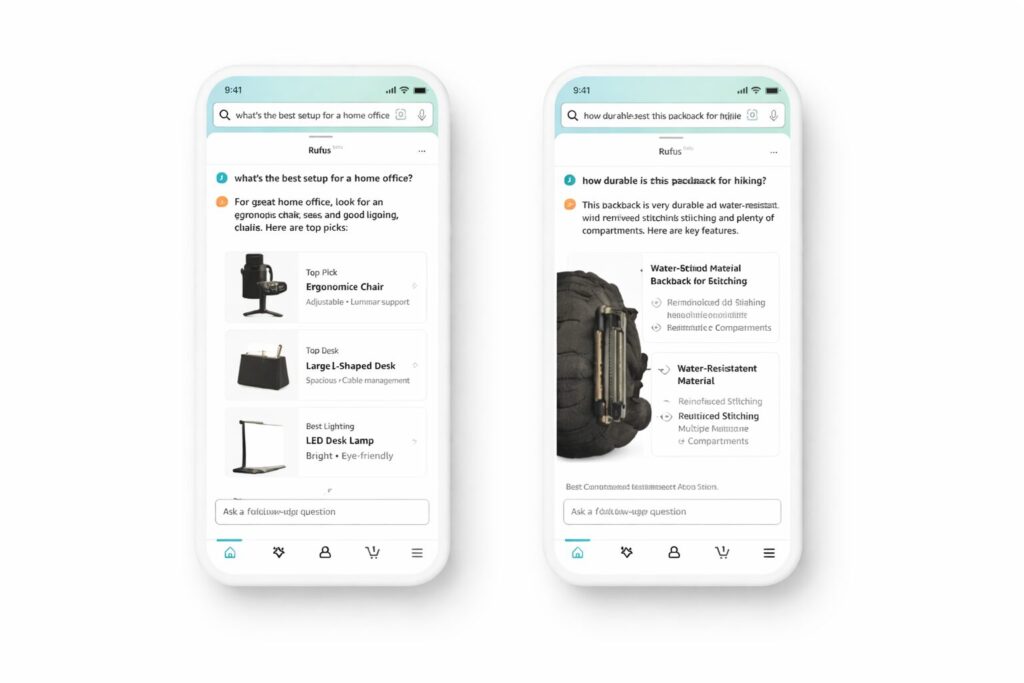
When a customer asks questions like “What’s the best product for setting up a home office?” or “How durable is this backpack for hiking?”, Rufus doesn’t just rely on traditional search algorithms. Instead, it scans your product title, bullet points, A+ content, customer reviews, and Q&A to determine if your product is the best fit.
If your product clearly addresses those needs, Rufus will recommend it. If not, it will prioritize a competitor that does, regardless of where your product ranks in traditional search results.
Why Your Traditional SEO Efforts Aren’t Enough for Rufus
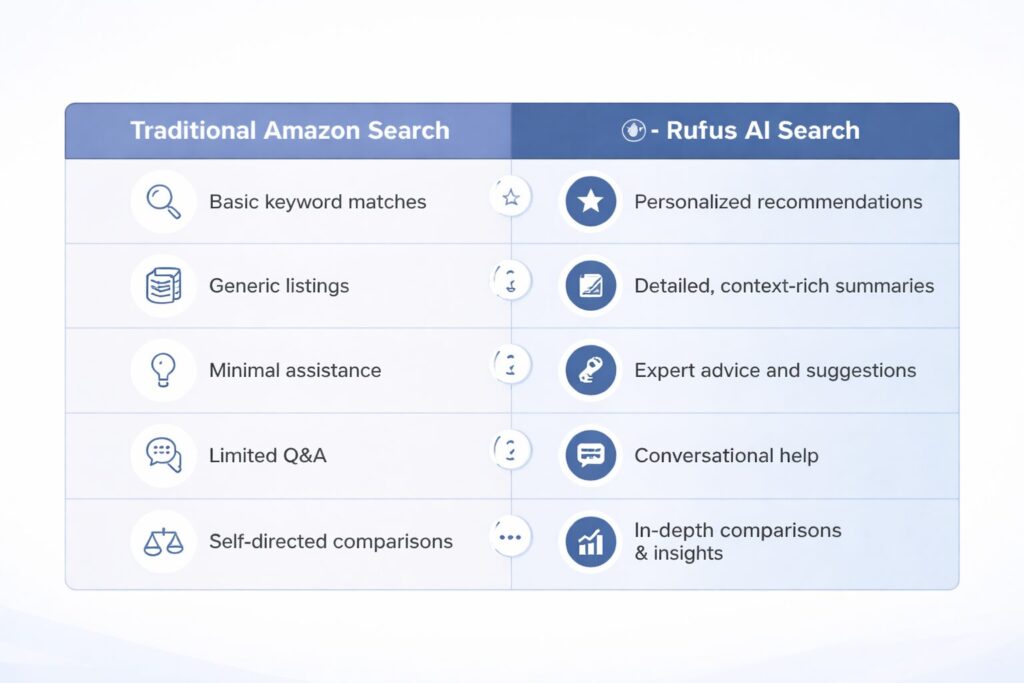
Traditional Amazon SEO relies heavily on keyword matching. The algorithm looks for specific keywords in your title, bullet points, and backend fields, then factors in signals like conversion history and sales velocity to generate a ranked list. If your product ranks well, the customer browses based on that order.
But Rufus works differently. It doesn’t just generate a ranked list. Instead, it constructs an answer to the shopper’s question. To do this, it needs content that it can read, interpret, and cite effectively.
Here’s where traditional SEO can fall short: A listing optimized for keyword density alone may fail to pass the Rufus test. If your bullets simply list features, Compact design. Lightweight. USB-C charging, there’s no clear answer to Who is this for? Or what problem does this solve?
Rufus wants to understand how your product helps a specific customer, not just list specs. Backend fields stuffed with exact-match keywords won’t help either, they need to speak in natural language, the way customers actually ask their questions. Even if your listing ranks on page one, Rufus will bypass it if a competitor’s product provides clearer, more specific answers.
The shift here is huge. Rufus tends to recommend products that are well-reviewed (typically 4-star or above) and contain detailed, helpful content. Products with shallow descriptions and generic claims, despite ranking well in traditional search, are often passed over. Content quality now plays a direct role in AI visibility, which was never the case with the old ranking systems.
What Amazon Rufus Actually Reads Before Recommending a Product?
One reason many sellers underestimate Rufus is that they still think of listings too narrowly. They think in terms of title, bullets, maybe backend terms, and price. Rufus is working with a much broader set of signals.
Rufus reads from six major content sources when deciding whether and how to recommend a product: product attributes, listing copy, A+ Content, customer reviews, Q&A, and even text extracted from image infographics. That means Amazon is not looking at your listing as a few isolated keyword fields. It is interpreting it as a content environment.
1. Product attributes matter more than many sellers realize
Many sellers underestimate the importance of product attributes in Amazon’s AI-driven ecosystem. Every detail you input in Seller Central, from required fields to optional ones, plays a significant role in how Rufus AI compares your product to others. If these attributes are incomplete or missing, your product could become invisible in comparison searches.
When a shopper asks, “What’s the difference between these two options?” Rufus relies on your attribute data to make an informed recommendation. The more thorough and detailed your attributes, the better your product’s chances of being recommended.
Unfortunately, product attributes are often seen as low-priority tasks. Many sellers fill in only the basic required fields, leaving the optional ones blank or vague. This is a mistake.
Attributes provide structured data that Rufus uses for product comparisons, filters, and explanations. When shoppers are looking for specific details, like size, material, or compatibility, Rufus needs hard data points to make accurate recommendations. If these fields are incomplete or inconsistent, it becomes harder for Rufus to interpret your product, reducing its chances of appearing in relevant searches or comparison queries.
2. Listing copy now needs to do more than rank
In the past, titles and bullet points were mainly seen as tools to rank your product. But with Rufus AI now in control, simply listing features like Lightweight. Durable. Water-resistant. won’t cut it anymore. Rufus is looking for clarity and relevance to the customer’s specific needs.
Instead of relying on generic feature lists, focus on use-case language. For example: Perfect for daily commuters needing a compact and durable backpack.
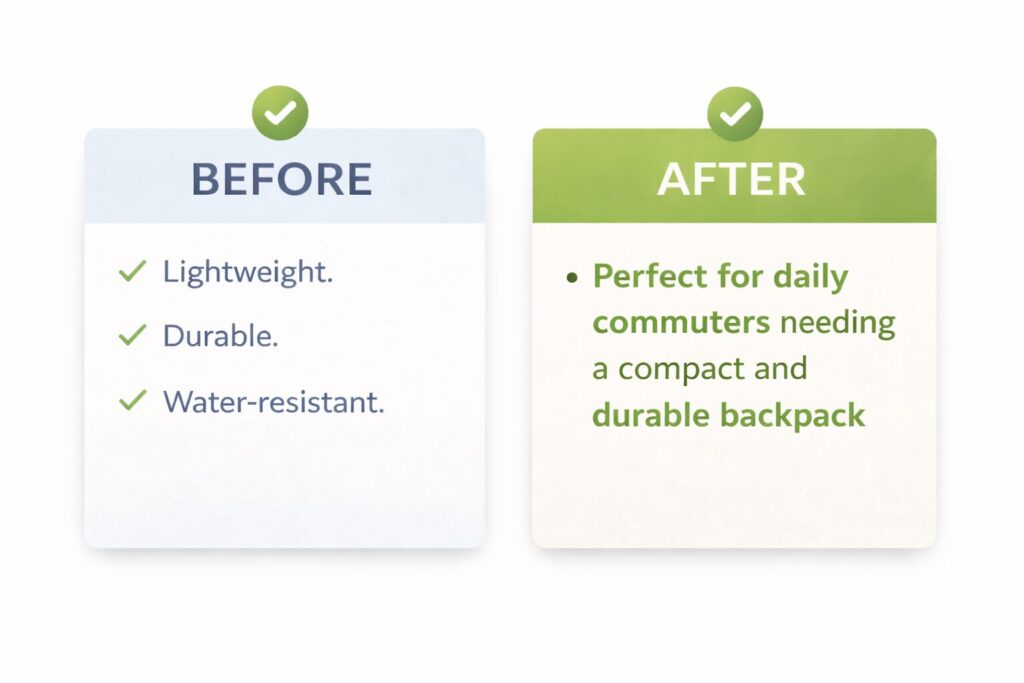
This type of description helps Rufus understand who the product is for, what problem it solves, and how it’s used, insights that are critical for Rufus to recommend your product.
It needs your listing to explain:
- who the product is for
- what problem it solves
- how it is used
- what makes it different
- when someone should choose it over an alternative
If your bullets are just thin feature fragments, Rufus will have to work harder to infer these details, and in many cases, it simply won’t bother. This means your product is less likely to show up in relevant recommendations.
3. A+ Content is no longer just conversion support
A+ Content used to be viewed mostly as a conversion asset. It pulls from FAQ sections, comparison charts, and even your brand story to form a well-rounded view of your product. Alt text on images also matters: Rufus reads the descriptions embedded in your visuals, which gives it even more context to work with. Ensure your A+ Content is filled with customer-centric details that reflect common search queries.
If Rufus can pull a clean answer from a comparison module or FAQ section, your product has a much better chance of being surfaced when a shopper asks a matching question.
4. Customer reviews are evidence, not just social proof
Customer reviews have always been important for conversion, but for Rufus, they provide something even more valuable: evidence.
When shoppers ask questions like “What do people like about this product?” or “Is this product durable?”, Rufus turns to review sentiment to answer those queries. A product with hundreds or thousands of detailed reviews provides Rufus with a stronger evidence base than a product with sparse or generic feedback.
The more specific and detailed the reviews, the better Rufus can use them to match the product with the shopper’s needs. If the reviews are vague or generic, Rufus may bypass your product in favor of a competitor with more substantial feedback.
5. Q&A is one of the most underused Amazon Rufus SEO assets
Rufus can directly cite Q&A content when recommending products. It’s important to proactively add questions and answers that are relevant to your audience. Instead of waiting for customers to ask, take control by adding high-intent questions and answering them clearly. This not only helps Rufus understand your product but also improves shopper trust by providing the answers they’re actively seeking.
6. Image text can also support recommendation visibility
Rufus doesn’t stop at text, it can also extract information from images. Using optical character recognition (OCR), it reads any text in your product images, such as specifications, use case scenarios, or comparison charts. If your images contain helpful overlays or visual descriptions, they provide Rufus with more data to help determine whether your product fits a shopper’s needs.
Before Editing Your Listing – Ask Rufus These Questions
Before you rewrite a single bullet point, run a simple Rufus audit. The fastest way to spot optimization gaps is to ask Rufus the same questions your customers would ask, then study the answers closely.
Start with one of your top ASINs and ask:
- What is this product for?
- What do people like about this product?
- What do people not like about this product?
- What are shoppers buying instead of this product?
- Why do customers choose this product over alternatives?
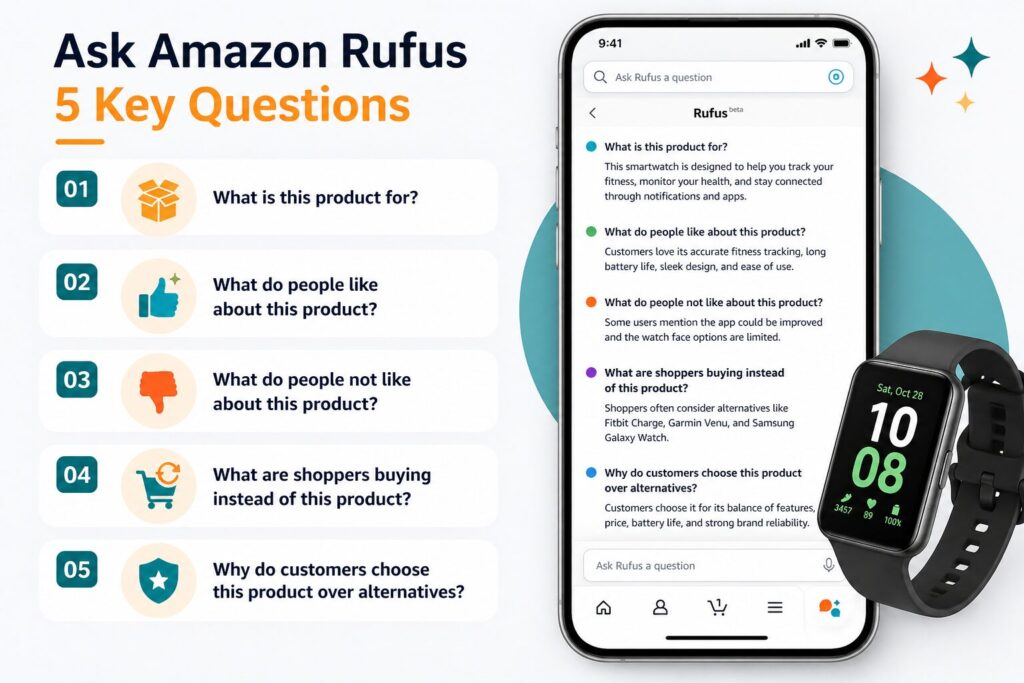
What Rufus gives back is often revealing. It shows how Amazon’s AI currently understands your product, not how your brand intends to position it. That gap matters.
In many cases, sellers discover that Rufus is pulling a stronger value proposition from a competitor’s listing, leaning too heavily on unresolved review complaints, or failing to describe a clear use case at all. Sometimes the issue is thin Q&A coverage. Sometimes it is weak listing copy. Sometimes the product has good features, but Rufus cannot confidently explain who it is for or why it is the better choice.
That is exactly why this step matters. It turns vague optimization work into a focused correction plan. You stop guessing and start fixing the specific signals Rufus is actually using.
Once you update the listing, give Amazon time to process the changes, then test again. The goal is simple: when Rufus answers those key shopper questions, the response should reflect your intended positioning, not a distorted or incomplete version of it.
Why Rufus Optimization Is Part of Generative Engine Optimization
Amazon Rufus is part of a larger shift in how product discovery works. More shoppers are now using AI interfaces to get answers, compare options, and narrow choices before reaching traditional search results.
According to Adobe, 39% of U.S. consumers have already used generative AI for online shopping, and 53% plan to do so in 2025. Since September 2024, AI-driven traffic to U.S. retail sites has been doubling roughly every two months. The same pattern is seen across major platforms. Google’s AI Overviews now reach 1.5 billion monthly users, and OpenAI has expanded its shopping tools, with hundreds of millions using ChatGPT to research and compare products.
This is where Generative Engine Optimization (GEO) comes in. The goal is simple: content must be optimized to be read, extracted, compared, and cited by AI systems, not just rank for keywords.
AI systems like Rufus, Google, and ChatGPT perform best when content answers specific questions clearly, uses natural language, and provides structured details. Vague, general copy is being replaced by clear, evidence-based content that AI can easily interpret and recommend.
For brands, this means your product pages, blog posts, landing pages, and comparison content now impact how AI systems understand your brand. Companies that invest in this content architecture early will gain an advantage as AI-powered discovery becomes the default. Brands still relying solely on keyword-first strategies are becoming invisible in this evolving landscape.
The Competitive Window for Amazon Rufus Optimization
Most Amazon sellers haven’t optimized for Rufus yet. That’s the opportunity.
Rufus optimization requires a deep understanding of what content signals influence product recommendations, how to structure listings for AI readability, and how to test and iterate based on what Rufus says about your products. It’s a shift from traditional listing practices, and many brands are still figuring out exactly what it takes.
The brands capturing Rufus’ recommendations share key traits:
- They have complete attribute data.
- They structure their bullet points around use cases, not just features.
- They’ve developed A+ Content with FAQ and comparison modules.
- They actively manage their Q&A sections.
These brands don’t necessarily have better products. They simply have listings that give Rufus the data it needs to recommend them.
To close this gap, start by understanding what Rufus currently says about your product. If you haven’t yet asked those key diagnostic questions, that’s your first step.
Why Amazon Rufus Doesn’t Care About Your Keyword Rank
Sellers obsess over keyword rank because it is visible, trackable, and familiar. It gives a sense of control. You can watch a term move from position 22 to position 9 and feel like progress is happening.
But Rufus is evaluating something less obvious and, in many cases, more important: Can this listing answer the customer’s actual question clearly and credibly?
A keyword-stuffed listing often fails that test. Think about how many Amazon bullet points still read like this:
- Premium quality RFID cards
- Durable design
- Secure encryption
- Ideal for personal use
Those phrases are not technically wrong. But they are weak. They are vague. They do not create a mental picture of who the product is for, when it is used, why it is better, or what tradeoffs exist. They are optimized for the logic of search indexing, not the logic of explanation.
Now compare that with a listing that says:
Designed for businesses needing secure access control, these RFID cards offer robust protection with 256-bit encryption, ideal for employee identification in office buildings.
That second version is much more useful to both a shopper and an AI assistant. It identifies the user, the use case, the practical benefit, and the context.
That is the core shift. Amazon Rufus optimization is less about repeating the right search phrase and more about answering the right buying questions in natural language. The seller who wins in Rufus is not necessarily the seller with the highest keyword density. It is often the seller with the clearest content architecture.

Why Thin Listings Lose in Amazon Rufus SEO?
The uncomfortable truth is that a lot of Amazon listings are still thin.
They may not look thin to the seller, especially if the title is long, the bullets are filled, and the images look polished. But from the perspective of AI interpretation, they are often shallow.
Thin listings tend to share a few common problems:
- They describe features without context
- They use generic marketing language
- They skip comparison language
- They ignore likely objections
- They provide little use-case specificity
- They leave attributes incomplete
- They lack robust Q&A
- They have weak or generic reviews
In a pure keyword-ranking environment, some of those products can still do reasonably well, especially if they have strong sales history or competitive pricing. But in an AI recommendation environment, thin content becomes a direct handicap.
Why? Because Rufus cannot confidently recommend what it cannot confidently explain.
- If your listing never says who the product is for, Rufus has to guess.
- If your listing never clarifies use cases, Rufus has to infer.
- If your reviews are vague, Rufus has little evidence.
- If your Q&A is empty, Rufus has fewer answer patterns.
Every missing piece makes it easier for Amazon to choose a competitor whose content is more complete.
Amazon Rufus Optimization Starts with Better Questions
The most useful mental shift for sellers is this: stop thinking only in keywords and start thinking in questions. Traditional Amazon SEO asks, What phrases should I rank for?
Amazon Rufus optimization asks, What questions should my listing be able to answer? That is a better framework because it naturally leads to richer content.
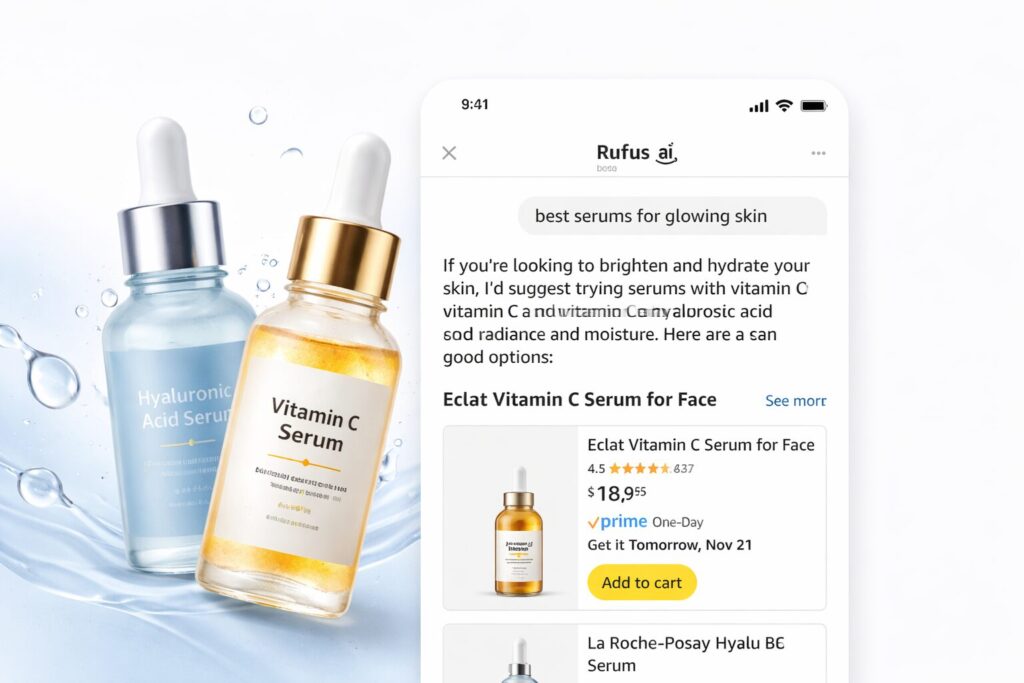
For example, instead of only targeting the phrase “anti-aging serum”, ask:
- Who is this serum best for?
- Does it help with fine lines and wrinkles?
- Is it good for sensitive skin?
- How long does it take to see results?
- What are the key ingredients, and how do they work?
- How does it compare to other serums on the market?
- What do customers say after using it for a few weeks?
A listing that answers those questions will often still rank for the keyword. But it will also be far more usable to Rufus. This is where Amazon listing optimization AI becomes a practical content exercise. You are not writing for a robot in the old sense. You are writing in a way that makes your product legible to systems that summarize and recommend.
Ask Rufus About Your Own Product
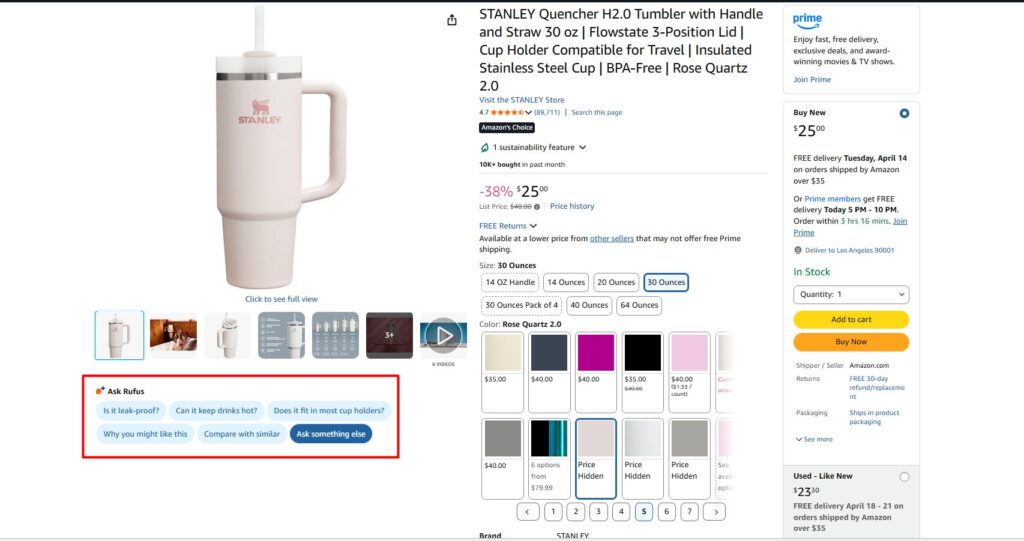
Ask Rufus a handful of direct questions about your own ASIN and study the answers. That is such a useful exercise because it reveals the difference between seller intent and AI interpretation.
A seller might believe their product is positioned as durable, commuter-friendly, laptop-safe, and ideal for professionals. But when they ask Rufus, the output may be vague, incomplete, or skewed by a few recurring review complaints. That gap is where the real optimization work begins.
Questions worth asking include:
- What is this product for?
- What do customers like about it?
- What do customers dislike?
- What are people buying instead?
- Why do customers choose this over alternatives?
Those questions expose weak spots fast.
- Maybe Rufus cannot describe the product clearly because the bullets are generic.
- Maybe it overemphasizes a complaint that shows up in reviews but is never addressed elsewhere on the listing.
- Maybe it prefers a competitor because the competitor has stronger Q&A content.
- Maybe it cannot compare options because your attributes are incomplete.
That kind of audit is far more useful than staring at keyword rank in isolation, because it tells you how Amazon’s AI actually sees the product.
What Sellers Should Do To Make Your Listings Rufus Ready
The opportunity here is not mysterious. It is operational. Sellers should start by auditing their top ASINs through the lens of question coverage, not just keyword placement.
- They should review product attributes and fill in missing structured data.
- They should rewrite weak bullets so they explain use cases, not just features.
- They should expand A+ Content with FAQs and comparison logic.
- They should actively build out the Q&A section with real shopper concerns.
- They should improve review generation processes so that customer feedback becomes richer and more specific.
And then they should test again. That is the part many sellers skip. They optimize once and move on. Rufus requires iteration. Ask the same product questions again after changes propagate and see whether the answers improve. If they do, you are moving in the right direction.
The New SEO Reality: Ranking Is Not Enough
Keyword rank still matters. It is just no longer the whole story. That is the real point sellers need to absorb.
For years, Amazon rewarded whoever could best align listings to keyword demand and conversion signals. That system has not disappeared. But it is no longer the only surface shaping discovery and purchase decisions.
Amazon Rufus introduces a different kind of competition. Now, sellers are not just competing for rank. They are competing to be the most understandable, the most citable, and the most useful answer.
That is why Amazon Rufus doesn’t care about your keyword rank in the way sellers expect. It is trying to solve a different problem. The sellers who recognize that early will stop treating content like a box to check and start treating it like the engine of recommendation visibility.
And the sellers who keep optimizing only for keyword position may eventually discover that they are ranking well in a system shoppers are relying on less and less.
FAQS
1. Does Rufus optimization replace traditional Amazon SEO?
No, Rufus optimization complements traditional SEO. Both are important, but they focus on different aspects of visibility. You need to run both in parallel for optimal results.
2. How does Rufus decide which products to recommend over others?
Rufus prioritizes content quality and completeness. It favors products with strong reviews, detailed Q&A, and rich A+ Content—even over high keyword rankings.
3. What’s the fastest way to improve our Rufus visibility?
Start with the five-question diagnostic to understand your current positioning, then focus on completing attribute fields, rewriting bullet points for use cases, adding Q&A content, and updating A+ Content.
4. Does Rufus optimization apply to Walmart and other platforms too?
Yes, similar AI-driven assistants, like Sparky on Walmart, also prioritize structured content, detailed use-case descriptions, and strong reviews. GEO principles extend across platforms, including Google AI and ChatGPT.
5. How do we measure whether Rufus optimization is working?
Track organic session volume, conversion rates, review quality, and Q&A engagement. Retest the five-question diagnostic after updates to see if Rufus’s representation of your product improves.
6. Can we directly control what Rufus says about our product?
Not directly. However, complete and optimized content—including reviews, Q&A, and product details—improves how Rufus understands and recommends your product.
7. How long does it take for changes to reflect in Rufus recommendations?
Typically, 24 to 48 hours after making changes, although it can vary. The most important step is to ensure your updates are consistent across listings and reflect customer-centric content.
8. How often should I update my listings for Rufus optimization?
Regular updates are important. Q&A and reviews should be actively managed, and A+ Content should be reviewed periodically for relevance. Testing and tweaking your listings every few months is a good practice.
9. What role does customer feedback play in Rufus optimization?
Customer feedback, especially reviews and Q&A, plays a major role in how Rufus perceives your product’s value. Detailed reviews with positive sentiment and thorough Q&A help Rufus recommend your product over others.
10. Can Rufus optimization affect my product’s search ranking?
Yes, products optimized for Rufus AI tend to rank better, but Rufus optimization is focused more on matching user intent and answering specific shopper questions. It enhances visibility, which can indirectly improve keyword ranking.
How we help to optimize for
How Ecomclips Drives Real Amazon Results with Rufus Optimization
At Ecomclips, we focus on real results, not just promises. Our data-driven approach combines strategy, optimization, and continuous improvement to help your Amazon listings rank higher, convert better, and ultimately grow your brand.
- Deep Keyword Research: We start with identifying high-intent, long-tail, seasonal, and high-converting keywords that align with buyer behavior. This insight directly feeds into your Rufus optimization, ensuring that your listings are visible to the right audience, increasing conversions.
- Conversion-Optimized Listings: We don’t just optimize for search rankings. Our listings are fully rewritten for clarity and engagement, covering titles, bullet points, descriptions, and backend fields. Every detail is crafted to boost discoverability and purchase intent, all while staying Amazon-compliant.
- High-Quality Images & A+ Content: Visuals matter. Professional images, lifestyle photos, and infographics create trust and higher engagement. We also enhance A+ Content to provide more information, answer common questions, and improve conversion rates. This is key for Rufus, which heavily relies on quality, detailed product content.
- SEO + Rufus Optimization Integration: Paid traffic doesn’t just boost visibility—PPC campaigns accelerate your organic ranking as well. The insights we gather from PPC allow us to refine your keywords and listings for even better Rufus recommendations. This dual approach helps optimize both organic and paid growth, driving long-term success.
- Continuous Audits & Optimization: We constantly monitor your rankings, click-through rates (CTR), and conversions, identifying gaps and opportunities to stay ahead of algorithm changes. Rufus is always evolving, and we ensure your listings stay optimized to meet those changes.
At Ecomclips, sellers get transparent, data-driven strategies that turn clicks into measurable growth. By combining deep keyword research, optimized listings, A+ visuals, and Rufus AI optimization, we ensure your product is positioned to succeed on Amazon.
Need Help Optimizing for Amazon Rufus?
Optimizing for Amazon Rufus requires a deep understanding of content quality, customer intent, and continuous adjustments. If you want expert help with Rufus optimization, our team at Ecomclips helps brands refine their listings with data-driven strategies that ensure higher visibility and conversion rates.
Contact us today at info@ecomclips.com or book an appointment with our e-commerce experts to start optimizing smarter on Amazon.
See how we help sellers optimize their Amazon listings for Rufus to drive better visibility:
Amazon’s Rufus AI Prompts: The Future of Sponsored Products Optimization
Amazon Prompts 2026: The New AI Feature Every Seller Must Know
Amazon AI Just Rewrote the Ranking System — Most Sellers Aren’t Ready for 2026
Amazon’s AI is Watching Your EVERYTHING!
Ecomclips: Your Complete eCommerce Solution Under One Umbrella
At Ecomclips, we bring every eCommerce service you need under one roof — strategy, operations, design, marketing, and growth, all seamlessly connected to help your brand thrive across every marketplace.
Since 2012, we’ve been helping businesses of all sizes launch, scale, and dominate online. From Amazon, Walmart, eBay, and Etsy to Shopify and WooCommerce, our team of marketplace experts, designers, developers, and marketers works together to deliver measurable results.
Our services span the full eCommerce lifecycle:
- Account Setup & Product Listing Management: We handle registrations, compliance, and product data optimization across all marketplaces.
- Amazon Optimization Service: From keyword-rich titles and A+ content to PPC campaigns and storefront design, we craft listings that convert.
- Creative Design & Content Production: A+ visuals, infographics, brand stores, and product videos built to boost engagement.
- Advertising & PPC Management: Smart, data-driven ad strategies for Amazon, Walmart, and Google that maximize ROI.
- Web Development & Store Design: Shopify, WooCommerce, and Magento websites built for performance and conversion.
- Data Management & Automation: Streamlined product feeds, catalog syncing, and inventory control for effortless scalability.
- Customer Service & Order Fulfillment: End-to-end support that enhances customer satisfaction and builds long-term loyalty.
- Analytics & Growth Strategy: Real-time insights and ongoing optimization to ensure consistent, profitable growth.
Whether you’re launching a new store or managing multiple global marketplaces, Ecomclips acts as your single strategic partner, simplifying complexity and driving sustainable revenue growth.