

Is your brand actually growing on Amazon or just surviving?
Let’s be honest — Amazon is not the same platform it was five years ago. Back then, you could list a product, sprinkle in a few keywords, run some basic ads, and watch the sales roll in. Those days are gone. Today, selling on Amazon for brands is one of the most competitive battlegrounds in all of e-commerce and the brands that refuse to adapt are the ones quietly losing market share every single day.
Here’s the reality: Amazon holds over 40% of all US e-commerce sales, more than 60% of those sales come from third-party sellers, and there are over 470,000 brands actively competing for the same customers you’re after.
So what does all of this mean for you?
It means that brands on Amazon can no longer afford to be passive. The sellers who are winning in 2026 are doing things differently. They control their distribution. They protect their brand. They invest in content, SEO, and advertising. They treat Amazon as a core growth channel not an afterthought.
In this guide, we’re going to break down exactly what brands must do to compete on Amazon today — whether you’re just starting out or looking to protect what you’ve already built. This is the 2026 playbook.
Understanding the Amazon Marketplace
Before we talk about strategy, let’s talk about the landscape you’re competing in. Understanding how Amazon works today is step one to beating your competition.
1. The Marketplace Structure
Amazon operates as both a retailer and a marketplace. On one side, Amazon sells its own products (Amazon Basics, Amazon Essentials, etc.). On the other side, it opens its platform to third-party sellers which is where most brands operate.
As a third-party seller, you’re competing not just for customer attention, but for Amazon’s algorithmic approval. Amazon decides which products get shown, which listings rank on page one, and who wins the Buy Box. Understanding this is critical because Amazon’s goal is not to sell your product, it’s to serve the customer. The brands that align with that goal win. The ones that don’t, disappear.
What’s Changed in A10 Algorithm
Amazon’s search ranking algorithm, commonly referred to as the A10 algorithm, has become significantly more sophisticated. In 2026, the key ranking signals include:
- Sales velocity: How fast your product is selling
- Keyword relevance: How well your listing matches what customers search for
- Conversion rate: What percentage of shoppers who view your listing actually buy
- Click-through rate: How often shoppers click your product in search results
- External traffic: Traffic you drive to Amazon from outside sources (Google, social media, email)
- Seller authority: Your account health, feedback score, and history
The big shift in recent years? External traffic now carries more weight than ever. Amazon rewards brands that bring new customers to the platform. This changes the advertising and marketing strategy significantly for serious brands.
2. AI-Driven Product Discovery
Amazon has been heavily investing in AI-powered shopping features. The Rufus AI shopping assistant, launched broadly in 2024 and now deeply embedded in the shopping experience, answers customer questions and recommends products conversationally. This means your listings need to answer questions, not just rank for keywords. Customers are asking things like “What’s the best protein powder for beginners?” and Amazon’s AI is pulling answers directly from product listings, reviews, and A+ content.
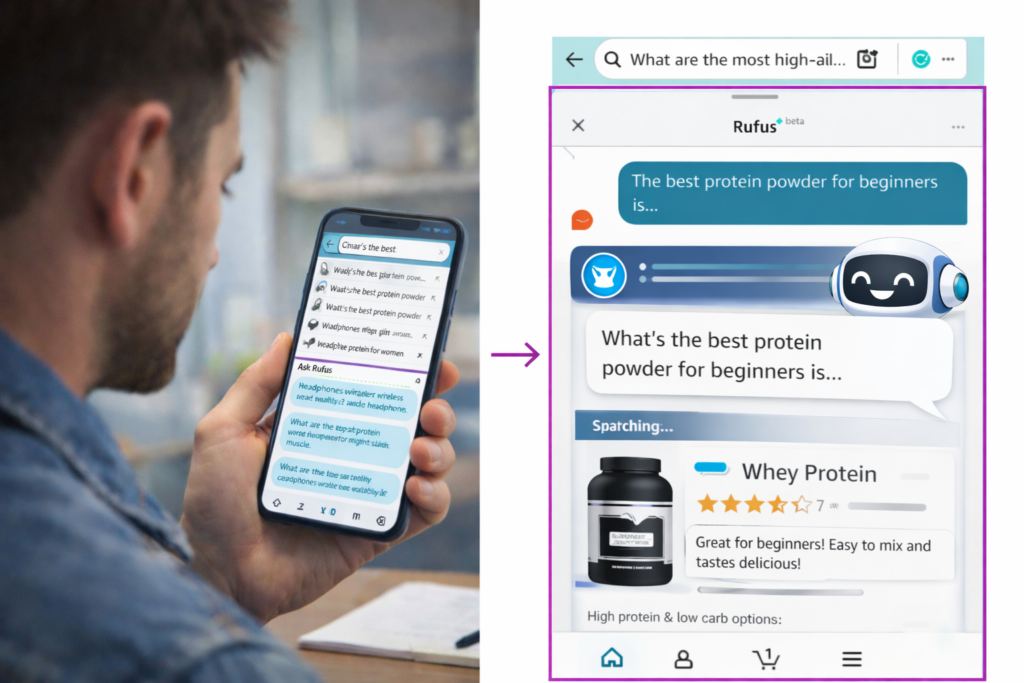
If your listing doesn’t answer questions clearly and conversationally, Rufus won’t recommend you. It’s that simple.
Advertising Competition Is at an All-Time High
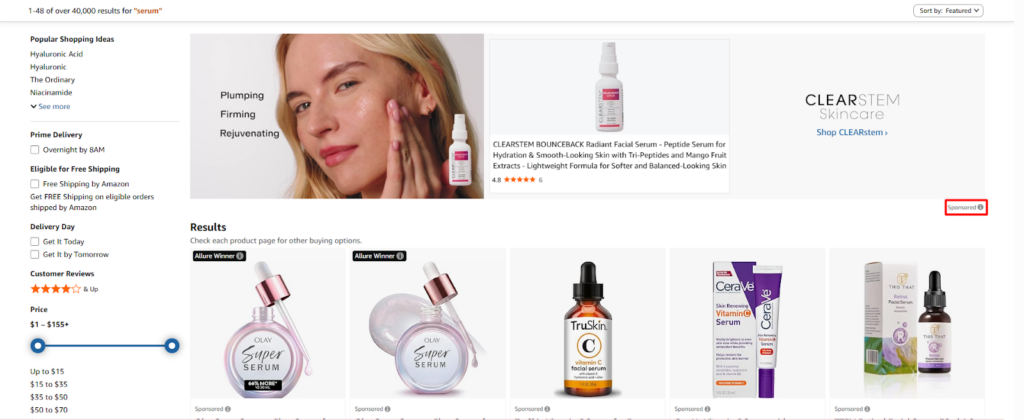
Sponsored ad costs have risen sharply across most categories. Average Amazon PPC costs have increased year over year, and in competitive niches, cost-per-click can range from $2 to $10 or more. Brands that rely purely on organic ranking without an advertising strategy are giving up valuable real estate to competitors who are willing to invest.
Digitally Native Brands vs. Traditional National Brands on Amazon
Not all brands on Amazon are playing the same game. There are two fundamentally different types of sellers and understanding which one you are shapes everything about your Amazon strategy.
1. Digitally Native Brands
These are brands that were born online. They started on Amazon, through their own DTC website, or both. They understand the digital landscape because it’s all they’ve ever known. Their pricing is controlled from day one. Their listings are built for SEO. Their advertising is data-driven.
2. Traditional National Brands
These are brands that grew through brick-and-mortar retail — think department stores, wholesale accounts, and distributor networks. Amazon is often treated as “just another retail channel.” The problem? That mindset is catastrophically wrong, and it leads to price erosion, unauthorized sellers, and a total loss of brand control online.
Here’s a side-by-side comparison:
| Key Area | Digitally Native Brands | Traditional National Brands |
| Origin | Online-born / private label | Brick-and-mortar / wholesale |
| Distribution | Controlled from day one | Multiple distributors, leakage risk |
| Pricing Control | Full control | Limited — distributors set their own prices |
| Amazon Focus | Primary sales channel | Secondary / afterthought |
| Listing Quality | SEO-optimized, conversion-focused | Often generic or inconsistent |
| IP & Legal | Trademarks filed proactively | Often reactive — slow to protect IP |
| Amazon Expertise | Deep — PPC, SEO, analytics | Usually limited |
| Agility | Fast to adapt and test | Slow to react to market changes |
| Main Risk | Scaling too fast without infrastructure | Unauthorized sellers, price erosion |
The gap between these two types of brands is widening. Digitally native brands are getting more sophisticated every year. Traditional brands that don’t adapt are getting left behind.
Why Many Brands Fail on Amazon
Before we talk solutions, let’s talk about the mistakes — because understanding what’s going wrong is just as important as knowing what to do right. If any of these sound familiar, don’t worry. You’re not alone, and it’s fixable.
1. Treating Amazon Like a Traditional Retailer
Amazon is not Walmart. It’s not Target. It doesn’t work the way traditional retail works. Brands that think they can hand off their Amazon account to a distributor, check in once a quarter, and expect results are consistently disappointed. Amazon demands active management — daily if you’re serious about growth.
2. Relying on Distributors to Handle Amazon
Here’s the uncomfortable truth: your distributors’ goals are not aligned with your brand’s goals. Distributors want to move volume. They’ll sell on Amazon at whatever price gets them a sale — even if it destroys your pricing structure across other channels.
3. Ignoring Listing Optimization
A bad listing is money left on the table. Blurry photos. Keyword-stuffed titles that don’t make sense. Bullet points that list features with no mention of benefits. No A+ content. No brand story. These are all conversion killers that push shoppers straight to your competitor.
4. Skipping Advertising
Organic ranking alone is no longer enough in most categories. If you’re not investing in Amazon advertising, you’re invisible to a huge segment of buyers who never scroll past the sponsored results at the top of the page.
5. Neglecting Brand Protection
Unauthorized sellers quietly erode your pricing, post incorrect product information, and destroy the customer experience — all under your brand name. Every bad review they generate hurts your ranking. Every price they undercut pulls your Buy Box away.
6. Not Knowing What Amazon Updates Exist
Amazon rolls out new features constantly. Sellers who don’t keep up miss out on tools that could give them a serious edge — things like the Transparency Program, Amazon Vine, video ads, Amazon Posts, and AI-assisted listing features. Staying updated is a competitive advantage in itself.
Proven Strategies Brands Must Use to Compete on Amazon
Now let’s get into the meat of it. Here is exactly what brands on Amazon need to be doing in 2026 to compete, protect their position, and grow.
1. Take Control of Your Distribution
If you don’t control who sells your product, you don’t control your brand on Amazon. It’s that simple.
The problem: When your inventory passes through multiple distributors, wholesalers, and liquidators, it inevitably ends up on Amazon at prices you never approved — sold by sellers you’ve never heard of, with listing content you didn’t create.
The solution:
- Audit your entire supply chain. Map every single entity that has access to your product inventory. Where does it go after it leaves your warehouse? Who can buy it, and can they resell it?
- Identify and plug leakage points. Look for wholesale accounts or liquidation channels where your product is ending up on Amazon unauthorized
- Reduce the number of authorized distributors to only those you trust and can hold accountable
- Monitor Amazon regularly for unauthorized seller listings using tools like SellerWatch, BrandShield, or Helium 10’s brand monitoring features
Distribution control isn’t glamorous, but it is the foundation of everything else. You can’t fix pricing, content, or customer experience until you know who’s selling your product.
2. Build a Strong Online Reseller Policy
A Minimum Advertised Price (MAP) policy is a start — but it is not enough on its own.
Here’s why MAP alone fails: MAP policies are notoriously difficult to enforce on Amazon. They’re often unenforceable by law in the US (the Supreme Court’s Leegin ruling opened the door for resale price restrictions, but enforcement is still complex), and unauthorized sellers simply ignore them.
What you need is a formal Online Reseller Policy — a documented, enforceable agreement that clearly defines:
- Who is authorized to sell your products online
- Which specific platforms they can sell on
- Content standards for how your product must be represented
- Consequences for violations — including being cut off as an authorized seller
When this policy is built correctly and enforced consistently, it gives you real leverage. Authorized sellers know the rules. Unauthorized sellers can be removed through Amazon’s reporting systems with proper documentation.
3. Protect Your Brand with Trademark and Amazon Brand Registry
This is non-negotiable. If you’re serious about building a brand on Amazon, you need legal protection in place.
Step 1: Register Your Trademark
Without a registered trademark, Amazon doesn’t fully recognize you as a brand. You’re vulnerable to:
- Competitors creating listings under your brand name
- Counterfeiters copying your product and selling under your ASIN
- Other sellers editing your listing content without permission
File your trademark with the USPTO (United States Patent and Trademark Office) as early as possible. If you manufacture overseas — which most Amazon sellers do — also file a trademark in the country of manufacture (commonly China). Without this, a Chinese manufacturer could legally copy and sell your product abroad.
2026 Tip: Amazon’s IP Accelerator program connects you with vetted IP law firms and can fast-track your Brand Registry access even before your trademark is fully registered. If you haven’t used it, look into it now.
Step 2: Enroll in Amazon Brand Registry
Brand Registry is your key to Amazon’s most powerful brand tools. Once enrolled, you unlock:
- A+ Content (Enhanced Brand Content): Rich visual content that dramatically improves conversion rates
- Amazon Brand Storefront: Your own branded page on Amazon — a destination shoppers can visit, follow, and buy from
- Brand Analytics: Deep data on search terms, demographics, competitor performance, and customer journeys
- Transparency Program: Unique serial codes on every unit to stop counterfeiters cold
- Project Zero: AI-powered automated counterfeit removal — no manual reporting needed
- Manage Your Customer Engagement (MYCE): Email marketing directly to your Amazon followers
- Amazon Posts: Free social-media-style posts that appear on your listings and competitor listings
Without Brand Registry, you are leaving all of these tools unused — and your competitors are using them against you.
Step 3: Use Project Zero and Transparency for Counterfeit Protection
As your brand grows, counterfeiters will come. It’s not a matter of if — it’s when. Project Zero uses Amazon’s machine learning to proactively detect and remove fake listings. The Transparency program serializes every unit so customers can verify authenticity before they even open the box.
4. Optimize Your Product Listings for Amazon SEO
Your listing is your storefront. It’s your salesperson, your pitch, your first impression — all rolled into one. In 2026, a mediocre listing simply doesn’t convert. Here’s what a winning listing looks like:
1. Title: Your title should lead with your primary keyword, include key product attributes (size, color, quantity, material), and still read naturally for human shoppers. Don’t keyword-stuff to the point that the title is unreadable.
Example of weak title: “Protein Powder Supplement Shake Muscle Gain Gym Workout Men Women Vanilla”
Example of strong title: “Optimum Nutrition Gold Standard 100% Whey Protein Powder – Vanilla Ice Cream – 5 lb (74 Servings)”
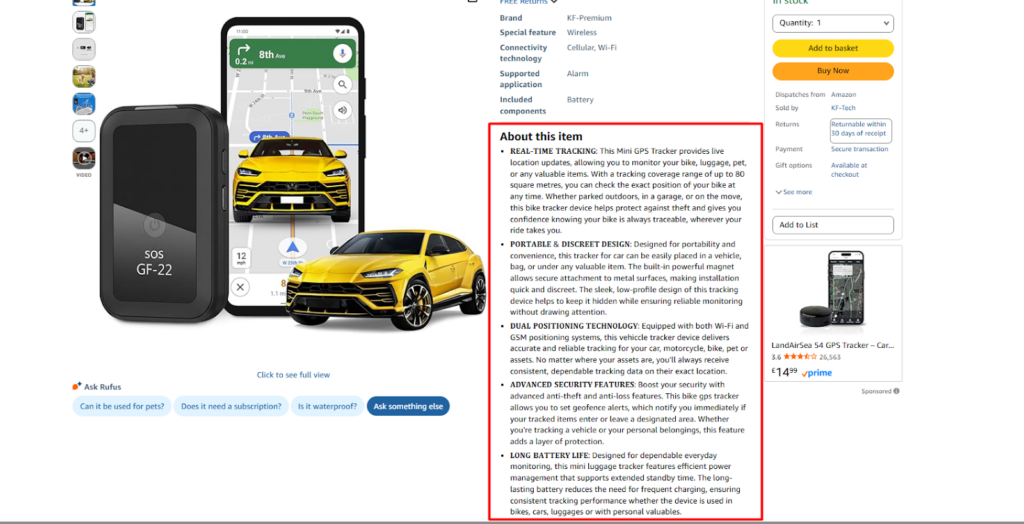
2. Bullet Points: Five bullet points. Lead with the benefit, back it up with the feature. Write for the customer who is scanning quickly — use capitalized lead-ins to make each point easy to read. Naturally weave in secondary keywords.
3. Product Description / A+ Content If you have Brand Registry (and you should), replace your text description with A+ Content. Use lifestyle images, comparison charts, infographics, and brand story modules. Listings with A+ Content see an average 5-10% conversion rate lift according to Amazon’s own data.
Images
- Main image: White background, product clearly visible, fills 85%+ of the frame
- Secondary images: Lifestyle shots, infographics showing features, size comparison, packaging
- Video: Product demo videos significantly increase conversion — and are now available to all sellers, not just Brand Registry members
- 2026 Update: Amazon’s AI now uses your image content for search relevance. Label your images descriptively and include text overlays with key benefits
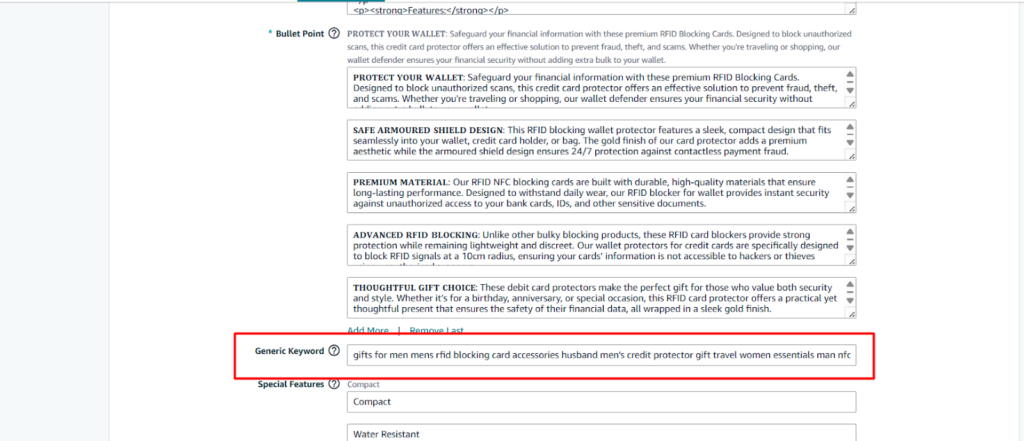
4. Backend Keywords Your backend search terms are invisible to shoppers but crucial for ranking. Fill all available character space with relevant keywords not already in your title or bullets. Include misspellings, synonyms, and Spanish-language terms where relevant for your audience.
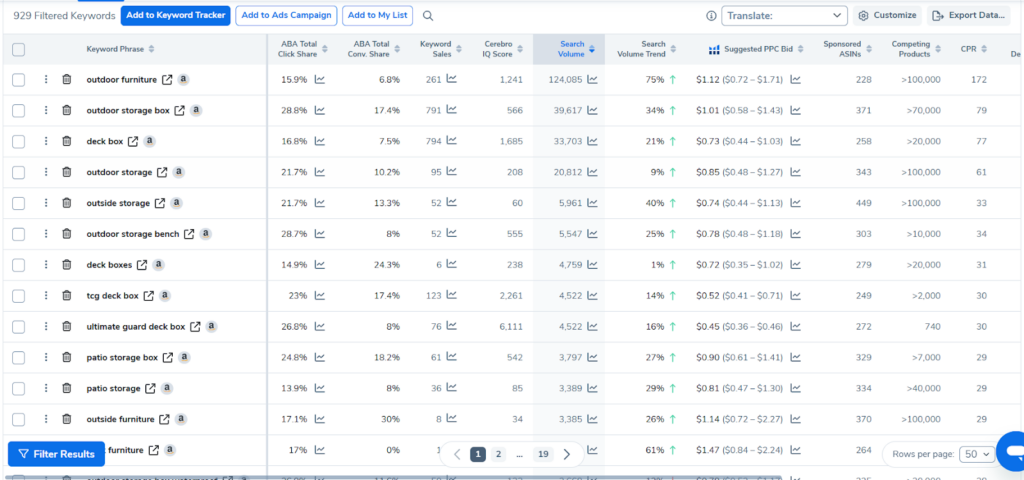
Keyword Research Tools to Use in 2026:
- Helium 10 (Cerebro, Magnet): industry standard for Amazon keyword research
- Jungle Scout: great for search volume and competition analysis
- Amazon’s own Brand Analytics Search Term Report: if you have Brand Registry, this is pure gold
5. Invest in Amazon Advertising
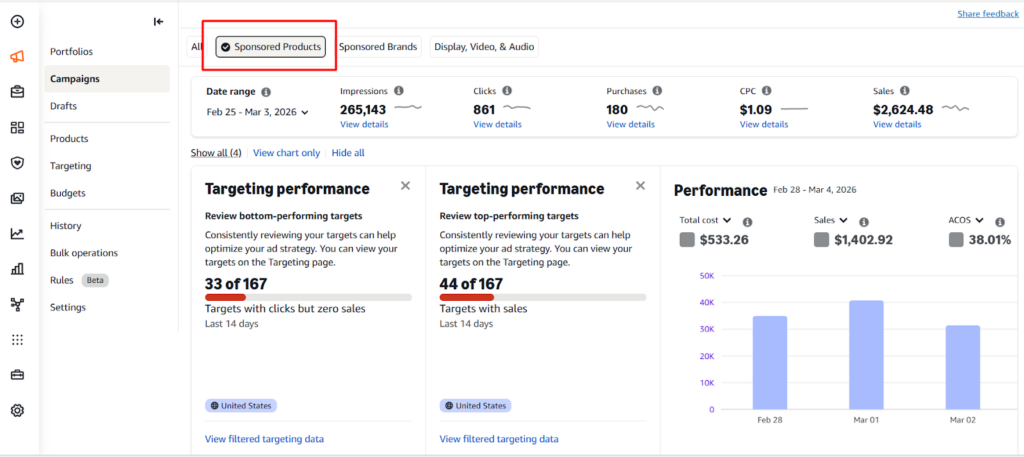
Organic ranking is important, but in 2026, Amazon PPC advertising is essential for brand visibility — especially when you’re launching, competing in a crowded category, or protecting your branded search terms.
Here’s a breakdown of the ad types and how to use them:
Sponsored Products The most fundamental ad type. These are keyword-triggered ads that appear in search results and on product detail pages. Every brand on Amazon should be running Sponsored Products campaigns. Start with:
- Automatic campaigns to discover what keywords Amazon associates with your product
- Manual exact match campaigns targeting your highest-converting keywords
- Competitor targeting campaigns — show your ad on competitor product pages
Sponsored Brands These banner ads appear at the top of search results and feature your brand logo, a custom headline, and up to three products. They drive brand awareness and are excellent for protecting your branded search terms so competitors can’t steal your customers when they search for your brand name.
Sponsored Display Display ads that can follow shoppers off Amazon — on apps, websites, and back onto Amazon. In 2026, Sponsored Display has become a critical retargeting tool for brands that want to stay top of mind throughout the customer’s buying journey.
Amazon DSP (Demand-Side Platform) For brands with larger budgets, Amazon DSP allows programmatic ad buying across Amazon properties and third-party websites. It’s powerful for upper-funnel brand awareness and retargeting, but requires either in-house expertise or agency support to manage effectively.
2026 PPC Tips:
- Use negative keywords aggressively to avoid wasted spend
- Monitor your Advertising Cost of Sales (ACoS) and Total ACoS (TACoS) together — TACoS gives the full picture of ad efficiency relative to total sales
- Don’t pause ads that are driving organic ranking — the correlation between ad-driven sales velocity and organic ranking is very real
- Bid on your own branded keywords — if you don’t, your competitors will
6. Monitor Pricing and Win the Buy Box
The Buy Box — that “Add to Cart” button on every Amazon listing — is where the vast majority of purchases happen. Winning the Buy Box is critical for sales volume, and losing it to an unauthorized or lower-priced seller can devastate your revenue overnight.
How the Buy Box Algorithm Works (2026): Amazon determines Buy Box eligibility based on:
- Pricing (competitive total price including shipping)
- Fulfillment method (FBA sellers have a significant advantage)
- Seller performance metrics (ODR, late shipment rate, cancellation rate)
- Inventory availability
- Delivery speed
Best Practices for Buy Box Control:
- Use FBA (Fulfilled by Amazon) wherever possible — FBA sellers are heavily favored in Buy Box competition
- Keep your pricing consistent and competitive across all channels
- Maintain excellent seller performance metrics — Amazon monitors these constantly
- Use repricing tools (like Informed Repricer or BQool) to stay competitive in real time without racing to the bottom on price
- Monitor your Buy Box win rate in Seller Central regularly — if it drops unexpectedly, investigate immediately for unauthorized seller activity
7. Use Data and Analytics to Stay Ahead
In 2026, gut instinct isn’t a strategy. The brands winning on Amazon are making decisions backed by data. Here’s what to track:
Amazon Brand Analytics (Requires Brand Registry)
- Search Term Report: See exactly which keywords are driving traffic to your listings. Use this to optimize PPC bids and update listing keywords
- Market Basket Analysis: See what products customers frequently buy alongside yours — great for cross-sell and bundle opportunities
- Repeat Purchase Behavior: Understand how often your customers buy again — crucial for subscription-based or consumable products
- Demographics: Know your customer — age, gender, income, education, household composition
Seller Central Reports
- Business Reports: Daily sales, traffic, and conversion rate by ASIN
- Inventory Health Report: Avoid stockouts (ranking killer) and excess inventory (storage fees)
- Search Query Performance Report: A newer report showing how your listings perform for specific customer searches
Third-Party Tools
- Helium 10 and Jungle Scout: for market research and competitor tracking
- DataDive:for deep keyword and listing analysis
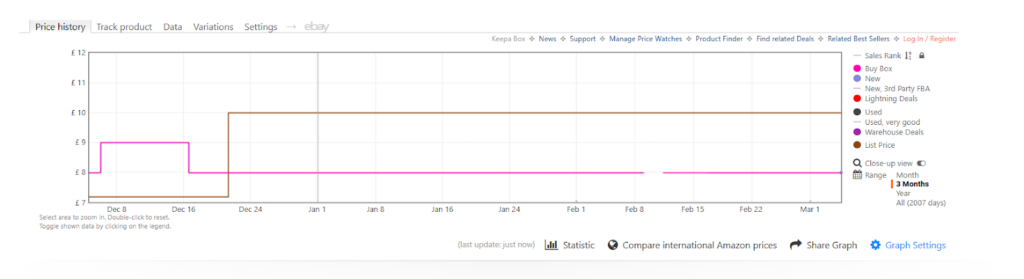
- Keepa: for tracking price history and competitor Buy Box data
Key Strategies Specifically for Digital Native Brands
If you’re a newer brand or private label seller, you have a real advantage — you started in the digital world. But rapid growth without the right foundation can create serious problems. Here’s what to prioritize:
- Register Your Trademark Before You Scale: Don’t wait until your product is selling thousands of units a month to file for trademark protection. By then, a counterfeiter may have already copied you. File early — even if your brand is small. Use Amazon’s IP Accelerator to speed up the process.
- Build a Consistent Brand Identity: Your logo, color palette, brand voice, and product packaging should all tell the same story. Brand consistency builds customer recognition and trust — which drives repeat purchases and reduces your dependence on advertising over time.
- Invest in Listing Content From Day One: Your first listing should be your best listing. Don’t plan to “fix it later.” Research your keywords properly, hire a professional product photographer, write compelling copy, and build your A+ Content before launch. Getting this right from the start dramatically reduces your time to profitability.
- Protect Your IP Globally: If you’re manufacturing in China (or anywhere overseas), register your trademark there too. If you don’t, a manufacturer could legally replicate your product and sell it in other markets — or even on Amazon — without any recourse available to you.
- Plan for Copycats Before They Arrive: Success on Amazon attracts imitators. Budget for brand monitoring, legal enforcement, and ongoing IP protection from the beginning. The more successful your product becomes, the more important this gets. Don’t wait for a problem to start building your defense.
- Go All In — Don’t Half-Test: The biggest mistake new brands make is “testing with minimal investment.” This approach sounds cautious, but it’s actually risky. A product that gains traction without proper brand protection, solid content, or advertising infrastructure creates bigger problems than it solves. If you’re building a real brand, commit to doing it properly from the start.
Key Strategies Specifically for Traditional Brands
If your brand grew through wholesale accounts, distributors, or physical retail, Amazon presents a different set of challenges. Here’s your playbook:
- Clean Up Your Distribution Channels This is the starting point. Before you can win on Amazon, you need to understand who is selling your product there, at what price, and through what supply chain pathway. Audit everything.
- Align Executive Leadership on Amazon Strategy Amazon brand protection is not just an e-commerce team problem — it requires buy-in from the top. If your sales leadership is still being measured purely on volume shipped to distributors, the incentives are working against your Amazon strategy. Change the metrics.
- Invest in Amazon-Specific Expertise Amazon expertise is a specialty. The skills required to grow a brand on Amazon — keyword research, PPC management, listing optimization, account health management — are genuinely different from traditional retail skills. Invest in people or partners who know this platform deeply.
- Enforce Your Reseller Policy Consistently Building a reseller policy and not enforcing it is worse than not having one at all. When you selectively enforce, unauthorized sellers learn they can push back. Enforce consistently, document violations, and follow through on consequences.
- Actively Manage Your Listings Check your listings regularly. Are your images still displaying correctly? Is your A+ Content live? Has a third-party seller edited your title or bullet points? Are there negative reviews that need responses? Amazon rewards active sellers and penalizes neglect.
The Role of Amazon SEO in Brand Success
Let’s talk about Amazon SEO specifically — because ranking organically on Amazon is one of the most powerful and cost-effective ways to grow your brand long-term.
Amazon’s A10 algorithm determines which products appear first when a customer searches. Unlike Google, Amazon’s algorithm is heavily purchase-driven. It’s not just about relevance — it’s about what’s most likely to result in a sale.
The Core Amazon Ranking Factors:
- Keyword Relevance: Your listing must contain the words customers are actually searching for. This sounds basic, but many brands use internal product names and industry jargon that customers never search for. Always do keyword research from the customer’s perspective, not the brand’s.
- Conversion Rate: Amazon tracks what percentage of people who view your listing actually buy. A high conversion rate tells Amazon’s algorithm that your product is a good match for what shoppers want — and it rewards you with higher ranking. Everything about your listing (images, copy, pricing, reviews) affects conversion rate.
- Click-Through Rate (CTR): Before a customer converts, they have to click. Your main image and title are the two biggest drivers of CTR. A product with a great main image and a clear, benefit-driven title will outperform a competitor with better specs but a boring presentation.
- Sales Velocity: The more you sell — and the more consistently you sell — the higher Amazon ranks you. This is why product launches with promotional pricing or giveaways can kickstart organic ranking. Sales velocity signals demand.
- Reviews and Ratings: More reviews and higher ratings improve both CTR and conversion rate, which in turn improves ranking. Use the Request a Review button in Seller Central after every sale, and enroll in Amazon Vine (Brand Registry required) for newly launched products to build an initial review base.
- External Traffic: Driving traffic to your Amazon listing from outside the platform — through Google ads, social media, email marketing, or influencer partnerships — signals to Amazon that your brand has demand beyond its own ecosystem. In 2026, this is increasingly rewarded in ranking.
- AI and Conversational Shopping: With Amazon’s Rufus AI deeply integrated into the shopping experience, your listing content needs to answer questions conversationally. Think about the questions your ideal customer would ask before buying your product. Then make sure your listing answers them — in your bullets, A+ content, and even in your responses to customer questions in the Q&A section.
Future Trends Brands Must Prepare For
The Amazon of 2026 is already very different from the Amazon of 2022. Here’s what’s coming next — and what forward-thinking brands are already preparing for:
- AI-Powered Shopping: Rufus is just the beginning. Amazon is investing billions in AI-driven shopping experiences. Brands that optimize their content for AI recommendation — conversational, question-answering, benefit-focused — will have a significant edge over brands still writing listings for keyword stuffing.
- Video Commerce Is Exploding: Amazon has integrated video throughout the shopping experience — in search results, on product pages, in Amazon Live, and in Sponsored Brand Video ads. Brands that invest in product video content today are building an asset that will continue to compound in value as video’s role in discovery grows.
- Influencer Storefronts and the Amazon Creator Economy: Amazon’s Influencer Program allows content creators to build storefronts featuring recommended products. When an influencer promotes your product and links it to their storefront, it drives external traffic that Amazon rewards. Building relationships with relevant creators in your niche is a legitimate and growing brand-building channel.
- Amazon Live and Interactive Shopping: Live shopping — where sellers and creators demonstrate products in real-time livestreams — is growing rapidly on Amazon. While it’s still maturing in the US compared to markets like China, brands that get comfortable with it early will be well-positioned as adoption grows.
- External Traffic Signals: Amazon is increasingly factoring external traffic into organic ranking. This means your Amazon strategy and your broader digital marketing strategy need to work together. Your social media, your Google ads, your email list — all of it can and should be directed toward driving customers to your Amazon listings.
The Brands That Adapt Will Win
Amazon in 2026 is competitive, complex, and constantly changing. There’s no shortcut, and there’s no “set it and forget it” strategy that works.
But here’s the good news: most brands are still making the same avoidable mistakes. That means the opportunity for brands willing to do the work is still enormous.
To succeed on Amazon today, brands must:
- Control distribution — Know who is selling your product and at what price
- Protect their brand — Trademark, Brand Registry, and active enforcement are non-negotiable
- Invest in listing quality — SEO-optimized content, professional images, A+ Content, and video
- Run smart advertising — PPC is not optional in competitive categories
- Monitor and manage actively — Amazon rewards engagement and punishes neglect
- Use data to make decisions — Brand Analytics and third-party tools exist for a reason
- Stay ahead of platform changes — AI shopping, video, and external traffic are the next frontiers
The brands that treat Amazon as a core growth channel — and invest in it accordingly — will thrive. The brands that ignore it, minimize it, or outsource it without oversight will find themselves losing ground to faster, smarter competitors who are playing the long game.
The choice is yours. But the best time to act was yesterday. The second best time is right now.
FAQ — Frequently Asked Questions About Brands on Amazon
Q: What is the biggest challenge for brands selling on Amazon today?
The biggest challenge is maintaining control — control over who sells your product, at what price, and how it’s represented. Without tight distribution control and active brand management, unauthorized sellers and price erosion can erode your brand equity very quickly.
Q: Why do traditional brands struggle on Amazon compared to digitally native brands?
Traditional brands were built for brick-and-mortar retail — their systems, incentives, and expertise are optimized for that world. On Amazon, the rules are different. Pricing is transparent, distribution leaks instantly, and success requires specialized digital skills that most traditional brands haven’t historically invested in.
Q: What is Amazon Brand Registry and why is it important?
Amazon Brand Registry is a program that gives brand owners greater control over their product listings and unlocks powerful tools including A+ Content, Amazon Stores, Brand Analytics, the Transparency Program, and Project Zero. To enroll, you need a registered trademark. It’s one of the most important steps any serious Amazon brand should take.
Q: How can brands protect themselves from unauthorized sellers on Amazon?
The most effective approach combines several tactics: tightening distribution agreements, building and enforcing an Online Reseller Policy, using Amazon’s Brand Registry reporting tools to flag unauthorized listings, and in some cases, working with IP attorneys to build enforceable quality control policies that reduce third-party resale rights under the First Sale Doctrine.
Q: How do brands rank their products on Amazon?
Amazon ranking is driven by the A10 algorithm, which considers keyword relevance, conversion rate, click-through rate, sales velocity, reviews, and external traffic. Brands improve their ranking through optimized listings, strong advertising campaigns that drive initial sales velocity, excellent product imagery, high review counts, and by driving external traffic from social media, email, and Google.
Q: Is Amazon still profitable for new brands in 2026?
Yes — but it requires more upfront investment than it used to. The brands that are succeeding as new entrants in 2026 are those who invest properly in their listing content, advertising, and brand protection from day one, rather than testing with minimal resources and hoping for the best.
Q: Do brands need Amazon advertising to succeed?
In most competitive categories, yes. Organic ranking takes time to build, and advertising accelerates it. PPC campaigns — especially Sponsored Products — also drive sales velocity, which directly improves organic ranking. Advertising and SEO work together on Amazon, not independently.
Q: What is the difference between private label and branded products on Amazon?
Private label products are manufactured by a third party and sold under your own brand name — very common among Amazon-native sellers. Branded products are those with an established brand identity, often sold both on and off Amazon.
Q: How important are product reviews for Amazon brand success?
Very important. Reviews influence both your click-through rate in search results and your conversion rate on the listing page — both of which are core ranking factors. More importantly, customers trust reviews.
Q: What Amazon tools and features should every brand be using in 2026?
Every brand with Brand Registry should be actively using: A+ Content, Amazon Brand Store, Brand Analytics (especially the Search Term Report and Market Basket Analysis), Sponsored Products and Sponsored Brands ads, the Vine program for new products, and Amazon Posts.
Watch how we help sellers to protect their Amazon Business:
Amazon Suspended This Seller — Here’s Exactly How We Reinstated the Account
Amazon Keywords Aren’t Converting? Here’s Why and How to Fix It.
Is Amazon FBA Still Worth It in 2026? The Truth About Fees, AI & Seller Survival
Why 70% of Amazon Listings Fail (Even on Page One)
How Ecomclips Can Help Brands Grow
Growing a brand on Amazon in 2026 requires expertise across multiple disciplines simultaneously — SEO, advertising, design, legal, analytics, competitor research, and account management. For many brands, building all of that in-house isn’t realistic.
This is where working with a specialized Amazon agency makes a real difference. At Ecomclips, we work with brands at every stage — from new sellers just finding their footing, to established brands that need to protect and scale what they’ve built.
Here’s where expert agency support delivers the most value:
- Listing Optimization: We research your keywords, write compelling, conversion-focused copy, design professional images and A+ content, and ensure your listing is fully optimized for both the A10 algorithm and Amazon’s AI shopping features.
- Amazon PPC Management: We build and manage data-driven advertising campaigns across Sponsored Products, Sponsored Brands, and Sponsored Display — maximizing your return on ad spend while protecting your branded search terms from competitors.
- Brand Protection: We monitor your listings for unauthorized sellers, pricing violations, and content changes — and take action quickly when issues arise, before they can damage your rankings or customer experience.
- Competitor Analysis: We analyze what your top competitors are doing in terms of keywords, pricing, advertising, and content — and identify the gaps your brand can exploit to gain market share.
- Account Health Management: We keep your seller account in excellent health, responding to performance notifications, managing customer feedback, and ensuring you stay compliant with Amazon’s constantly evolving policies.
Contact us today at info@ecomclips.com or book an appointment with our e-commerce experts to start selling smarter on both marketplaces.
Ecomclips: Your Complete eCommerce Solution Under One Umbrella
At Ecomclips, we bring every eCommerce service you need under one roof — strategy, operations, design, marketing, and growth, all seamlessly connected to help your brand thrive across every marketplace.
Since 2012, we’ve been helping businesses of all sizes launch, scale, and dominate online. From Amazon, Walmart, eBay, and Etsy to Shopify and WooCommerce, our team of marketplace experts, designers, developers, and marketers works together to deliver measurable results.
Our services span the full eCommerce lifecycle:
- Account Setup & Product Listing Management: We handle registrations, compliance, and product data optimization across all marketplaces.
- Amazon Optimization Service: From keyword-rich titles and A+ content to PPC campaigns and storefront design, we craft listings that convert.
- Creative Design & Content Production: A+ visuals, infographics, brand stores, and product videos built to boost engagement.
- Advertising & PPC Management: Smart, data-driven ad strategies for Amazon, Walmart, and Google that maximize ROI.
- Web Development & Store Design: Shopify, WooCommerce, and Magento websites built for performance and conversion.
- Data Management & Automation: Streamlined product feeds, catalog syncing, and inventory control for effortless scalability.
- Customer Service & Order Fulfillment: End-to-end support that enhances customer satisfaction and builds long-term loyalty.
- Analytics & Growth Strategy: Real-time insights and ongoing optimization to ensure consistent, profitable growth.
Whether you’re launching a new store or managing multiple global marketplaces, Ecomclips acts as your single strategic partner, simplifying complexity and driving sustainable revenue growth.