
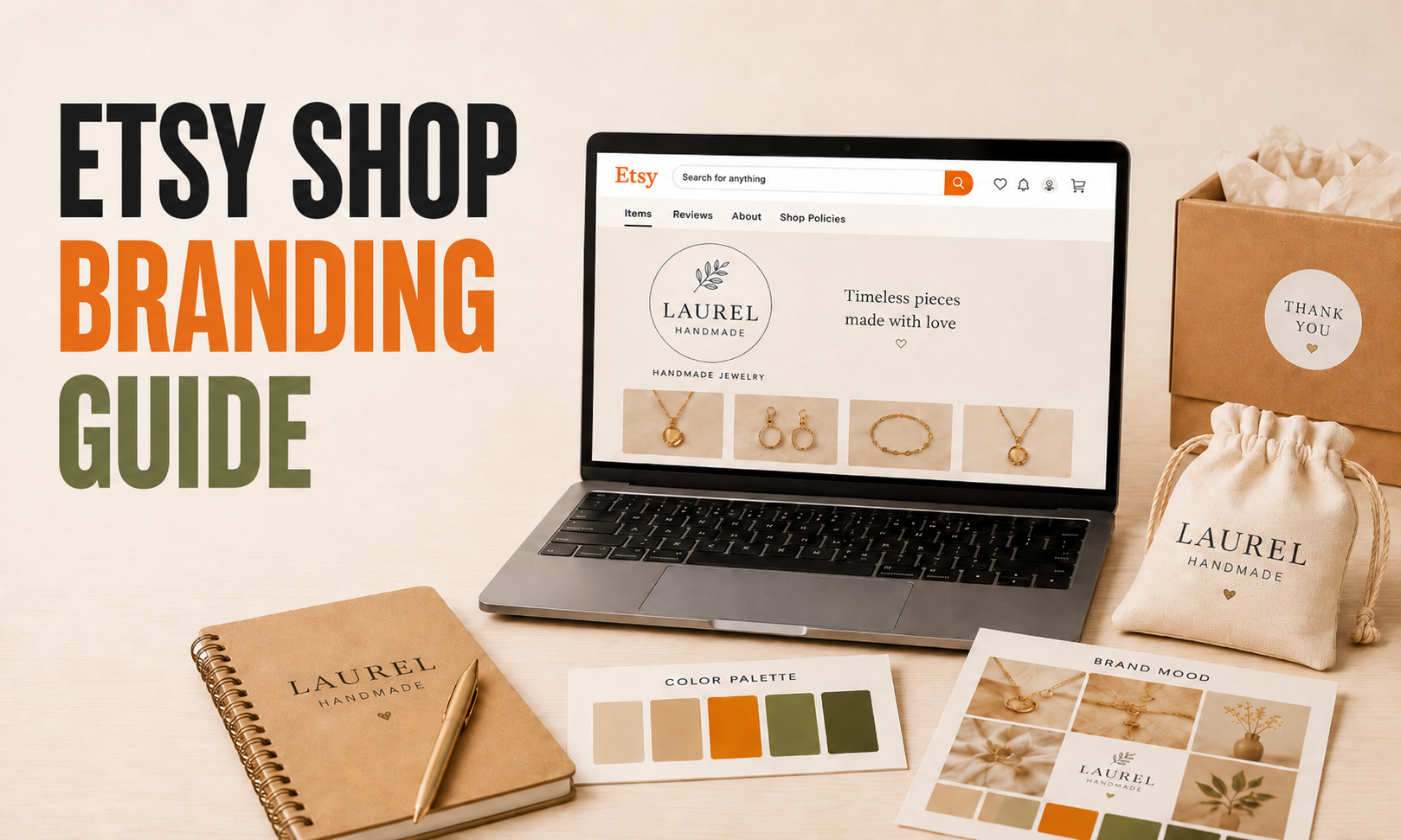
Does your Etsy shop look like a business or feel like a brand?
Your products may be great, your prices fair, and your reviews positive, yet buyers often decide within seconds whether a shop feels trustworthy and worth exploring. If your listings feel disconnected or your shop does not clearly show what sets you apart, customers may leave before they understand your value.
Etsy branding is the system that creates that feeling. It includes your shop name, icon, banner, colors, typography, photography, listing copy, About section, packaging, order messages, and customer service. When these parts reinforce the same promise, buyers understand what you sell, why it is different, and what they can expect.
This guide shows you how to build that system step by step. You will define your brand promise, translate it into visuals and words, design a stronger shop home, improve product presentation, reduce buyer uncertainty, and measure whether the brand is helping people move from discovery to purchase and return.
Why Branding Matters for Your Shop?
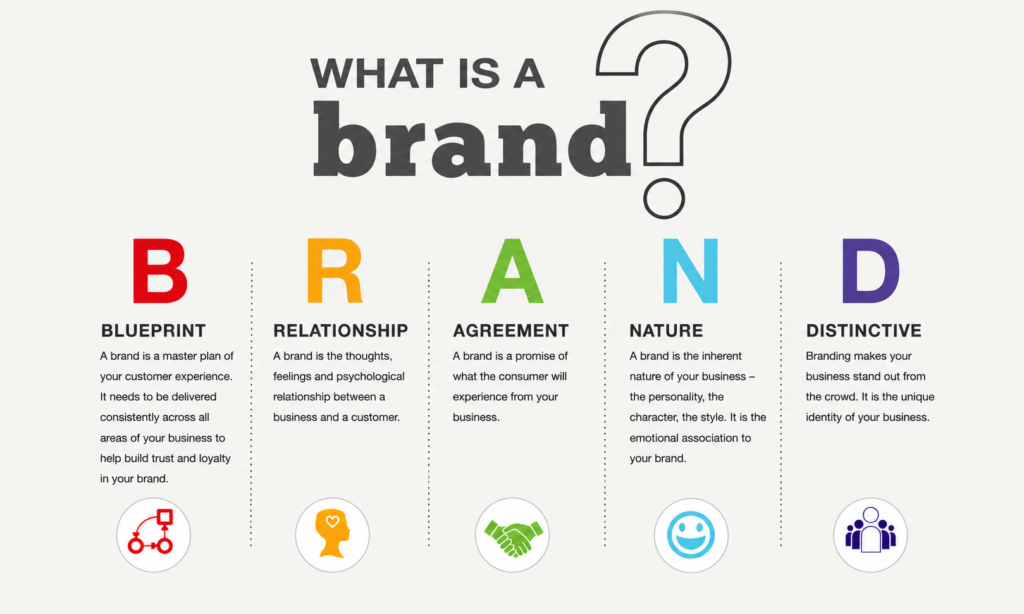
Branding is far more than a logo or a color scheme. It brings the unique story of your business to life, helping your shop stand out from the crowd and connecting your products with your target market. A clear brand identity has a lasting impact on everyone who encounters it, shaping the perceptions of potential customers, press, and competitors, and it facilitates meaningful connections that resonate both online and offline.
Your brand lets everyone who comes into contact with your business know who you are, what you care about, and why they should care about your products. Sharing the story behind your shop, your inspiration, perspective, and values helps create a more personal connection with buyers. Developing a clear, recognizable identity helps attract new buyers and keep existing customers loyal.
Through branding, you infuse the story of your business into everything you do: customer service, marketing, graphic design, packaging, and beyond. This guide will walk you through each of these elements, giving you the tools to build a cohesive, compelling presence wherever customers find you.

Why Buyers Notice Branding Before They Notice Details
Buyers may not consciously say, ‘This shop has a strong brand’. But they notice when a shop feels polished, clear, and consistent. They notice when:
- The product images look like they belong together.
- The shop banner matches the product style.
- The packaging feels thoughtful.
- The descriptions are clear and easy to read.
- The seller seems reliable and approachable.
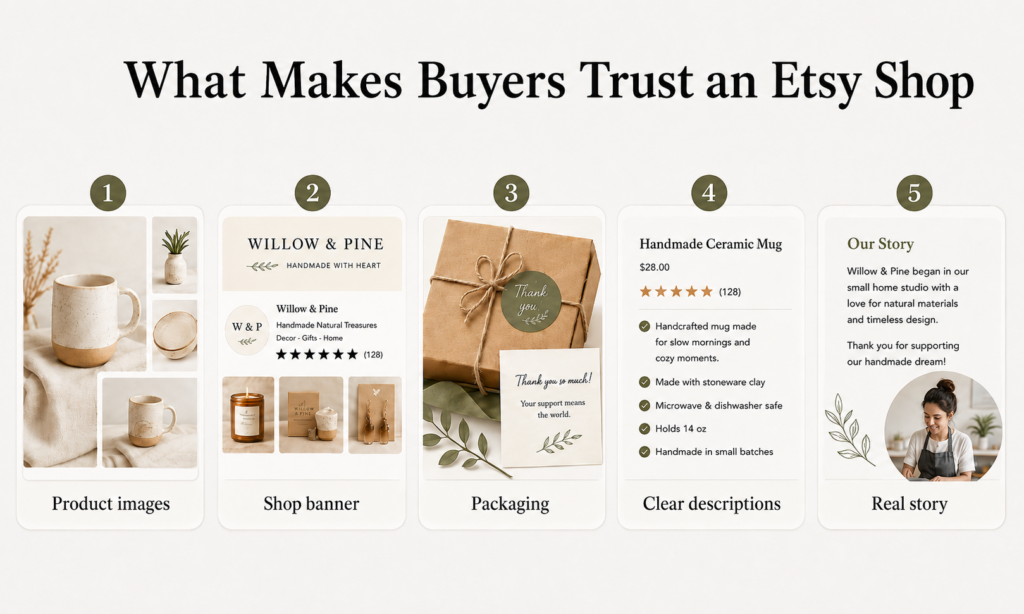
A strong brand helps reduce hesitation. It makes buyers feel that they know what to expect.
1. Start With Strategy Before You Choose Colors
The strongest visual identity will not fix unclear positioning. Before choosing a font or opening a design template, decide what your shop should mean to the right buyer.
Defining Your Brand Promise
Defining a brand promise provides a foundation for bringing your brand to life. Once you establish what you are delivering, who you are delivering it to, and why it is uniquely valuable, you can ensure a cohesive, consistent application wherever people interact with your business.
Use this simple formula:
| Brand promise formula: We create [product type] for [ideal buyer] who want [desired result, feeling, or solution], through [distinctive method, material, style, or service]. |
Example: We create personalized keepsake jewelry for thoughtful gift buyers who want to mark a meaningful moment through hand-finished pieces and simple, reassuring customization.
Answer Four Positioning Questions
Four key questions to shape your brand promise, helping signal to customers what your business stands for and what experience your products will deliver:
1. Who Are You, and Why Do You Sell Your Items?
In an environment like Etsy, a big part of the appeal is the authenticity and personal aspect of what you do. Think about how the story of your business fits into your brand. The story behind your products can attract customers because it makes what they’re buying special and by extension, it makes them feel special.
Sharing the who behind your brand is also important. Buyers, press outlets, and other members of the community want to get to know you: who you are, what inspires you, how your shop came about, and what it means to you. Weaving those details and visuals into a compelling about section can help tell that story effectively.
2. What Is Important and Consistent About Your Product?
What is your Unique Selling Proposition (USP)? What does your product reliably and uniquely bring to the table? Your USP is a way of expressing what you offer, what you value, and what people can expect. Think about what you sell and consider the following:
- What makes your dog sweaters different from other dog sweaters?
- Why is your hand dyed yarn special?
- What is unique about your business that can serve your customers’ needs?
3. Which Words Would You Use to Describe Your Items?
Try the 20/10/4 exercise: Choose 20 words to describe your brand, whittle them down to 10, then narrow to just 4. These four words become the essence of your brand voice. A pet portraitist whose four words are ‘soulful, spiritual, accessible, and playful’ appeals in a very different way than one who leads with ‘sophisticated, experienced, elegant, and chic.’
4. Who Are Your Customers?
Brainstorm the person most likely to purchase from your shop, this is your target customer. The promise you make to them through your branding should reflect their specific demographic details:
- How old are they?
- What kinds of shows or content do they consume?
- How much do they earn, and where do they live?
- What values and aesthetics resonate with them?
Knowing who your customer is will help you create a message and identity that resonates with their values, interests, and needs. Focus on them, don’t worry about being everything to everybody.
Define A Primary Buyer, Not Everybody
A brand becomes stronger when it makes a clear choice. A shop for sentimental gift buyers should present personalization, meaning, delivery timing, and presentation differently from a shop for design conscious collectors. You may serve several buyer groups, but the shop should still have one dominant point of view.
2. Build a Visual Identity System, Not a Mood Board You Forget
A mood board is a useful starting point, but a usable brand needs rules. Those rules should be simple enough to apply every week when you create a listing, edit a photo, design an insert, or announce a new collection.
Choose a Brand Design Palette

From building brand recognition through consistent color choices to styling cohesive product photos, design decisions shape the associations people have when interacting with your business. Establishing a brand design palette provides a reference guide for all of the digital and print assets your business needs.
To get started, decide what story and style you want your business to convey to your target market. Jot down a few words to describe the personality of your shop, referencing your notes from the 20/10/4 exercise. When you can succinctly explain the distinctive style of your business, you’re ready to reflect that branded identity across the following components:
Colors
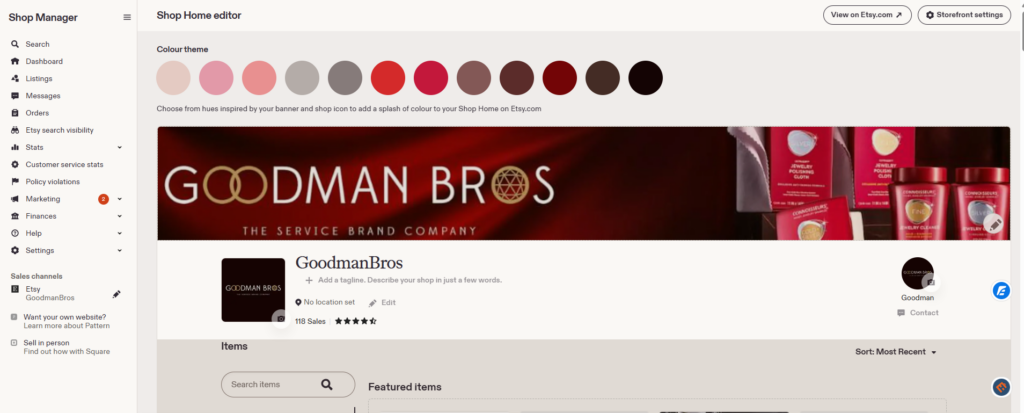
Think about the tones and color combinations that evoke the personality of your brand. What positive visual associations can you channel to capture the attention of your target market? Identify two to five complementary hues as the basis for your visual storytelling. Consider what each color conveys:
- Warm tones (reds, oranges) evoke energy, passion, and warmth
- Cool tones (blues, greens) signal calm, trust, and professionalism
- Neutrals (beige, white, black) create a clean, minimalist backdrop
- Bold contrasts command attention and signal confidence
Fonts
Clear communication should always be the primary goal of typography, supported by consistent font combinations that reflect your brand persona. Consider these fundamentals:
- Serif fonts (e.g., Times New Roman) are classic and easy to read, ideal for traditional or artisanal brands
- Sans-serif fonts feel modern, clean, and approachable
- Script and decorative fonts offer stylized embellishments use sparingly for headings or accents
- As you explore your options, think about where your fonts will appear: logo, product packaging, marketing materials, website, and beyond.
Use Two Fonts with Clear Jobs
Choose one display font for short headings and one highly readable font for supporting information. Decorative or script typefaces should be accents, not the foundation of product instructions or small text. Your Etsy icon, thumbnails, and mobile shop view are all unforgiving places for thin lines and elaborate lettering.
3. Design Your Shop Home for Five Second Clarity
Your shop home is the virtual storefront of your business, often the very first impression your brand makes on potential customers. Strong, cohesive visuals and storytelling help tell buyers who you are and what’s unique about your products. A well coordinated shop home captures visitors’ attention, inspires buyer confidence, and has the potential to build long-term loyalty.
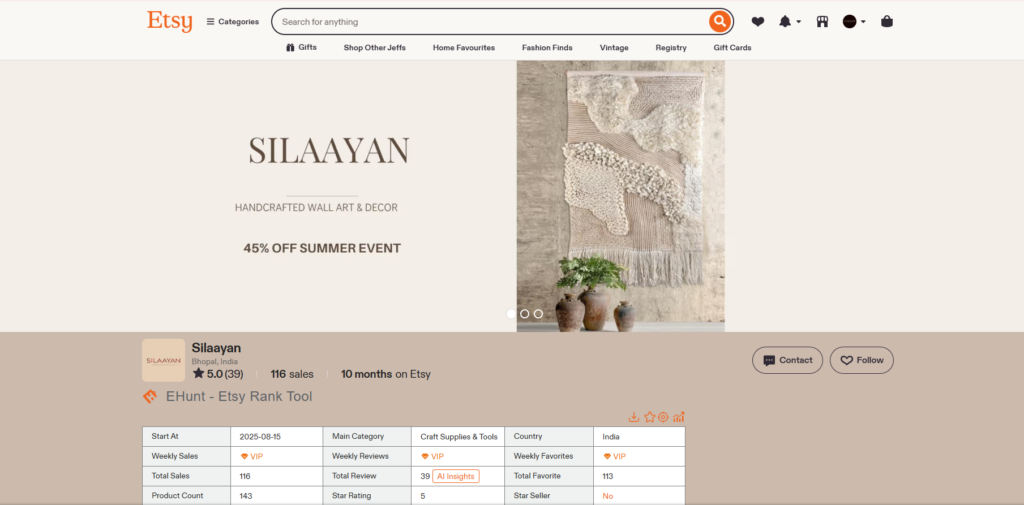
Creating Cohesive Visuals
Although they’re two separate graphics, your logo and banner work in tandem to represent your brand as a whole. Together, these striking visual elements should give buyers an immediate sense of what your business is all about as soon as they arrive at your shop.
Designing a Logo
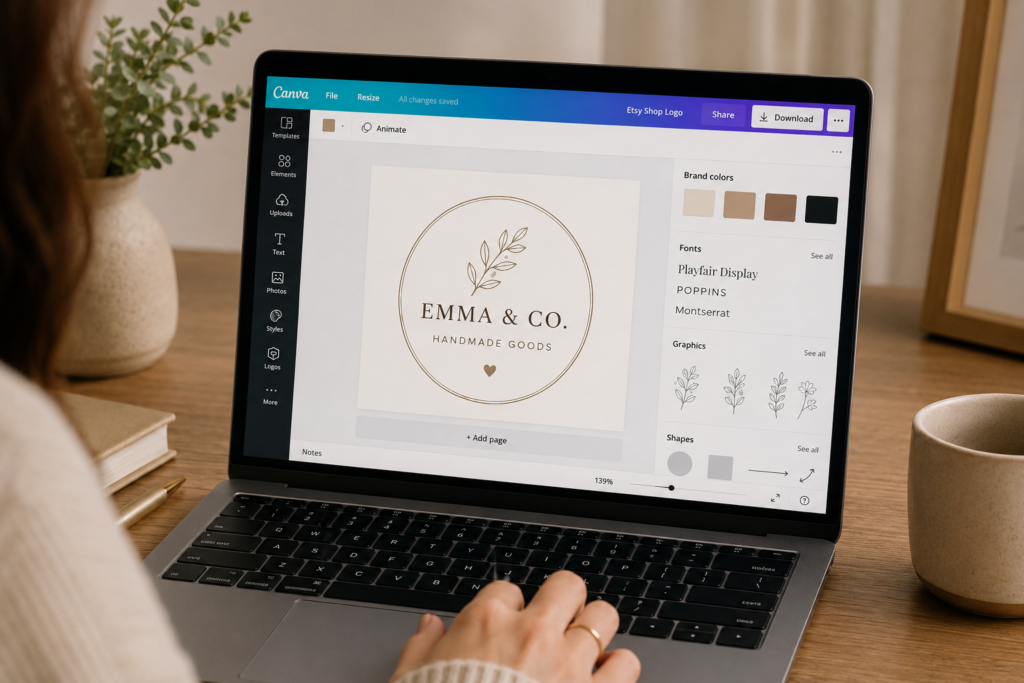
Your shop logo is a small but powerful graphic that represents your business across the site. A great logo communicates something meaningful about your brand using simple graphics and minimal text. Keep these principles in mind:
- Make it easily understood: If you use a graphic, ensure buyers understand what it depicts and how it relates to your shop.
- Keep it memorable: Simple, minimal logos and icons are more recognizable.
- Ensure it scales down: Your logo will appear at small sizes on activity feeds and receipts, so avoid too much text and fine detail.
Creating a Banner
Spanning the top of your homepage, your banner is the most prominent graphic buyers see when visiting your shop. Here are your sizing options and key tips:
- Big banner: 3360 x 840 pixels (minimum 1200 x 300 pixels). Makes a visual splash across the top of your shop.
- Mini banner: 1200 x 160 pixels. Best if you’d rather your logo and listings take primary focus.
Note: mini banners do not appear on mobile devices.
Additional Banner Tips:
- Highlight your best photography use your banner to show products in action or feature a styled collection shot.
- Use text sparingly. Keep any text large enough to read on mobile and centered so it’s legible when scaled.
- Reflect major milestones: use your banner to signal seasonal changes, holidays, and special occasions but avoid changing it too frequently, as consistency builds recognition.
Think Like a Storefront Owner
Your shop home should help buyers feel welcome and confident. Within a few seconds, they should understand:
- What you sell?
- Who your products are for?
- What makes your style different?
- Which products are most popular?
- Where they should start browsing?
Try organizing product categories around how buyers shop, not only how you manage inventory. For example:
- Gifts for Her
- Gifts for Him
- Wedding Gifts
- Best Sellers
- New Arrivals
- Personalized Products
- Under $50
- Seasonal Collections
Advanced Customization (Etsy Plus)
Etsy Plus subscribers have access to advanced banner layouts:
- Collage: Assemble up to four coordinating images into one clean banner ideal for showcasing different product details or patterns alongside finished items.
- Carousel: Four rotating images on a continuous loop capture buyers’ attention and take them on a guided tour of your shop offerings.
4. Build a Product Photography System That Sells
Shoppers make assumptions about your business based on what they see in your photos, so your images must reflect the Product photography is not one hero image. It is a sequence of evidence. Every image should either attract attention, answer a question, prove quality, explain scale, demonstrate use, or make the product feel desirable.
Etsy currently allows up to 20 photos and two short videos per listing. You do not need to fill every slot, but the expanded capacity gives sellers more room to explain products that are customizable, detailed, technical, size-sensitive, or gift-led.
Product Photography Essentials
Great product photography is the backbone of any successful online shop. When customers can’t touch or try your products, your images do all the selling. Here’s how to capture photos that convert browsers into buyers.
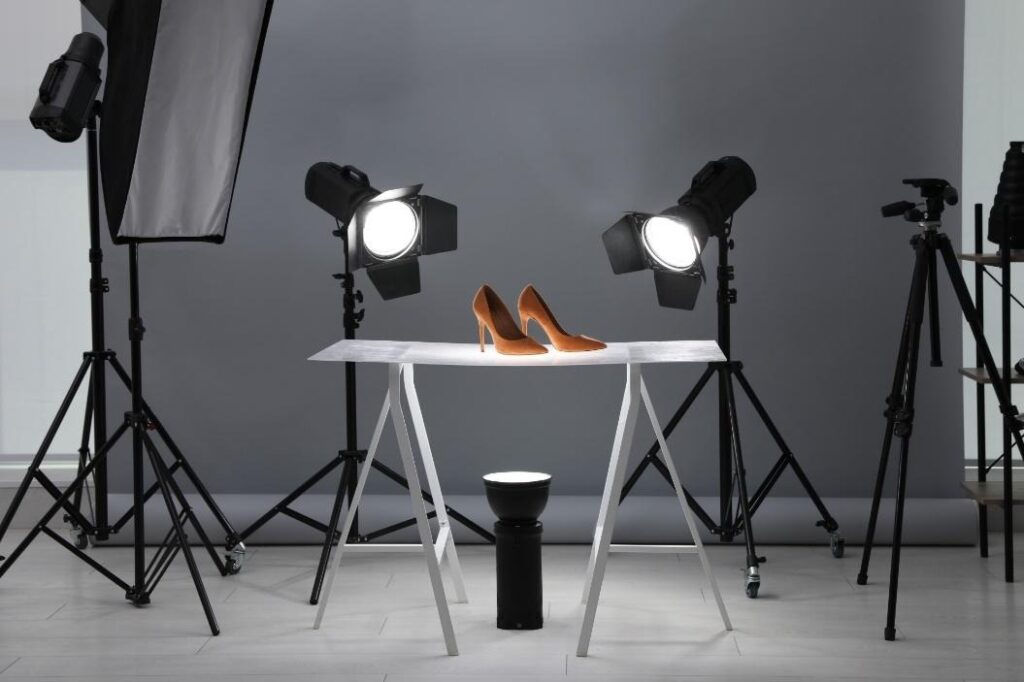
The Basics of a Great Shot
Before investing in expensive equipment, master the fundamentals that make the biggest difference:
- Natural light is your best friend. Shoot near a large window for soft, even illumination that flatters most products.
- Use a clean, simple background. White, cream, or linen backdrops keep the focus on your product.
- Keep your camera steady. Even slight blurring reduces perceived quality use a tripod or prop your phone securely.
- Shoot multiple angles. Give buyers a complete view: front, side, detail, and scale shots.
- Edit consistently. Apply the same brightness, contrast, and white balance settings across your product range for a cohesive look.
Use a Planned Listing Sequence
The first image wins attention. The remaining images earn confidence. Plan them as a storyboard rather than uploading whatever is available.
| Image position | What to show |
| 1. Hero | A clean, instantly understandable view with the product as the clear focal point. |
| 2. Alternate angle | A second perspective that makes shape and construction easy to understand. |
| 3. Lifestyle | The product in use or in an environment that matches the buyer’s life. |
| 4. Scale | Held in a hand, worn by a model, or placed beside a familiar object. |
| 5. Detail | Texture, stitching, engraving, hardware, grain, print quality, or finish. |
| 6. Options | Colors, sizes, materials, or variations with clear labels. |
| 7. Personalization | A simple diagram showing exactly where and how to enter custom details. |
| 8. Packaging | The real packaging, presentation, and included materials. |
| 9. Process or maker | Hands at work, tools, studio, or a relevant production step. |
| 10. Key facts | A clean information image with dimensions, materials, care, or delivery note. |
Styling Your Product Photos
Thoughtful styling transforms a plain product shot into an aspirational image. Props, models, and seasonal touches all help buyers envision the product in their own lives:
- Props: Use complementary items that suggest context without distracting from the product (e.g., a mug of coffee beside a handmade journal).
- Models: Lifestyle shots featuring real people make products feel relatable and help with sizing.
- Seasonal touches: Fresh flowers, autumn leaves, or festive elements can add timely relevance and emotional resonance.
- Color coordination: Match prop and background hues to your brand palette for visual harmony.
Avoid Heavy Watermarks
Etsy advises sellers to incorporate branding naturally into the scene rather than placing large watermark overlays on listing images. A recognizable surface, packaging detail, color system, or in-scene brand card can reinforce identity without obscuring the product or limiting promotional eligibility.
Write Useful Alt Text
Describe what is visible, including the product, color, material, viewpoint, and important context. Alt text should help someone understand the image; it should not be a list of repeated keywords.
5. Make Every Listing Sound Like the Same Brand
A visually cohesive shop can still feel inconsistent if one description is warm and detailed, another is abrupt, and a third is packed with generic keywords. Your listings need a repeatable voice and structure.
Use Clear, Relevant Titles
Current Etsy guidance emphasizes clarity and relevance. The title remains important, but it does not need to carry every possible keyword. Use the beginning of the title to explain what the product is and the most important differentiating detail. Move supporting information into tags, attributes, and the description.
Weak: Gift for Her Unique Gift Personalized Gift Custom Necklace Birthday Gift Minimal Jewelry
Stronger: Personalized Birth Flower Necklace, Hand Stamped Sterling Silver Keepsake, Handmade Gift For Her
Use All Relevant Discovery Fields
Etsy search considers the listing as a whole, including titles, tags, categories, attributes, descriptions, first photo, reviews, and other quality signals. Select the most accurate category, complete relevant attributes, and use natural multi word tags that reflect how a buyer searches. Avoid repeating the same broad phrase in slightly different forms when another tag could capture a new intent.
Write Descriptions In The Buyer’s Decision Order
| Description block | Example prompt |
| Opening promise | What is it, who is it for, and why is it special? |
| Key benefits | What will the customer enjoy, solve, give, display, or remember? |
| Materials and craftsmanship | What is it made from, and how is it made or finished? |
| Size and scale | What are the exact dimensions, fit, or capacity? |
| Options and personalization | What choices exist, and what must the buyer enter? |
| Processing and delivery | How long before dispatch, and what should the buyer consider for an event date? |
| Care and use | How should the item be cleaned, stored, installed, or handled? |
| Packaging and gifting | How will it arrive, and can it be sent directly as a gift? |
A buyer usually wants the main answer before the story. Lead with what the product is, who it is for, and the most important benefit. Then explain materials, size, options, personalization, production time, care, packaging, and policies.
Create A Brand Voice Guide In One Page
Document four voice words, sentence length, preferred vocabulary, words to avoid, punctuation style, greeting style, and how you explain problems. This small guide makes listings, order messages, inserts, social posts, and customer-service replies feel connected.
6. Crafting an Engaging About Section
Shoppers come to Etsy to buy from real people. Getting to see the person behind the products gives them greater confidence to make a purchase, and learning your personal story can inspire loyalty to your brand. Your shop’s About section is a great way to take prospective buyers behind the scenes of your passion and process, deepening their understanding of what makes your shop so special.
It can also spark unexpected opportunities: press coverage, collaborations, and new partnerships. Here are four proven strategies to make your about section shine.
Tell Your Shop’s Origin Story
Sharing key backstory details, including the initial creative spark, notable milestones, and how your business has evolved, helps shoppers connect with your brand on a personal level. When a shop’s About section delves into specific real-life journeys and turning points, it signals that there’s a meaningful story behind the shop.
If you develop writer’s block, imagine you’re explaining your story to a new acquaintance at a craft fair. Then use these prompts:
Start with one defining, real-life moment that shaped your path (inheriting something meaningful, making a major life change) and include a few vivid details to bring it to life. Make a clear connection between that experience and what you create today. Explain how it led you to the products you make now.
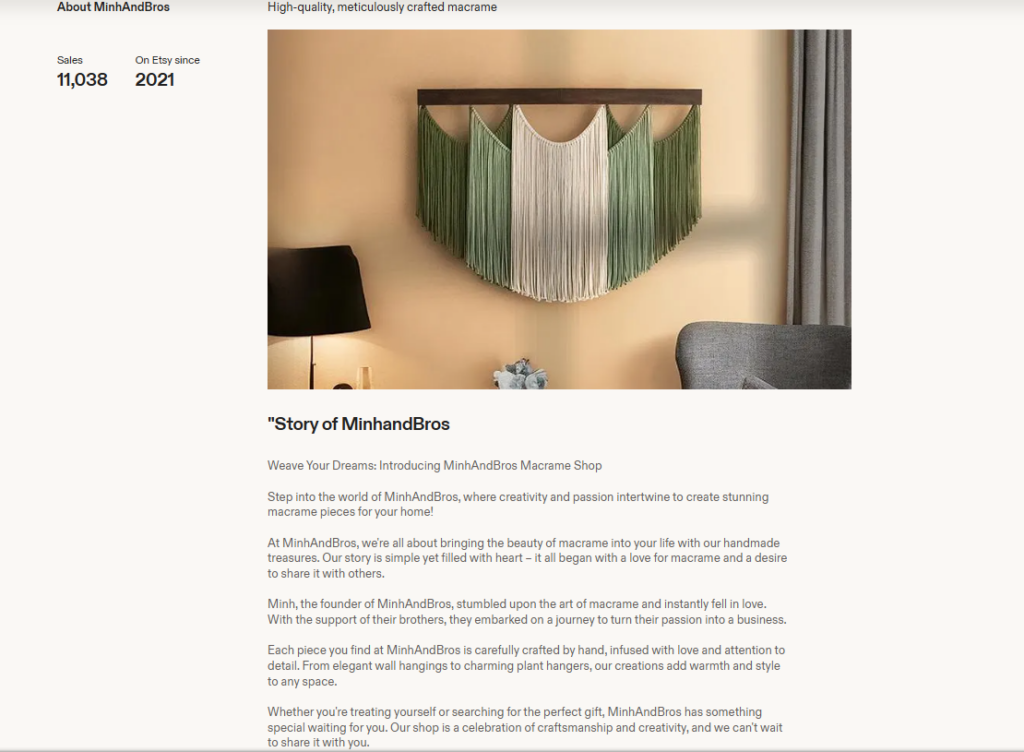
Captivate with Beautiful Photos and Video
High-quality visuals are another key to a great about section. Give customers a behind-the-scenes look at your company by including images of yourself practicing your craft in your workspace. Aim for a variety of professional-level, high-resolution photos, and consider adding a video to go even further. Types of imagery to include:
- A photo or video highlighting your range of products or your products in context: capture the viewer’s imagination and tell a visual story.
- A photo of your studio or workspace: natural light is often best; tidy up or style your space to reflect your brand’s personality.
- A photo of your creative process: action shots of you in the midst of making. Experiment with angles and use a tripod if shooting solo.
- A portrait of you: a high-quality, personality-forward photo that reflects your vibe and makes you look your best.
Introduce Your Team
If multiple people contribute to your shop, introduce them all. Buyers want to know who answered their message, who hand-packed their order, and who stitched the embroidery. Making your team visible humanizes your business and deepens trust.
Share What You Stand For
Beyond the origin story, let buyers know what values guide your work. Do you use sustainable materials? Give back to a cause? Source locally? These commitments differentiate your shop and attract customers who share your values turning one-time buyers into lifelong advocates.
7. Reduce Buyer Doubts Before They Become Lost Sales
A buyer can love the product and still leave because one practical question remains unanswered. Strong branding is not only emotional; it is operational clarity. Review messages, reviews, abandoned cart patterns, and pre-purchase questions. Every repeated question is a signal that the listing or shop experience can be improved.
Make Product Information Easy to Understand
Buyers want to feel confident before they click the purchase button. A product may look beautiful, but customers still need practical details:
- What size is it?
- What materials are used?
- How does it look in real life?
- How will it arrive?
- Is it suitable for gifting?
- Can it be customized?
Clear product descriptions, helpful images, and simple explanations remove uncertainty and help buyers make decisions faster. Think of your listing as a conversation with a customer. The more questions you answer before they ask, the easier the buying process becomes.
Turn Customer Questions Into Better Content
Your buyers often tell you what your shop is missing. If customers repeatedly ask about sizing, add a size reference image. If they ask about materials, make those details more visible. If they want to know how the product is made, include process photos or a short story.
Instead of seeing questions as problems, treat them as opportunities to strengthen your brand experience. The best Etsy shops continue improving because they listen closely to their buyers.
Build Trust Through Every Touchpoint
Trust is created through small details working together. A professional product photo, clear shipping information, thoughtful packaging, and a consistent shop style all help buyers feel more comfortable.
When every part of your shop communicates the same message, buyers understand what to expect and feel more confident choosing your product. Reducing buyer doubts is not about adding more information everywhere. It is about providing the right information at the right moment.
A strong brand not only attracts attention, but it also helps buyers move from ‘This looks interesting’ to ‘I feel confident purchasing this.’
8. Build a Thoughtful Post-Purchase Experience
The brand experience does not end at checkout. It continues through order messages, packaging, thank-you notes, care instructions, and customer support. These small moments can shape how buyers remember your shop long after their order arrives.
You do not need expensive packaging to make an impression. A thoughtful detail can be enough. What matters most is that the experience feels consistent with your brand.
1. Start With Clear Order Updates
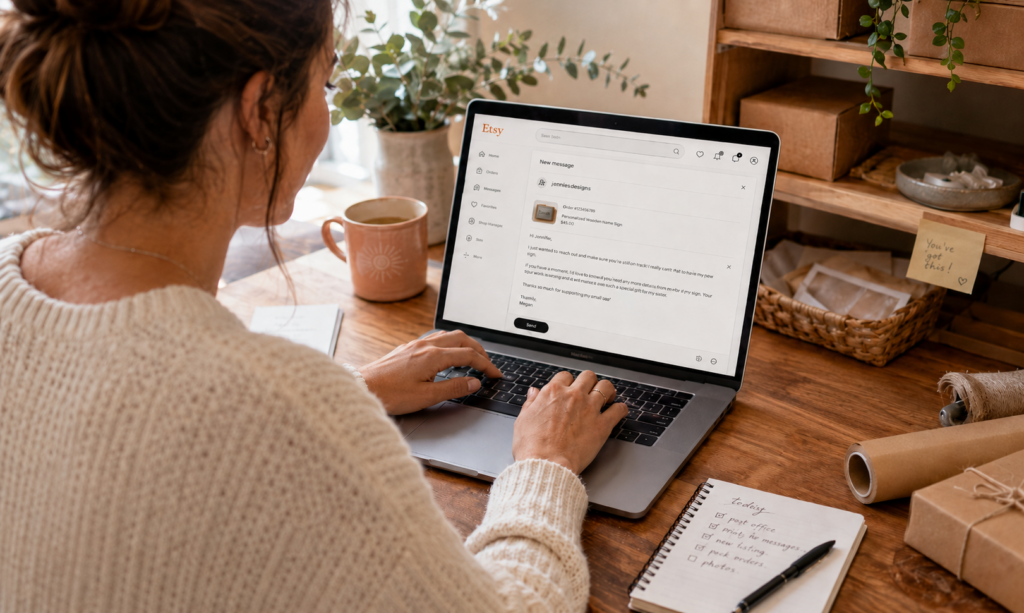
After placing an order, buyers want to know what happens next. A simple confirmation message can make them feel reassured and appreciated. Let them know that their order has been received, when it will be prepared, and what they can expect next.
Clear communication helps reduce uncertainty, especially for personalised or made-to-order products.
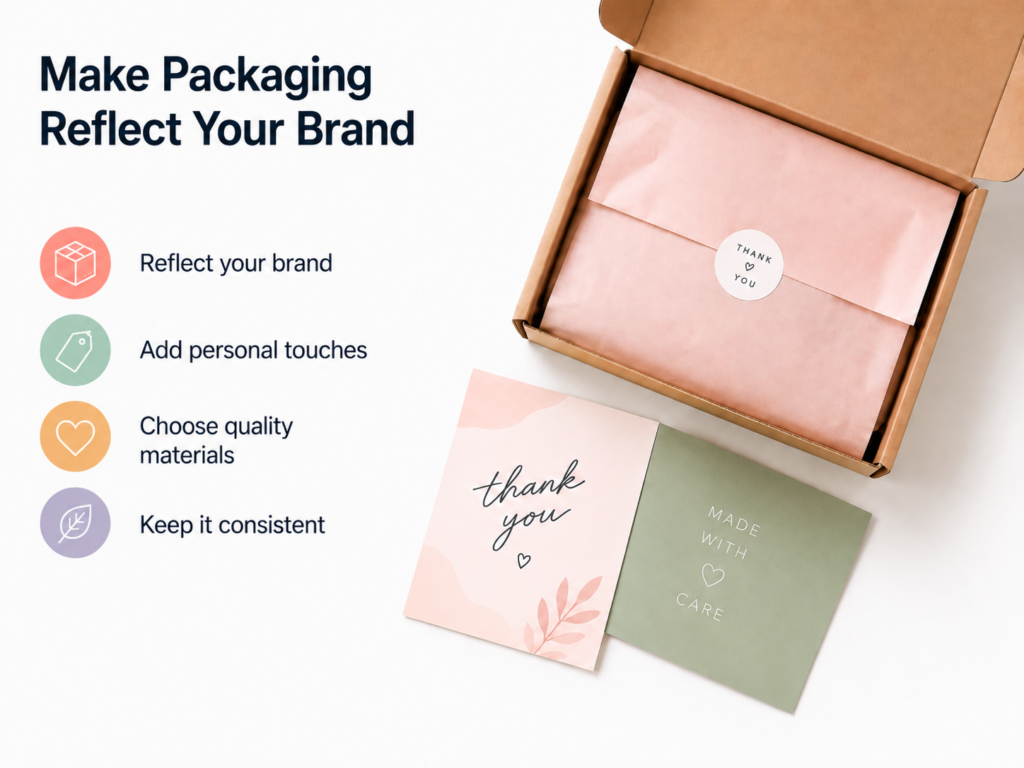
2. Make Packaging Feel Like Part of Your Brand
Your packaging does not need to be complicated. It simply needs to feel intentional. This could mean using tissue paper in your brand colours, a simple sticker, a handwritten note, or a small card that reflects the personality of your shop.
A handmade jewellery brand may use soft wrapping and a care pouch. A playful stationery brand may use colourful inserts. A sustainable brand may choose recyclable materials and explain why. The packaging should feel like a natural extension of what buyers saw in your shop.
3. Include Something Helpful
A small insert can make the buyer’s experience easier and more enjoyable. This may include:
- A care or use guide
- Instructions for personalised items
- A product-story card
- A thank-you note
- A small note about materials or craftsmanship
Helpful details show buyers that you have thought about what happens after the product arrives.
4. Keep Your Brand Voice Consistent
The words you use after checkout matter too. Your order message, thank-you card, care guide, and follow-up note should sound like they came from the same shop. If your brand feels warm and personal, let that come through in your message. If your brand is simple and modern, keep the writing clean and clear.
Consistency helps buyers feel that every part of the experience was created with care.
5. Invite Buyers Back Gently
A follow-up message does not need to feel pushy. You can simply thank buyers for supporting your shop, invite them to leave a review, or let them know about future collections. A gentle message can help buyers remember your shop when they need another gift, want to reorder, or recommend a seller to someone else.
6. Turn Small Details Into Lasting Impressions
Buyers may forget the exact wording of a thank-you note, but they often remember how the order made them feel. A neatly wrapped package, a helpful care card, or a friendly message can make your shop feel more thoughtful and trustworthy. Those small details are often what turn a one-time order into a returning customer.
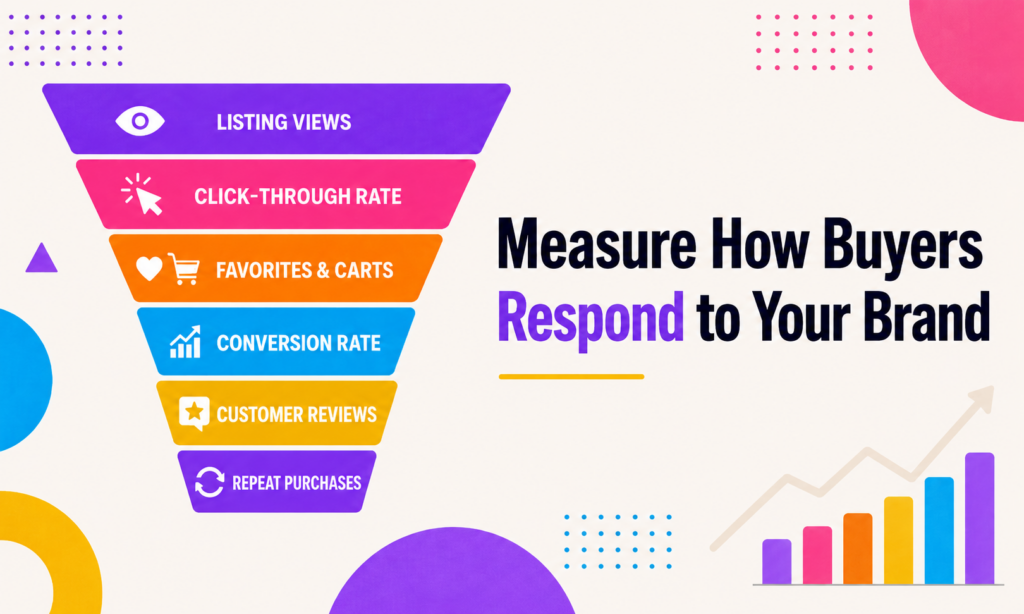
9. Measure How Buyers Respond to Your Brand
Branding is creative, but it should also be measured. You do not need to track every number. Start with a few simple signals that show whether buyers are responding well to your shop.
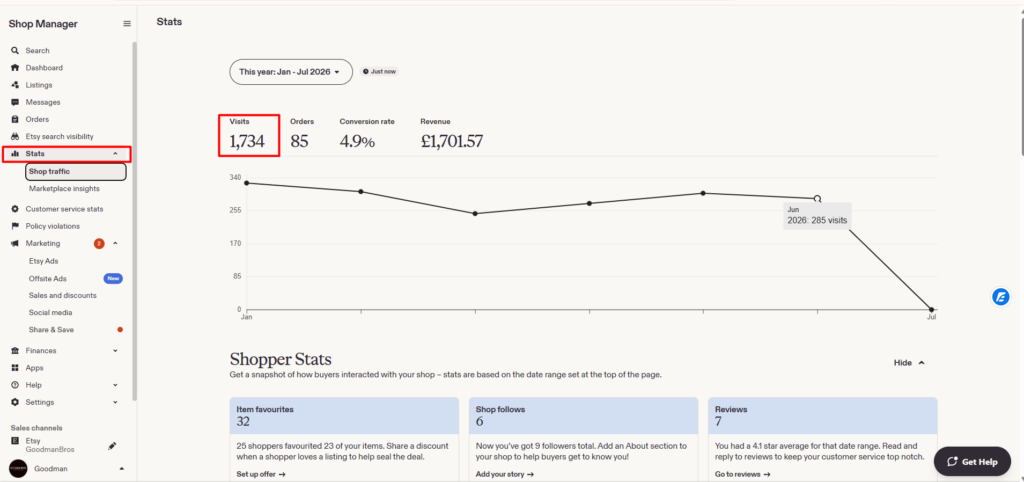
1. Listing Views
Listing views show whether shoppers are finding your products. If your views are low, it may be a sign that your product titles, keywords, thumbnails, or visibility need more attention. A beautiful product cannot sell if buyers do not see it first.
Think of views as the beginning of the buyer journey. They show whether people are stopping long enough to notice your shop.
2. Click-Through Rate
Click-through rate helps you understand whether buyers are interested enough to open your listing. A strong thumbnail, clear product image, and easy-to-understand title can make a big difference here. If people are seeing your listing but not clicking, look closely at the first impression your product is making.
Ask yourself: does this image make someone want to know more?
3. Favorites and Cart Activity
Favorites and cart activity can be a positive sign. They often show that buyers like your product, even if they are not ready to purchase yet.
Sometimes buyers need a little more reassurance before they decide. They may be checking delivery times, comparing options, waiting for a special occasion, or thinking about the price.
Look for ways to make the next step feel easier. Clear photos, helpful product details, and simple ordering instructions can all help.
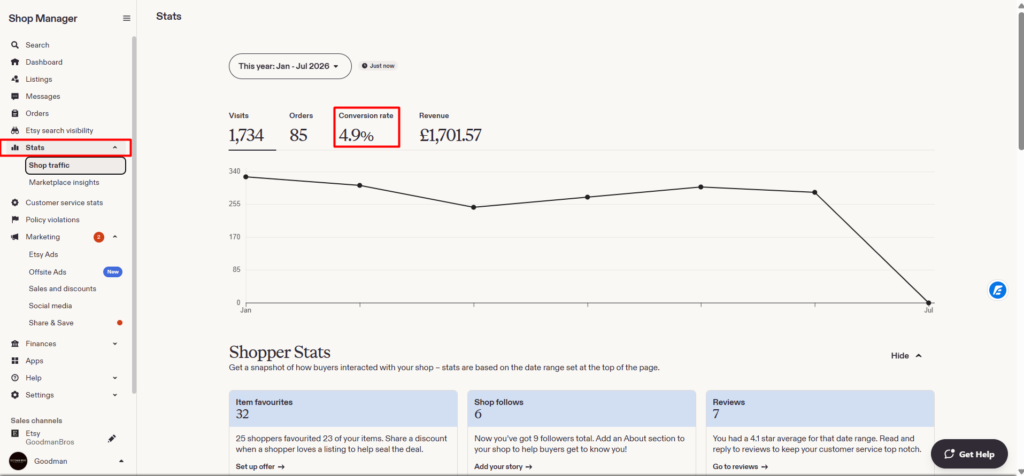
4. Conversion Rate
Your conversion rate shows how many visitors become customers. If people are visiting your listing but not purchasing, it may be worth reviewing the full experience. Are the photos clear? Is the size easy to understand? Are the materials, variations, and delivery details explained well?
Often, small improvements can make a meaningful difference. A clearer scale photo, a better personalization guide, or a more helpful description may give buyers the confidence they need.
5. Customer Reviews
Reviews can tell you a lot about what buyers value most. Pay attention to the words customers use. They may mention the quality of your product, the care in your packaging, how quickly it arrived, or how special it felt to receive.
These comments can help you understand what is already working in your brand. They can also inspire stronger product descriptions, better listing images, and future marketing messages.
6. Repeat Purchases
Repeat customers are one of the clearest signs that your brand is making a good impression. When someone comes back to your shop, it often means they enjoyed not only the product, but also the experience around it. The packaging, communication, quality, and care all matter. Notice which products bring people back. This can help you create thoughtful collections, bundles, and future product ideas.
10. Follow a 30-Day Etsy Branding Plan
A full rebrand can feel overwhelming because every touchpoint seems connected. Work in the order that produces clarity first and decoration last.
| Week | Actions | Deliverable |
| Week 1 | Define the primary buyer, brand promise, proof points, four personality words, and top three buyer doubts. | One-page brand foundation. |
| Week 2 | Choose colors and fonts, simplify the logo, define photo rules, create a voice guide, and design the banner. | Mini brand guide and shop assets. |
| Week 3 | Update icon, banner, sections, featured products, first images, titles, descriptions, attributes, tags, and key information graphics. | A coherent shop home and five fully optimized priority listings. |
| Week 4 | Rewrite the About section, update policies and FAQs, improve order messages, refine packaging, create a care or thank-you insert, and record baseline metrics. | A complete end-to-end customer experience and measurement dashboard. |
Prioritize The Highest-Impact Listings
Do not begin by redesigning every listing. Start with the products that receive the most traffic, generate the most revenue, best represent the brand, or have the greatest potential but weak conversion. Create the system on five listings, learn what works, and then scale it across the catalog.
Frequently Asked Questions
Q1. What does branding mean on Etsy?
Etsy branding is the complete system that helps buyers recognize, understand, trust, and remember a shop. It includes positioning, visuals, product presentation, listing language, story, packaging, and customer service—not only the logo or banner.
Q2. Do I need a professional logo before I open an Etsy shop?
No. A simple, legible shop icon is better than a complicated logo created too early. Begin with a clear wordmark, monogram, or product-related symbol, then refine it after the shop’s promise and audience are clearer.
Q3. What size should an Etsy shop banner be?
For a big banner, Etsy currently lists 1200 × 300 pixels as the minimum and 1600 × 400 pixels as a recommended size; 3360 × 840 pixels is also described as an optimal high-resolution option. A mini banner has a minimum size of 1200 × 160 pixels and a recommended size of 1600 × 213 pixels.
Q4. Does branding affect Etsy search ranking?
Branding is not presented as one direct ranking factor. Etsy search considers relevance as well as shop, listing, and customer-service quality. Branding can strengthen important inputs such as the shop icon, first photo, listing clarity, buyer confidence, conversion, reviews, and service consistency.
Q5. How many colors and fonts should an Etsy brand use?
Most small shops can work effectively with two to five colors and two core fonts. The system should be flexible enough for product variation but controlled enough to remain recognizable.
Q6. How often should I change my Etsy branding?
Change seasonal campaign details when useful, but keep the core identity stable. Review the brand when the audience, product range, positioning, quality level, or business direction has changed—not simply because a new design trend appears.
Q7. What should I improve first if my shop feels inconsistent?
Begin with the brand promise and five priority listings. Standardize the first photo, image sequence, title structure, description order, and voice. Then update the shop icon, banner, sections, About story, and post-purchase materials around the same system.
Conclusion: Bringing It All Together
Building a powerful brand and stunning product photography isn’t about having the most expensive equipment or the biggest budget. It’s about clarity, consistency, and authenticity. When you know who you are, who your customers are, and what makes your products special, and when you reflect that understanding visually across every touchpoint, you create a brand that resonates, connects, and endures.
Use the frameworks and strategies in this guide as a living reference. Revisit your brand promise as your business evolves, refresh your photography seasonally, and keep listening to your customers. The most successful shops are not those that found perfection overnight, but those that showed up consistently, refined their story over time, and built genuine relationships with the people who love what they make.
Need Help Building a Strong Etsy Brand?
Building a successful Etsy shop is not only about creating great products. It requires a clear brand strategy, consistent visuals, strong product presentation, and a customer experience that helps buyers trust your shop.
At Ecomclips, we help e-commerce brands improve their online presence through creative design, marketplace optimization, listing improvements, and growth-focused strategies. From building a stronger brand identity to improving product presentation and customer experience, our team helps sellers create shops that connect with buyers and support long-term growth.
For more e-commerce growth insights, explore the Boostontime e-commerce blog, where you can find related topics on marketplace growth, online selling strategies, and e-commerce best practices.
For more marketplace optimization and advertising resources, explore the Amazon advertising guides on the EcomClips blog to learn more about improving visibility, product performance, and conversion strategies.
You can also browse practical tutorials and e-commerce education content on the EcomClips YouTube channel for additional marketplace tips and growth strategies.
For direct questions or support, you can contact the EcomClips team at info@ecomclips.com.
Ecomclips: Your Complete eCommerce Solution Under One Umbrella
At Ecomclips, we bring every eCommerce service you need under one roof – strategy, operations, design, marketing, and growth, all seamlessly connected to help your brand thrive across every marketplace.
Since 2012, we’ve been helping businesses of all sizes launch, scale, and dominate online. From Amazon, Walmart, eBay, and Etsy to Shopify and WooCommerce, our team of marketplace experts, designers, developers, and marketers works together to deliver measurable results.
Our services span the full eCommerce lifecycle:
- Account Setup & Product Listing Management: We handle registrations, compliance, and product data optimization across all marketplaces.
- Amazon Optimization Service: From keyword-rich titles and A+ content to PPC campaigns and storefront design, we craft listings that convert.
- Creative Design & Content Production: A+ visuals, infographics, brand stores, and product videos built to boost engagement.
- Advertising & PPC Management: Smart, data-driven ad strategies for Amazon, Walmart, and Google that maximize ROI.
- Web Development & Store Design: Shopify, WooCommerce, and Magento websites built for performance and conversion.
- Data Management & Automation: Streamlined product feeds, catalog syncing, and inventory control for effortless scalability.
- Customer Service & Order Fulfillment: End-to-end support that enhances customer satisfaction and builds long-term loyalty.
- Analytics & Growth Strategy: Real-time insights and ongoing optimization to ensure consistent, profitable growth.
Whether you’re launching a new store or managing multiple global marketplaces, Ecomclips acts as your single strategic partner, simplifying complexity and driving sustainable revenue growth.