
Most Amazon sellers spend hours reviewing their Amazon search term report, yet many still miss the real reason shoppers convert. A keyword may appear unprofitable on its own, while the buyer intent behind that search is actually revealing valuable opportunities to improve your Amazon PPC optimization, refine your Amazon advertising strategy, and increase sales.
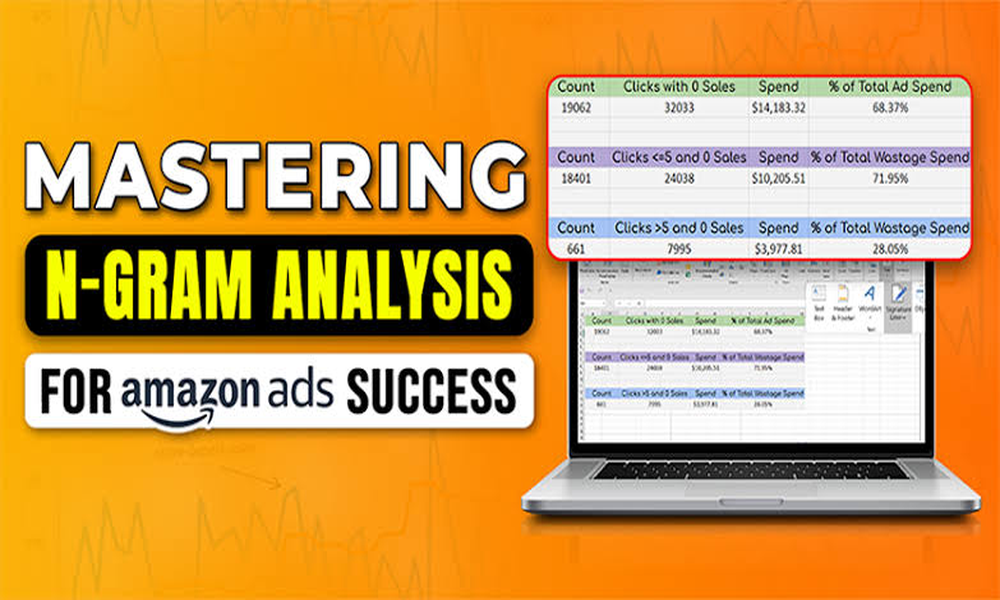
This is where N-gram analysis becomes one of the most effective techniques for Amazon PPC management. Instead of evaluating each search term individually, it groups them by shared words and phrases, making it easier to uncover profitable buyer intent, identify irrelevant traffic, and discover new keyword opportunities. Whether you’re managing Amazon Sponsored Products campaigns or building a long-term PPC strategy for Amazon, N-gram analysis helps you make smarter optimization decisions.
In this content, you’ll learn exactly how N-gram analysis works in real Amazon advertising campaigns, followed by a step-by-step breakdown of a complete Amazon PPC guide for sellers who want sharper results in 2026.
Why Traditional Amazon PPC Search Term Analysis Misses Buyer Intent

Most Amazon ad campaign optimization starts the same way. Sellers download an Amazon search term report, sort keywords by spend, identify expensive search terms with no sales, pause poor performers, add Amazon negative keywords, and increase bids on keywords with a low Amazon ACoS.
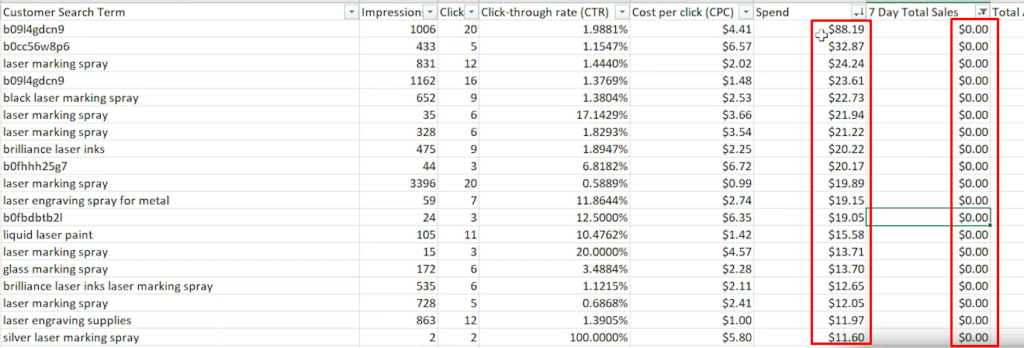

Although this is considered one of the standard Amazon advertising best practices, it often provides only a surface-level view of campaign performance.
The biggest limitation is that shoppers rarely search using isolated keywords. Instead, they search based on a specific need or use case. They might be looking for a product designed for metal, aluminum, paper, a particular color, or a specific application. When you evaluate each keyword individually, you may identify wasted spend, but you often miss the larger buying pattern hidden within your Amazon PPC search term analysis.
As a result, many sellers remove individual keywords without recognizing the broader intent behind them. Likewise, profitable keyword opportunities can remain hidden because each search term appears too small to justify attention on its own.
| Approach | What You Review | What You Discover | Main Limitation |
| Manual Amazon search term review | Individual search terms | High-spend losers and low-Amazon ACoS winners | Slow and weak at identifying buyer intent |
| Amazon PPC N-gram analysis | Repeating words across multiple search terms | Shared buyer intent, product fit, and wasted traffic patterns | Requires one additional layer of analysis |
With a traditional review, you may notice five poor-performing keywords. Through Amazon ad keyword research using N-gram analysis, you may discover those five keywords all contain the same word—such as “powder” or “paper.” That insight completely changes your optimization strategy.
Instead of reacting to isolated keywords, you’re solving a buyer-intent problem at its source.
Customers do not purchase products because a keyword looks good inside a spreadsheet. They buy because their search matches a genuine need, and your listing clearly demonstrates that your product fulfills that need.
When you begin analyzing your Amazon Sponsored Products campaigns through the lens of buyer intent rather than individual keywords, Amazon PPC optimization becomes far more effective. Your Amazon negative keywords become more accurate, your budget allocation becomes more efficient, and your product listing optimization aligns more closely with how customers actually search.
Ultimately, this approach strengthens your Amazon ad strategy, improves campaign performance, and helps you make more informed decisions across your entire Amazon advertising account. Whether you’re new to Amazon seller PPC or looking to improve your Amazon advertising 2026 strategy, N-gram analysis is one of the most valuable tools for uncovering hidden opportunities and scaling profitable campaigns.
How to Turn an Amazon Search Term Report into N-Gram Data
The foundation of Amazon PPC N-Gram Analysis is the standard Amazon search term report. Every successful Amazon PPC optimization strategy begins with accurate search term data, and N-gram analysis transforms that raw data into actionable buyer intent insights.
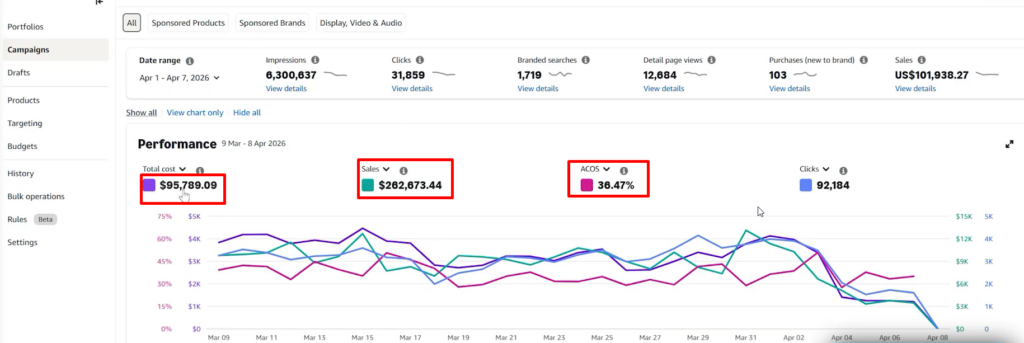
In the example screenshot below, the data came from an Amazon Sponsored Products search term report using a 30-day date range. The account generated approximately $95,000 in ad spend, $262,000 in attributed sales, and an Amazon ACoS of around 36%. Although the ACoS appeared relatively high, the business continued to grow steadily, demonstrating an important principle of Amazon PPC campaign management—ACoS should always be evaluated alongside overall sales performance and profitability, not in isolation.
How to Generate an Amazon Search Term Report
Before you begin Amazon ad keyword analysis, you’ll first need to download your Amazon Sponsored Products search term report.
Follow these steps:
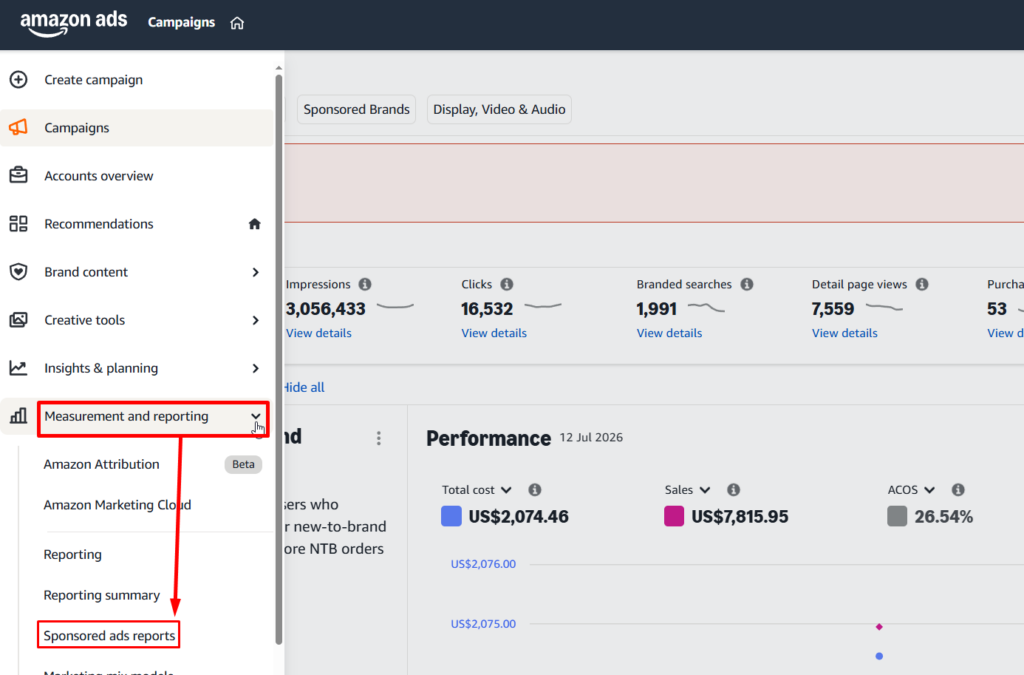
- Navigate to Measurement & Reporting in Amazon Advertising.
- Open Sponsored Ads Reports.
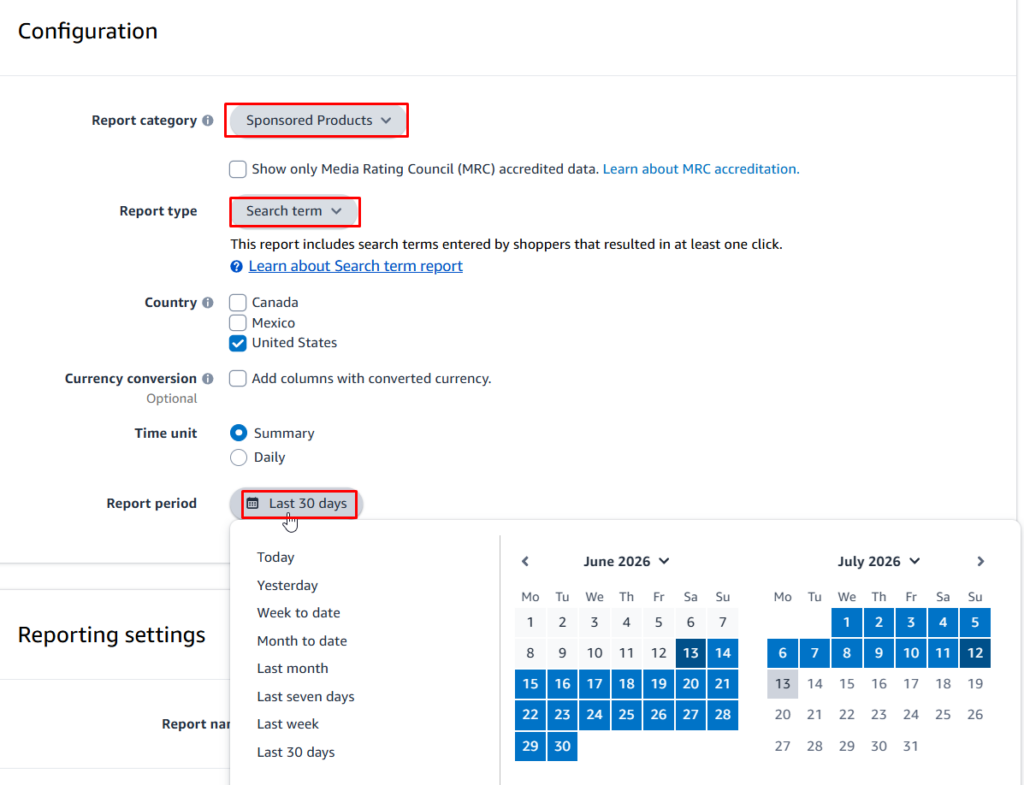
- Create a new report.
- Select Sponsored Products – Search Term Report.
- Choose a 30- to 60-day date range to gather meaningful performance data.

This report provides the raw metrics needed for effective Amazon search term analysis, including:
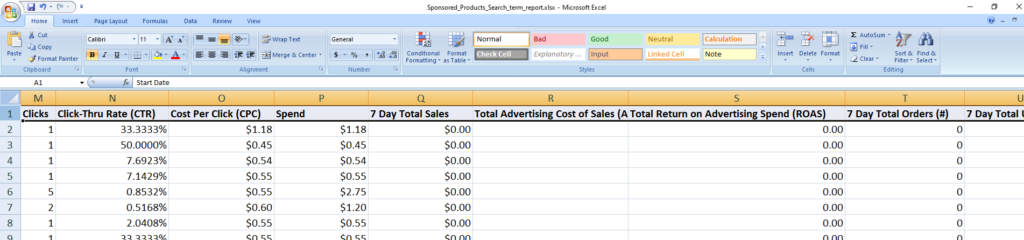
- Search Terms
- Impressions
- Clicks
- Spend
- Sales
- Click-Through Rate (CTR)
- Conversion Rate (CVR)
- Amazon ACoS
These metrics form the foundation of any successful Amazon advertising reporting, Amazon seller keyword research, and Amazon advertising optimization process.
How Amazon PPC N-Gram Analysis Works
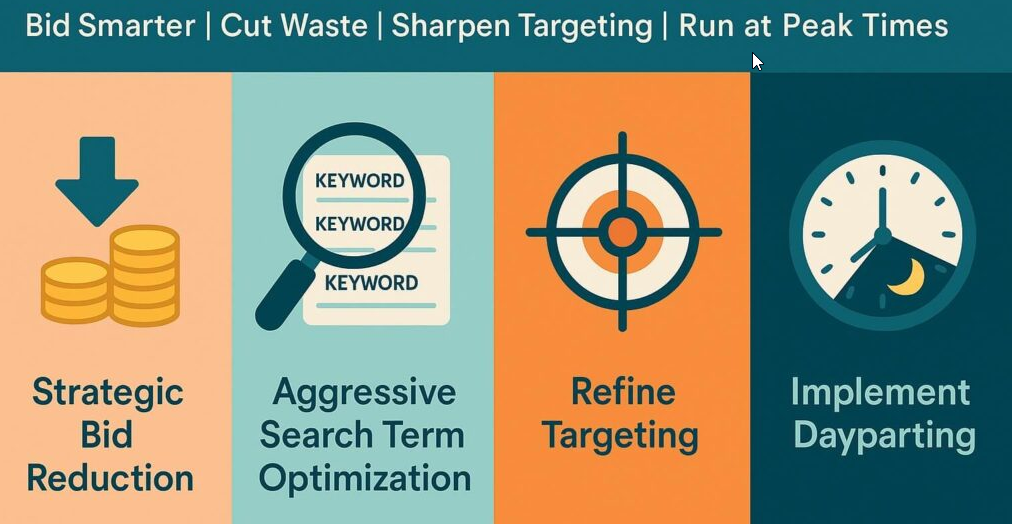
Traditional Amazon PPC keyword research evaluates each search term individually. Amazon PPC N-Gram Analysis goes one step further by breaking search phrases into individual words or recurring word combinations and grouping performance around those shared terms.
Rather than analyzing hundreds or thousands of isolated keywords, N-gram analysis uncovers recurring buyer-intent patterns across your entire account.
For example, it can reveal how words like “laser,” “metal,” “aluminum,” “paper,” or “white” perform across dozens or hundreds of search terms.
Perform across dozens or even hundreds of different customer searches.
Instead of asking whether one keyword performs well, you’re identifying which buyer-intent themes consistently generate profitable traffic. This makes Amazon PPC buyer intent much easier to understand and gives you clearer direction for Amazon ad campaign optimization.
Discover Buyer Intent Faster

One of the biggest advantages of Amazon N-Gram Analysis is that a single recurring word often reveals customer intent much faster than reviewing complete search phrases one by one.
For example:
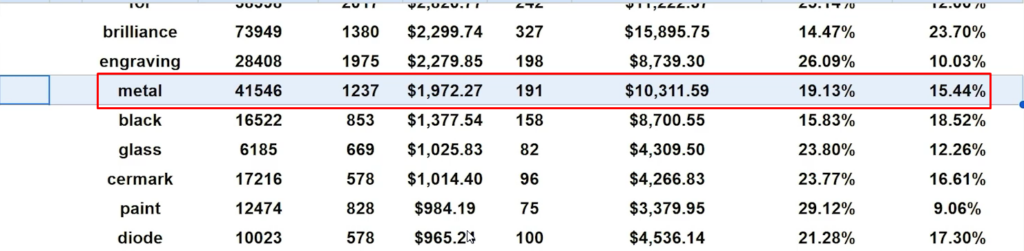
- If the word “metal” consistently delivers high conversion rates, it’s a strong indication that shoppers searching for metal applications closely match your product. This insight can influence your Amazon PPC keyword strategy, bidding decisions, and even your product listing.
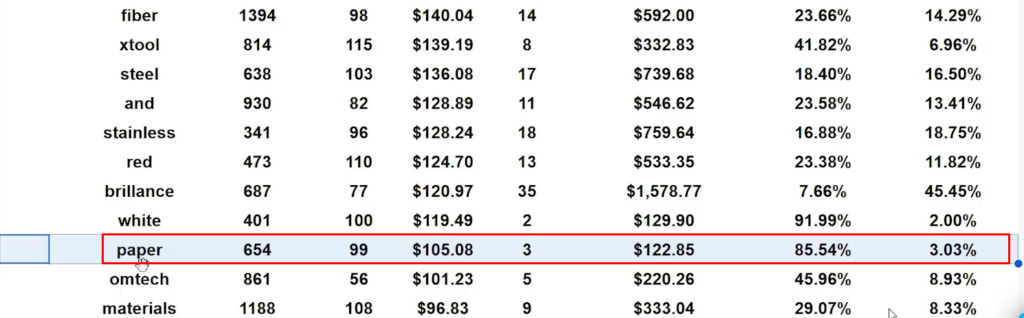
- If the word “paper” repeatedly generates clicks but few conversions, it may signal poor product relevance. That recurring pattern could become an ideal candidate for your Amazon PPC negative keywords list, helping reduce wasted spend and improve campaign efficiency.

This approach allows advertisers to make data-driven decisions based on buyer intent rather than isolated keyword performance.
Improve CTR, CVR, and Amazon PPC Performance

N-gram analysis isn’t just a tool for identifying wasted ad spend—it also helps improve campaign performance.
When your Amazon Sponsored Products optimization aligns with the language customers actually use, your ads become more relevant. That relevance often leads to:
- Higher Click-Through Rate (CTR)
- Better Conversion Rate (CVR)
- Lower Amazon ACoS
- More efficient Amazon PPC bid optimization
- Improved Amazon advertising optimization
- Better long-term campaign scalability
Rather than simply removing underperforming keywords, Amazon PPC N-Gram Analysis helps you discover the words and themes that resonate most with buyers. Those insights can guide smarter Amazon keyword harvesting, stronger Amazon PPC optimization tips, and more effective listing updates.
Ultimately, combining Amazon search term report analysis with N-gram analysis gives sellers a more complete understanding of customer behavior. Instead of optimizing around individual keywords, you optimize around buyer intent, making it easier to optimize Amazon PPC campaigns, improve advertising efficiency, and build a scalable Amazon advertising strategy for long-term growth.
Finding the Red Zone Words That Waste Amazon PPC Ad Spend
One of the biggest advantages of Amazon PPC N-Gram Analysis is its ability to uncover hidden buyer-intent issues that are often missed during a standard Amazon search term analysis. Instead of reviewing keywords one by one, Amazon N-Gram Analysis groups recurring words across your Amazon search term report, making it much easier to identify themes that consistently waste advertising budget.
In the example below, the product was a black laser engraving spray designed for use on surfaces like metal and aluminum. After performing N-gram analysis for PPC, several recurring words quickly stood out as poor matches, including:
Words such as “fiber,” “paint,” “liquid,” and “powder” stood out as poor matches.
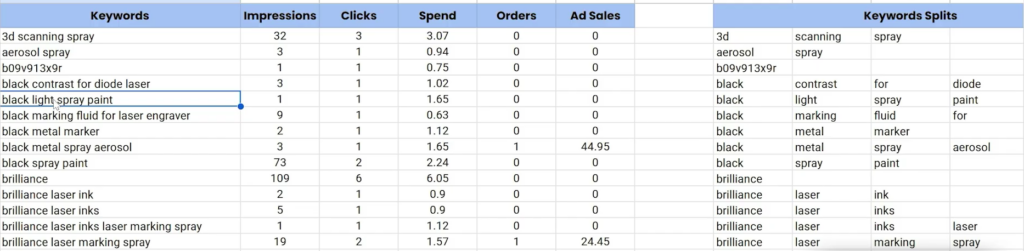
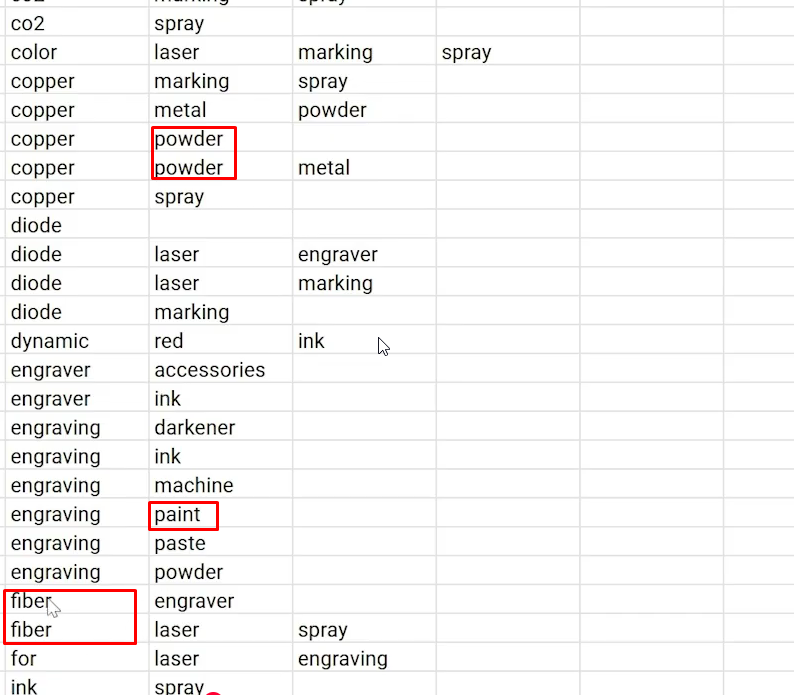
These words indicated weak buyer intent because shoppers searching for fiber engravers, laser paint, liquid paint, or metal powder were looking for products different from what was being advertised. Although these search terms generated clicks, they attracted the wrong audience, leading to inefficient Amazon Sponsored Products performance.
Identify Buyer Intent Before It Wastes Your Budget
One of the most valuable insights from Amazon PPC keyword analysis is that recurring words often reveal buying intent better than individual search terms.
For example, the word “powder” appeared in nearly 190 different search terms. When those searches were grouped using Amazon PPC N-Gram Analysis, they generated approximately:
- $368 in ad spend
- $1,300 in attributed sales
- Around 30% Amazon ACoS
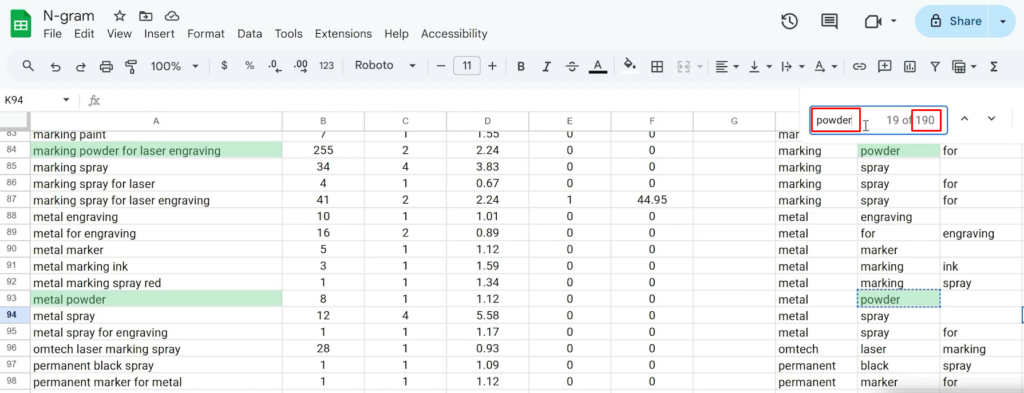
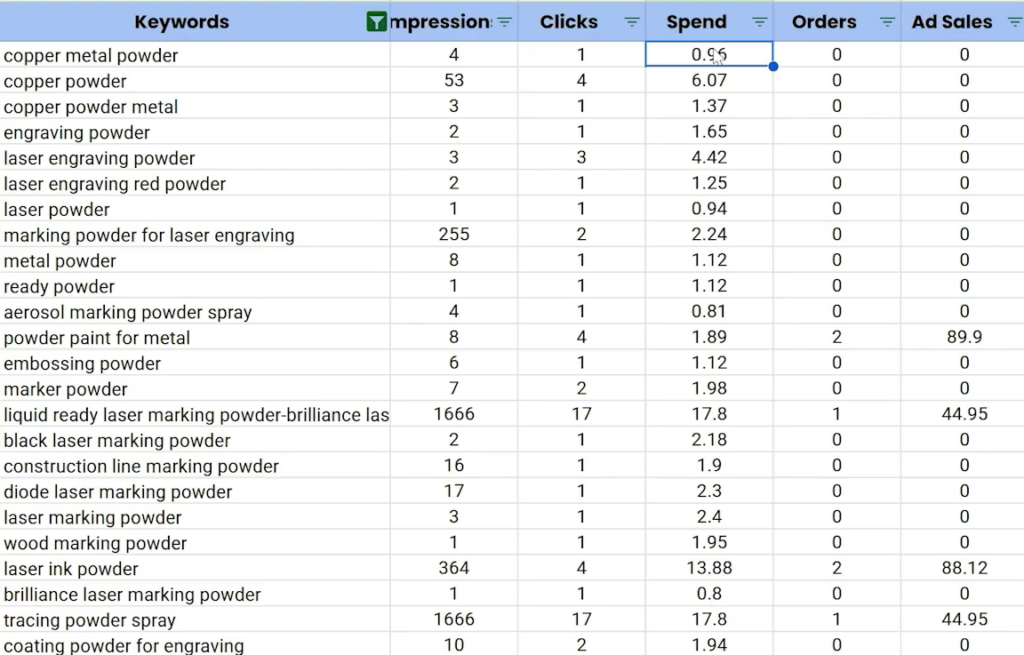
At first glance, a 30% Amazon ACoS may appear acceptable. However, a deeper Amazon PPC data analysis revealed that many of those conversions came from low-volume search terms with very few impressions and clicks. Several keywords generated only one click and one sale, making them appear profitable despite lacking enough data to prove they were reliable long-term performers.
This is why Amazon PPC reporting should never rely solely on individual keyword metrics.
One sale does not always indicate a profitable keyword theme. Low search volume and inexpensive clicks can make weak buyer intent appear more successful than it really is.
Use Amazon N-Gram Analysis to Build Better Negative Keywords

Traditional Amazon search term report analysis often encourages sellers to keep keywords simply because they generated a few sales. However, Amazon N-Gram Analysis provides a broader perspective by evaluating the overall performance of recurring word patterns instead of isolated search terms.
If a recurring word consistently:
- attracts shoppers with poor product fit,
- generates low-quality traffic,
- produces inconsistent conversions,
- or results in rising Amazon ACoS,
it may be time to add that theme to your Amazon PPC negative keywords list.
Rather than blocking only one search term, you eliminate an entire category of low-intent traffic, improving Amazon ad spend optimization and helping lower wasted advertising costs.
Finding the High-Intent Keywords That Deserve More Budget
One of the biggest advantages of Amazon PPC N-Gram Analysis is that it doesn’t just uncover wasted ad spend—it also helps identify the high-intent keywords that deserve more budget. By grouping recurring words from your Amazon search term report, you can quickly discover which buyer-intent themes consistently generate sales and deserve a larger share of your advertising investment.
Unlike traditional Amazon PPC keyword analysis, which focuses on individual search terms, Amazon N-Gram Analysis reveals broader customer intent across hundreds of searches. This makes it easier to build a data-driven Amazon advertising strategy, improve Amazon PPC campaign optimization, and scale the keywords that produce profitable results.
Use Amazon N-Gram Analysis to Find Winning Buyer Intent
In the example account from the screenshot below, the strongest buyer-intent themes included the words “laser,” “spray,” and “metal.” These recurring terms generated significant attributed sales while maintaining healthy advertising metrics.
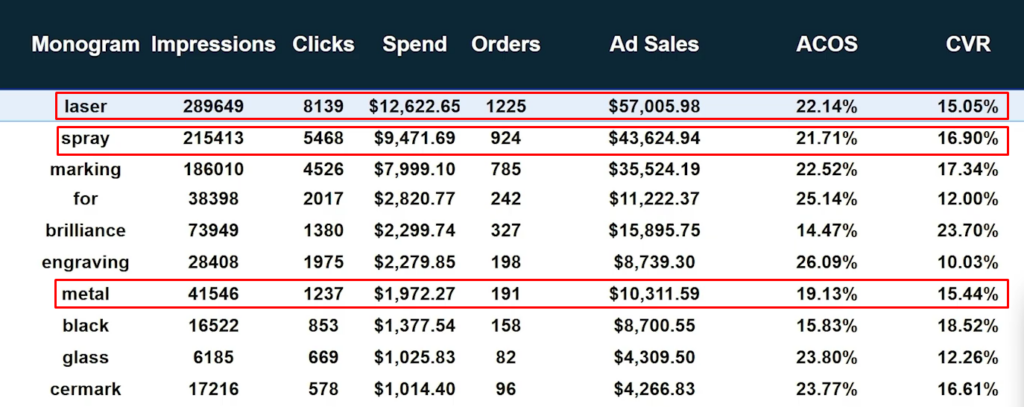
For example, the word “metal” delivered:
- Amazon ACoS below 20%
- Conversion Rate (CVR) around 15%
- Strong product relevance
- Consistent sales performance
These metrics clearly indicate strong Amazon PPC buyer intent. Instead of simply increasing bids on individual keywords, sellers can confidently allocate more budget to the entire keyword theme. This approach improves Amazon PPC optimization, strengthens Amazon PPC budget optimization, and creates a more scalable Amazon Sponsored Products strategy.
High-Converting Keywords Reveal Product Fit
Another standout keyword in the Amazon PPC search term report was “aluminum.” Since the engraving spray was specifically designed for aluminum surfaces, the search intent aligned perfectly with the product.
The grouped performance showed approximately:
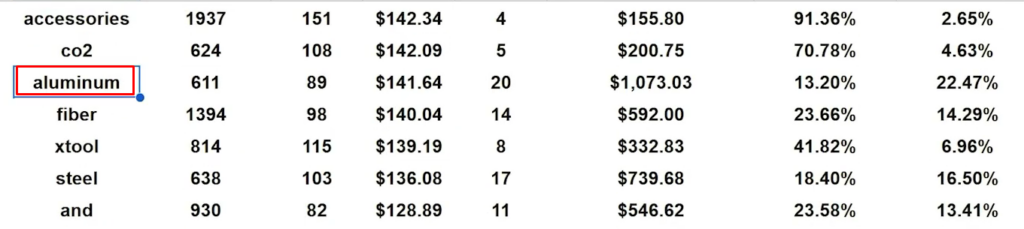
- 13% Amazon ACoS
- 22% Conversion Rate (CVR)
These are excellent indicators of strong product-market fit and demonstrate how Amazon PPC word analysis can uncover buyer-intent themes that deserve more aggressive bidding.
When recurring keywords consistently deliver:
- High Conversion Rate (CVR)
- Low Amazon ACoS
- Strong attributed sales
- High product relevance
they become excellent candidates for:
- Higher bids
- Increased campaign budgets
- Dedicated exact-match campaigns
- Ongoing Amazon PPC scaling strategy
This is one of the most valuable outcomes of Amazon keyword clustering and Amazon keyword grouping, allowing sellers to invest more confidently in proven customer demand.
Validate Product Compatibility Before Scaling
Not every promising keyword deserves additional budget.
For example, the word “ceramic” appeared as a potentially profitable search theme. However, before expanding spend, sellers must confirm that the product genuinely works on ceramic surfaces.
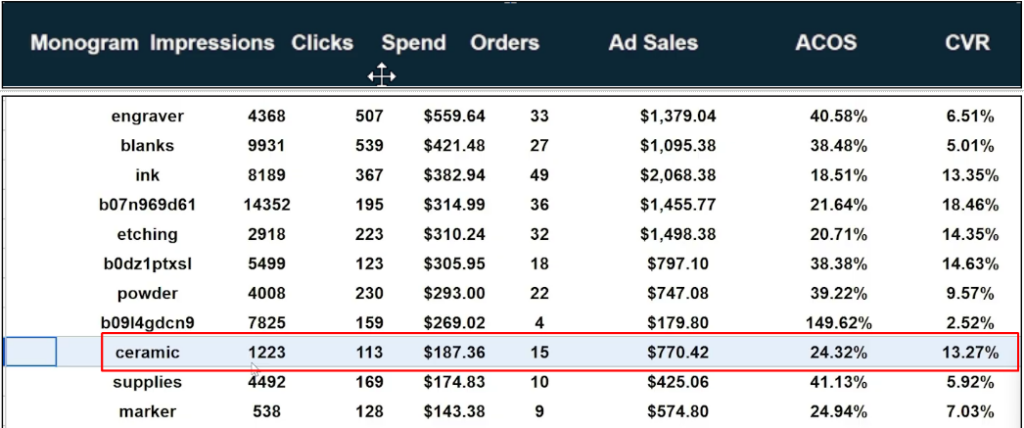
No matter how attractive the advertising metrics appear, product compatibility always comes first.
If your product cannot satisfy the customer’s intended use, increasing bids will only generate wasted clicks, lower conversion rates, and higher advertising costs.
This is one of the most important Amazon PPC optimization tips:
Never scale keywords based solely on performance metrics. Scale keywords that combine strong buyer intent with genuine product relevance.
Use Longer Date Ranges for Better Amazon PPC Data Analysis
One of the most common mistakes during Amazon PPC reporting is making optimization decisions based on too little data.
For reliable Amazon PPC performance analysis, follow these best practices:
- Use at least a 30-day Amazon search term report for most optimization decisions.
- Prefer a 60-day reporting window when search volume is inconsistent or seasonal.
- Avoid making decisions based on only a few low-volume conversions.
- Focus on recurring keywords that consistently deliver high CVR, reasonable Amazon ACoS, and strong buyer intent.
Longer reporting periods provide more reliable Amazon PPC data mining, making Amazon search term optimization significantly more accurate.
For more examples like this, the Ecomclips blog on Amazon seller growth has related articles on advertising and optimization.
Use N-Gram Insights to Optimize Your Amazon PPC Campaigns and Product Listings
Running Amazon PPC N-Gram Analysis is only the first step. The real value comes from applying those insights to improve both your Amazon PPC campaigns and your product listings. Once you’ve identified the recurring words that signal strong or weak buyer intent, you can make smarter decisions that improve Amazon PPC optimization, reduce wasted spend, and increase conversions.
A successful Amazon advertising strategy doesn’t stop at the Amazon search term report. It uses Amazon search query analysis, keyword clustering, and Amazon PPC data mining to optimize every part of the customer journey from the first click to the final purchase.
Scale High-Performing Keyword Themes
Start by reviewing the high-performing word groups discovered through Amazon N-Gram Analysis. If a recurring keyword consistently delivers strong ROAS, low Amazon ACoS, and high Conversion Rate (CVR), it deserves additional investment.
Increase bids or budgets for keyword themes that:
- Match your product perfectly
- Generate consistent sales
- Maintain healthy CTR, CVR, and ROAS
- Support long-term Amazon PPC scaling strategy
For example, if the keyword cluster “aluminum” consistently converts well, don’t leave it buried inside a low-budget campaign. Move those search terms into dedicated campaigns, increase bids strategically, and support them with sufficient budget. This approach strengthens your Amazon Sponsored Products strategy, improves Amazon PPC campaign optimization, and helps maximize profitable traffic.
Eliminate Wasted Spend with Negative Keywords
Not every recurring search theme deserves additional budget. One of the biggest benefits of Amazon PPC N-Gram Analysis is identifying recurring words that consistently attract the wrong audience.
When a keyword cluster repeatedly produces:
- High Amazon ACoS
- Low Conversion Rate
- Poor product relevance
- Weak buyer intent
it’s time to strengthen your Amazon negative keyword strategy.
Adding these recurring themes as Amazon PPC negative keywords helps:
- Reduce Amazon PPC wasted spend
- Improve campaign efficiency
- Increase advertising profitability
- Lower overall Amazon ACoS
- Improve ROAS
If only part of a keyword theme performs well, isolate the converting search terms into dedicated campaigns instead of blocking the entire group. This allows you to continue harvesting Amazon PPC keywords while reducing unnecessary advertising costs.
Optimize Your Product Listing with Buyer Intent Keywords
Many sellers improve their Amazon PPC campaigns but forget to optimize the product listing itself. This is where significant growth opportunities are often missed.
Your Amazon advertising strategy should align your ads with your listing.
If Amazon N-Gram Analysis shows that buyers consistently search using words like “aluminum” or “laser engraving,” those same buyer-intent keywords should appear throughout your listing whenever they accurately describe your product.
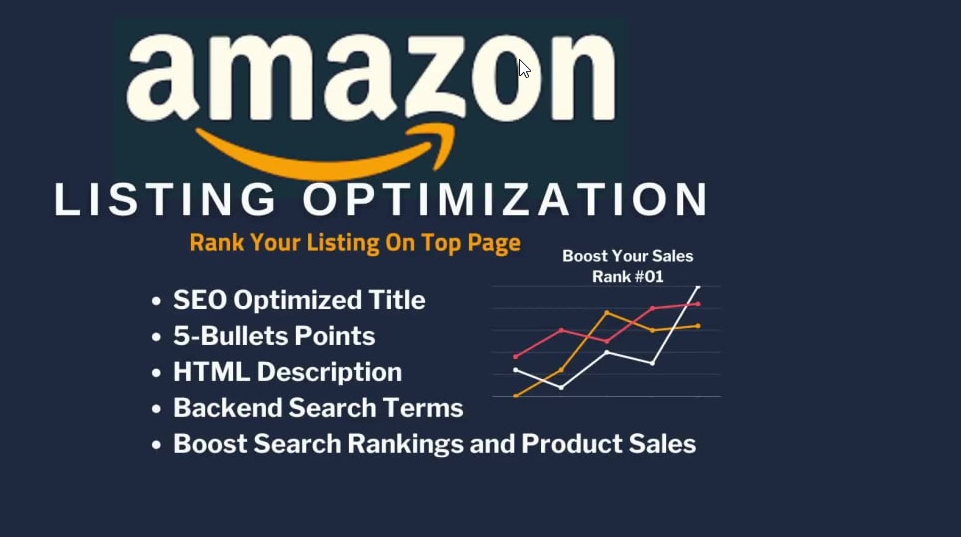
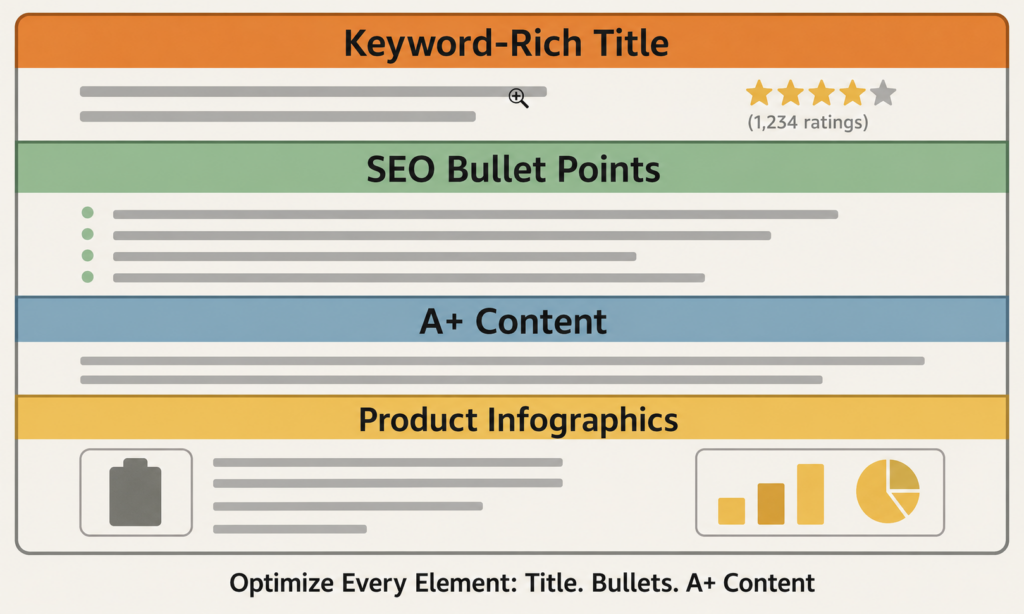
Improve your listing optimization by naturally incorporating high-performing keywords into your:
- Product Title
- Bullet Points
- Product Description
- Backend Search Terms
- A+ Content
- Lifestyle Images
- Infographics
When your Amazon Sponsored Products ads, landing page, and product content all reinforce the same buyer intent, shoppers gain confidence that they’ve found exactly what they’re looking for. This alignment improves CTR, boosts CVR, supports higher organic ranking, and increases overall conversion optimization.
Align Ads, Listings, and Buyer Intent
One of the most overlooked Amazon PPC optimization techniques is maintaining consistency between advertising and product content.
When an advertisement promotes one use case but the listing emphasizes something different, shoppers often click without converting. This results in:
- Higher Amazon ACoS
- Lower Conversion Rate
- Increased CPC costs
- Reduced advertising efficiency
Conversely, when your Amazon Ads, Sponsored Products, product images, bullet points, and A+ Content all communicate the same product relevance and buyer intent, conversions improve while advertising costs become more efficient.
This integrated approach supports:
- Better Amazon PPC campaign management
- Improved Amazon PPC account optimization
- Higher Amazon PPC conversion rate (CVR)
- Better Amazon PPC CTR optimization
- Stronger Amazon PPC ROAS optimization
- Improved Amazon advertising analytics
Amazon PPC Optimization Checklist
After completing your Amazon search term report analysis, use this checklist to implement your findings effectively:
- Increase budgets for recurring buyer-intent keywords that consistently convert.
- Expand winning keyword themes through Amazon PPC keyword harvesting.
- Add recurring poor-fit words as Amazon PPC negative keywords.
- Improve your Amazon PPC campaign structure by separating high-performing keyword clusters.
- Update your product title, bullet points, images, and A+ Content using proven buyer-intent keywords.
- Monitor Impressions, Clicks, CTR, CVR, ACoS, and ROAS after making changes.
- Review a new Amazon search term report after 30–60 days and repeat the Amazon N-Gram Analysis process.

Turn Amazon PPC Data into Long-Term Growth
The goal of Amazon PPC N-Gram Analysis isn’t simply to find better keywords—it’s to build a complete Amazon PPC optimization strategy based on real customer behavior. By combining Amazon search term optimization, Amazon keyword research, keyword grouping, search query optimization, and listing optimization, you create campaigns that attract the right shoppers while improving both advertising performance and organic visibility.
When your Amazon Ads, product listing, and buyer intent are fully aligned, you’ll reduce wasted spend, improve Amazon PPC performance analysis, increase ROAS, lower ACoS, strengthen organic ranking, and build a more scalable, profitable Amazon advertising strategy.
Build a Smarter Amazon PPC Optimization Strategy with Smarter Search Term Analysis

A successful Amazon PPC optimization strategy is not about removing every keyword with a high ACoS. Instead, it’s about understanding buyer intent keywords on Amazon and determining whether a recurring search theme truly matches your product.
Using Amazon PPC keyword research, Amazon keyword harvesting, and Amazon PPC search term analysis, you can separate profitable buyer-intent themes from wasted traffic.
This approach supports:
- Better Amazon PPC campaign management
- More accurate Amazon PPC bid optimization
- Stronger Amazon advertising optimization
- Improved Amazon Sponsored Products optimization
- Smarter Amazon PPC keyword strategy
- More effective Amazon PPC audits
- Lower wasted spend and a healthier Amazon ACoS
Ultimately, Amazon PPC N-Gram Analysis helps sellers move beyond individual keywords and optimize campaigns based on real buyer behavior. By identifying recurring low-intent words before they consume your advertising budget, you can significantly improve campaign efficiency, lower ACoS on Amazon, and build a more profitable long-term Amazon advertising strategy.
Final Thoughts
The biggest advantage of Amazon PPC N-Gram Analysis is changing how you interpret your Amazon search term report. Instead of treating every search term as an isolated keyword, you begin analyzing recurring word patterns that reveal real buyer intent. This makes Amazon PPC keyword analysis more strategic, enabling you to make faster, more confident optimization decisions.
By incorporating Amazon N-Gram Analysis into your Amazon PPC optimization workflow, you can identify high-performing keyword themes, eliminate wasted ad spend with smarter Amazon PPC negative keywords, and improve your overall Amazon advertising strategy. Rather than reacting to individual keywords, you optimize entire buyer-intent groups, leading to better Amazon PPC campaign optimization, stronger Amazon PPC budget optimization, and improved Amazon ACoS.
The insights gained from Amazon search term analysis shouldn’t stop at your advertising campaigns. Use those same high-converting buyer-intent keywords to strengthen your product title, bullet points, images, and A+ Content. When your Amazon Sponsored Products ads and product listing communicate the same message, shoppers are more likely to click, convert, and ultimately improve your CTR, CVR, ROAS, and organic rankings.
Ultimately, Amazon PPC N-Gram Analysis is more than an advanced reporting technique—it’s a smarter way to optimize your entire Amazon business. By combining Amazon keyword research, Amazon PPC keyword harvesting, listing optimization, campaign optimization, and continuous Amazon PPC performance analysis, you can build campaigns that attract higher-quality traffic, reduce wasted spend, and generate sustainable long-term growth.
Whether you’re managing a single product or an enterprise-level catalog, making Amazon N-Gram Analysis a regular part of your Amazon PPC optimization strategy will help you make better advertising decisions, improve profitability, and stay competitive in Amazon PPC 2026 and beyond.
If you want a second set of eyes on your data, Ecomclips offers a free N-gram audit. You can request it by email at info@ecomclips.com. You can also browse more video content on the Ecomclips YouTube channel.