

Who would disagree that in the bustling world of e-commerce, visibility is everything?
Your Shopify store isn’t just a collection of products. It’s a digital storefront, a brand experience, and, most importantly, a destination. In today’s hyper-competitive digital space, simply having a store is not enough. You need to make it discoverable. You need to make it irresistible.
Enter the Shopify SEO Checklist 2025: a strategic playbook engineered to help your store rise through the ranks of search engines and grab your audience’s attention the moment they start looking. Whether you’re a seasoned entrepreneur or just launching your first product, this guide will position your store for long-term organic growth.
Table of Contents
| Why SEO Still Wins in 2025 |
| Top 10 Shopify SEO Checklist |
| 2.1 Craft Compelling Page Titles, Meta Descriptions, and URLs That Attract Clicks |
| 2.2 Do Strategic Keyword Research with Buyer Intent in Mind |
| 2.3 Optimize Headers, Internal Linking, and Site Structure for Easy Navigation |
| 2.4 Prioritize Mobile Optimization and Improve Page Load Speed |
| 2.5 Leverage Alt Text, Schema Markup, and Rich Snippets to Boost Visibility |
| 2.6 Create and Update High-Quality Content That Converts |
| 2.7 Optimize Product Descriptions with SEO and Buyer Psychology |
| 2.8 Maximize Trust Signals with HTTPS, Reviews, and Social Proof |
| 2.9 Monitor SEO Performance and Stay Ahead with Ongoing Audits |
| 3. What Ecomclips Can Do for Your Shopify Store |
- Why SEO Still Wins in 2025
The e-commerce space isn’t just crowded, it’s cutthroat. With rising ad costs and shrinking attention spans, SEO remains the most cost-effective way to drive qualified traffic. Organic search not only builds trust and loyalty but also powers sustainable growth.
“SEO is the slow burn that fuels explosive growth, if you build it, they will come.”
As of 2025, Shopify powers over 6 million merchants worldwide, and platforms like Online Store 2.0 make it easier than ever to implement rich, SEO-friendly templates. Features such as Shop Pay (with 70% faster checkout times) and built-in AI SEO assistants help stores rank higher and convert better. Mobile commerce now accounts for 75% of Shopify’s traffic, reinforcing the need for mobile-optimized, content-rich pages. The good news? Most Shopify stores are barely scratching the surface of what a strategic SEO approach, leveraging dynamic sections, automated schema markup, and built-in performance optimizations, can achieve.
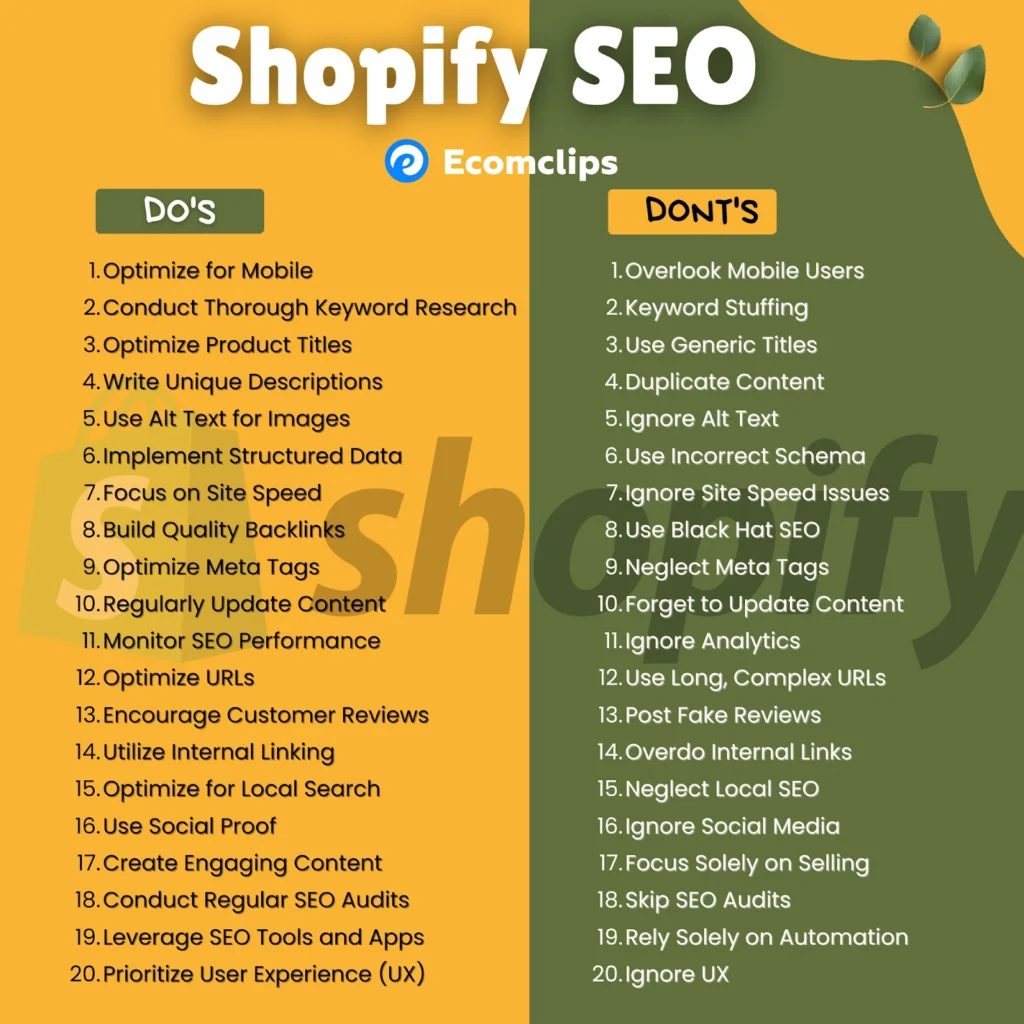
- SEO Checklist
Get ready to supercharge your Shopify store’s visibility with a proven SEO checklist designed for 2025’s competitive landscape. We’ll cover everything from site structure and mobile optimization to advanced schema and performance tweaks.
Follow these steps to attract qualified traffic, boost rankings, and turn browsers into buyers.
1. Craft Compelling Page Titles, Meta Descriptions, and URLs That Attract Clicks
Your first impression in search results is everything. Use clear, emotionally engaging page titles and meta descriptions with relevant keywords.
Tips:
- Use power words: discover, exclusive, shop now
- Keep title under 60 characters, meta under 155
- Use clean, keyword-rich URLs (e.g., /organic-skin-care not /p54321)
- Optimize for both users and search engines
Example:
Title: Ethical Apparel for Women | Sustainable Style You’ll Love
Meta: Discover eco-friendly clothing that looks great and feels better. Free shipping on your first order.
2. Do Strategic Keyword Research with Buyer Intent in Mind
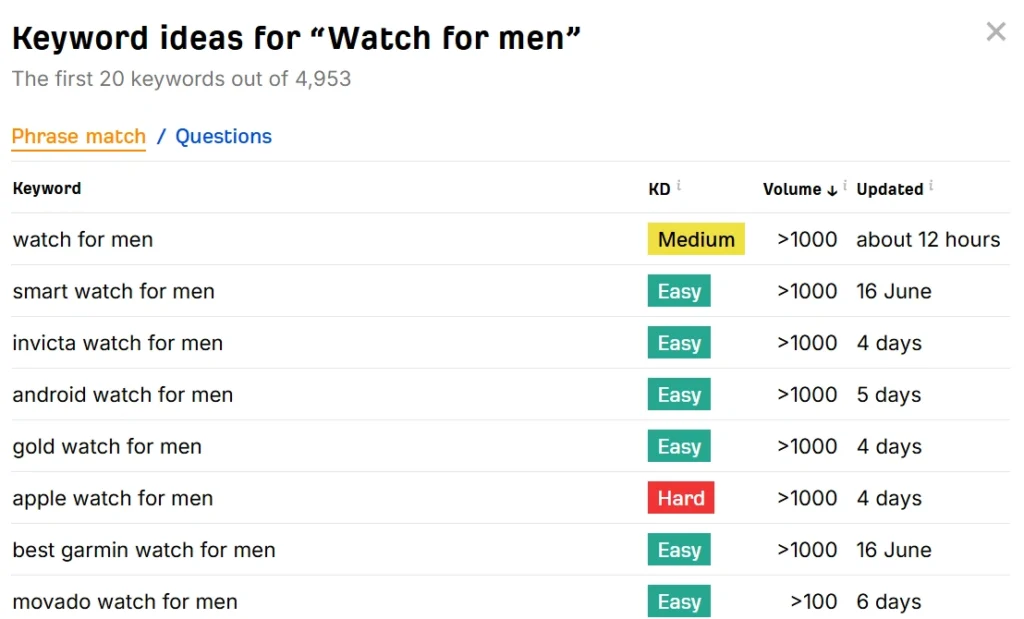
Effective SEO begins with understanding exactly what your potential customers are searching for, not just traffic, but traffic that buys.
- “Keywords with intent = clicks that convert.”
- “Ranking is great, but ranking for the right search is what drives sales.”
Key Focus Areas:
- Use long-tail keywords – lower competition, higher relevance
- Target buyer intent keywords like “best,” “buy,” “discount,” “top-rated”
- Prioritize problem-solving phrases your audience actually types
- Look for commercial and transactional intent (not just informational)
Top Tools to Use:
- Ahrefs, SEMrush, Google Keyword Planner
- Ubersuggest, Keywords Everywhere, AnswerThePublic
“Don’t guess—research what your customers are already searching for.”
3. Optimize Headers, Internal Linking, and Site Structure for Easy Navigation
A clean, well-structured website isn’t just for looks — it boosts search engine visibility and keeps users engaged. Clear headings, smart internal links, and intuitive navigation help guide both visitors and bots. Structure your content to be found, read, and ranked.
Why It Matters:
- “Great content needs great structure to shine.”
- “Smart linking builds authority from within.”
A strong site structure helps both users and search engines easily navigate your content. Use a single H1 tag for the main title, and organize content with H2s and H3s to improve readability. Strengthen SEO by adding internal links to related blog posts, product bundles, and category pages. Implement breadcrumbs and mega menus to guide users through a logical path. Finally, keep your site crawlable with an XML sitemap and avoid orphan pages at all costs.

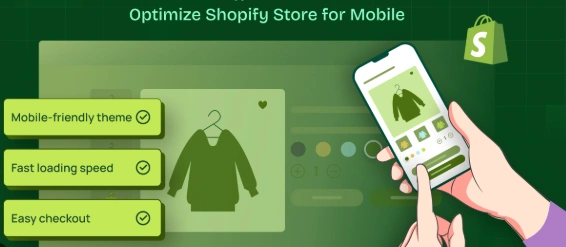
4. Prioritize Mobile Optimization and Improve Page Load Speed
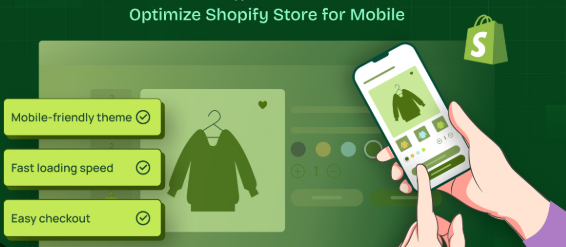
With over 60% of Shopify traffic coming from mobile devices, a slow or unresponsive site can instantly turn potential buyers away. Google also uses mobile-first indexing, meaning your mobile site performance directly impacts your rankings. A mobile-optimized, fast-loading site improves user experience, boosts conversions, and reduces bounce rates.
What to Focus On
Start by using a responsive design that adapts to all screen sizes without breaking layout or content. Test your site using Google’s Mobile-Friendly Test and PageSpeed Insights to identify issues. Compress large images, minify CSS and JavaScript, and implement lazy loading to reduce page weight and improve load times.
Choose a lightweight, fast-loading Shopify theme that’s already optimized for mobile. Avoid unnecessary apps and scripts that can slow things down. Enable browser caching, use a reliable CDN, and audit your store regularly. Speed and usability aren’t optional—they’re key to mobile success and long-term SEO growth.
5. Leverage Alt Text, Schema Markup, and Rich Snippets to Boost Visibility
Search engines rely on structured data and image context to understand your content better. Adding the right metadata boosts your visibility in rich results and improves overall SEO performance. Small changes like alt text and schema markup can make a big difference.
Quick Tips:
- Add keyword-relevant alt text to images, naturally and clearly.
- Use schema markup for reviews, FAQs, and pricing data.
“If search engines can’t understand it, they won’t rank it.”
“Structured data is like giving Google a roadmap to your store.”
Search engines need context to understand your pages and images. Use keyword-relevant alt text for images, keep it natural, not stuffed. Add schema markup for reviews, FAQs, and pricing to boost visibility in rich results. Tools like Google’s Structured Data Markup Helper or Shopify plugins make it easy.
“Structured data tells Google what your page means, not just what it says.”
Bonus: Increases the chance of rich snippets and improves Google Shopping visibility.
6. Create and Update High-Quality Content That Converts
Content is still king, but it only works if it’s relevant, engaging, and built to convert. Focus on creating high-quality content like product comparisons, buying guides, and how-to articles that help shoppers make decisions. Add FAQ sections to target voice search queries and improve your SEO reach.
Incorporate videos such as product demos, tutorials, and unboxings to increase dwell time and engagement. Regularly update old content by refreshing outdated data, adding new keywords, and improving visual elements. Great content not only informs, it builds trust and drives sales.
“The best content solves a problem and moves the customer closer to purchase.”
7. Optimize Product Descriptions with SEO and Buyer Psychology
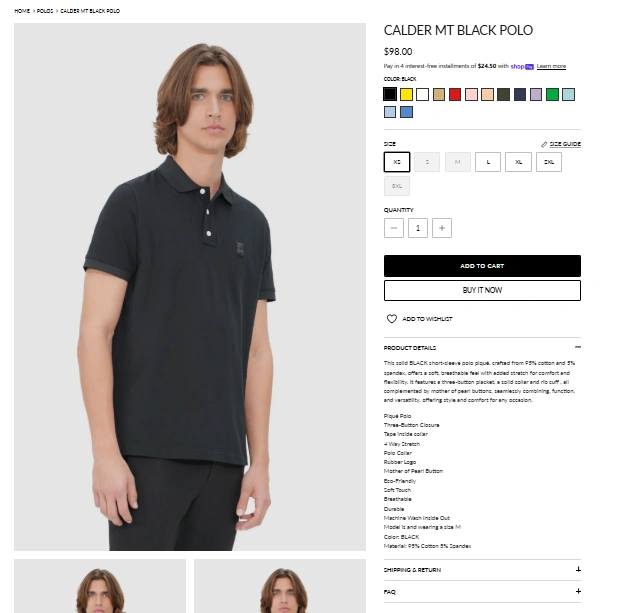
Avoid boring, generic product copy. Instead, focus on highlighting benefits, addressing customer pain points, and using scannable formats that make it easy to understand quickly. Well-optimized descriptions boost your search rankings and connect emotionally with buyers to drive conversions.
- Solve real customer problems in your copy
- Include focus keywords naturally without stuffing
- Use bullet points for easy readability
- Add images, videos, and reviews to build trust and credibility
8. Maximize Trust Signals with HTTPS, Reviews, and Social Proof
Trust is a critical factor that influences both your search rankings and customer buying decisions. Securing your store with HTTPS not only protects user data but also improves SEO. Actively encourage customer reviews through follow-ups and incentives, and prominently display them on product pages to build credibility.
Leverage user-generated content and share it on social media to create authentic connections. Collaborate with micro-influencers to expand your reach and drive targeted traffic.
9. Monitor SEO Performance and Stay Ahead with Ongoing Audits
SEO is not a one-time setup—it requires ongoing attention to keep your site ranking and converting. Regularly track key metrics like organic traffic, bounce rates, and conversion rates to understand how your audience engages with your site. Identify and fix technical issues such as 404 errors, redirect chains, and duplicate content that can harm your rankings. Use powerful tools like Google Analytics 4 (GA4), Shopify Analytics, Screaming Frog, SEMrush, and Sitebulb to gain deep insights. Automate routine SEO tasks with Shopify apps like Plug in SEO, Smart SEO, or SEO Manager to save time and stay efficient. Keep yourself updated with the latest SEO trends by following Google Search Central, Shopify News, and trusted blogs like EcomClips.
What to Monitor:
- Organic traffic, bounce rate, and conversions
- Technical issues: 404s, redirects, duplicate content
- Keyword rankings and backlink health
What Ecomclips Can Do for Your Shopify Store
We build and redesign stores that are fast, mobile-optimized, and designed to convert visitors into buyers. Whether you’re starting from scratch or need a full makeover, we create clean, high-converting storefronts your customers will love.
We make sure your store gets seen with smart Shopify SEO strategies — including keyword research, on-page optimization, speed improvements, and blog content that ranks.
Shopify App & Automation Integration
Seamlessly connect and configure apps, set up your CRM, design upsell flows, manage subscriptions, and automate workflows with Shopify Flow so your store runs flawlessly—even when you’re offline.
Product Listing Optimization – Meta Title and Description
Craft compelling titles and SEO-rich descriptions.
Showcase products with high-quality images: infographics for clarity, lifestyle shots for aspiration, and comparison visuals for informed decisions.
Data-Driven Conversion Growth
Run A/B tests to identify winning variations.
Enhance the checkout process for smoother purchases.
Use heatmap insights to optimize page layouts.
Implement cart recovery tactics to recapture lost sales.
Need global reach? We support multi-language and currency setups so you can sell worldwide with confidence. Plus, we take care of analytics, reporting, shipping, and fulfillment tools — so you always stay in control.

Why Choose Ecomclips?
- Experts at Scale: 50+ trained professionals specializing in Shopify, SEO, marketing, design, and automation.
- End-to-End Support: From build to scale, we manage every phase of your store’s journey.
- Proven Results: Hundreds of success stories, with up to 300% traffic growth in under 6 months.
- Global Clientele: Serving brands across the US, UK, Canada, UAE, Australia, and more.
- Rated Excellent on Trustpilot: Clients love our transparency, quick turnarounds, and consistent growth.
- Free Trial & SEO Consultation: No guesswork, start with a free audit and strategy call.
Ready to Turn Your Shopify Store Into a Sales Machine?
📩 Email us at info@ecomclips.com –
to schedule your free Shopify growth consultation.
Helpful Resources from Ecomclips
If you’re serious about building a high-converting homepage, we recommend diving into some of these deep reads from the Ecomclips blog:
- How to Build a Shopify Store: Shipping and Fulfillment Guide (2025)
- 3 Simple Shopify Store Strategies to Boost Sales in 2025
- How Much Does It Cost to Start a Shopify Store in 2025
- 5 Best Free Shopify Apps to Manage Your Online Store