

Before an eBay listing can generate sales, it first needs to earn visibility in search.
From working with eBay listings, we have seen many sellers focus only on keywords while overlooking the factors that actually influence performance. In 2026, eBay SEO is no longer just about adding words to your title. Search relevance, item specifics, pricing, shipping, listing quality, and seller performance all shape how competitive your offer becomes.
In this guide, we will break down 5 practical eBay SEO strategies to help you improve visibility, attract the right buyers, and turn more traffic into sales.
What Is eBay SEO?

eBay SEO is the process of improving your listings and overall marketplace offer so your products can appear for relevant buyer searches and generate more qualified traffic and sales. If 50,000 people see your listing but almost nobody clicks or buys, those impressions are not particularly valuable.
A stronger SEO strategy connects three things: Search Relevance + Offer Competitiveness + Buyer Response
Your product needs to:
- Match what buyers are searching for.
- Look competitive when it appears.
- Convince those buyers to purchase.
Why Sellers Need an eBay SEO Strategy
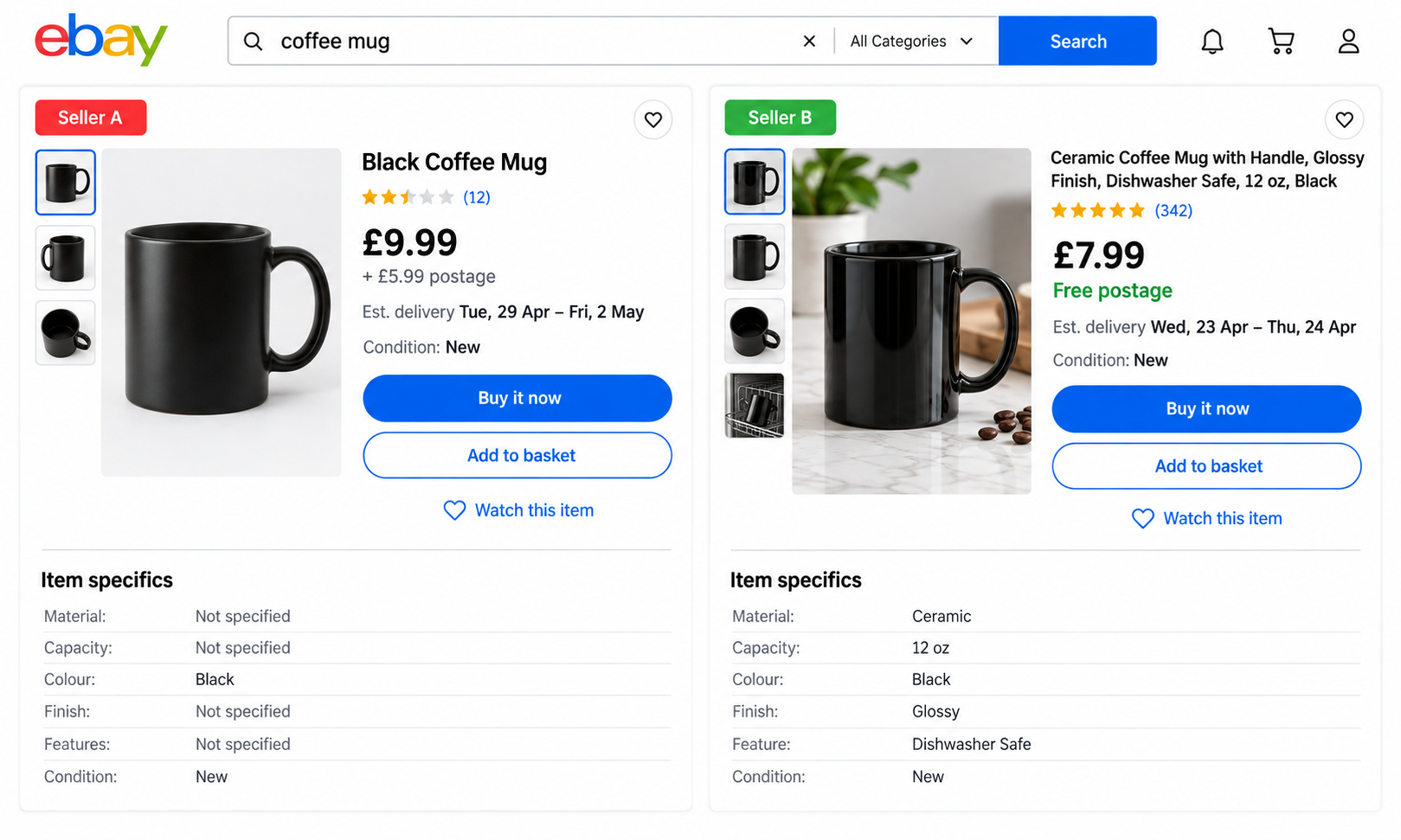
Take a simple black coffee mug.
Seller A Title: Black Coffee Mug. A basic title, limited item specifics, an average image, and a weaker overall offer.
Seller B Title: Ceramic Coffee Mug with Handle, Glossy Finish, Dishwasher Safe, 12 oz, Black. A clearer title, complete item specifics, stronger images, competitive pricing, and better delivery.
Both listings may be relevant, but Seller B gives eBay more information and gives buyers more reasons to click.
That is why a strong eBay SEO strategy goes beyond keywords, it improves both search relevance and buyer appeal.
Strategy 1: Map How Buyers Search Before You Optimize
Most sellers begin eBay SEO by choosing keywords too quickly. A better approach is to understand how buyers actually search for the product.
Take a laptop charger. Buyers may search Dell laptop charger, Dell Inspiron 15 charger, 65W Dell charger, or Dell AC power supply.
These searches target the same product through different signals such as brand, model, specification, compatibility, and product type.
That is why keyword research should begin with a buyer search map. The exact search pattern will vary by category, but the goal is the same: cover the language buyers actually use.
1. Use Real eBay Search Data
Do not build your keyword map from guesswork alone. Successful eBay SEO starts with understanding the language buyers already use.
Use these three data sources:
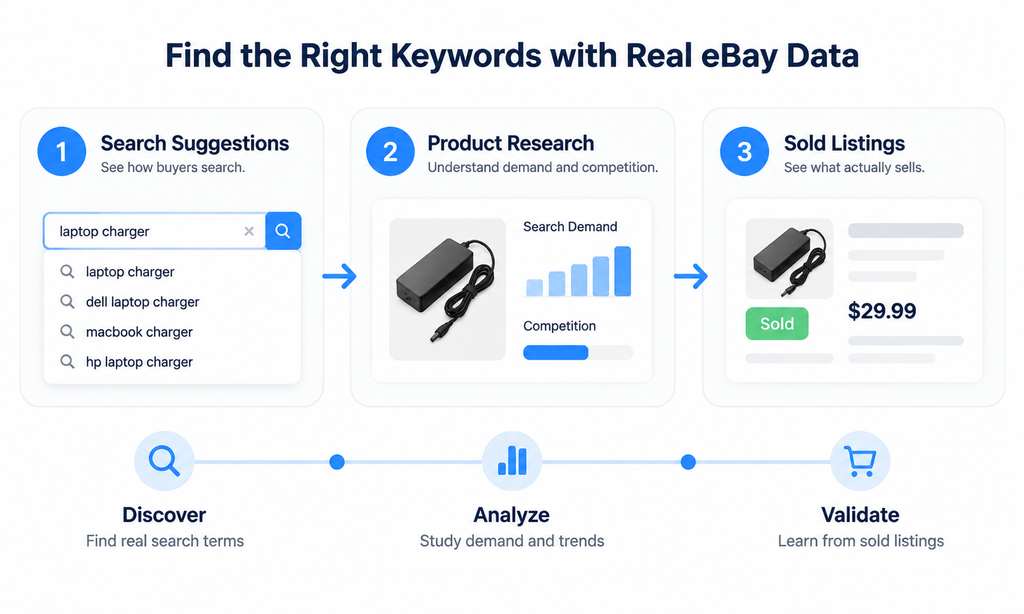
eBay Search Suggestions: Start typing your product into eBay search and analyze the autocomplete suggestions. These phrases show how shoppers naturally describe what they are looking for.
eBay Product Research: Study demand, pricing trends, competition, and successful listings. Look for patterns in titles, item specifics, and product attributes used by listings that perform well.
Sold Listings: Analyze products that have actually sold, not just active competitors. Compare their titles, pricing, photos, shipping options, and item specifics to identify what information repeatedly appears in successful listings.
2. Prioritize Intent, Not Just Search Volume
A broad keyword like wireless headphones may attract more searches. But a phrase like Sony WH-1000XM5 black headphones shows stronger buying intent because the shopper already knows the exact product they want.
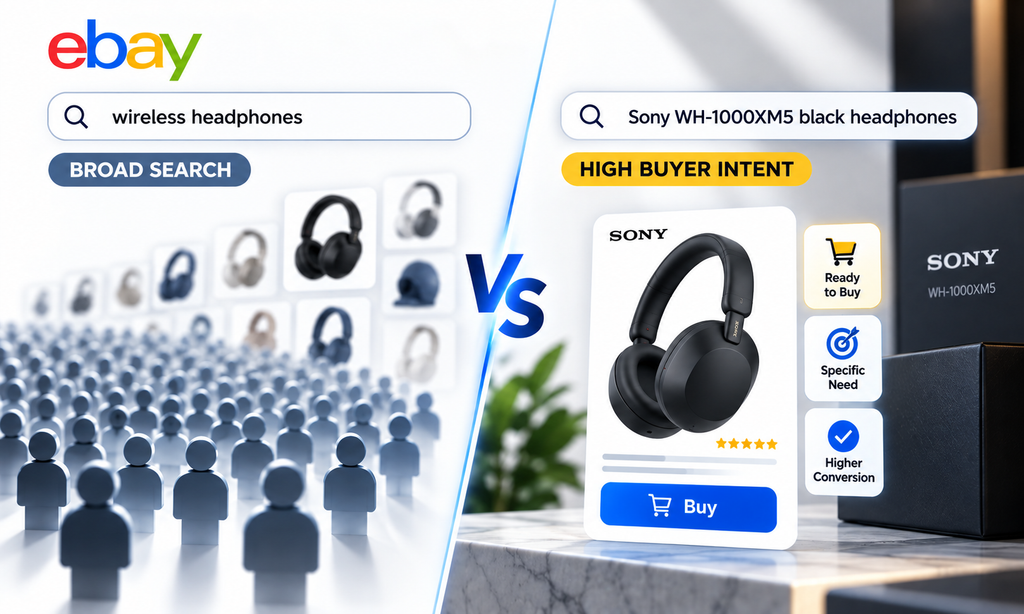
That is why long-tail keywords can be valuable even with lower search volume. They often bring fewer but more qualified buyers.
Build your listing around how buyers identify and search for the product, then use that insight to shape your title, item specifics, and broader SEO strategy.
Strategy 2: Use Structured Product Data to Improve Search Visibility
Once you understand what buyers are searching for, the next step is helping eBay understand exactly what your product is.
Many sellers focus too heavily on the title. Titles matter, but eBay also relies on structured product data such as:
- Category
- Item specifics
- Brand
- Model
- Size
- Colour
- Material
- Condition
- Compatibility
- Product identifiers
These fields help eBay match listings to relevant searches and filters.
Why Item Specifics Matter
Imagine you sell: Nike Air Max 270 Men’s Shoes, Black, UK Size 9
Your title may contain the right keywords, but if Size: UK 9 is missing from the item specifics, your listing may not appear when a buyer filters the results by that size. The product is relevant, but the structured data is incomplete.
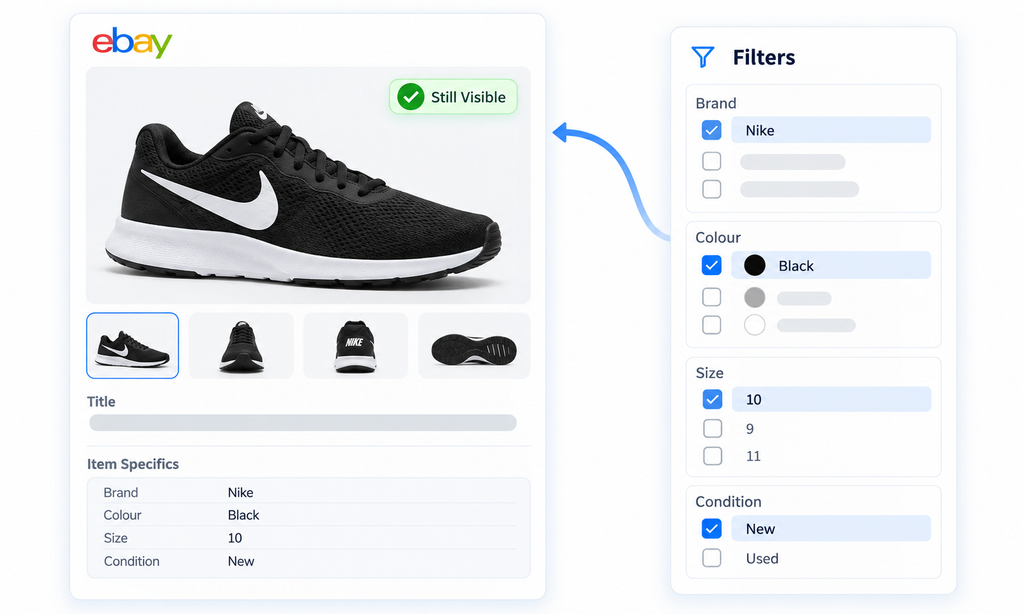
That is why item specifics should be treated as part of your search infrastructure, not just optional listing details.
Prioritize the Attributes Buyers Use
Not every item specific deserves the same attention.
eBay may classify attributes as:
- Required
- Required Soon
- Recommended
- Additional
Start with the fields buyers are most likely to search or filter by.
For example, size and colour may be critical in fashion, storage capacity in electronics, and vehicle compatibility in automotive.
Keep Product Data Accurate
Do not fill fields just to add more keywords.
Incorrect item specifics can create irrelevant traffic, confuse buyers, increase returns, and hurt conversion.
Good SEO is not about adding the maximum amount of data. It is about providing accurate, relevant product data.
Strategy 3: Optimize the Search Result for the Click
Ranking gives your listing visibility, but visibility alone does not generate traffic. Once several relevant products appear together, buyers start comparing which offer looks most worth clicking.
At that stage, your listing is competing on more than keywords. Buyers may compare:
- Main image
- Title clarity
- Price
- Shipping cost and speed
- Condition
- Seller reputation
- Ratings
That is why eBay SEO should also include search-result optimization.
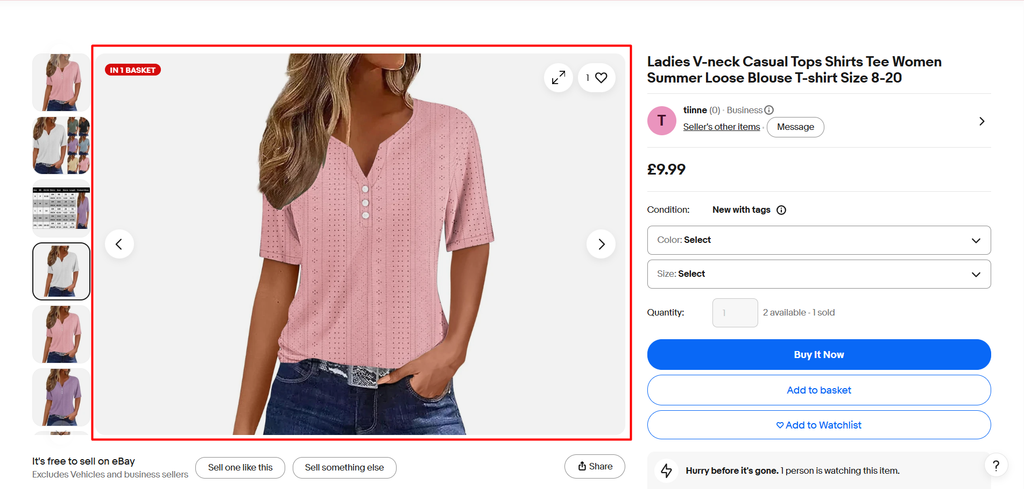
1. Make the Main Image Win Attention
Your main image is often the first thing buyers notice.
It should make the product easy to recognize at a glance, clearly show its condition, and look competitive beside similar listings. Avoid clutter and make sure the product fills enough of the frame to stand out.
2. Write Titles for Buyers, Not Just Search
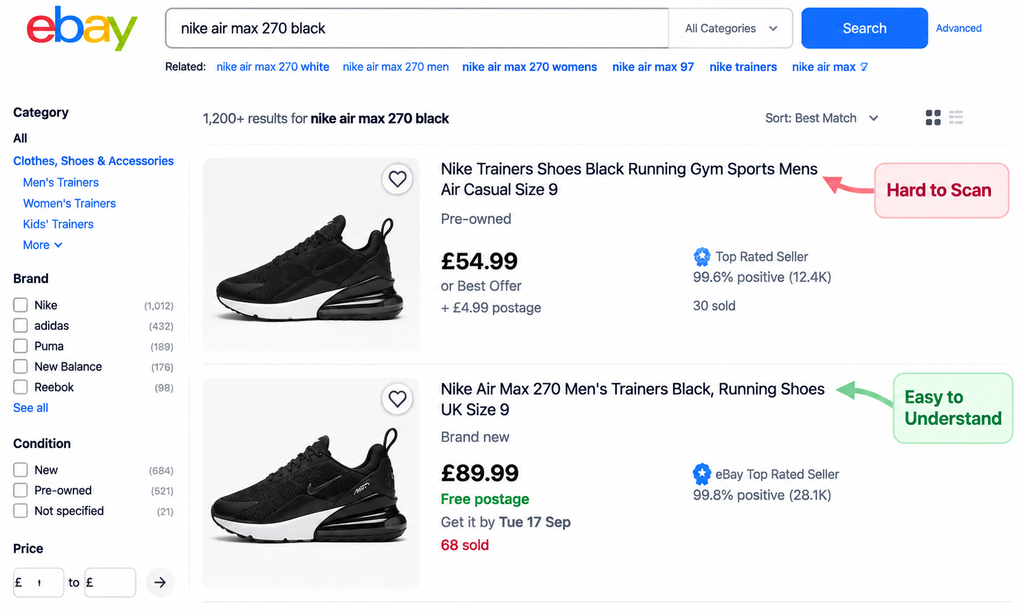
Keyword coverage matters, but the title still needs to be easy to scan.
Compare: Nike Trainers Shoes Black Running Gym Sports Mens Air Casual Size 9
With: Nike Air Max 270 Men’s Trainers Black, Running Shoes, UK Size 9
The second title makes the important information much easier to understand: brand, model, product type, colour and size.
3. Compete on the Whole Offer
Buyers do not evaluate price alone.
A £19.99 item with expensive shipping and slow delivery may be less attractive than a £22.99 listing with free shipping, faster delivery and stronger seller trust.
Think in terms of: Price + Shipping + Delivery + Condition + Trust
4. Watch for High Impressions but Low Clicks
If your impressions are increasing but listing views remain weak, visibility may no longer be the main problem.
The issue could be:
- Weak main image
- Unclear title
- Uncompetitive total price
- Slow delivery
- Stronger competing offers
In that case, changing keywords again may not help. The priority is making your listing more compelling when buyers see it in search.
Strategy 4: Find and Scale Your Highest-Potential eBay Listings
Most sellers approach eBay SEO one listing at a time.
They optimize one product, move to the next, and repeat the process. This works for small catalogs, but it becomes inefficient when a store grows to hundreds or thousands of listings. At that stage, sellers need to think beyond individual products and focus on catalog-level SEO.
1. Analyze Your Catalog by Opportunity
Instead of reviewing every listing separately, group products based on:
- Category
- Product family
- Search demand
- Conversion rate
- Profit margin
- Inventory level
- Competition
- Seasonality
This helps identify where optimization effort will create the biggest impact.
For example:
High impressions + Low clicks → Improve title, image, pricing, or shipping offer.
High clicks + Low sales → Fix conversion issues such as product information, trust, or offer quality.
Low impressions + Strong conversion → Increase visibility through keyword expansion, item specifics, category checks, or targeted promotion.
2. Identify Your SEO Winners
Not every product deserves equal attention.
Focus on listings with:
- Strong sales history
- Healthy conversion
- Competitive pricing
- Good margins
- Positive feedback
- Stable inventory
These products already show buyer demand.
Scale them by improving:
- Keyword coverage
- Item specifics
- Images
- Delivery options
- Variations
- Inventory availability
3. Find Hidden Growth Opportunities
Some listings perform well after the click but lack visibility.
Example:
Listing A
- 40,000 impressions
- 800 views
- 12 sales
Listing B
- 3,000 impressions
- 180 views
- 18 sales
Listing B has lower visibility but stronger buyer response.
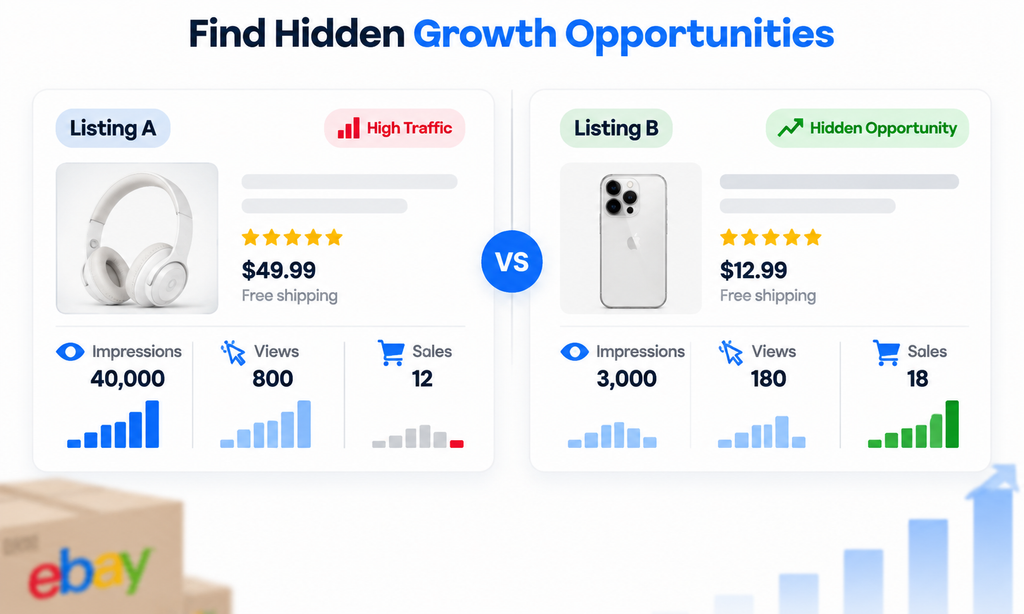
These listings can become valuable SEO opportunities because increasing their exposure may generate more sales without changing the offer.
4. Use eBay Data to Guide Decisions
Tools like eBay’s Listing Quality Report help sellers identify where listings can improve compared with successful competitors.
Instead of asking: Is this listing optimized? Ask: Where is my catalog weaker than listings that already perform well?
This helps prioritize SEO improvements based on data instead of assumptions.
6. Plan SEO Around Seasonality
Search demand changes throughout the year. Optimize before demand peaks, not during them.
Examples:
- Holiday products before Q4
- Back-to-school products before school season
- Winter clothing before colder months
- Garden products before spring
Preparing early helps listings gain visibility before buyer demand reaches its highest point.
Strategy 5: Use Promoted Listings to Accelerate SEO
Paid advertising can increase visibility, but it cannot fix a weak listing.
Promoted Listings should be used as an accelerator for products that already show potential, not as a shortcut for products that are struggling.
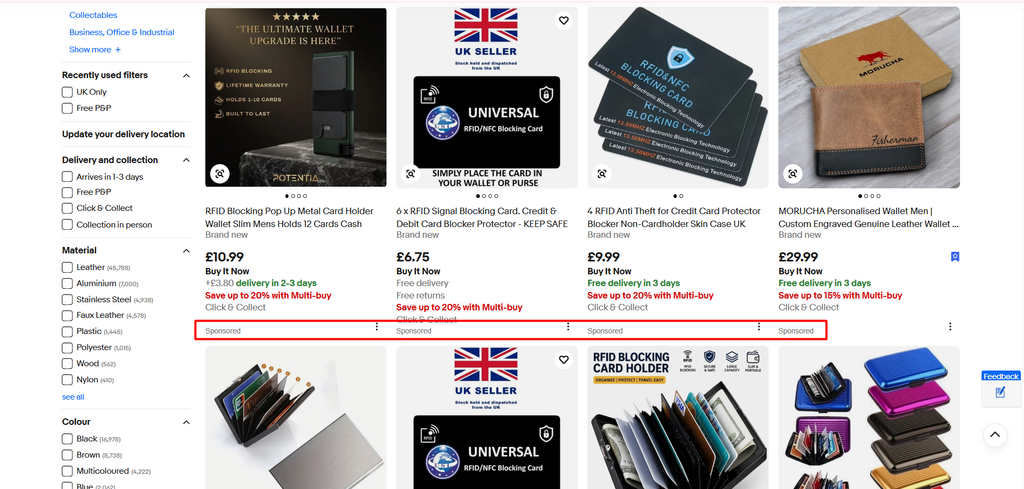
A listing with poor conversion, weak images, missing information, or an uncompetitive offer will not become successful simply by receiving more traffic. More visitors only create more opportunities for buyers to leave.
The right approach is: Build a strong listing → Generate organic performance → Use ads to scale visibility
Promote Products That Are Ready to Scale
The best candidates for Promoted Listings usually have:
- Proven buyer demand
- Strong conversion rate
- Competitive pricing
- Healthy profit margin
- Reliable inventory
- Strong listing presentation
These products already show signs that buyers respond positively. Additional visibility can help them reach more potential customers.
Avoid Using Ads to Fix Weak Listings
Advertising is unlikely to solve problems such as:
- Low buyer interest
- Poor conversion
- Weak images
- Missing item specifics
- Unclear product information
- Uncompetitive pricing
- Limited profit margin
For example, if a listing receives clicks but rarely generates sales, increasing ad spend may only send more buyers to an offer that still needs improvement.
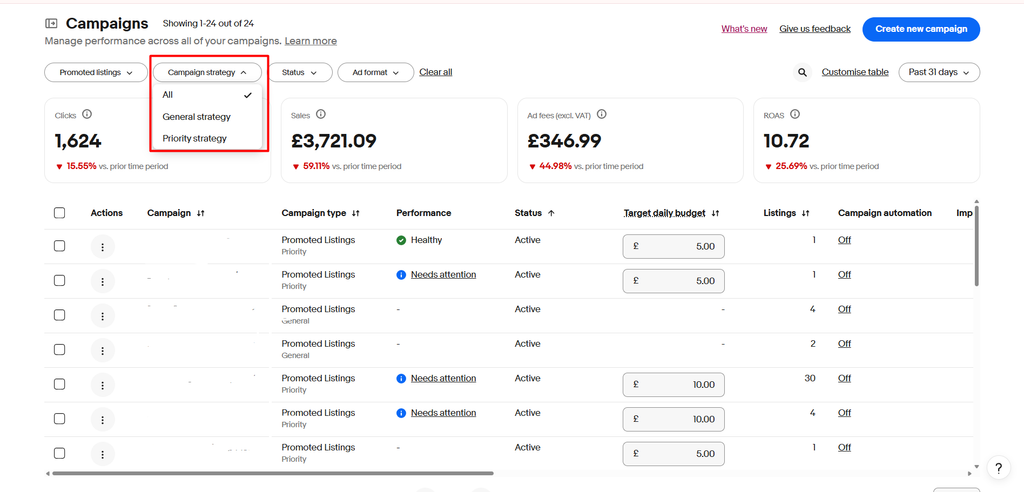
Understand eBay Promoted Listings Strategies
eBay currently offers different campaign approaches, including:
1. General Strategy
A cost-per-sale model where advertising fees apply when a promoted interaction leads to a sale.
2. Priority Strategy
A cost-per-click model that provides additional campaign controls, including keyword targeting options. The right choice depends on your product, goals, and campaign maturity.
Use Advertising Data to Improve SEO Decisions
Promoted campaigns are not only traffic sources. They are also valuable testing tools.
Advertising data can reveal insights about:
- Search demand
- Keyword engagement
- Click behavior
- Product competitiveness
For example: A listing receives a large increase in impressions and clicks from advertising but sales remain low.
This suggests the problem may not be visibility. The issue could be:
- Pricing
- Product information
- Images
- Shipping
- Trust signals
Instead of simply increasing the budget, use that data to improve the offer.
eBay SEO Mistakes to Avoid in 2026
Even experienced sellers can waste time by focusing on tactics that do not solve the actual problem.
1. Keyword Stuffing Titles: Adding more keywords does not guarantee better rankings; focus on clear, relevant titles that help buyers understand the product.
2. Copying One Competitor: Studying competitors is useful, but copying one seller’s strategy can prevent you from finding better opportunities.
3. Ignoring Item Specifics: Missing product attributes can reduce search visibility even when your title contains the right keywords.
4. Optimizing for Impressions Instead of Buyers: High impressions do not always create sales; focus on attracting shoppers with real purchase intent.
5. Changing Everything at Once: Modifying titles, images, pricing, and promotions together makes it difficult to understand what actually improved performance.
6. Using Ads to Rescue Weak Listings: Promoted Listings can increase traffic, but they cannot fix poor conversion, weak offers, or missing product information.
7. Treating SEO as a One-Time Task: Search behavior, competition, and buyer demand change constantly, so listings require regular optimization.
eBay SEO Is Not About Beating an Algorithm
The biggest shift in eBay SEO is moving away from trying to “trick” the algorithm and focusing on building the most relevant and competitive offer for buyers.
Strong SEO comes from understanding buyer intent, improving titles and item specifics, creating better images, offering competitive pricing and shipping, and tracking performance through impressions, clicks, and conversions.
The sellers who succeed in 2026 will not be the ones chasing ranking shortcuts. They will be the ones consistently creating listings that match searches, earn clicks, and convert buyers.
Frequently Asked Questions About eBay SEO
1. What is eBay SEO?
eBay SEO is the process of optimizing your listings and overall offer so your products appear for relevant buyer searches and attract more qualified traffic.
2. Does eBay SEO only depend on keywords?
No. Keywords are only one part of eBay SEO. Search visibility also depends on item specifics, listing quality, pricing, shipping, conversion, and seller performance.
3. How important are item specifics for eBay SEO?
Item specifics are critical because they help eBay understand your product and allow buyers to find listings through filters such as size, brand, colour, model, and compatibility.
4. Do Promoted Listings improve organic eBay rankings?
Promoted Listings can increase visibility and generate valuable data, but they do not replace strong SEO. A weak listing with poor conversion will still struggle even with more traffic.
5. How often should I update my eBay listings for SEO?
SEO is an ongoing process. Sellers should regularly review search performance, competition, buyer demand, item specifics, pricing, and listing quality to identify improvement opportunities.
6. Why is my eBay listing getting impressions but no sales?
High impressions mean buyers are seeing your listing, but low sales usually indicate issues with click appeal or conversion, such as weak images, unclear titles, pricing, shipping, or product information.
7. Does having an eBay Store improve SEO rankings?
An eBay Store alone does not guarantee higher rankings. Search visibility depends more on listing relevance, product information, offer quality, and seller performance.
8. What is the biggest mistake sellers make with eBay SEO?
The biggest mistake is treating SEO as only a keyword exercise. Successful sellers optimize the entire buyer journey, from search visibility to clicks and final purchase decisions.
How Ecomclips Helps Sellers Build, Launch, and Grow on eBay
Building a successful eBay business requires more than simply opening a Store and uploading products. Sellers need a complete strategy covering Store setup, product research, listing optimization, SEO, advertising, inventory planning, and long-term growth.
At Ecomclips, we help eBay sellers and brands build stronger marketplace strategies, from creating a professional Store foundation to optimizing listings and scaling products that have growth potential.
Our eBay support includes:
- eBay Store Setup & Branding: Create a professional Store structure with organized categories, consistent branding, improved navigation, and a better customer shopping experience.
- eBay Product Research & Strategy: Identify profitable opportunities by analyzing market demand, competition, pricing trends, sales data, and product potential.
- eBay Listing Optimization & SEO: Improve titles, item specifics, descriptions, images, and keywords to increase search visibility and improve conversion.
- Competitor & Market Analysis: Analyze successful sellers, pricing strategies, product positioning, and market gaps to build stronger offers.
- eBay Advertising Management: Create and optimize Promoted Listings campaigns to attract qualified traffic and improve advertising efficiency.
- Store Performance & Growth Strategy: Analyze performance data, identify improvement opportunities, expand successful categories, and develop a scalable growth plan.
Need Help Building and Growing Your eBay Business?
Whether you need help with eBay Store setup, category organization, branding, listing optimization, eBay SEO, advertising, or complete marketplace growth, the Ecomclips team can help you build a stronger eBay presence around your products, customers, and business goals.
For more practical ecommerce guidance, explore the Ecomclips Blog, watch eBay selling strategies and marketplace tutorials on the Ecomclips YouTube Channel, or explore additional ecommerce resources on the Boostontime Blog.
Need direct support? Contact us at info@ecomclips.com or book an appointment with our ecommerce experts to discuss your eBay Store setup, listing optimization, SEO strategy, advertising, and marketplace growth plans.