
Selling on Etsy is not just about creating products and waiting for customers to find them. Behind every successful Etsy shop is a strategy built around understanding buyers, creating products with demand, optimizing listings, and building a brand customers trust.
Unlike marketplaces such as Amazon, Walmart, or eBay, Etsy shoppers are often looking for something unique, personalised gifts, handmade products, original designs, vintage finds, and creative items that feel different from mass-market products.
However, great products alone are not enough. Sellers need the right combination of product research, Etsy SEO, listing optimization, photography, branding, pricing, advertising, and customer experience to build a sustainable business.
This complete guide to selling on Etsy in 2026 covers everything from setting up your shop and finding profitable products to improving visibility, increasing conversions, managing fees, running Etsy Ads, and scaling long-term growth.
What Is Etsy?
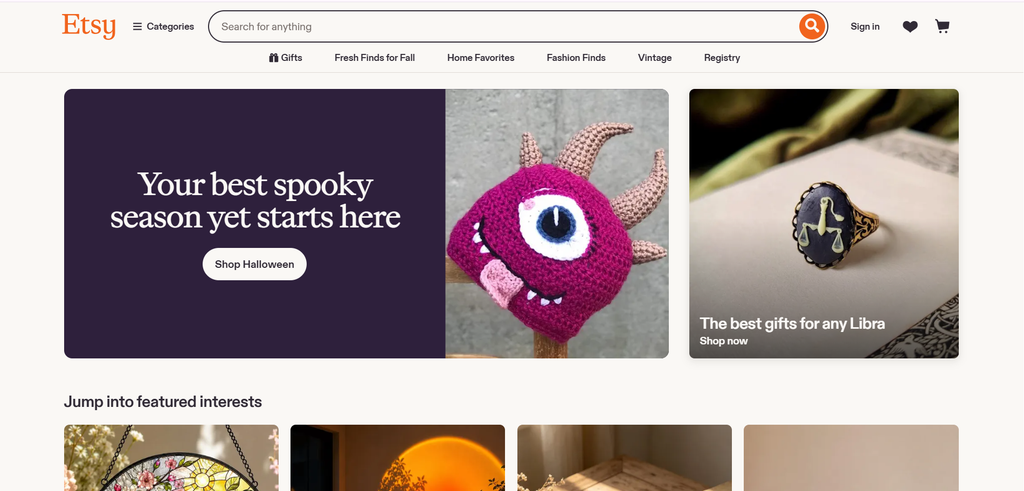
Etsy is an ecommerce marketplace focused on unique, creative, and personalised products sold by independent sellers. Unlike general marketplaces where sellers can list almost any standard retail product, Etsy has specific marketplace standards designed around creativity and originality.
Products generally need to fall into one of Etsy’s accepted categories:
- Made by a seller
- Designed by a seller
- Handpicked by a seller
- Sourced by a seller
This difference is important.
Etsy is not designed to be a traditional retail marketplace where sellers simply purchase generic products and resell them. The marketplace is built around products that have a creative, personalised, handmade, vintage, or craft-focused element.
Common Etsy Business Models
Etsy supports several different business models, allowing sellers to build businesses around handmade products, original designs, vintage items, creative supplies, and digital products.
Understanding these models helps sellers choose the right approach based on their skills, resources, and long-term goals.
1. Handmade Products
Handmade products are items physically created or assembled by the seller. This is one of the most recognized Etsy business models and focuses on craftsmanship, creativity, and unique product value.
Examples include:
- Handmade jewellery
- Candles
- Pottery
- Wooden products
- Artwork
- Clothing
- Leather goods
- Handmade stationery
- Home décor
Handmade sellers compete through factors such as design quality, materials, craftsmanship, personalisation, and brand story.
2. Designed Products
Designed products are items where the seller creates the original concept, artwork, or design but may use an approved production partner to manufacture the final product. This model allows sellers to scale without producing every item themselves.
Examples include:
- Print-on-demand clothing
- Art prints
- Mugs
- Phone cases
- Posters
- Digital designs
3. Vintage Products
Vintage products are items that meet Etsy’s vintage requirements and are valued because of their age, rarity, history, or uniqueness.
Examples include:
- Vintage clothing
- Antique jewellery
- Collectibles
- Retro home décor
Vintage sellers often succeed by finding unique products, understanding buyer interests, and presenting items through strong photography and storytelling.
4. Craft Supplies
Craft supply sellers provide materials and tools that help other creators make their own products.
Examples include:
- Fabric
- Beads
- Yarn
- Craft tools
- Creative materials
This category supports the wider maker community on Etsy and can create opportunities for sellers who understand specific creative niches.
5. Digital Products
Digital products allow sellers to offer downloadable items without physical inventory or shipping requirements.
Examples include:
- Printable planners
- Wedding templates
- Digital artwork
- SVG files
- Resume templates
- Social media templates
- Educational resources
Digital products can be highly scalable, but success still depends on strong design, keyword research, presentation, and customer value.
How to Start Selling on Etsy
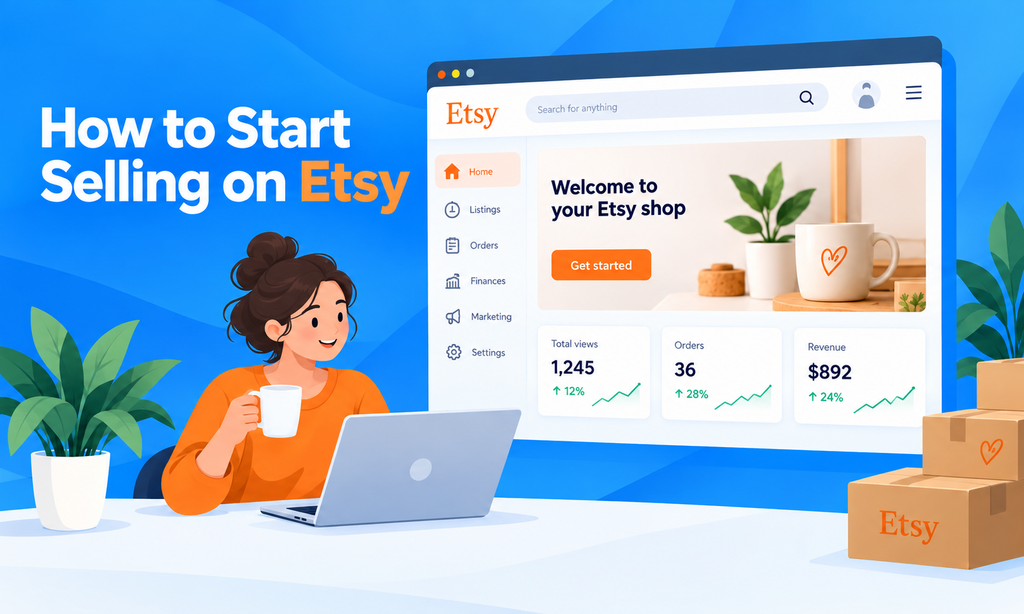
Opening an Etsy shop is straightforward, but building a successful shop requires much more than simply creating an account and uploading products.
A strong Etsy launch begins with the right foundation. Sellers need to understand marketplace requirements, validate product opportunities, create a professional storefront, build optimized listings, and prepare systems that create trust with customers.
Taking the time to prepare before launch helps sellers avoid common mistakes and creates a stronger path for long-term growth.
Step 1: Confirm Your Product Eligibility
Before investing time, money, or inventory into your Etsy business, the first step is ensuring your products meet Etsy’s marketplace requirements.
Unlike general ecommerce platforms, Etsy focuses on unique, creative, and seller-driven products. Sellers need to understand which category their products belong to and whether their business model aligns with Etsy’s standards.
Your products should generally fall into one of these areas:
- Made by you
- Designed by you
- Vintage products
- Craft supplies
- Products created with an approved production partner
Understanding product eligibility early helps prevent future problems such as listing removals, compliance issues, or investing in products that do not fit Etsy’s marketplace.
It also helps sellers choose the right business model from the beginning.
For example, a handmade jewellery seller, a print-on-demand designer, and a digital product creator may all succeed on Etsy, but each requires a different approach to product development, branding, and operations.
Step 2: Research Your Market Before Creating Products
One of the biggest mistakes new Etsy sellers make is creating products based only on personal interests. A product idea may seem attractive, but successful Etsy businesses are built around customer demand.
Before launching, sellers should understand:
- What customers are searching for
- How competitive the market is
- Current price ranges
- Popular product styles
- Customer reviews
- Common complaints
- Seasonal opportunities
- Expected profit margins
The real opportunity is identifying where you can create a stronger offer through better design, improved quality, unique positioning, better customer experience, or additional value.
Step 3: Choose a Shop Name That Supports Your Brand
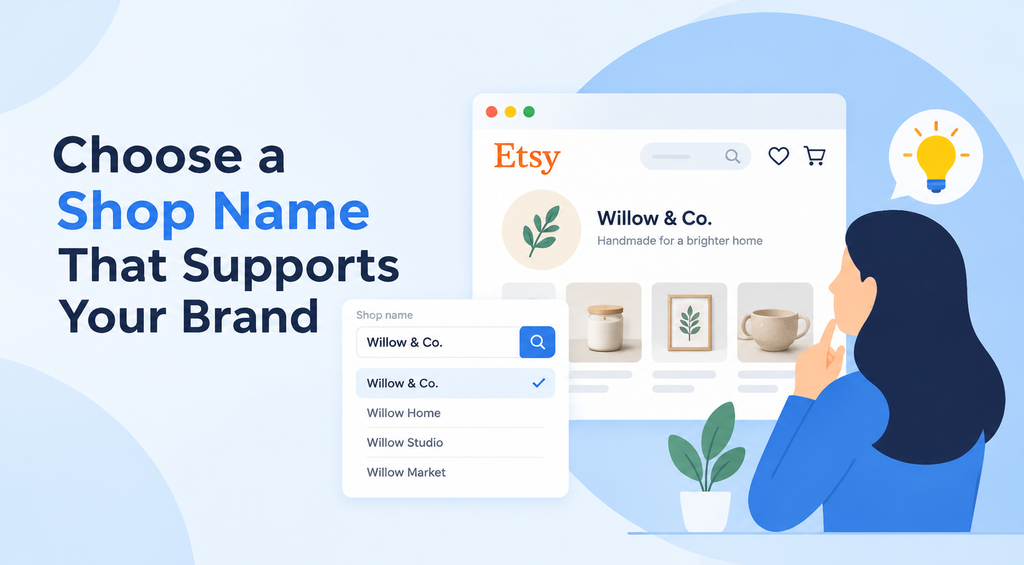
Your Etsy shop name is more than just an account name. It becomes part of your brand identity and can influence how customers remember your business.
A strong shop name should be:
- Easy to remember
- Simple to spell
- Relevant to your product category
- Flexible enough for future expansion
Avoid choosing names that are too narrow.
For example, a shop named ‘WeddingWoodSignsOnly’ may work if you only sell wedding signs today, but it can limit growth if you later expand into wedding invitations, gifts, table décor, or other related products.
Think beyond your first product. The strongest Etsy brands choose names that can grow with the business.
Step 4: Build a Professional Etsy Shop Foundation
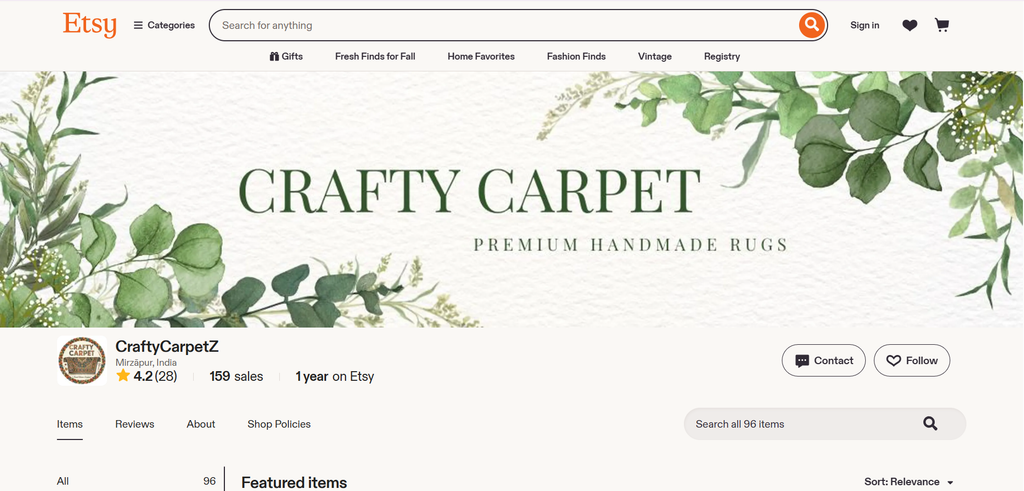
Your Etsy storefront is the first impression customers receive. Before launching products, create a complete and trustworthy shop experience that communicates your brand, products, and values.
A professional Etsy shop should include:
- Shop logo
- Banner image
- Shop announcement
- About section
- Shop policies
- Product categories
- Seller information
A complete storefront creates more confidence than an unfinished shop with only product listings.
Think of your Etsy shop as your online retail space. Every element should help customers understand who you are and why they should buy from you.
Step 5: Set Clear Shipping and Customer Policies
Customer trust plays a major role in ecommerce success. Before purchasing, buyers want confidence about:
- When their order will arrive
- What happens if there is an issue
- Whether returns are possible
- How personalized products work
Clearly define:
- Processing times
- Shipping expectations
- Return policies
- Exchange policies
- Personalisation rules
- Product care instructions
For handmade and customized products, clear communication is especially important because expectations can vary between customers.
Strong policies reduce confusion, prevent unnecessary disputes, and create a smoother buying experience.
A professional Etsy shop does not only sell products, it builds confidence before, during, and after every purchase.
Etsy Product Research Strategy

Product research is one of the most important stages of building a successful Etsy business.
A professionally designed shop with high-quality listings cannot succeed if the product does not have enough customer demand. Many new sellers make the mistake of creating products based on personal interests rather than understanding what buyers are already searching for.
Successful Etsy product research combines marketplace analysis, customer behaviour, competitor research, and profitability evaluation.
1. Understand Demand Before You Create
Before investing time, materials, or inventory into a product, sellers should first understand whether there is genuine customer demand.
Etsy buyers usually arrive with a specific purpose. They are searching for personalised gifts, handmade products, creative designs, home décor, wedding items, craft supplies, and products that offer something different from mass-market alternatives.
Understanding demand requires analyzing customer search behaviour, popular categories, emerging styles, seasonal buying patterns, and competitive trends.
The goal is not simply to find products with high search volume. High demand often comes with high competition. The stronger opportunity is identifying products where buyers are actively searching but current sellers are not fully meeting customer expectations.
For example, a generic wedding sign may have thousands of competing listings. However, more specific products such as:
- Minimalist acrylic wedding welcome sign
- Personalized destination wedding sign
- Luxury handwritten wedding sign may target a more specific audience with stronger purchase intent.
Successful sellers focus on improving existing opportunities through better design, stronger branding, improved customer experience, or additional product value.
2. Use Etsy Auto-Suggest Feature for Keyword Discovery
Etsy’s search bar is one of the simplest ways to understand customer language and buying behaviour.
When shoppers search for products, Etsy provides suggestions based on popular searches and buyer activity. These suggestions reveal how customers describe products and what specific variations they are interested in.
Start with a broad keyword related to your product category and analyse the suggested searches.
For example, searching: Necklace
may reveal:
- Personalised name necklace
- Birth flower necklace
- Custom pet necklace
- Mother daughter necklace
- Minimalist gold necklace
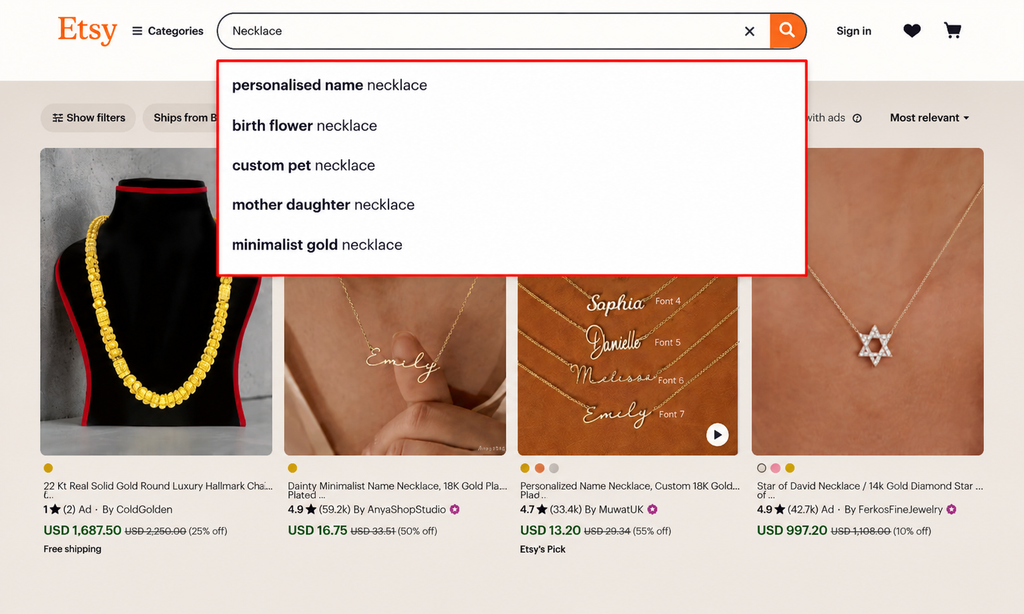
How to Find Keywords Using Etsy Search
These suggestions help sellers understand customer intent and identify long-tail opportunities.
A shopper searching for a gold necklace may still be exploring different options. However, a shopper searching for a personalised birth flower gold necklace usually has a clearer idea of what they want and may be closer to purchasing.
Long-tail searches are valuable because they connect products with more specific customer needs. They help sellers understand exactly how buyers describe products and create listings that better match real search behaviour.
By analyzing Etsy search suggestions, sellers can discover new product ideas, improve listing keywords, and identify niche opportunities with stronger purchase intent.
3. Analyze Competitor Listings
Competitor research is not about copying successful sellers. It is about understanding why certain products attract customers and identifying opportunities to create a stronger offer.
When analyzing competitor listings, focus on 3 areas:
Product Positioning
Understand how competitors present their products and who they are targeting.
Look at whether the product is designed for:
- Gifts
- Specific occasions
- Personalisation
- A particular customer group
- A specific lifestyle or aesthetic
Understanding positioning helps sellers identify how products are being differentiated in the marketplace.
Listing Presentation
Analyze how successful sellers present their products through:
- Main images
- Photography style
- Product titles
- Description structure
- Pricing
- Variations
- Personalisation options
A strong listing often reveals what customers expect before making a purchase.
Customer Response
Reviews and customer interactions provide valuable insights into product performance. Analyse review volume, customer feedback, frequently asked questions, and complaints.
If buyers repeatedly mention issues such as poor packaging, limited options, unclear instructions, or slow communication, those weaknesses can become opportunities to create a better customer experience.
4. Explore Etsy’s ‘Most Loved’ Section
Etsy’s Most Loved section provides insight into products receiving strong customer engagement.
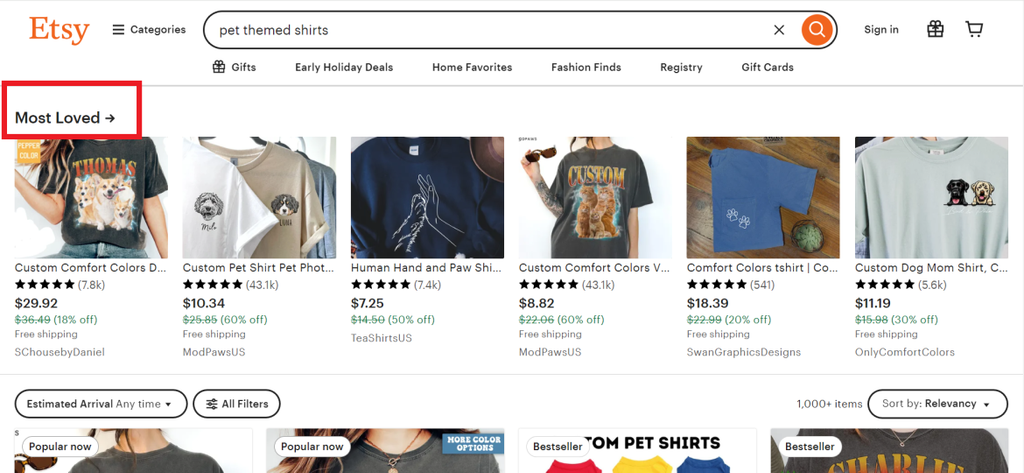
Instead of simply browsing these products, sellers should analyse the patterns behind successful listings.
Look for:
- Product styles customers prefer
- Popular materials and colours
- Common themes
- Pricing approaches
- Photography styles
- Seasonal opportunities
The goal is not to reproduce existing products. The purpose is to understand what customers respond to and apply those insights to create a differentiated product.
5. Study Customer Reviews for Product Insights
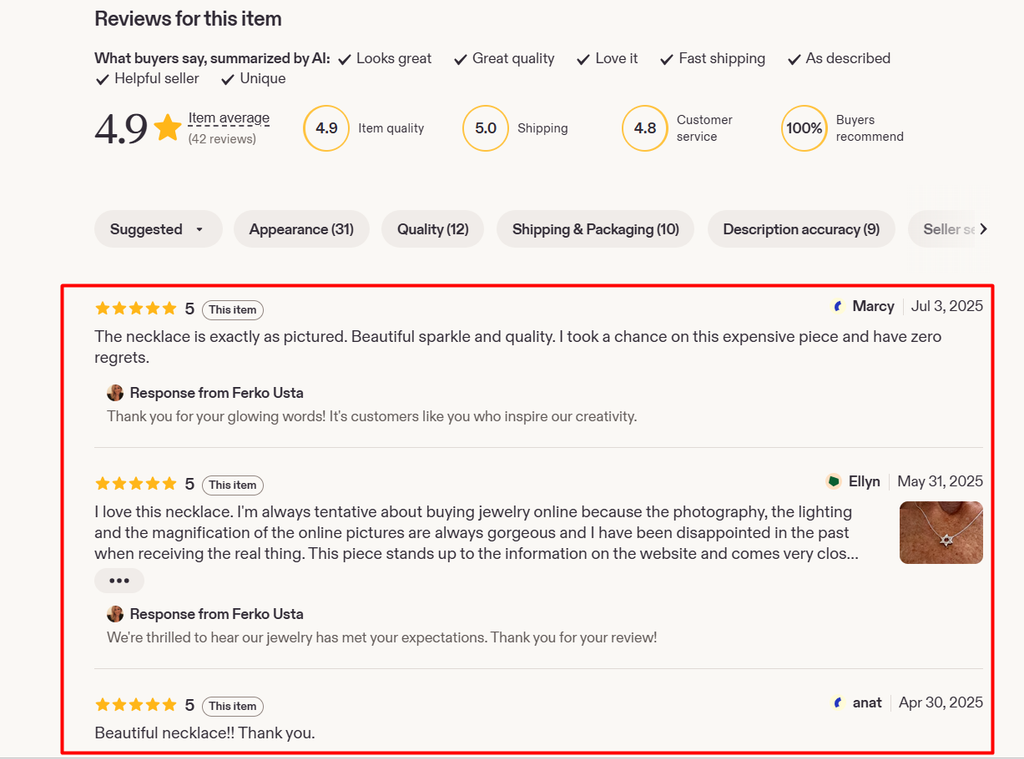
Customer reviews are one of the most valuable sources of product research information.
Positive reviews show what customers appreciate, while negative reviews reveal where existing products fail to meet expectations.
Review analysis can uncover opportunities related to product quality, sizing, packaging, customisation options, instructions, delivery experience, and product presentation.
For example, if customers frequently mention that personalisation is confusing, creating a simpler customisation process can become a competitive advantage.
Customer feedback helps sellers move beyond creating similar products and instead build products that solve real buyer concerns.
6. Research Occasion-Based Demand
Etsy has a strong gift-driven marketplace. Many customers are not only searching for products; they are searching for something connected to a specific moment or relationship.
Common purchase occasions include:
- Birthday gifts
- Wedding gifts
- Anniversary gifts
- Graduation gifts
- Mother’s Day
- Father’s Day
- Christmas
- Valentine’s Day
- Baby showers
- Housewarming gifts
Understanding the reason behind a purchase helps sellers position products more effectively.
Instead of selling a Wooden Frame, a seller could position it as a Personalised First Home Anniversary Gift. The product may be similar, but the second approach connects with a stronger emotional buying motivation.
Successful Etsy sellers understand not only what customers buy, but why they buy.
7. Evaluate Profit Before Launching

Demand alone does not create a successful Etsy business. A product must also generate healthy profit margins after considering all business costs.
Before launching, sellers should calculate: Selling Price
Minus:
- Product cost
- Materials
- Labour
- Packaging
- Shipping
- Etsy fees
- Payment processing fees
- Advertising costs
- Returns or replacements
A product generating hundreds of sales may still fail if the margins are too low.
Before investing in production, sellers should understand their cost structure, expected margins, break-even point, advertising tolerance, and scaling potential.
Etsy Listing Optimization
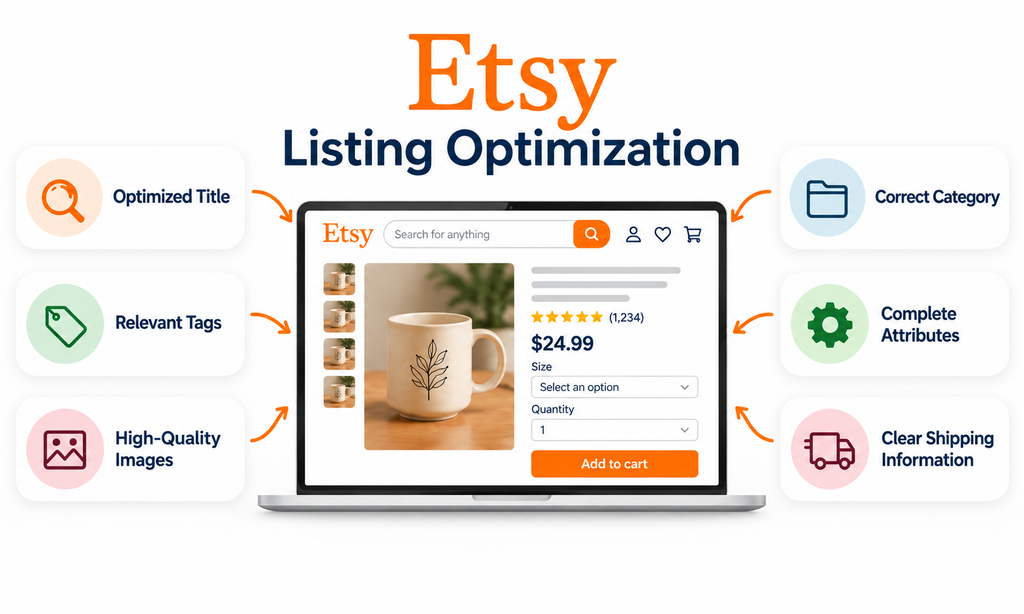
Once you have identified the right product, the next challenge is turning visitors into customers.
A great Etsy listing does more than simply display a product. It needs to help Etsy understand what you are selling while also helping shoppers feel confident enough to make a purchase.
Every part of your listing, from the category and attributes to the title, images, description, pricing, and shipping details, plays a role in how customers discover and evaluate your product.
A successful Etsy listing has two main goals:
1. Help Etsy understand your product and match it with relevant searches.
2. Help customers understand the product, trust the seller, and make a buying decision.
Strong Etsy sellers do not optimize listings only for search visibility. They create listings that connect search traffic with a smooth customer experience.
1. Choose the Correct Product Category
Categories are one of the first signals Etsy uses to understand where your product belongs.
Selecting the most accurate and specific category helps Etsy match your listing with shoppers who are searching for that type of product.
Avoid choosing broad categories simply because they appear to have more traffic. A highly relevant category usually creates better visibility because your product is competing against more similar items.
A beaded necklace should not be placed under a broad Jewelry category when a more specific category like Jewelry → Necklaces → Choker Necklaces is available.
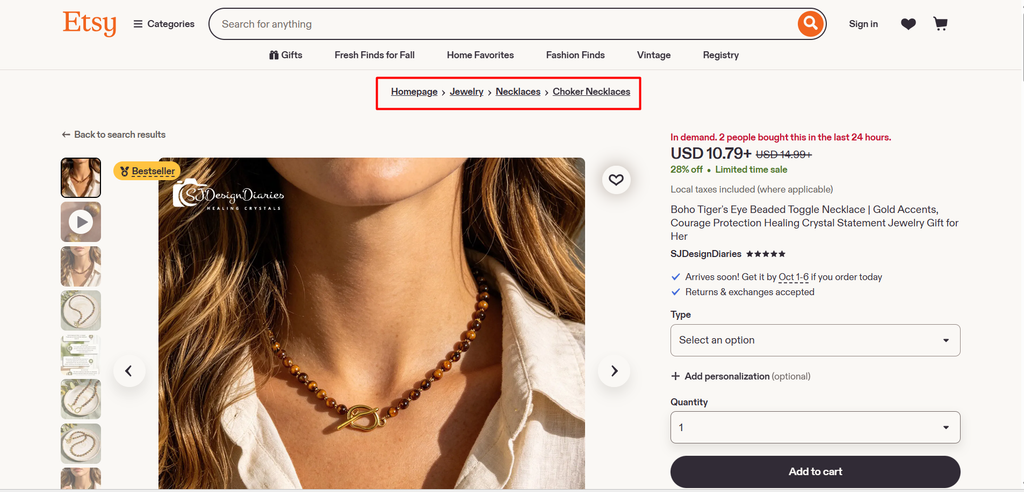
Accurate categorization helps Etsy understand your product better and improves the chances of reaching the right customers.
2. Complete All Relevant Attributes
Attributes provide Etsy with additional structured information about your product.
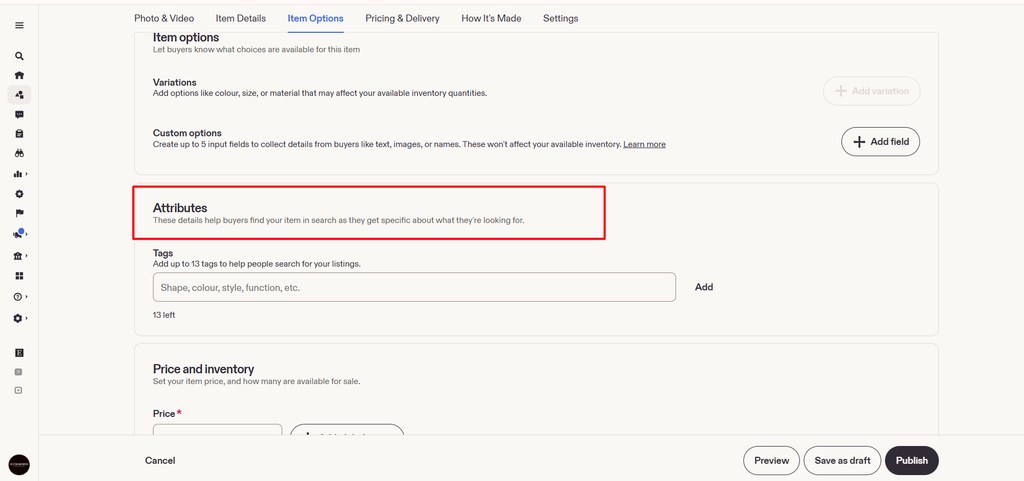
They help describe your product beyond keywords and allow Etsy to better understand specific details that shoppers may use when searching.
Depending on your category, attributes may include:
- Color
- Material
- Size
- Style
- Occasion
- Recipient
- Dimensions
- Jewelry details
- Clothing specifications
Complete every relevant attribute available for your product.
Leaving important fields incomplete can reduce your opportunities because Etsy has less information to understand where your listing fits.
A necklace listing with details about the metal type, style, color, and occasion gives Etsy much more context than a listing with only a basic title.
3. Create Clear Etsy Titles
Your Etsy title needs to work for both Etsy search and potential customers.
Keywords help Etsy understand your product, but adding too many repeated phrases can make your title difficult to read. A strong title should naturally combine important search terms with clear product details so shoppers can quickly understand what you are selling.
A well-optimized title should communicate:
- What the product is
- Main materials or features
- Important style or variations
- The occasion or customer intent
Title Example:
Weak: Freshwater Pearl Necklace Pearl Drop Necklace Wedding Necklace Bridal Gift Necklace Gift for Her
Better: Minimalist Freshwater Pearl Drop Necklace, Single Pearl Necklace, Wedding Necklace, Bridal Jewelry, Bridesmaid Gift for Her, Gift for Mom
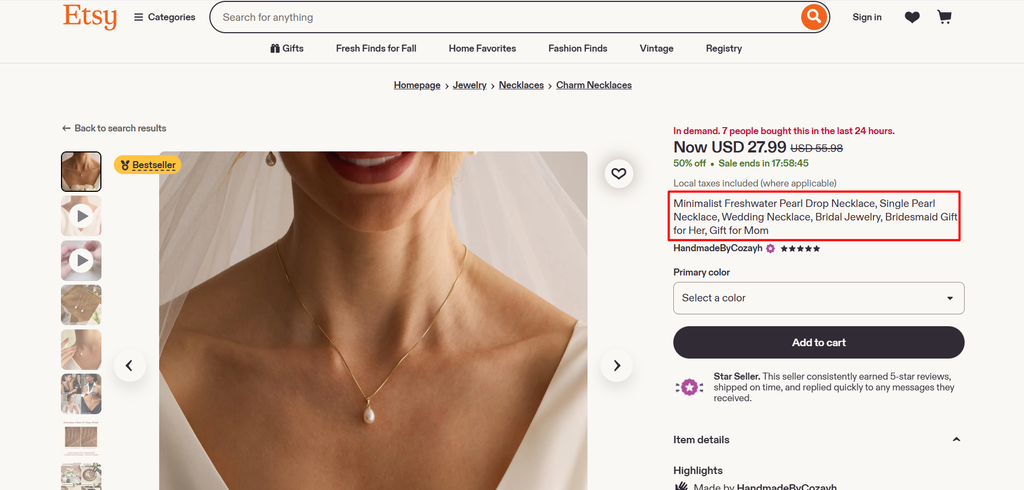
The improved title keeps the important search terms while making the product clearer and more appealing to shoppers.
A good Etsy title should read like a helpful product description, not a collection of unrelated keywords.
4. Write Product Descriptions That Convert
Your product description is where you turn interest into confidence.
After discovering your listing, customers use the description to understand what they are buying, what makes it valuable, and whether it meets their expectations.
A strong Etsy description should include:
Product Overview
Start by clearly explaining what the product is, who it is designed for, and what makes it special.
Materials and Quality
Explain important details such as:
- Material type
- Finish
- Product quality
- Durability
Customers want to understand what they are receiving before they purchase.
Size and Dimensions
Include accurate measurements where relevant.
Mention:
- Product size
- Available sizes
- Weight
- Dimensions
Clear sizing information helps prevent confusion and reduces returns.
Personalization Details
For personalized products, make the process simple and clear.
Explain:
- Available customization options
- Required customer information
- Character limits
- Font choices
- Design options
Processing Information
Set clear expectations around:
- Production time
- Processing timeline
- Shipping preparation
Care Instructions
For products that require maintenance, provide simple care guidance to help customers protect their purchase.
A detailed description reduces uncertainty and helps customers feel confident buying from your shop.
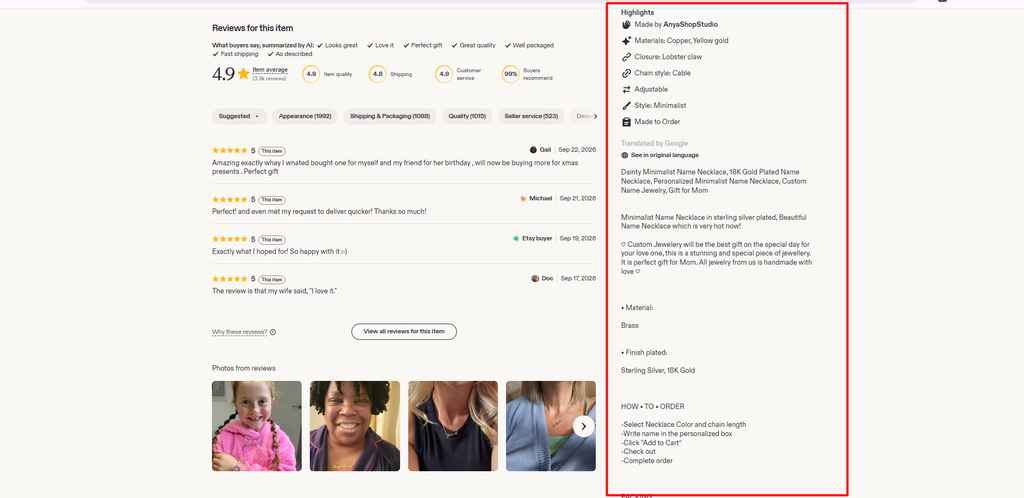
5. Use Etsy Tags Strategically
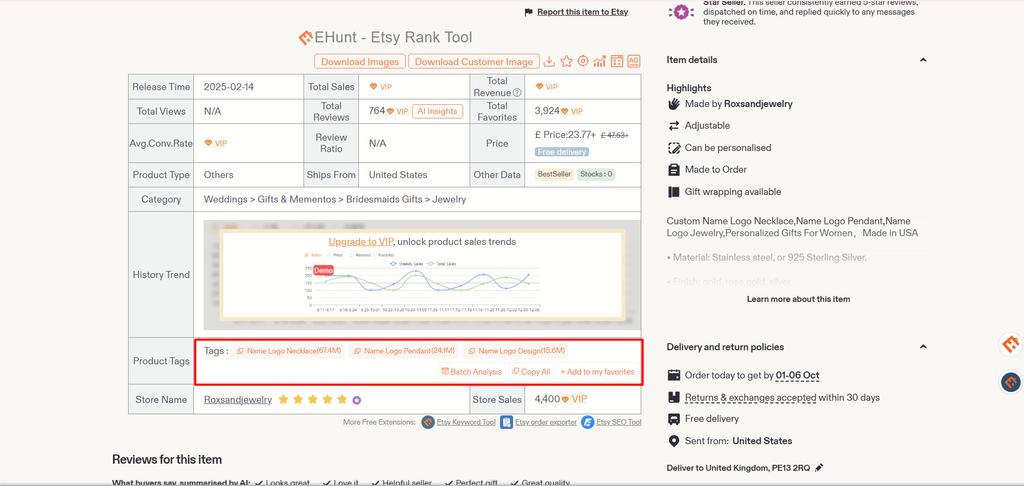
Tags help Etsy understand additional search terms where your product may appear.
Etsy allows sellers to add up to 13 tags per listing, and each tag provides another opportunity to match customer searches. Instead of repeating the same keyword multiple times, use tags to cover different search angles.
For Personalized Leather Journal,
Possible tags:
- Custom leather journal
- Engraved notebook
- Travel journal
- Writing journal
- Gift for writer
- Handmade notebook
- Leather diary
A strong tag strategy considers different ways customers may search for the same product.
Think about:
- Product type
- Material
- Style
- Recipient
- Occasion
- Usage
Etsy SEO Strategy
Etsy SEO is the process of helping your products appear when shoppers search for items on Etsy.
However, Etsy SEO in 2026 is no longer about simply adding as many keywords as possible into a listing. The marketplace has become more sophisticated.
A successful Etsy SEO strategy combines:
- Keyword relevance
- Listing quality
- Customer engagement
- Conversion performance
- Shop experience
- Customer service
The goal is not just to appear in search results. The goal is to appear for the right shoppers and convince them that your product is the right choice.
How Etsy Search Works
Etsy search works through two main stages: understanding which products are relevant to a search and determining which relevant listings should appear higher.
1. Query Matching
The first stage determines whether a listing matches what a shopper is searching for.
Etsy analyzes information from different parts of your listing, including:
- Titles
- Tags
- Categories
- Attributes
- Descriptions
When your listing information matches the shopper’s search intent, Etsy can identify your product as a relevant result.
A shopper searches: Personalized wedding gift
Etsy looks for listings related to:
- Personalized products
- Wedding items
- Gift-related keywords
- Relevant attributes
A listing with accurate information and strong keyword relevance has a better chance of appearing for that search.
2. Search Ranking
After Etsy identifies relevant listings, it determines the order in which products appear in search results.
Ranking considers different performance signals, including:
- Listing quality
- Customer experience
- Conversion behavior
- Reviews
- Shop performance
- Buyer interaction
This means two sellers can target similar keywords but receive different visibility because one listing creates a stronger customer response.
Etsy SEO Strategies
Build a Keyword Strategy Before Creating Listings
Many sellers start creating titles and tags without understanding what customers are actually searching for. This often leads to listings that describe the product from the seller’s perspective rather than matching real buyer searches.
A stronger approach is building a keyword strategy before publishing your listing. Understanding customer search behavior helps sellers create listings that match how shoppers actually discover products on Etsy.
Start by organizing keywords into different groups:
1. Primary Keywords
Primary keywords are the main phrases that directly describe your product.
Example: Personalized Leather Journal
2. Supporting Keywords
Supporting keywords are additional phrases customers may use when searching for similar products.
Examples:
- Custom notebook
- Engraved journal
- Handmade journal
- Leather diary
3. Attribute Keywords
Attribute keywords describe specific product characteristics.
Examples:
- Brown leather
- A5 size
- Handmade
- Minimalist
4. Intent Keywords
Intent keywords explain why customers are looking for the product.
Examples:
- Writing journal
- Travel journal
- Gift for writer
5. Occasion Keywords
Occasion keywords connect products with specific buying moments.
Examples:
- Graduation gift
- Birthday gift
- Anniversary gift
A structured keyword strategy helps sellers target different search opportunities instead of adding random keywords throughout their listings.
Use Etsy SEO Tools for Keyword and Market Research
While Etsy search suggestions provide valuable insights, dedicated Etsy research tools can help sellers analyze keywords, competition, and product opportunities in more detail.
Tools such as Alura, EverBee, and eRank provide additional marketplace insights that support better decision-making.
These tools can help sellers understand:
- Keyword demand
- Search trends
- Competition levels
- Product opportunities
- Competitor listings
- Pricing patterns
Alura
Alura helps sellers research products, analyze keywords, and study competitor shops.
Sellers can use Alura to discover product opportunities, identify keyword trends, and understand how successful shops position their listings.
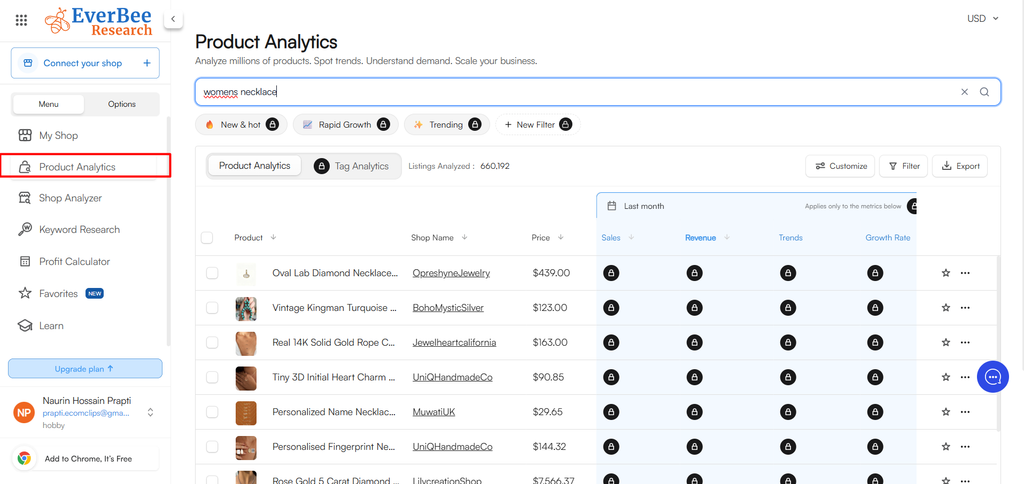
EverBee
EverBee helps sellers analyze Etsy products while browsing the marketplace.
It provides insights into estimated sales performance, revenue potential, competitor activity, and product trends.
eRank
eRank focuses on Etsy SEO research and listing optimization.
Sellers can use eRank to discover keyword ideas, analyze competition, track seasonal trends, and improve titles and tags.
These tools should support marketplace research rather than replace it. The strongest Etsy SEO strategies combine tool insights with customer understanding and competitor analysis.
Use Tags, Categories, and Attributes to Improve Search Relevance
Etsy uses multiple listing elements to understand your product and match it with relevant searches. Tags, categories, and attributes work together to provide Etsy with more context about your listing.
Etsy allows sellers to add up to 13 tags per listing. Instead of repeating keywords, use tags to cover different customer searches.
Example: Custom Pet Portrait
Possible tags:
- Pet memorial gift
- Dog portrait art
- Custom animal art
- Pet lover gift
- Personalized artwork
Categories and attributes also help improve search relevance. Complete important details such as:
- Color
- Material
- Style
- Occasion
- Size
- Recipient
A listing with complete information gives Etsy a clearer understanding of your product and improves the chances of reaching relevant shoppers.
Improve Click-Through Rate From Search Results
Appearing in search results is only the first step.
When shoppers see your listing, they decide whether to click based on how attractive, relevant, and trustworthy your product appears.
Important click factors include:
- Main image
- Product design
- Price
- Reviews
- Title clarity
- Shipping information
Your first image is especially important because it is often the first element shoppers notice while browsing Etsy.
A listing receiving impressions but very few clicks may indicate:
- Weak thumbnail image
- Unclear product value
- Poor positioning
- Pricing concerns
Improving click-through rate helps convert search visibility into actual visitors.
Improve Conversion Through Better Listing Experience
SEO does not end when shoppers click your listing.
Once visitors arrive, your listing needs to provide enough information and confidence to encourage a purchase.
Conversion can be improved through:
- Better product photography
- Clear descriptions
- Competitive pricing
- Strong reviews
- Accurate expectations
- Simple personalization options
A listing that receives traffic but does not generate sales may need improvements beyond keywords.
Strong conversion performance shows that your product successfully matches customer expectations.
Build Strong Customer Experience Signals
Customer experience plays an important role in long-term Etsy performance.
Etsy shoppers consider reviews, communication, delivery reliability, and overall buying experience before making a purchase.
Important areas include:
- Review ratings
- Response speed
- Order accuracy
- Case management
- Delivery reliability
A positive customer experience helps create:
- Better reviews
- More repeat customers
- Stronger shop reputation
SEO helps customers discover your products, but customer satisfaction helps build long-term marketplace growth.
Etsy Product Photography Tips

On Etsy, photography is not just a visual element. It is a sales tool.
Customers cannot physically touch or inspect products before purchasing. Your images need to replace that experience by showing product quality, size, materials, usage, and details.
A strong listing can still fail if the photography does not create enough confidence for customers to purchase.
1. Create a Strong First Image
The first image is the customer’s first interaction with your product.
It should immediately communicate what the product is, why it is attractive, and why shoppers should click.
A strong main image should be:
- Clear
- Bright
- Professional
- Product-focused
- Easy to understand
Avoid:
- Confusing compositions
- Too much text
- Poor lighting
- Over-edited colors
2. Build a Complete Product Photography Sequence
Your images should answer customer questions throughout the buying journey.
A strong Etsy listing should include different types of images that help shoppers understand the product better.
1. Main Product Image
Show the product clearly and professionally. The purpose is to generate clicks and create the first impression.
2. Alternative Angle Image
Show different views of the product. It helps customers understand the product from multiple perspectives.
3. Lifestyle Image
Show the product being used in a real environment.
Examples:
- Jewelry worn by a person
- Home décor inside a room
- Gift product being opened
4. Scale Image
Show the actual size of the product visually.
Examples:
- Product in hand
- Product beside common objects
- Product installed in its environment
5. Detail Image
Highlight important product details such as:
- Texture
- Material
- Craftsmanship
- Finish
6. Variation Image
Show available options, including:
- Colors
- Sizes
- Styles
- Customization choices
7. Packaging Image
Show:
- Gift packaging
- Shipping preparation
- Brand experience
3. Use Lifestyle Photography to Create Emotional Connection
Lifestyle images are especially powerful on Etsy because many purchases are emotional.
Customers are often not only buying a product. They are buying a feeling, memory, or experience.
For example, someone purchasing a handmade wedding gift is not just buying an item. They are buying something connected to a special moment.
Lifestyle photography helps communicate that emotional value and makes products feel more meaningful.
4. Show Product Size Clearly
One common ecommerce challenge is customers misunderstanding product size. Dimensions written in text are not always enough because shoppers may struggle to imagine scale.
Instead of only writing: 10 inches wide
Show:
- Someone holding the product
- Product placed in a room
- Product beside a familiar object
Clear size representation reduces uncertainty and helps customers make confident purchase decisions.
5. Keep Product Colors Accurate
Product photography should look attractive while still representing the actual item.
Avoid excessive editing that changes:
- Product color
- Material appearance
- Texture
Customers expect the delivered product to match what they saw online.
Accurate images help reduce:
- Returns
- Complaints
- Negative reviews
6. Use Product Videos When Helpful
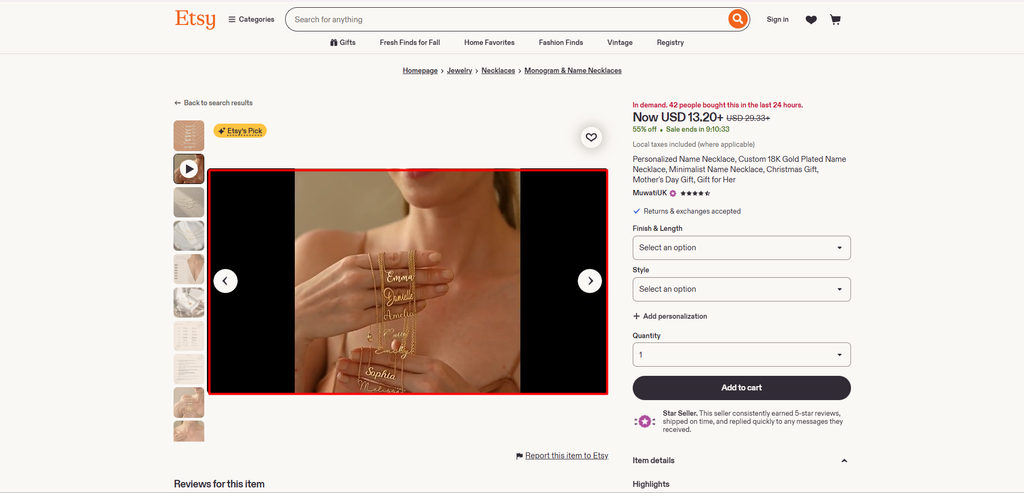
Short product videos can provide information that static images cannot.
Videos are especially useful for showing:
- Product movement
- Handmade process
- Packaging experience
- Product details
- Size demonstration
Products with unique textures, functions, or craftsmanship can benefit significantly from video content.
7. Maintain Consistent Brand Photography
Your images should feel connected across your entire Etsy shop.
Maintain consistency in:
- Background style
- Lighting
- Colors
- Editing
- Composition
A consistent visual style creates a more professional storefront and helps customers recognize your brand.
Photography Mistakes That Reduce Sales
- Poor Lighting: Dark or unclear images reduce customer confidence.
- Weak Main Image: Customers should immediately understand what the product is.
- Too Few Photos: Limited images leave unanswered questions and increase hesitation.
- Inconsistent Visual Style: Random photography styles can make a shop feel less professional.
- Misleading Images: Over-editing or unrealistic images can create disappointment when customers receive the product.
Etsy Branding Strategy

Many sellers believe Etsy success comes only from finding the right product and improving search visibility. While having the right products and a strong SEO strategy are important, long-term Etsy growth depends on something that is much harder for competitors to copy: a strong brand identity.
Thousands of sellers may offer similar products. A personalized necklace, wedding sign, printable planner, or home décor item can often be recreated by another seller. However, customers do not only purchase products; they purchase trust, style, experience, and the story behind the brand.
A strong Etsy brand transforms individual listings into a complete shopping experience. It helps customers recognize your shop, understand your value, and feel more confident choosing your products over similar alternatives.
Successful Etsy branding connects:
- Product design
- Visual identity
- Photography
- Shop presentation
- Packaging
- Customer experience
- Storytelling
1. Define Your Brand Positioning
Before designing your logo, choosing colors, or creating your shop banner, first define what your brand represents.
Brand positioning is the foundation of your Etsy business. It explains who your customers are, what products you offer, and why your shop is different from thousands of other sellers. A clear position helps customers immediately understand whether your products are created for them.
Start by identifying:
Your Target Customer
Understanding your ideal customer helps shape your products, messaging, photography, and overall brand style.
Examples:
- Newly engaged couples
- Home décor buyers
- Pet owners
- Gift shoppers
- Craft enthusiasts
Your Product Focus
Avoid describing your business too broadly.
Instead of: Handmade products. A stronger positioning: Minimalist personalized wedding gifts designed for modern couples
Specific positioning makes your shop easier to understand and helps attract customers with stronger purchase intent.
Your Differentiation
Your products should have a reason for customers to choose them over alternatives.
Your difference may come from:
- Unique designs
- Product quality
- Customization options
- Materials
- Craftsmanship
- Packaging
- Customer experience
A strong brand does not compete only on price. It creates value through uniqueness and customer connection.
2. Create a Consistent Visual Identity
Your visual identity is how customers recognize your brand before they even read your shop name.
A professional Etsy shop should feel visually connected across every customer touchpoint, including your shop banner, product images, packaging, and social media.
Consistency creates familiarity. When customers repeatedly see the same style, colors, and design language, your shop becomes easier to remember. Important visual elements include:
Logo
Your logo represents your shop identity and is one of the first elements customers associate with your brand.
A good Etsy logo should be:
- Simple
- Recognizable
- Easy to read
- Suitable for your product style
Avoid overly complicated designs that become unclear when displayed at smaller sizes.
A strong logo does not need to explain everything about your business. Its purpose is to create recognition and support your overall brand identity.
Color Palette
Colors influence how customers emotionally perceive your brand. Different color choices can communicate different brand personalities.
Luxury Brand
- Neutral tones
- Black
- Gold accents
Natural Handmade Brand
- Earth tones
- Green
- Brown
- Warm colors
Modern Minimal Brand
- White
- Grey
- Soft colors
Once selected, use your color palette consistently across:
- Shop banner
- Product photography
- Packaging
- Social media
A consistent color system creates a more professional and memorable shopping experience.
Typography
Typography plays an important role in communicating brand personality.
Elegant fonts may work well for wedding products or luxury items, while clean modern fonts may better suit digital products or minimalist brands.
The most important factor is consistency. Using the same font style across banners, images, and marketing materials helps create a unified brand appearance.
3. Optimize Your Etsy Shop Storefront
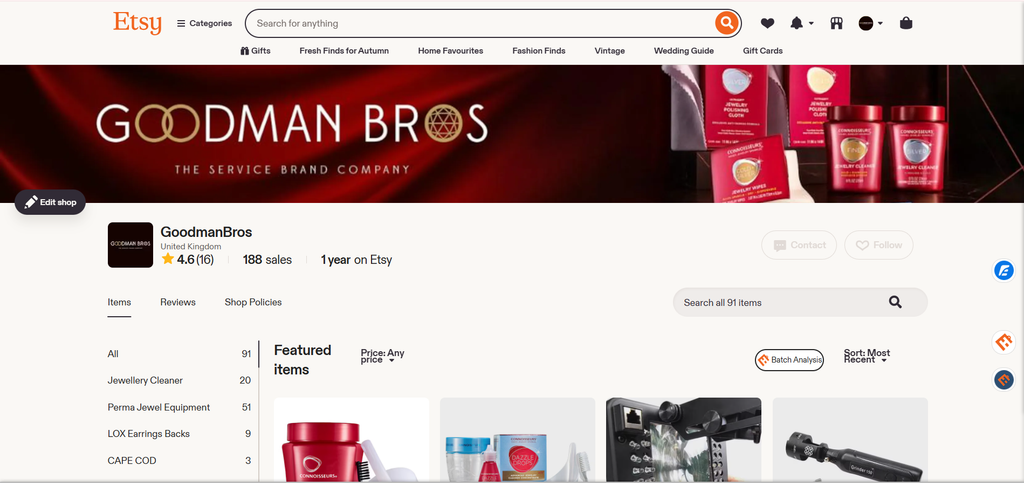
Your Etsy storefront is your digital shop window. Before customers explore individual listings, they often form their first impression from your overall shop presentation.
A well-designed storefront creates trust and makes customers more comfortable exploring your products.
Shop Banner
Your shop banner should immediately communicate your brand style and product category.
A strong banner helps visitors understand:
- What your shop sells
- Your visual style
- Your overall brand personality
It should support your brand message without becoming overcrowded with information.
Shop Icon
Your shop icon appears throughout Etsy and represents your brand in smaller spaces.
Because customers often see it at a reduced size, the design should remain clear and recognizable.
A simple, consistent icon creates stronger brand recognition over time.
Shop Announcement
Your shop announcement is an opportunity to communicate important information with visitors.
Use it for:
- New collections
- Seasonal launches
- Processing updates
- Important shop information
Keep it useful and customer-focused rather than filling it with generic promotional messages.
Shop Sections
Organized shop sections make it easier for customers to browse your products.
For example:
Wedding Shop
- Wedding Signs
- Bridal Gifts
- Table Décor
Jewelry Shop
- Necklaces
- Bracelets
- Personalized Gifts
Clear organization improves navigation and helps customers discover more products.
4. Build a Strong About Section
One of Etsy’s biggest advantages is the connection between buyers and sellers.
Unlike traditional marketplaces where customers may only focus on price, Etsy shoppers often value the story behind the product.
A strong About section helps customers understand:
- Who creates the products
- Why the business started
- How products are made
- What makes the brand unique
Include your brand story, creative process, materials, and values. Specific details create stronger trust than general statements.
For example, instead of saying: We create high-quality handmade products.
Explain: Each piece is designed and carefully finished in our studio using selected materials to create meaningful products for special occasions.

5. Extend Branding Through Packaging
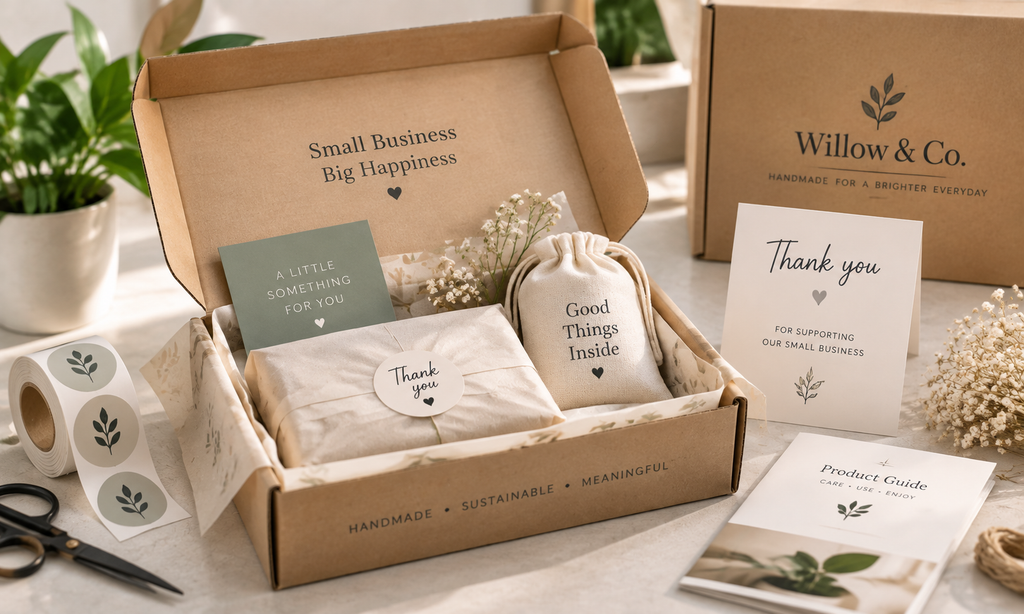
The customer experience does not end when someone places an order.
Packaging is the final physical interaction customers have with your brand, making it an important part of the overall experience.
Thoughtful packaging can include:
- Branded packaging
- Thank-you cards
- Care instructions
- Product guides
- Gift-ready presentation
The goal is not to create expensive packaging. The goal is creating a thoughtful experience that matches the quality customers expect from your shop. A memorable unboxing experience can encourage positive reviews and repeat purchases.
6. Build Trust Through Consistency
Strong Etsy brands are built through consistent experiences over time.
Customers should receive the same level of quality and professionalism from their first interaction with your shop until they receive their order.
Maintain consistency in:
- Product quality
- Photography style
- Communication
- Packaging
- Delivery expectations
- Product descriptions
A consistent customer experience builds confidence and helps turn first-time buyers into repeat customers.
Branding is not only about how your Etsy shop looks. It is about how customers feel throughout the entire buying journey.
Etsy Fees and Pricing Strategy
Understanding Etsy fees is essential before launching products. Many sellers focus only on sales revenue but overlook marketplace costs that directly affect profitability.
A product generating hundreds of sales does not always mean it is a successful business. Sellers need to understand every cost involved and include these expenses when setting prices.
1. Etsy Listing Fee
Etsy charges a listing fee when sellers publish products on the marketplace. This means every product added to your catalogue has a cost, even before generating sales. Sellers managing large inventories should carefully consider these expenses.
Important factors include:
- Large catalogues create higher total listing costs
- Expired listings may require renewal
- Multiple product variations may increase listing expenses
Small fees can become significant when managing hundreds or thousands of products.
2. Etsy Transaction Fee
Etsy charges a transaction fee when a customer purchases a product.
This fee applies to the order amount and should be included when calculating:
- Product pricing
- Profit margins
- Advertising decisions
Ignoring transaction fees can result in lower-than-expected profits, especially for products with smaller margins.
3. Etsy Payment Processing Fee
Payment processing fees cover the cost of handling customer payments through Etsy Payments.
These fees can vary depending on the seller’s country and marketplace location.
Sellers should always calculate fees based on their own account location rather than copying another seller’s fee structure from a different region.
4. Currency Conversion Fees
International sellers may face additional currency conversion costs when their listing currency and payment account currency are different.
These fees should be considered when selling internationally because they directly affect final profit margins.
Understanding currency-related costs helps sellers price products more accurately across different markets.
5. Etsy Ads Costs
Etsy Ads use a cost-per-click model, meaning sellers pay when shoppers click on promoted listings.
Advertising costs depend on factors such as:
- Product category
- Competition
- Budget
- Customer demand
Etsy Ads should be viewed as a business investment rather than simply an expense.
The important consideration is whether advertising generates profitable sales after all costs are included.
6. Offsite Ads Fees
Etsy may promote eligible listings outside the marketplace through channels such as search engines, social platforms, and partner websites.
When these promotions generate attributed sales, sellers may pay an additional advertising fee.
These costs should be included when calculating product profitability, especially for sellers with higher sales volumes.
Build a Profitable Etsy Pricing Strategy
Many new sellers make one common pricing mistake: they calculate only the product cost. A professional pricing strategy considers the complete cost structure of running the business.
1. Product Cost: Include all materials, manufacturing expenses, and production costs required to create the product.
2. Labour Cost: Consider the time spent designing, creating, preparing, and packaging each order.
3. Marketplace Costs: Include Etsy-related expenses such as:
- Listing fees
- Transaction fees
- Payment processing fees
4. Marketing Costs: Consider advertising expenses and promotional activities needed to generate sales.
5. Business Growth: Leave room for future investment, such as improving products, expanding inventory, or building your brand.
Etsy Ads Strategy
Etsy Ads can help sellers increase product visibility, test customer demand, and accelerate growth. However, advertising should not be treated as a shortcut to success.
Many new sellers assume that increasing ad spending will automatically generate more sales. In reality, Etsy Ads only increase exposure. If a product has weak photography, unclear positioning, low demand, poor descriptions, or uncompetitive pricing, advertising will simply bring more shoppers to a listing that is not ready to convert.
Advertising works best when it amplifies products that already show customer interest and sales potential.
How Etsy Ads Work
Etsy Ads allow sellers to promote their listings within Etsy search results and other shopping placements across the marketplace.
The system works on a cost-per-click model, meaning sellers pay when shoppers click on an advertised listing. Advertising costs depend on factors such as product category, competition, customer demand, budget, and listing performance.
Sellers can control their daily advertising budget and select which listings they want to promote.
Types of Etsy Ads
Etsy provides different advertising options to help sellers increase visibility both inside and outside the marketplace.
1. Etsy Search Ads
Etsy Search Ads promote listings directly within Etsy search results.
When shoppers search for products related to your listing, promoted products may appear in highly visible positions.
Search Ads can help sellers:
- Increase product visibility
- Reach shoppers with stronger buying intent
- Test product demand
- Promote high-potential listings
2. Etsy Browse and Placement Ads
Etsy Ads can also display promoted listings in different shopping areas across the marketplace, including category pages and browsing sections.
These placements help products reach shoppers who may not be searching for an exact keyword but are exploring related products.
They can support:
- Product discovery
- Brand awareness
- Reaching new audiences
3. Etsy Offsite Ads
Etsy Offsite Ads promote eligible listings outside the Etsy marketplace through external channels such as search engines, social platforms, and partner websites.
These ads help sellers reach customers beyond Etsy’s internal search system.
When an external advertisement generates an attributed sale, sellers may pay an additional advertising fee based on Etsy’s applicable fee structure.
When Should You Start Etsy Ads?
Advertising should not be the first step after creating a listing. Before investing in ads, sellers should make sure their product page is prepared to convert visitors into customers.
A strong listing should have:
- Professional product photography
- Clear title and description
- Complete attributes
- Relevant tags
- Competitive pricing
- Positive customer experience
Before starting Etsy Ads, consider these important factors:
1. Ensure Your Listing Is Fully Optimized
Before spending money on advertising, make sure your listing provides enough information and confidence for shoppers.
Your product page should clearly communicate:
- What the product is
- Why customers should choose it
- What they will receive
- How the product is different
Advertising increases visibility, but it cannot replace strong listing optimization.
2. Choose Products With Customer Interest
Etsy Ads work best when promoting products that already show signs of demand.
Look for products with:
- Organic traffic
- Favorites
- Previous sales
- Positive reviews
- Strong customer engagement
Products that already attract customer interest usually have a stronger opportunity to convert additional advertising traffic into sales.
3. Understand Your Profit Margins
Before launching ads, calculate whether the product remains profitable after advertising costs.
Consider:
- Product cost
- Materials
- Labour
- Etsy fees
- Shipping expenses
- Advertising spend
A product may generate more sales through advertising but still lose profitability if the margins are too low.
4. Start With a Test Budget
New sellers should avoid investing heavily before understanding advertising performance.
Start with a controlled budget and monitor:
- Clicks
- Orders
- Revenue
- Conversion rate
- Advertising cost
- Profit after advertising
Small tests allow sellers to identify which products and strategies are worth expanding.
5. Set Clear Advertising Objectives
Advertising should have a clear purpose rather than simply increasing traffic.
Sellers may use Etsy Ads to:
- Test product demand
- Increase visibility
- Generate sales
- Understand customer behavior
- Identify stronger product opportunities
Clear objectives make it easier to evaluate whether advertising is contributing to business growth.
Etsy Selling Mistakes
Even good products can struggle when sellers make strategic mistakes. Avoiding these common mistakes helps sellers build stronger listings, improve profitability, and grow sustainably.
- Choosing Products Without Research: Creating products without validating demand, competition, and profit potential can lead to poor market opportunities.
- Copying Successful Sellers: Competitor research is useful, but long-term success comes from creating differentiation through design, branding, and customer experience.
- Keyword Stuffing Titles: Overloading titles with keywords can reduce readability; Etsy SEO works better with clear, relevant, and natural titles.
- Ignoring Product Photography: Weak images reduce customer trust and can negatively affect clicks, conversions, and purchase decisions.
- Advertising Every Product: Ads should support products with demand and conversion potential rather than trying to force sales on weak listings.
- Ignoring Marketplace Fees: Failing to include Etsy fees, shipping, packaging, and advertising costs can create inaccurate profit calculations.
- Treating SEO as a One-Time Task: Etsy SEO requires continuous updates as search trends, competition, and customer behavior change.
- Building Listings Instead of Building a Brand: Individual products can be copied, but a strong brand creates recognition, trust, and long-term customer loyalty.
Frequently Asked Questions About Selling on Etsy
Q1. Is Etsy Still Worth Selling on in 2026?
Etsy remains a strong marketplace for handmade, personalized, vintage, craft, and digital products. Success depends on choosing the right products, understanding customers, and building a strong selling strategy.
Q2. How Much Does Etsy Charge Sellers?
Etsy charges sellers different fees, including listing fees, transaction fees, payment processing fees, and advertising costs. Sellers should calculate all marketplace expenses before setting product prices.
Q3. How Many Tags Can Etsy Sellers Use?
Etsy allows sellers to add up to 13 tags per listing. Use them to target different customer searches instead of repeating the same keywords.
Q4. How Important Are Etsy Titles for SEO?
Etsy titles help both shoppers and Etsy understand your product. However, strong SEO also depends on tags, categories, attributes, listing quality, and customer response.
Q5. Can You Sell Print-on-Demand Products on Etsy?
Yes, sellers can offer original designs through approved production partners when they follow Etsy’s requirements. Generic reselling without original input does not create the same opportunity.
Q6. Can You Sell Digital Products on Etsy?
Yes, digital products are a popular Etsy category. Sellers can offer items such as templates, printable designs, digital artwork, and downloadable files.
Q7. Do Etsy Ads Improve Organic Ranking?
Etsy Ads increase paid visibility but do not directly purchase organic rankings. However, ads can help generate sales, reviews, and customer data that support overall shop growth.
Q8. Should Sellers Renew Listings Frequently for SEO?
Constantly renewing listings only for temporary visibility is not a sustainable SEO strategy. Long-term growth comes from improving products, listings, customer experience, and overall shop performance.
Building a Successful Etsy Business in 2026
Selling successfully on Etsy requires more than uploading products and waiting for customers. Successful sellers combine creativity with strong ecommerce fundamentals, from choosing the right products to creating optimized listings and delivering a great customer experience.
Building a sustainable Etsy business requires continuous improvement across product strategy, branding, SEO, photography, advertising, and customer satisfaction. Each part plays an important role in creating a stronger marketplace presence.
Etsy success is not built from one perfect listing. It comes from understanding customers, improving based on data, protecting profitability, and building a brand that customers trust over time.
Build and Scale Your Etsy Business With Ecomclips
Building a successful Etsy business requires more than creating products and publishing listings. Sellers need a complete strategy that connects product research, shop setup, SEO, listing optimization, photography, branding, pricing, advertising, and customer experience.
At Ecomclips, we help ecommerce sellers and brands build stronger Etsy strategies through product research, listing optimization, marketplace SEO, creative content, catalogue management, advertising support, and performance analysis.
Explore practical ecommerce strategies on the Ecomclips Blog, watch marketplace tutorials and seller updates on the Ecomclips YouTube channel, and follow Ecomclips on Facebook and LinkedIn for more ecommerce insights and marketplace updates.
Need help launching, optimizing, or scaling your Etsy business? Contact info@ecomclips.com or book a consultation with our ecommerce experts.