

AI-generated models are no longer just an experiment on Amazon. Sellers are using them to create lifestyle images, virtual models, backgrounds, and promotional content faster than traditional photoshoots.
But there is one growing problem: What happens when an AI-generated person looks completely real?
Amazon now has an answer. Sellers must tag images and videos that contain photorealistic people generated entirely by AI before uploading qualifying content. The requirement applies across Amazon’s worldwide stores.
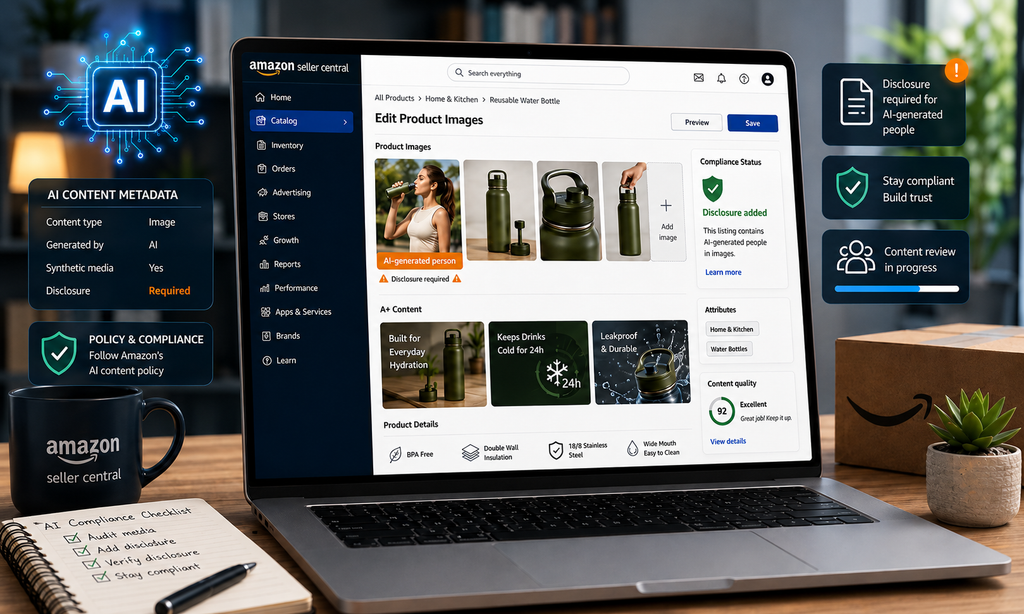
This does not mean Amazon is banning AI imagery. It means sellers now need to know when an AI-created person must be disclosed and how to tag it correctly.
What Is Amazon’s New AI Image Tagging Requirement?
Amazon announced in July 2026 that sellers must identify product images containing photorealistic AI-generated people before adding them to listings and A+ Content.
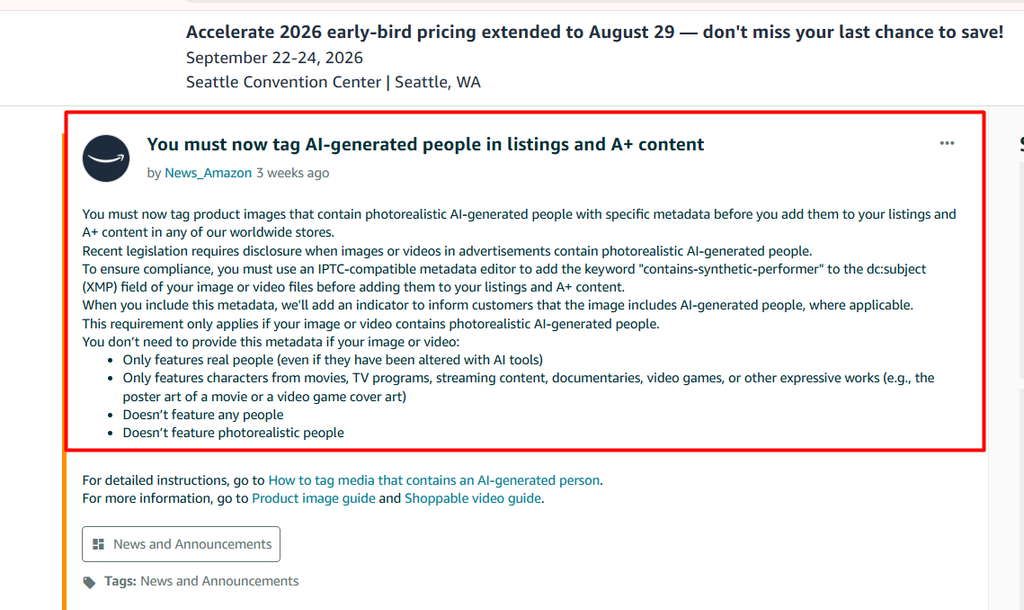
For qualifying images or videos, Amazon requires sellers to use an IPTC-compatible metadata editor and add the exact keyword: contains-synthetic-performer to the dc:subject (XMP) field of the media file.
Sellers must add the tag before uploading the file to Amazon. Once Amazon receives the metadata, the company says it can add an indicator informing customers that the media includes AI-generated people, where applicable.
So sellers are not simply adding the words ‘AI-generated’ to the image themselves. The disclosure begins inside the media file.
What Is a Synthetic Performer?
The New York legislation defines a synthetic performer as digitally created media that gives the impression of a human performance when the figure is not recognizable as an identifiable natural performer.
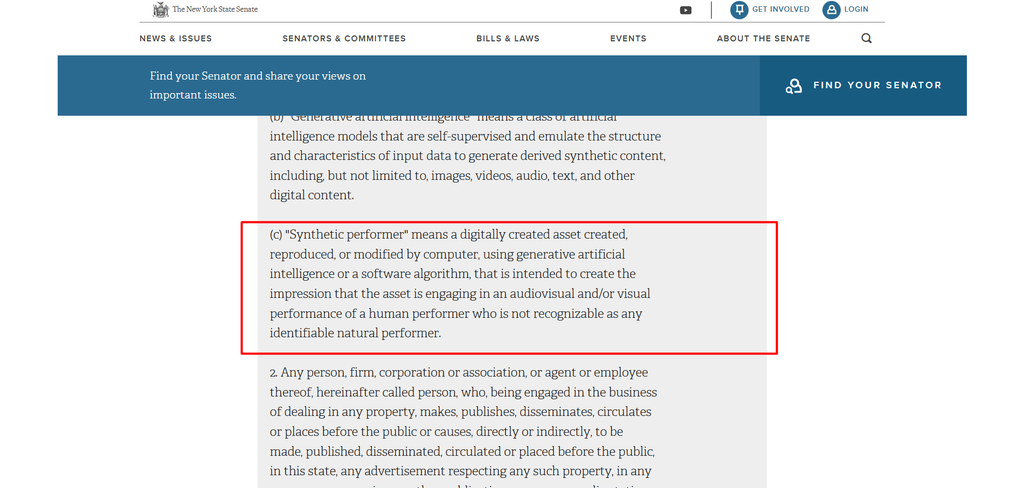
The legal language is broader than Amazon sellers need for their day-to-day workflow.
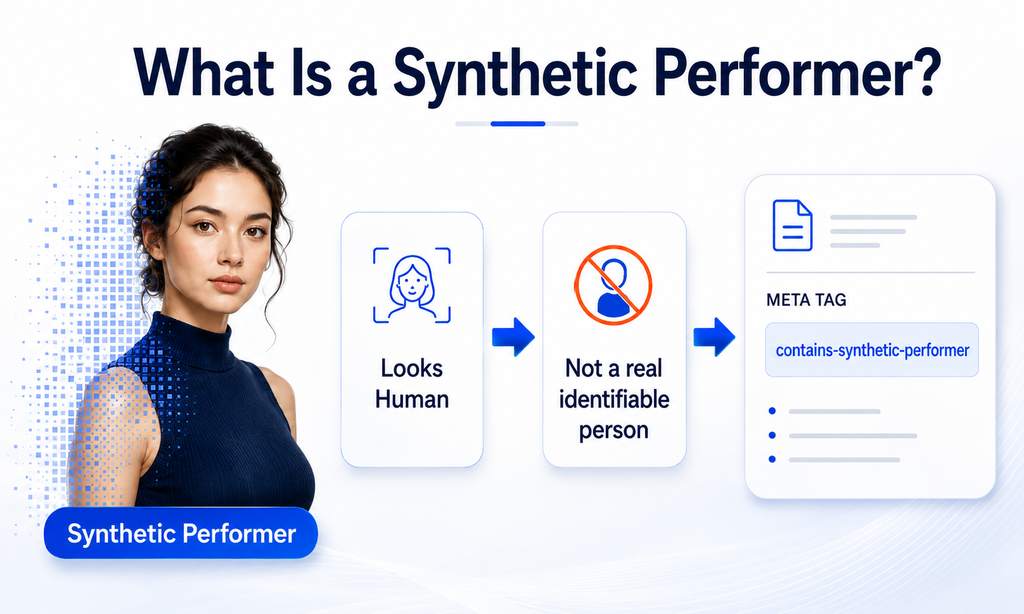
A simpler ecommerce interpretation is: The customer sees someone who appears human, but that person was synthetically created rather than being a recognizable real performer.
Amazon has turned that transparency issue into a practical marketplace rule using the contains-synthetic-performer metadata tag.
What Actually Counts as an AI-Generated Person?
This is where sellers need to be careful.
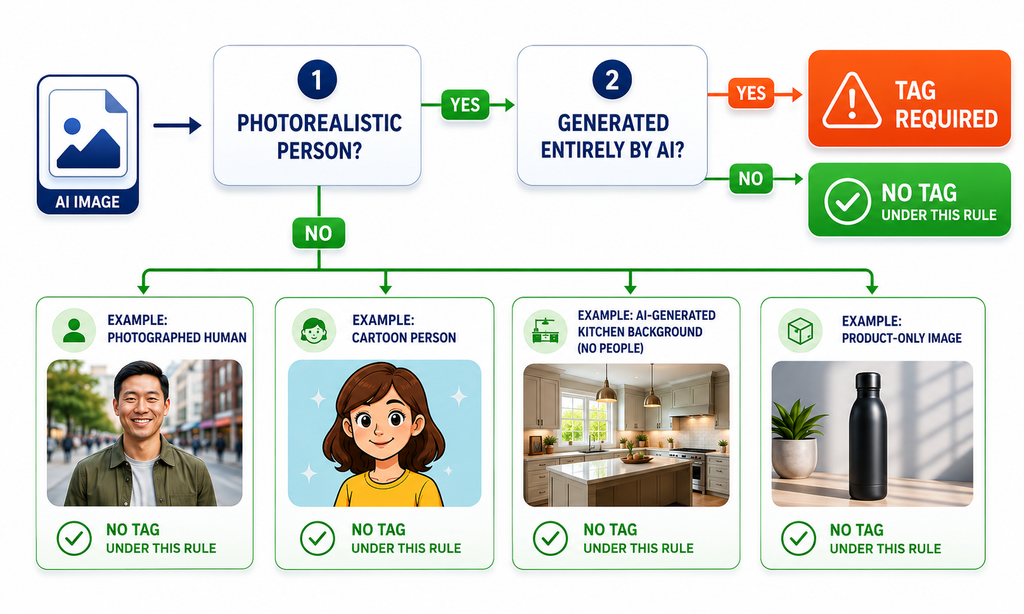
Amazon’s requirement is not triggered simply because AI was involved somewhere in the creative process. Amazon moderator guidance clarifies that the relevant threshold is a photorealistic person who was entirely generated by AI and is not based on a real person.
There is therefore an important difference between: A real person edited with AI and A realistic person created entirely by AI.
Consider two examples.
Example 1: A Fully AI-Generated Model
A fashion seller asks an AI image generator to create a realistic woman wearing its jacket. The woman looks like a real model, but she does not exist and was generated entirely through AI.
Tag required.
Example 2: A Real Model With an AI Background
The seller photographs a real model wearing the jacket.
AI is then used to replace the studio background, improve the lighting, remove unwanted objects, or make other creative edits. The model is still a real person.
This specific synthetic-performer tag is not required.

Amazon specifically says sellers do not need to add the metadata when content only features real people, even if those people have been altered using AI tools.
So instead of asking: Did we use AI? Amazon sellers should ask: Does this asset contain a photorealistic person who was generated entirely by AI?
That is the more useful compliance question.
Not Every AI-Generated Amazon Image Needs to Be Tagged
This is perhaps the biggest misconception surrounding the update.
Amazon is not requiring sellers to tag every image created with AI. Amazon says the metadata is not required when an image or video:
- Only features real people, even if they were altered using AI tools.
- Only features characters from films, TV programmes, streaming content, documentaries, video games, or other expressive works.
- Does not feature any people.
- Does not feature photorealistic people.
Imagine you sell a coffee maker. You use generative AI to create a modern kitchen around the product. There is no person in the image. This specific synthetic-performer rule does not apply.
Now imagine you add a clearly illustrated or cartoon-style barista. Because the character is not photorealistic, this particular requirement still does not apply.
But if you generate a realistic-looking person drinking coffee beside the machine, and that person was generated entirely by AI, the asset should be tagged.
How to Tag AI-Generated People on Amazon
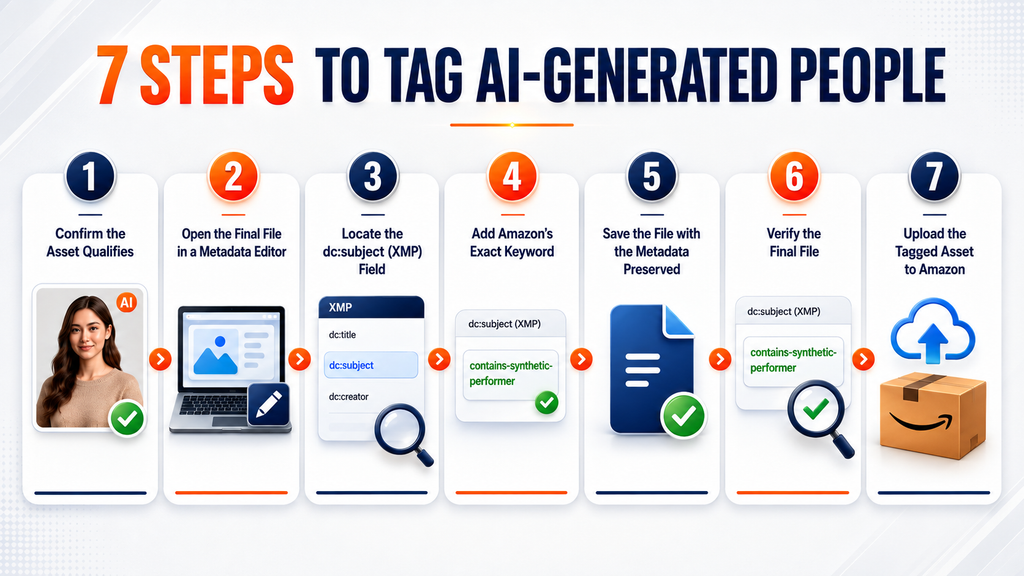
Once you identify a qualifying image or video, Amazon has a specific process for tagging it. This should happen before the media is uploaded.
Step 1: Confirm That the Asset Qualifies
First, determine whether the person:
- Appears photorealistic.
- Was generated entirely by AI.
- Is not based on a real person.
If the asset only includes a real person edited with AI, contains no person, or contains a non-photorealistic character, this particular metadata requirement does not apply.
Step 2: Open the Final File in an IPTC-Compatible Metadata Editor
Use a metadata editor that supports IPTC/XMP information. Import the final version of the image or video that you intend to send to Amazon.
This is important because adding the tag to an early creative file will not help if the final exported version loses the metadata.
Step 3: Locate the dc:subject (XMP) Field
Inside the metadata editor, locate the field corresponding to:
dc:subject (XMP)
This is the field Amazon specifies for the disclosure keyword.
Step 4: Add Amazon’s Exact Keyword
Enter: contains-synthetic-performer
Use the exact wording provided by Amazon.
Step 5: Save the File With the Metadata Preserved
Save or export the final asset while preserving its XMP metadata.
Be particularly careful if the image is later:
- Resized
- Compressed
- Converted into another format
- Re-exported
- Passed through another design or optimisation tool
Some workflows may remove embedded metadata.
Step 6: Verify the Final File
Before uploading the asset, reopen or inspect the final version and confirm that:
contains-synthetic-performer is still present in the: dc:subject (XMP) field.
For brands working with agencies or multiple creative teams, this final verification is particularly valuable.
Step 7: Upload the Tagged Asset to Amazon
Once the metadata is confirmed, upload the final file.
Amazon says it will use the metadata to add an indicator informing customers that AI-generated people appear in the media, where applicable.
A+ Content Has an Easier Tagging Option
Sellers using A+ Content have another option. Amazon moderator guidance says that for qualifying A+ Content, sellers can either:
Option 1: Add contains-synthetic-performer to the XMP dc:subject field before uploading.
Or:
Option 2: Select the ‘AI-generated people’ checkbox in A+ Content Manager Creative Assets when uploading the asset.
When the second option is used, Amazon applies the metadata for the seller.
There is another important exception for sellers using Amazon’s own generative AI tools. Amazon moderator guidance says images created through Amazon A+ generative AI features such as Creative Studio are tagged automatically.
Amazon is not moving away from AI-generated ecommerce content. It is introducing a disclosure framework for certain realistic synthetic humans.
Does the Rule Apply Only to Listings and A+ Content?
Amazon’s original announcement specifically highlighted listings and A+ Content, but subsequent moderator guidance clarified that the disclosure requirement covers buyer-facing media across Amazon.
That includes:
- Product listing images
- A+ Content
- Brand Story
- Store images
- Product videos
- A+ videos
- Store videos
- Advertising videos
This makes the requirement much more significant for established brands.
A synthetic model created for one lifestyle image might later be reused in A+ Content, Brand Store creative, video, or advertising.
Instead of asking whether the asset needs disclosure every time it is reused, sellers should classify the image when it is first created.
What If Only Part of the AI-Generated Person Appears?
This is an important edge case.
What happens if the image contains: A hand? Half a face? The back of a person’s head? Only the lower half of the body?
Amazon moderator guidance says the key threshold remains whether the content depicts a photorealistic person who was entirely AI-generated. If a qualifying synthetic human is still depicted, the metadata should be applied even when the person is only partially visible.
In other words: Cropping the AI model does not necessarily remove the disclosure requirement. Brands need to know how the person was produced, not simply how much of that person appears in the final crop.

What About AI-Generated Backgrounds?
This is another area where sellers could easily overreact.
If AI generates a background but the image contains no AI-generated photorealistic person, Amazon’s synthetic-performer tag is not required under this rule.
Amazon specifically excludes media that contains no people. So AI can still be used for:
- Rooms
- Kitchens
- Outdoor environments
- Seasonal scenes
- Decorative backgrounds
- Product settings
- Abstract environments
without automatically triggering the tagging requirement. Again, the issue is not whether AI created part of the image. The issue is whether the asset contains a photorealistic synthetic human.
What Happens to Existing Amazon Listings?
The update should not be treated only as a requirement for newly created listings.
Amazon guidance states that compliance has been mandatory since June 6, 2026, and recommends retroactively updating older qualifying content. That means sellers who were already using AI-generated models before this update should consider reviewing their existing catalogue.
Start with categories where synthetic lifestyle models are especially likely to appear:
- Apparel
- Beauty
- Skincare
- Jewellery
- Accessories
- Fitness
- Health and wellness
- Home and lifestyle products
Do not search only for assets labelled internally as ‘AI.’ Instead, look specifically for photorealistic people who were completely generated by AI.
An image is not necessarily compliant simply because Amazon accepted it before this policy was introduced.
What If Sellers Do Not Tag Qualifying Media?
This is where the update becomes more than a creative recommendation.
Amazon moderator guidance warns that non-compliant media may be removed and that repeated problems could lead to enforcement action against the seller’s account.
Another Amazon moderator response says non-compliance could potentially result in violations and ASIN removal.That makes proactive compliance important.
The safest approach is not: Upload the image and see whether Amazon flags it. It is: Classify the asset correctly before it reaches Amazon.
Why Is Amazon Introducing This Requirement Now?
Amazon says recent legislation requires disclosure when advertising contains photorealistic AI-generated people.
One major development behind the change is New York’s new synthetic-performer disclosure law. The law took effect on June 9, 2026, after being signed in December 2025. New York Governor Kathy Hochul described it as a first-in-the-nation law designed to increase transparency when advertisements contain AI-generated synthetic performers. The concern is understandable.
Imagine a shopper looking at:
- A model wearing a dress
- A woman applying skincare
- An athlete using gym equipment
- A person holding a supplement
- A family sitting on a sofa
If those people look completely real, customers may naturally assume they were photographed. But if the human figures were generated entirely by AI, regulators increasingly want consumers to know.
What Are the Penalties Under the New York Law?
New York’s legislation provides for a civil penalty of: $1,000 for a first violation and: $5,000 for subsequent violations. It is important not to confuse those statutory penalties with Amazon’s own marketplace enforcement.
The New York penalties come from the law. Amazon separately controls marketplace actions such as media removal or possible account enforcement for non-compliance with its requirements.
For sellers, both reinforce the same broader trend: AI transparency is becoming a real compliance issue rather than simply a creative preference.
Why This Update Matters to Amazon Sellers
At first glance, adding one metadata keyword may seem like a minor policy update. Its potential reach is much larger.
Quartz reports that third-party sellers account for more than 60% of the units sold on Amazon, citing CNBC’s reporting. At the same time, sellers increasingly use generative AI for:
- Listing copy
- Product imagery
- Virtual models
- Lifestyle scenes
- A+ Content
- Advertising concepts
- Localised creatives
- Videos
- Promotional graphics
Amazon itself has also developed generative AI tools to help sellers produce ecommerce content.
Two trends are therefore developing at the same time: AI content creation is becoming easier. But: AI disclosure requirements are becoming stronger.
The next stage of ecommerce AI will not simply be about which seller can generate content fastest. It will also be about which seller can use AI without losing control of compliance.
What Amazon Sellers Should Do Now
If your business already uses generative AI for Amazon visuals, focus on these five actions:
- Audit existing buyer-facing media: Review listings, A+ Content, Brand Stories, Store assets, videos, and advertising creatives for fully synthetic photorealistic people.
- Separate AI-generated people from AI-edited real people: Do not treat every AI-assisted image the same. Amazon distinguishes between a synthetic person and a real person edited with AI.
- Tag qualifying media before upload: Use an IPTC-compatible metadata editor to add contains-synthetic-performer to the dc:subject (XMP) field before uploading qualifying files.
- Use Amazon’s built-in A+ option where appropriate: For qualifying A+ Content, select “AI-generated people” where available, or embed the metadata manually. Eligible Amazon-generated A+ creative can be tagged automatically.
- Make AI classification part of creative approval: Record whether a person is real or synthetic when the asset is first created instead of leaving the decision to the final uploader.

Frequently Asked Questions
Q1. Do all Amazon AI-generated images need to be tagged?
No. The requirement applies specifically to media containing photorealistic AI-generated people. Images with no people, non-photorealistic people, or only real people do not require this specific metadata.
Q2. What exact Amazon AI metadata tag should I use?
Use: contains-synthetic-performer in the: dc:subject (XMP) field.
Q3. Does a real model edited with AI need the tag?
Not under this specific requirement. Amazon says media containing only real people does not require the metadata even if AI tools were used to alter them.
Q4. Does an AI-generated background need the tag?
Not if there are no qualifying photorealistic AI-generated people in the media.
Q5. What if only part of an AI person appears?
Amazon moderator guidance says the tag should still be used if the visible content depicts a photorealistic human that was entirely generated by AI.
Q6. Does the requirement apply to old listings?
Amazon moderators recommend retroactively updating existing qualifying content, and one moderator says compliance has been mandatory since June 6, 2026.
Q7. Do I have to tag Amazon-generated A+ images manually?
Not necessarily. Amazon moderator guidance says qualifying content created through Amazon A+ generative AI features such as Creative Studio is tagged automatically.
Q8. What happens if I do not comply?
Amazon moderator guidance says non-compliant media may be removed and repeated issues could result in further enforcement action.
What Sellers Need to Remember
Amazon is not banning AI-generated creative. Sellers simply need to know when disclosure is required.
If an asset contains a photorealistic person generated entirely by AI, add:
contains-synthetic-performer
to:
dc:subject (XMP)
before upload, or use Amazon’s “AI-generated people” option for qualifying A+ Content. Real people, AI-edited real people, images with no people, and non-photorealistic characters do not require this specific tag.
The key is simple: Know how the person was created, tag qualifying media correctly, and make AI compliance part of your creative workflow.
How Ecomclips Helps Sellers Manage Amazon AI Content Compliance
At Ecomclips, we help Amazon sellers manage AI-generated creative without losing sight of marketplace compliance.
Our team reviews listing images, A+ Content, Brand Store assets, videos, and other buyer-facing media to identify where AI-generated people may require disclosure and where existing content may need to be updated.
- AI Content Review: We help identify photorealistic people that were generated entirely by AI and separate them from real people, AI-edited real people, non-photorealistic characters, and product-only scenes.
- Listing & Media Compliance Checks: We review product images, A+ Content, Brand Stories, Store assets, and other creative to identify potential disclosure gaps before they become compliance issues.
- Metadata & Tagging Guidance: We help sellers understand when
contains-synthetic-performershould be added to thedc:subject (XMP)field and how the tagging step fits into the final creative workflow. - A+ Content Review: Where Amazon provides an ‘AI-generated people’ disclosure option, we help sellers understand when it should be used and how it relates to manually embedded metadata.
- Existing Catalogue Audits: If AI-generated models are already being used across your catalogue, we can help review older assets and identify content that may need attention.
- Creative Workflow Support: We help brands build a clearer approval process so teams know whether an asset contains a real person, an AI-edited person, or a fully synthetic photorealistic person before it goes live.
Need Help Reviewing Your Amazon AI-Generated Content?
If your brand uses AI-generated product images, virtual models, A+ Content, Brand Store creatives, videos, or advertising assets, the Ecomclips team can help you review your media, identify potential compliance gaps, and build a stronger creative approval process.
For more practical Amazon and ecommerce guidance, explore the Ecomclips Blog, visit the Ecomclips YouTube channel, or browse additional ecommerce resources on the Boostontime Blog.
Need direct support? Email us at info@ecomclips.com or book an appointment with our ecommerce experts to discuss your Amazon content and compliance needs.