
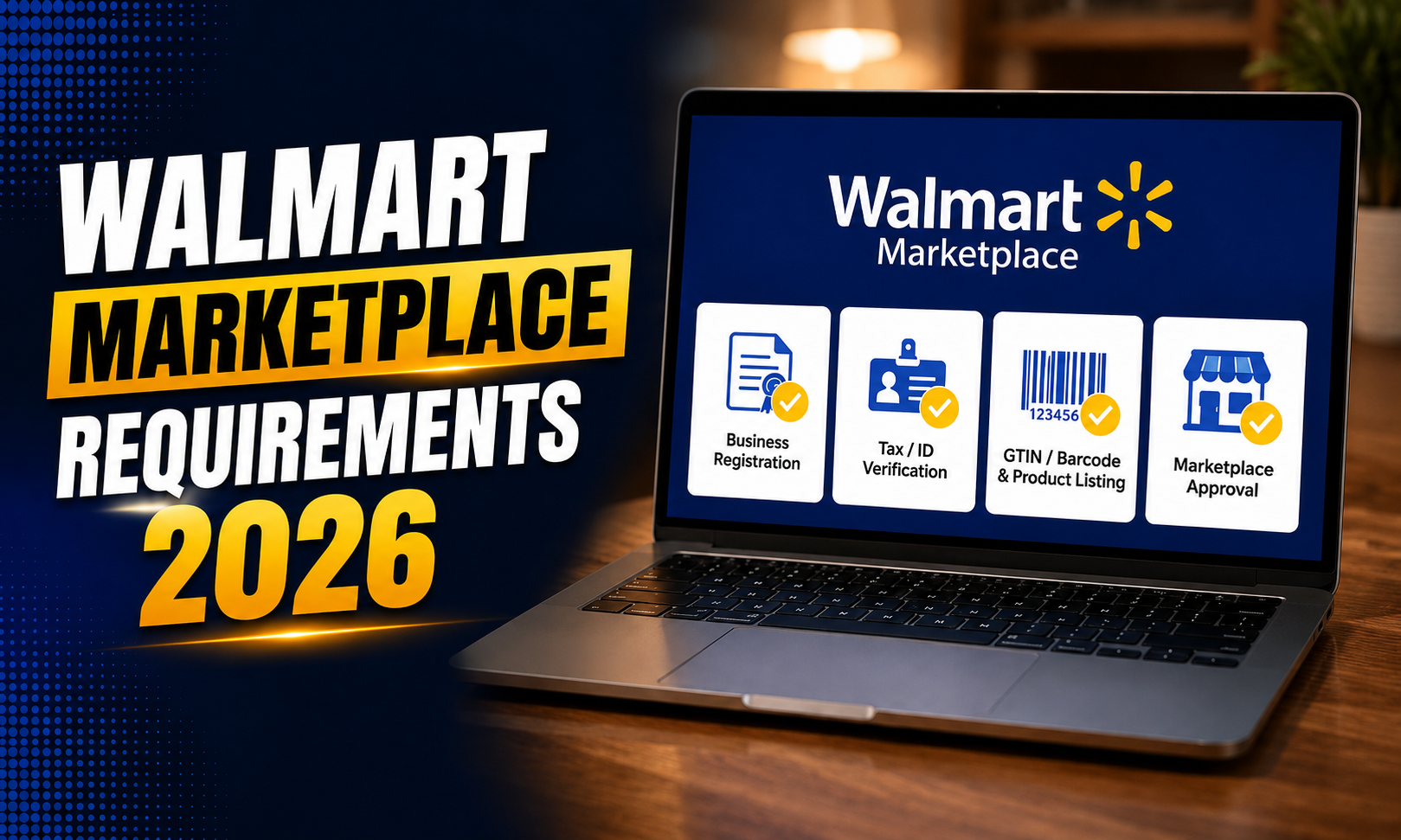
Getting approved on Walmart Marketplace is not just about filling out a form and waiting for approval.
Walmart wants proof that your business is real, your products are trustworthy and your operations are ready to deliver a smooth customer experience. A missing document, incorrect tax detail or mismatched business information can slow down your approval before you even get started.
The good news? Getting ready is easier when you know exactly what Walmart expects.
In this guide, we break down every Walmart Marketplace requirement for 2026, from business verification and tax documents to product identifiers, fulfilment, returns and international seller requirements.
By the end, you will know exactly what you need before submitting your application and how to avoid common approval delays.
What Are the Requirements to Sell on Walmart Marketplace?
Before applying to Walmart Marketplace, sellers need to make sure their business, products and operations are ready for verification. Walmart reviews more than just the application form. It checks whether the seller is a legitimate business, can provide accurate product information and is prepared to deliver a reliable customer experience.
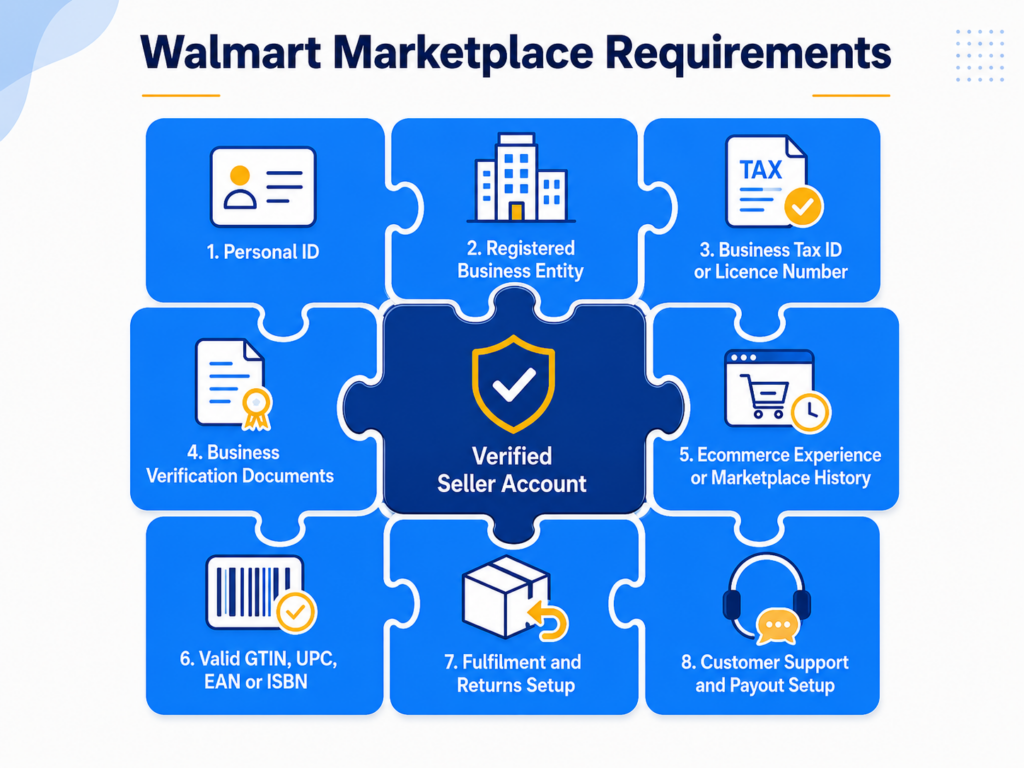
The main requirements include:
- Personal ID for the applicant or business representative.
- Registered business entity with valid legal details.
- Business Tax ID or Licence Number with correct tax information.
- Business verification documents matching company details.
- Ecommerce experience or marketplace selling history.
- Compliant products with valid GTIN, UPC, EAN or ISBN.
- Fulfilment and returns setup through WFS or a US warehouse.
- Customer support and payout setup for store operations.
Walmart does not accept a Social Security number as a replacement for the required Business Tax ID or Business Licence Number. Preparing these requirements before applying can help sellers avoid unnecessary verification delays.
Can Anyone Sell on Walmart Marketplace?
Walmart Marketplace is open to qualified businesses, but not every applicant will meet its minimum standards.
The application is essentially a readiness check. Walmart looks at whether the business can be verified, whether it has relevant ecommerce experience, whether its products are suitable for the platform and whether it can fulfil orders and handle returns properly.
Walmart clearly states that businesses that do not meet its minimum requirements will not qualify to sell on the Marketplace.
1. You Need a Verifiable Legal Business
The first requirement is straightforward: Walmart needs to confirm that it is dealing with a legitimate business.
During business verification, you will be asked to provide details such as:
- Country or region of incorporation
- Legal business name
- Business phone number
- Registered business address
- State business registration number or relevant licence number
- Business entity type
- Tax information
- Applicant or legal representative information
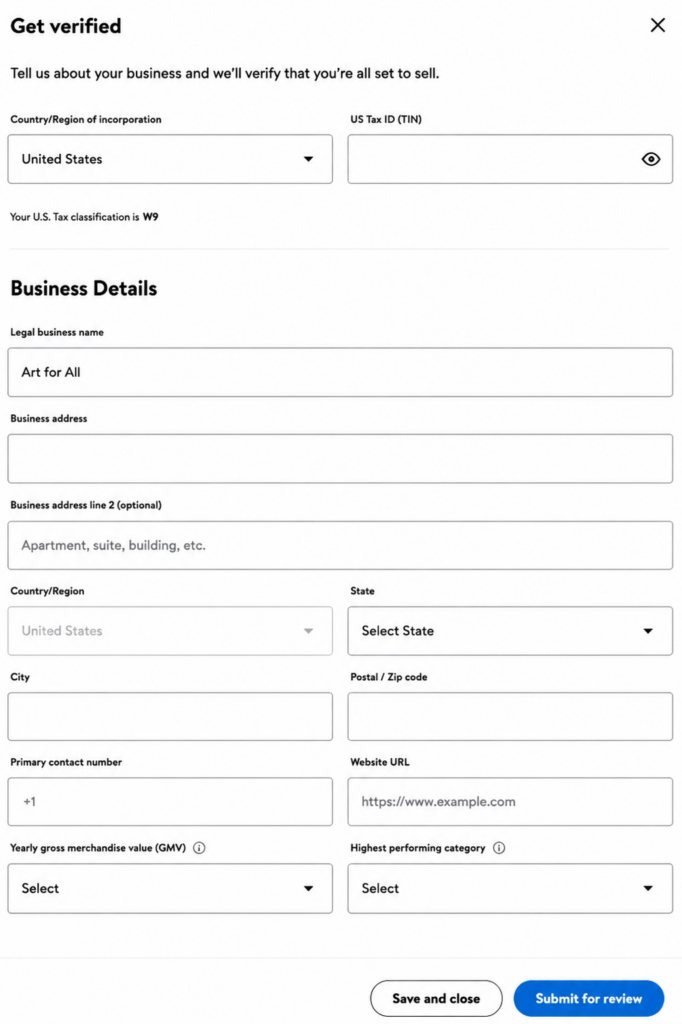
The exact form and documents can change depending on your country of incorporation. A business incorporated in Canada, for example, will not necessarily submit the same documentation as a business incorporated in the US, India or Hong Kong.
Which Business Structures Does Walmart Accept?
For US businesses using the W-9 tax classification, Walmart currently lists the following entity types:
- C Corporation
- LLC taxed as a C Corporation
- LLC taxed as an S Corporation
- Partnership
- S Corporation
For qualifying non-US businesses, the available W-8BEN-E and W-8ECI structures generally include corporations and partnerships.
Do You Need an LLC to Sell on Walmart?
You do not specifically need an LLC.
An LLC is one possible structure, but Walmart also recognises other qualifying business structures. The important point is that your selected entity must accurately reflect your legal and tax status.
Do not choose an LLC classification simply because it appears convenient. Walmart warns that the selected entity type cannot be changed after onboarding is completed. Anyone uncertain about the correct classification should consult a qualified tax or legal professional before submitting the application.
Which Business Types May Not Qualify?
Walmart’s current US Marketplace guidance says the following business types are not accepted:
- Non-profit organisations
- Sole proprietorships, excluding a limited India exception
- Hindu Undivided Families
Sole proprietor eligibility can be especially confusing because Walmart’s tax guidance contains limited country and market-specific pathways. Do not assume an individual or sole proprietor account will qualify simply because the business is legally operating in its home country. The correct answer depends on the country, tax classification and target Walmart market.
2. You Need the Correct Tax ID and Classification
Tax verification is one of the most important parts of the Walmart seller application.
Applicants must provide a Business Tax ID or Business License Number and supporting documentation that confirms the company’s credentials. The exact requirements depend on whether the business is incorporated inside or outside the US.
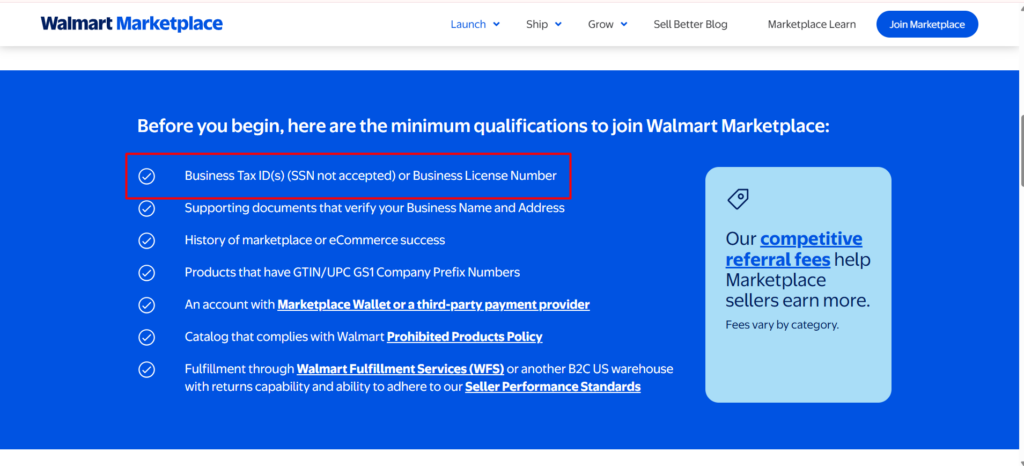
Tax Requirements for US Sellers
A US based business with an Employer Identification Number normally uses the W-9 classification.
Walmart may ask for supporting documents such as:
- IRS-issued EIN verification letter, including Letter 147C
- IRS-issued CP 575 confirmation letter
- State-issued business licence
- Registration certificate
- Articles of incorporation
- Certificate of Good Standing
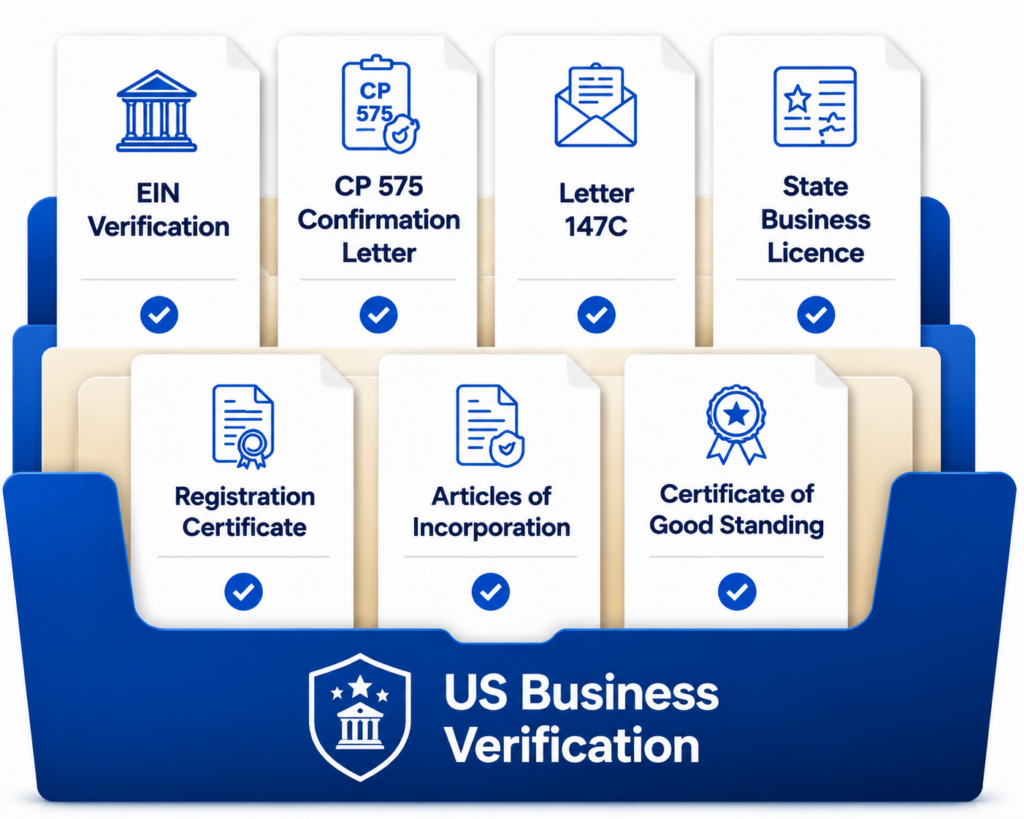
The name, address and tax details entered in the application must match the information held by the IRS or the relevant government authority.
Can You Use an SSN to Sell on Walmart?
Walmart’s published application requirements state that a Social Security number is not accepted in place of the required Business Tax ID or Business Licence Number.
This is an important difference for people accustomed to marketplaces that allow individuals to register using personal tax information.
Tax Requirements for International Sellers
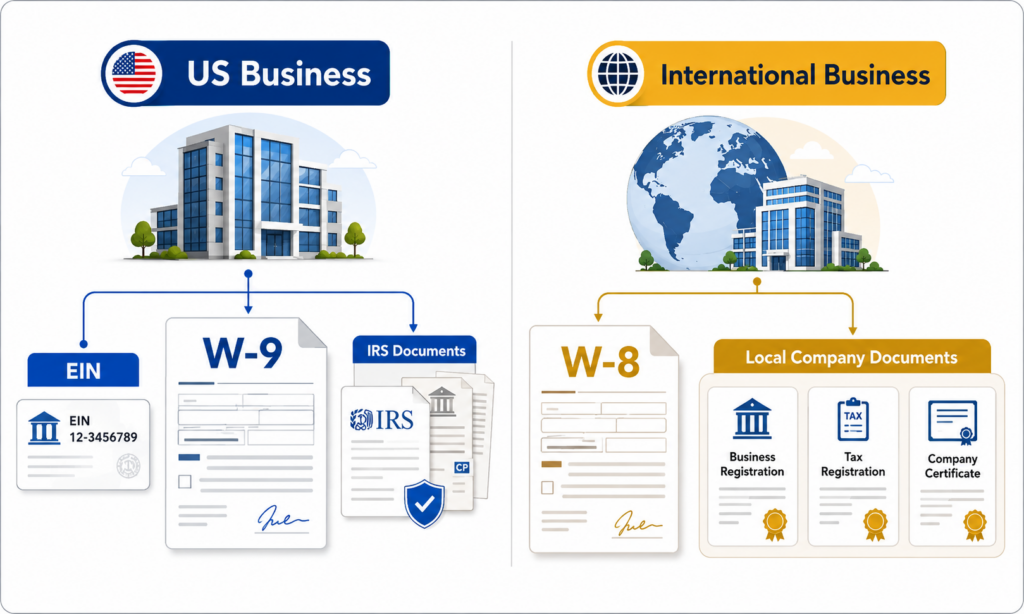
International sellers do not automatically need a US EIN to sell on Walmart Marketplace. The required tax pathway depends on the seller’s country of incorporation, business structure and tax situation.
Walmart uses different tax classifications for different types of businesses. US incorporated businesses typically use the W-9 form, while eligible non-US businesses may use options such as W-8ECI, W-8BEN-E or W-8BEN depending on their circumstances.
- W-9: Used by US incorporated businesses with an EIN.
- W-8ECI: Used by certain non-US businesses with an EIN and income connected to a US trade or business.
- W-8BEN-E: Used by eligible non-US companies without an EIN.
- W-8BEN: Used in limited individual or sole proprietor situations.
Walmart currently supports the W-8BEN-E pathway for qualifying sellers incorporated in countries such as China, Hong Kong, the United Kingdom, Japan, Canada, Mexico, India, Singapore, South Korea, Taiwan, Germany, Vietnam, Thailand, Chile and Turkey. However, the exact requirements and supporting documents can vary based on the seller’s country.
Depending on the location and business type, Walmart may request documents such as:
- Certificate of incorporation
- Local business registration
- Tax registration evidence
- Business licence
- Recent utility bill
- Recent business bank statement
- Government-issued company certificate
- Letter of Authorisation
- Personal ID of the company director or legal representative
The key takeaway is that international sellers should not rely on a general document checklist. Always review Walmart’s requirements based on the country where the business is legally incorporated to ensure the correct tax pathway and documents are submitted.
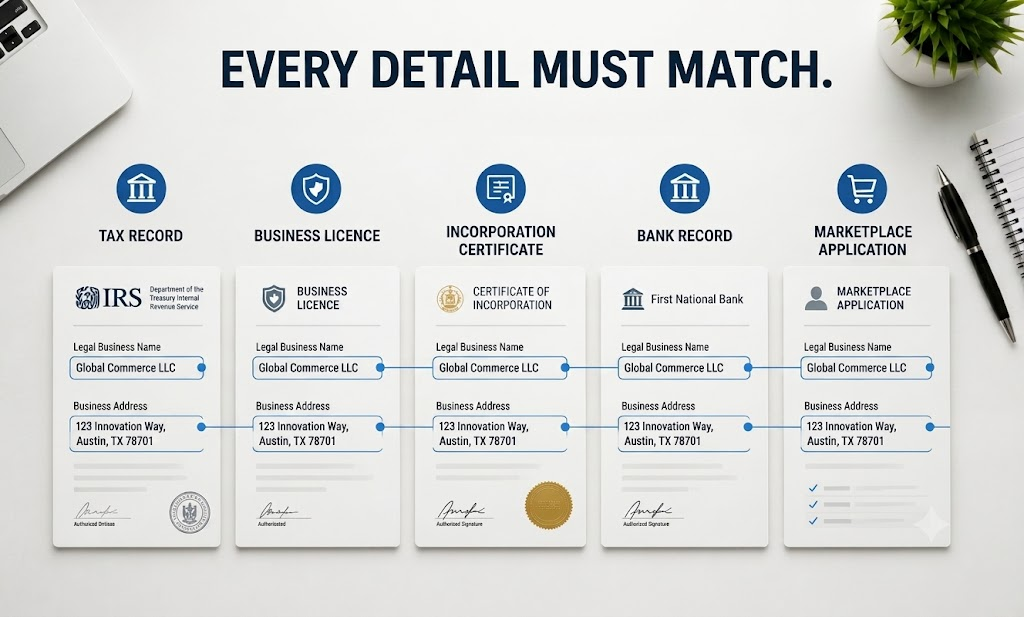
3. Your Business Information Must Match Everywhere
Many sellers focus on collecting documents but overlook something equally important: consistency.
Walmart recommends entering business details exactly as they appear on official records. This includes spelling, punctuation, abbreviations and address formatting.
Before applying, compare the following:
- Legal business name
- Registered address
- Tax ID records
- State registration
- Business licence
- Articles of incorporation
- Bank and payout information
- Applicant identity
- Company website
- Business telephone number
Imagine that your company is legally registered as:
North River Commerce LLC
Your application should not say:
- North River Ecommerce
- North River Commerce
- North Rivers Commerce LLC
- North River Commerce Limited
The difference may look harmless to a person. To an automated or document-based verification system, it may look like a different business.
What Happens When the Information Does Not Match?
Incorrect or unverifiable information can cause the application to show a failed verification status.
Depending on the seller’s country of incorporation, Walmart may allow the applicant to correct and resubmit the information. However, if the status remains failed after resubmission, Walmart may determine that the business does not currently satisfy Marketplace requirements.
This is why the best time to correct inconsistencies is before the application begins.
4. You Need a Valid Personal ID
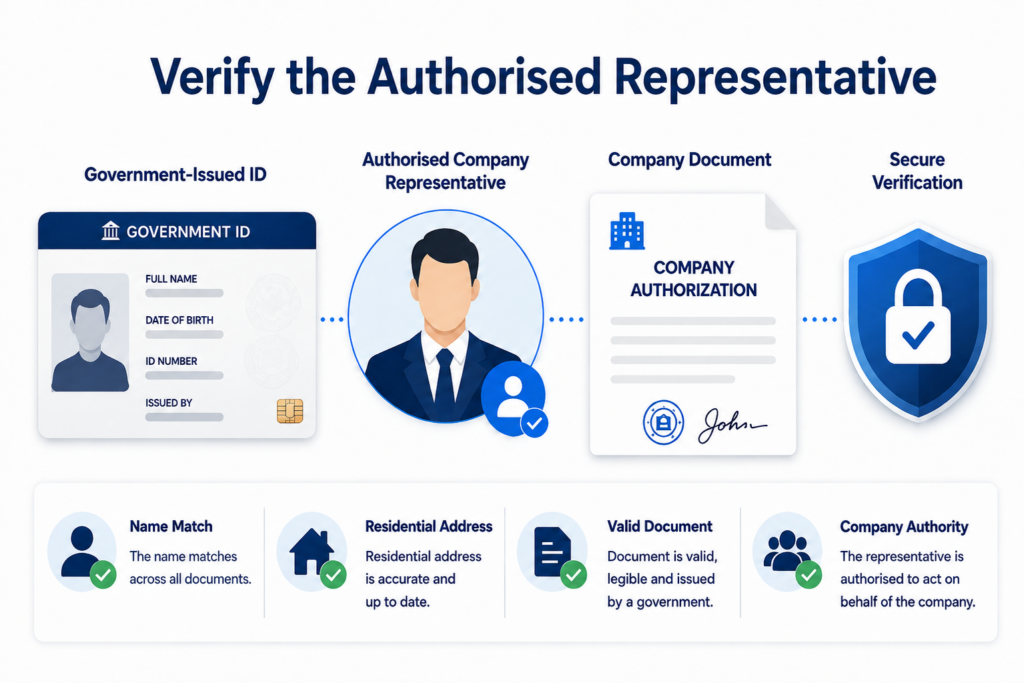
Walmart requires a copy of a personal ID as part of its minimum application qualifications. This is normally connected to the person submitting the application, the account’s primary contact, a director or another legal representative of the business.
When entering identity information:
- Use the name exactly as it appears on the ID
- Enter the correct residential address
- Include special characters where applicable
- Preserve local-language text when requested
- Upload a clear and valid document
- Make sure the applicant is authorized to represent the company
Additional Identity Verification
Walmart may request further proof that the applicant is authorised to represent the business.
This can include:
- Additional supporting documents
- Photo ID verification
- Facial recognition
- Verification of the legal representative
- Verification of a new account primary contact
When Walmart requests this additional identity check, it must be completed within seven days. Failure to complete it within the required period may lead to account closure.
Do not ignore verification emails while waiting for approval. A missed request can cause more damage than a minor document error.
5. You Need Previous Ecommerce or Marketplace Experience
Walmart lists a history of marketplace or ecommerce success as one of its minimum seller qualifications.
This requirement helps Walmart assess whether the applicant already understands the responsibilities of online retail, including inventory management, fulfilment, customer service and product data accuracy.
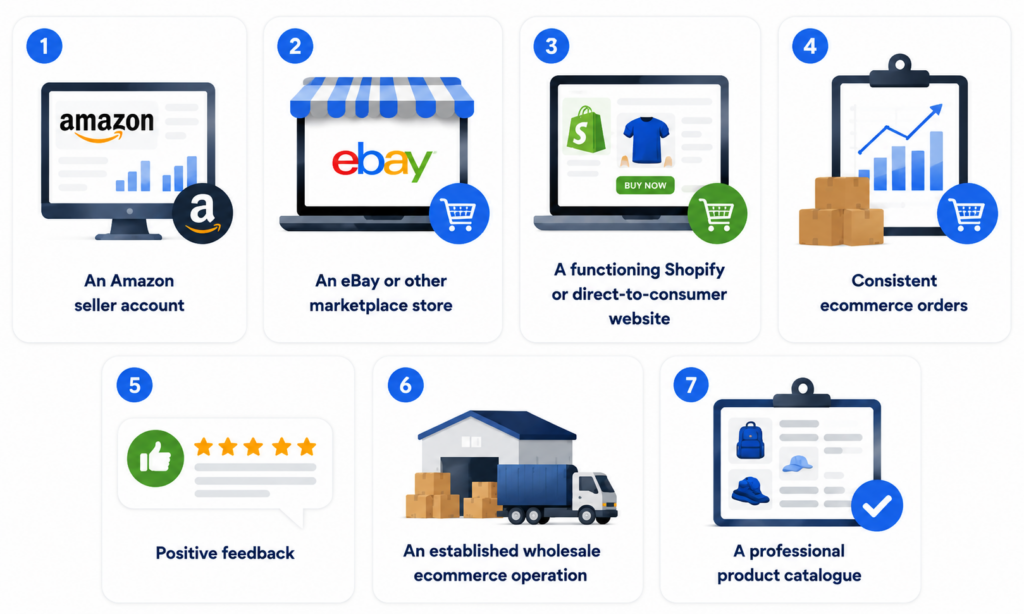
Useful evidence may include:
- An established Amazon seller account
- An eBay or other marketplace store
- A functioning Shopify or direct-to-consumer website
- Consistent ecommerce orders
- Positive marketplace feedback
- Documented fulfilment performance
- An established wholesale ecommerce operation
- A professional product catalogue
What If You Are Already an Amazon Seller?
Existing Amazon experience can support your application, but your Amazon operation should not simply be copied onto Walmart.
Your catalogue must still be adapted to Walmart’s product types, attributes, fulfilment settings and content requirements. My Amazon Guy similarly recommends adapting existing Amazon assets rather than copying them directly, with attention to Walmart-specific categorisation, product IDs, inventory synchronisation and item quality checks.
6. Your Products Need Valid Identifiers
Walmart uses product identifiers to recognise items, compare offers and organise its shared catalogue.
Accepted product identifier types include:
- GTIN
- UPC
- EAN
- ISBN
Walmart checks product identifier authenticity and product information against the GS1 database. Using a made-up number, another product’s UPC or an identifier for the wrong pack size can create listing errors and poor customer experiences.
For example, do not use the identifier for a 24-pack when you are selling a 12-pack. Walmart may connect your offer to the wrong product page, causing customers to receive something different from what they expected.
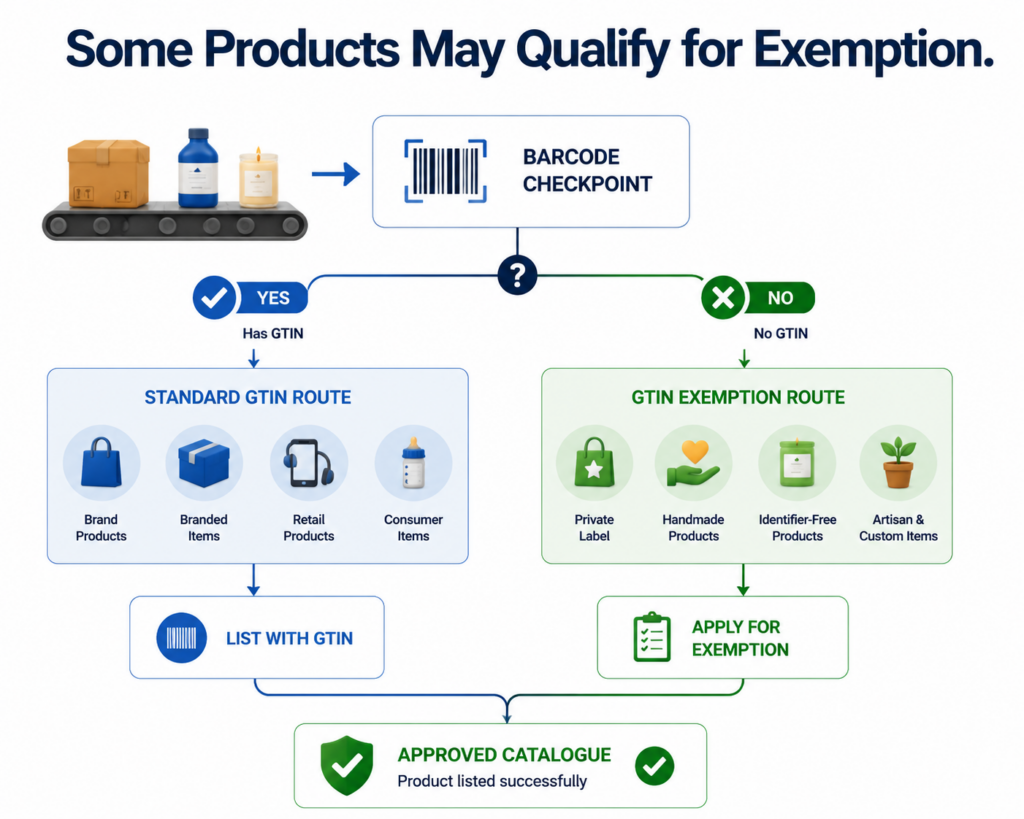
Does Every Product Need a UPC?
Most products require an accepted product identifier. However, eligible items without a standard identifier may qualify for a GTIN or UPC exemption.
This may apply to products such as:
- Private-label items without an existing identifier
- Handmade jewellery
- Certain Resold items
- Other eligible products without a standard GTIN or UPC
Walmart expanded this process in July 2026 to support eligible Walmart-fulfilled items as well as seller-fulfilled situations.
How to Request a GTIN Exemption
In Seller Center:
- Open the Catalog section.
- Select GTIN Exemptions.
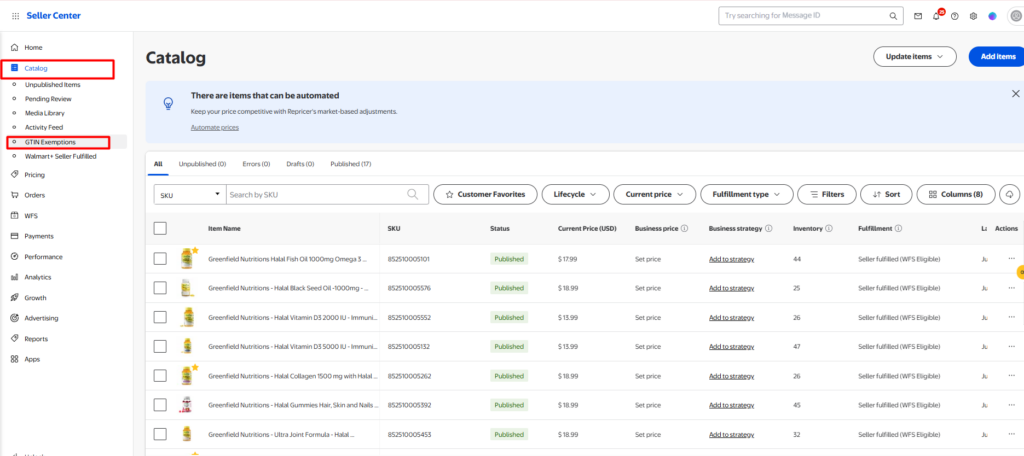
- Choose the relevant category and product type.
- Enter the brand.
- Select the reason for the exemption.
- Submit the request.
- Monitor the request status.
Sellers can select up to 10 categories and 100 product types in one exemption request. Walmart may take up to three business days to respond. When the status changes to “Needs info,” the applicant must respond within five days or the request may be closed.
The brand used during item setup must exactly match the brand entered in the approved exemption.
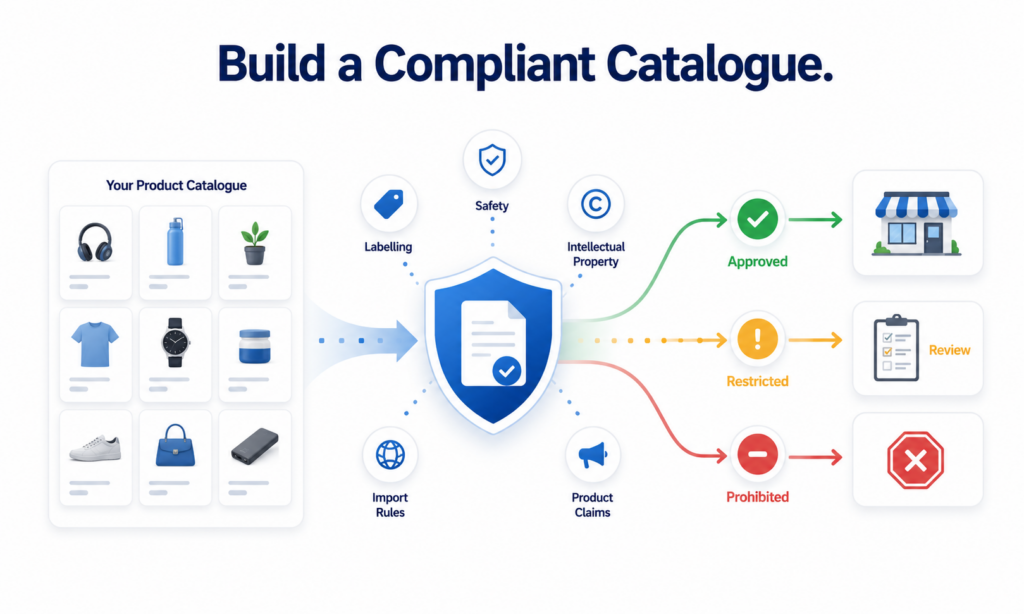
7. Your Catalogue Must Follow Walmart Policies
Having legitimate products is not enough. Every product must also comply with Walmart policies and all applicable laws.
Walmart requires products listed on its US Marketplace to comply with relevant local, state and federal regulations. Product information, images and labels must not contain conflicting or misleading details.
Before applying, review your catalogue for:
- Prohibited products
- Restricted products
- Product safety requirements
- Labelling requirements
- Category-specific approvals
- Intellectual property rights
- Import requirements
- Hazardous material restrictions
- Unsupported product claims
- Recall history
- Shipping limitations
Documents Worth Preparing
Even when Walmart does not request them during the first application screen, organised sellers should keep the following records available:
- Supplier invoices
- Manufacturer invoices
- Brand authorisation letters
- Distribution agreements
- Trademark records
- Safety certificates
- Laboratory test reports
- Product compliance documents
- Import records
- Packaging and label information
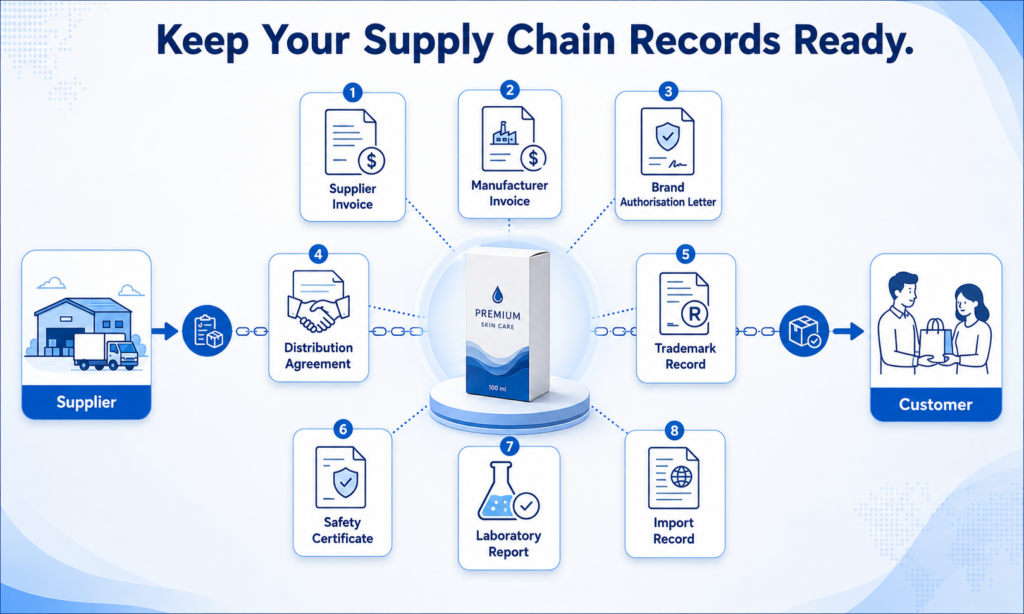
A clean chain of supply helps demonstrate that products are authentic, properly sourced and legally eligible for sale.
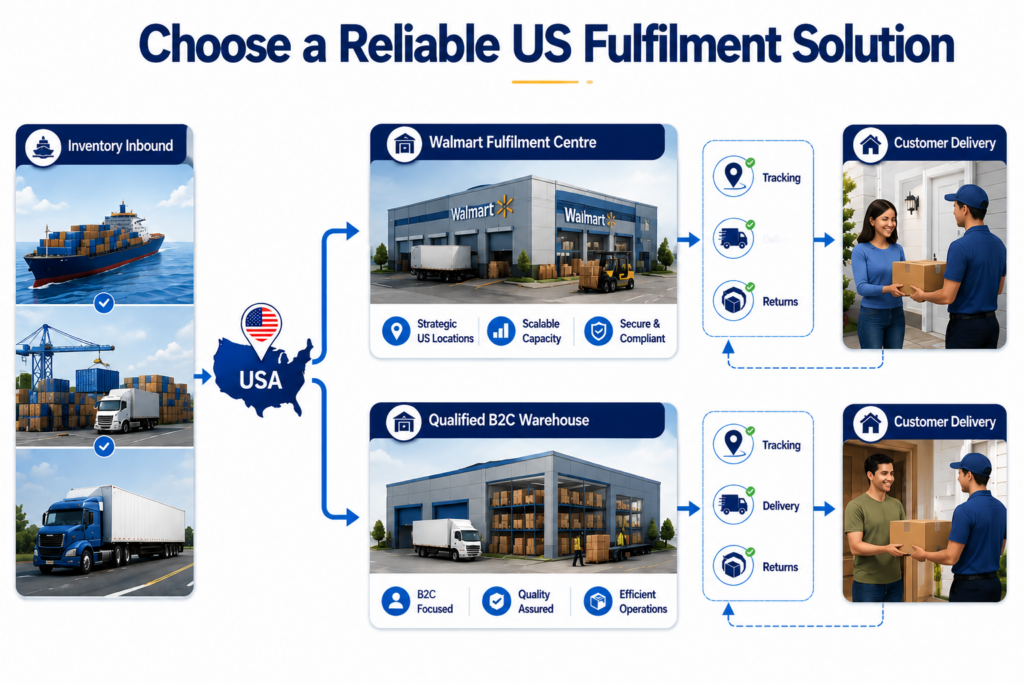
8. You Need a Reliable US Fulfilment Solution
Walmart requires sellers to use either:
- Walmart Fulfillment Services, or
- Another B2C US warehouse with returns capability that can meet Walmart’s performance standards.
This means your fulfilment operation cannot be an afterthought. Walmart expects sellers to know how orders will be stored, packed, shipped, tracked and returned before the store goes live.
Option 1: Walmart Fulfillment Services
With Walmart Fulfilment Services, sellers send inventory to Walmart fulfilment centres. Walmart then manages:
- Storage
- Picking
- Packing
- Shipping
- Customer support for WFS orders
- Returns for WFS orders
WFS can simplify the customer-facing side of fulfilment, but sellers must still meet WFS product, packaging, labelling, inventory and inbound shipment requirements.
Option 2: Seller Fulfilment
Seller-fulfilled businesses remain responsible for:
- Maintaining accurate inventory
- Processing orders on time
- Packaging products securely
- Selecting suitable carriers
- Providing valid tracking
- Meeting delivery promises
- Handling customer enquiries
- Processing returns and refunds
- Preventing overselling
- Monitoring performance metrics
This can be handled through the seller’s own warehouse or a qualified third-party logistics provider.
| WFS | Seller Fulfilled |
| Walmart stores and ships inventory | Seller or 3PL stores and ships inventory |
| Walmart handles WFS order support | Seller handles customer enquiries |
| Walmart manages WFS returns | Seller configures return centers and policies |
| Additional WFS requirements and fees apply | Seller controls more of the logistics operation |
| Useful for standardised, scalable fulfilment | Useful when the seller already has strong US logistics |
The right option depends on your products, margin, warehouse network and level of operational control.
9. You Need a Valid US Return Arrangement
All Marketplace sellers must provide a valid US return centre address for seller-fulfilled returns.
The address cannot be:
- A PO box
- Located in Alaska
- Located in Hawaii
- Located in Puerto Rico
- Located in Guam
- Located in the US Virgin Islands
- Located in other excluded US territories
Walmart requires return centre details to be configured in Seller Centre before accepting returns.
International sellers must pay particular attention to this requirement. Being eligible to apply from another country does not remove the need for a qualifying US return solution when selling on Walmart US.
A third-party logistics provider may be able to receive and process returns on your behalf, but responsibilities should be confirmed before applying.
10. International Sellers Have Additional Requirements
Walmart Marketplace is not limited to US-incorporated companies.
Eligible international sellers can use supported tax classifications and country-specific business documents. However, they must still be prepared to operate within the US retail and fulfilment environment.
For International Sellers
| Requirement | What It Means |
| Eligible country and tax path | Your country of incorporation must be supported for the relevant onboarding pathway |
| Local business documents | Submit the documents listed for your country |
| Identity verification | Provide the applicant, director or legal representative information requested |
| US return address | Use a valid return centre that meets Walmart’s location rules |
| Customer service number | Walmart currently requires a US toll-free customer service number |
| Fulfilment | Use WFS or an eligible US B2C warehouse |
| Customs | Clear inventory through US customs before it reaches a standard WFS facility |
| Payout provider | Choose an option available for your country of incorporation |
Walmart currently states that international sellers need a US customer service number with toll-free service.
Do International Sellers Need a US Tax ID?
Walmart accepts different tax classifications for certain international businesses. Some sellers may use a W-8BEN-E path without an EIN, while others may use W-8ECI or require different documentation based on their country of incorporation.
Can International Sellers Ship Directly to WFS?
Standard international inbound shipments must normally clear US customs before arriving at a Walmart fulfilment centre. Walmart states that WFS does not generally accept shipments arriving directly across the international border unless the inventory is imported through an eligible Walmart Cross Border arrangement.
Do not send inventory before confirming customs responsibility, importer-of-record arrangements, labels, packaging and delivery requirements.
11. You Need Customer Service Details
During store setup, Walmart asks sellers to provide market and customer service information.
Before applying, decide who will manage:
- Order enquiries
- Cancellation requests
- Delivery problems
- Damaged products
- Incorrect items
- Returns
- Refunds
- Product questions
- Weekend and holiday coverage
- Escalated complaints
This responsibility should not be assigned after orders begin arriving.
Walmart’s current Seller Performance Standards require sellers to respond to customer enquiries within 48 hours and maintain a Seller Response Rate of at least 95%.
12. You Need an Approved Payout Method
To receive Walmart Marketplace payouts, sellers must connect either:
- An approved third-party payout provider, or
- Walmart Marketplace Wallet, where available
Provider availability depends on the seller’s country of incorporation. Walmart currently lists options such as Marketplace Wallet, Hyperwallet, Payoneer, PingPong and several additional providers for eligible international locations.
Your payout details should match your business information.
Walmart also requires sellers to finish setting up payments within 30 days of completing the business details stage. An account may be declined if the payment setup is not completed within that period.
New sellers should also plan for an initial payment hold while the account builds transaction history and credibility.
13. What You Do Not Necessarily Need
Walmart Marketplace requirements are often mixed with assumptions copied from other platforms.
Here is what you do not necessarily need:
- A Monthly Seller Subscription: Walmart does not currently charge a standard setup fee or monthly Marketplace subscription. Sellers pay referral fees when products sell, along with any applicable fulfilment, storage, advertising, return, software or operational costs.
- An LLC Specifically: An LLC is not the only accepted entity. The correct legal and tax structure is what matters.
- A US-Incorporated Company in Every Situation: Eligible international companies may qualify through supported tax classifications and country-specific documentation.
- A US EIN in Every International Situation: Some international sellers can onboard through a supported W-8BEN-E pathway without an EIN.
- A Standard UPC for Every Eligible Product: An approved GTIN or UPC exemption may be available for certain private-label, handmade, Resold or otherwise eligible products.
- Walmart Fulfillment Services: WFS is optional when the seller already has an eligible B2C US warehouse with suitable fulfilment and returns capability.
How the Walmart Seller Application Works
Once your business meets Walmart Marketplace requirements, the onboarding process follows a few key stages. Sellers need to verify their business, set up payments, provide marketplace details, configure fulfilment and prepare their product catalogue before going live.
Step 1: Create the Account
Start by registering with a business email address and creating a secure password.
Use an email account controlled by your company rather than an employee or contractor’s personal email. This ensures your business maintains access to the account in the future.
Step 2: Verify the Business
Walmart requires sellers to provide information that confirms the business is legitimate. This may include:
- Legal business information
- Business entity type
- Tax registration details
- Business registration documents
- Personal ID of the applicant or authorised representative
- Location-specific business documents
Walmart may request additional verification documents depending on the seller’s location, business structure or review process.
Step 3: Connect the Payout Method
Select an approved payout option and complete the required verification process. This allows Walmart to send payments for completed orders and confirms that the payment account belongs to the seller.
Step 4: Add Market Details
Provide the information customers will see and Walmart needs to operate your account, including:
- Business display name
- Customer service details
- Marketplace information
- Required tax information
Accurate details help ensure smooth communication with customers and prevent account issues later.
Step 5: Configure Fulfilment and Returns
Choose how orders will be stored, shipped and managed. Sellers can use Walmart Fulfillment Services (WFS) or their own fulfilment setup.
You will also need to configure shipping settings, return locations, return labels and other operational preferences to support customer orders.
Step 6: Set Up the Catalogue
Create your product catalogue by adding listings manually, uploading spreadsheets, using integrations or importing eligible catalogue data from another marketplace.
Walmart’s Express Setup may help transfer existing business and product information, but sellers must review all imported content, confirm they have the rights to use it and update anything that does not meet Walmart’s requirements.
How Long Does Walmart Approval Take?
Walmart states that business verification may take from a few minutes to a few business days.
Its 2026 New-Seller Savings information says the full onboarding process takes about 10 days on average. That is not a guaranteed approval timeline. Missing information, document mismatches, identity checks and additional questions can extend the process.
Common Reasons Walmart Verification Fails
A failed application is not always caused by one dramatic problem. It is often caused by several small inconsistencies.
- Business Name Mismatch: The application name does not precisely match tax or registration records.
- Address Mismatch: The address on the application differs from the address on the business licence, tax record, bank statement or identity document.
- Incorrect Entity Type: The applicant selects an entity that does not match the company’s legal or tax classification.
- Incorrect Applicant Information: The person applying is not clearly connected to or authorised by the business.
- Weak or Unverifiable Ecommerce History: The applicant cannot demonstrate an established online retail operation.
- Product Identifier Problems: The products use inaccurate, duplicated, fabricated or mismatched GTIN or UPC information.
- Catalogue Compliance Problems: The planned catalogue contains prohibited, unsafe or insufficiently documented products.
- Missed Verification Requests: The applicant fails to respond to a request for more information or identity verification within the required timeframe.
Frequently Asked Questions
Q1. What Are the Main Walmart Marketplace Requirements?
Walmart generally requires a personal ID, Business Tax ID or Business Licence Number, accepted business classification, documents verifying the company name and address, ecommerce experience, valid product identifiers, a compliant catalogue and a qualifying US fulfilment and returns solution.
Q2. Can Anyone Sell on Walmart Marketplace?
No. Businesses must meet Walmart’s minimum eligibility, product and operational requirements before they qualify to sell.
Q3. Do I Need an LLC to Sell on Walmart?
No. Walmart accepts several qualifying structures. Your business entity must match your official legal and tax classification.
Q4. Do I Need an EIN to Sell on Walmart?
US businesses normally need an EIN for the W-9 pathway. Some eligible international businesses may use supported W-8 classifications without a US EIN.
Q5. Can I Use My Social Security Number?
Walmart states that an SSN is not accepted as a replacement for the required Business Tax ID or Business Licence Number.
Q6. Does Walmart Require Previous Ecommerce Experience?
Yes. Walmart lists a history of marketplace or ecommerce success among its minimum qualifications. It does not publicly provide one universal sales or revenue threshold.
Q7. Can International Sellers Join Walmart Marketplace?
Eligible international businesses can apply using supported tax classifications and country-specific documents. They must also satisfy Walmart’s fulfilment, returns, customer service and product requirements.
Q8. Do International Sellers Need a US Return Address?
Yes. Walmart currently requires a valid US return centre for Marketplace sellers. A PO box and addresses in several excluded states or territories cannot be used.
Q9. Does Every Product Need a UPC?
Products normally need an accepted product identifier. Eligible items without one may qualify for a GTIN or UPC exemption.
Q10. How Long Does Walmart Business Verification Take?
Business verification may take from a few minutes to a few business days. Full onboarding can take longer when Walmart requests corrections or additional documentation.
Ready to Start Your Business in Walmart?
A Walmart application should not feel like a gamble.
Before you submit your business documents, tax information, product identifiers, catalogue, and fulfilment systems should work together. One overlooked mismatch can slow down verification. A weak returns or inventory process can create even bigger problems after the account goes live.
Ecomclips helps businesses prepare, launch, and manage Walmart Marketplace accounts with a clearer, more structured approach.
Our Walmart Marketplace support can include:
- Walmart Account Setup & Application Support: We help businesses prepare their applications, verify requirements, complete onboarding and avoid common approval delays.
- Product Catalogue & Listing Management: From product uploads and catalogue creation to GTIN checks and data optimisation, we ensure your listings meet Walmart standards.
- Walmart Listing Optimisation: We improve titles, descriptions, attributes, images and product content to increase visibility and create better shopping experiences.
- WFS & Fulfilment Setup: We assist with Walmart Fulfillment Services (WFS), seller fulfilment configuration, inventory planning, shipping settings and return solutions.
- Walmart PPC Management: Data-driven advertising strategies designed to improve product visibility, control spending and drive profitable sales growth.
- Product Feed & Data Management: We manage catalogue feeds, product integrations, inventory updates and data accuracy to keep your store running smoothly.
- Account Health & Compliance Monitoring: We monitor performance issues, listing errors, policy risks and operational gaps to help maintain a healthy Walmart account.
- Growth Strategy & Marketplace Expansion: We provide ongoing insights and optimisation strategies to help businesses scale, improve conversions and grow sustainably on Walmart Marketplace.
Do not wait for Walmart to discover preventable gaps in your operation.
Contact us today at info@ecomclips.com or book an appointment with our e-commerce experts to start selling smarter on both marketplaces.
Build the Foundation Before You Build the Store
Walmart Marketplace can give established businesses access to a large and trusted retail environment. But the opportunity begins with preparation.
Your application should present one consistent picture. The business is legitimate. The documents are accurate. The ecommerce experience is real. The products are compliant. The fulfilment operation is dependable.
When those pieces fit together, approval becomes less mysterious, and the business has a much stronger foundation for long-term success. Do not treat Walmart Marketplace requirements as paperwork standing between you and your first sale. Treat them as the blueprint for building a store customers can trust.