
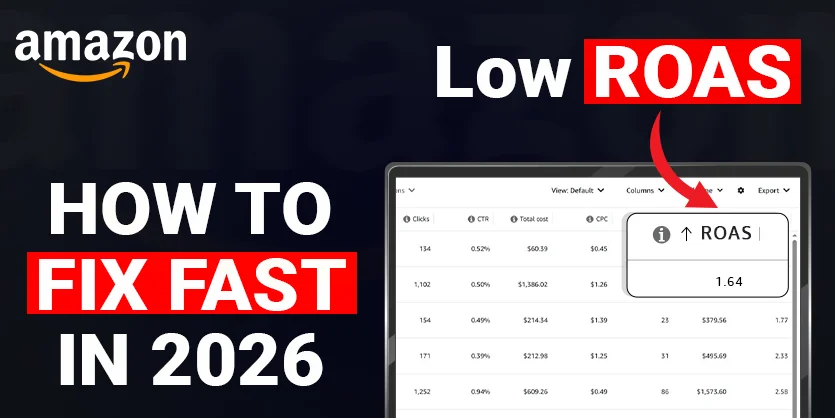
If your Amazon ad budget keeps increasing but your returns stay stuck, the problem usually is not the budget. It is wasted ad spend. Many sellers invest more in Amazon ads every month, yet still struggle with low ROAS because too much of their spend goes toward irrelevant search terms, weak targeting, and clicks that never convert into sales.
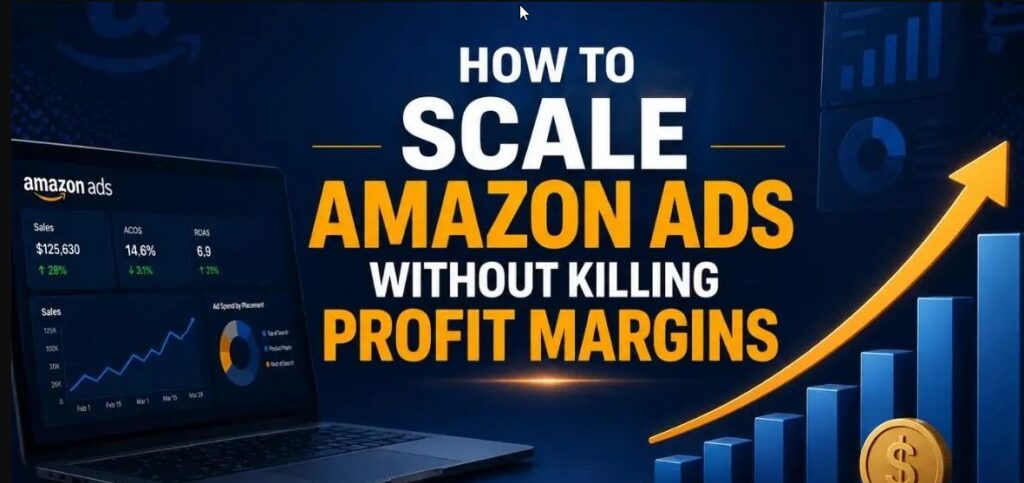
Without proper optimization, increasing ad spend often means increasing waste. A strong PPC strategy focuses on improving efficiency, not just raising budgets. The key to better performance is simple: cut what is not working and scale what is already profitable.
Effective campaign improvement starts by identifying wasted spend, improving keyword targeting, and refining bids. Strong account management can help improve ROAS while also helping sellers reduce ACoS.
When you focus on reducing waste and scaling winners, your campaigns become easier to control, more profitable, and better positioned for long-term growth.
Why Bigger Amazon Ad Budgets Still Lead to Low ROAS
Many Amazon sellers increase their ad budgets expecting stronger results, but bigger budgets do not always mean better performance. In fact, one of the biggest reasons for low ROAS is not low spending but poor campaign efficiency.
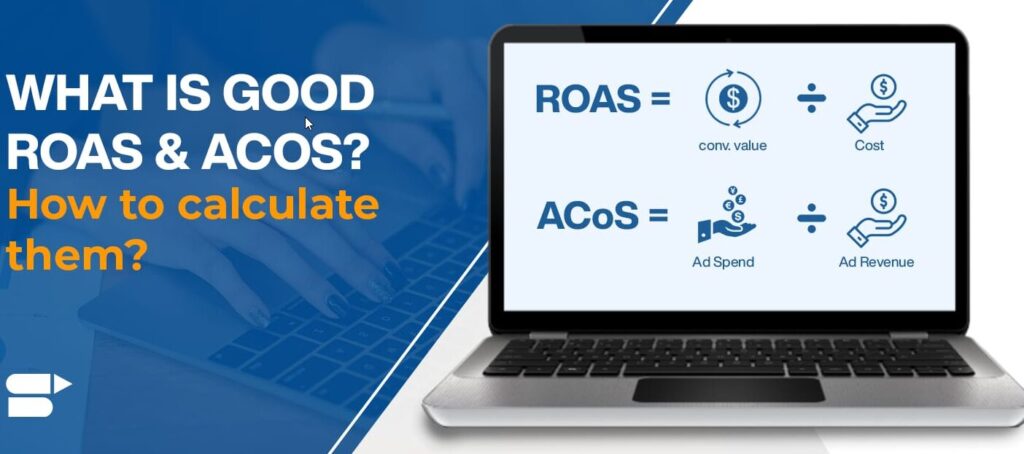
A lot of sellers see ROAS between 2x and 3x, while stronger-performing brands often achieve 4x to 6x, depending on product margins. If you are asking, “Why is my Amazon ROAS low?”, the answer often comes down to weak campaign structure, poor targeting, and wasted clicks.
More budget cannot fix weak performance. It often amplifies the same problems. Many ads spend money without generating sales because of irrelevant search terms, poor keyword targeting, or campaigns with high spend but no conversions.
This is one of the most common high-spend, no-conversion issues sellers face.
A strong strategy starts by understanding where your budget is leaking. Search term reports can reveal wasted spend, while campaign data can highlight profitable keywords and ASIN targets worth scaling.
If your goal is to improve ROAS, focus first on campaign cleanup instead of increasing the budget blindly. Better optimization means cutting waste, improving targeting, and scaling proven winners.
Here is the benchmark:
- Many struggling sellers are seeing 2x to 3x ROAS
- More profitable brands often aim for 4x to 6x ROAS
- The right target depends on your product margin
If you are looking for how to improve ROAS or reduce wasted ad spend on Amazon, the solution is simple: remove non-converting traffic, strengthen profitable campaigns, and continuously improve performance to reduce ACoS.
In most cases, fixing a low conversion rate starts with better targeting, not a bigger budget.
Strategy 1: Reduce Wasted Ad Spend with Amazon PPC Campaign Cleanup
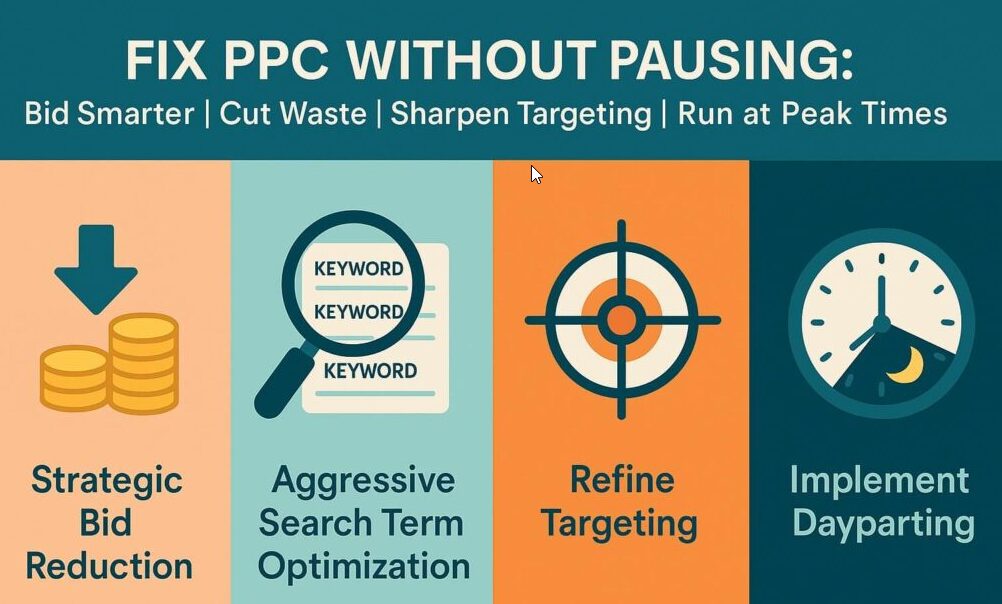
The first step in PPC optimization is simple: identify traffic that spends money but does not generate sales, then stop wasting budget on it. Many sellers struggling with low ROAS focus on increasing budgets instead of fixing inefficiencies. But strong campaign management starts with cleanup, not scaling.
If you want to know how to improve your campaigns, begin by reviewing performance data, tightening keyword targeting, and using a smart negative keyword strategy.
Use Amazon Search Term Report Analysis to Find Waste
One of the fastest ways to improve performance is through search term report analysis.
Start by looking at weak campaigns with poor performance metrics. For example, if a campaign shows very low ROAS and extremely high ACoS, it usually signals major budget waste.
Inside your Amazon Ads dashboard:
- Open the campaign and go to the ad group.
- Pull the search term report for the last 65 days.
- Filter for search terms with zero sales.
- Download the report.
- Review which search terms are irrelevant, loosely relevant, or still relevant but underperforming.
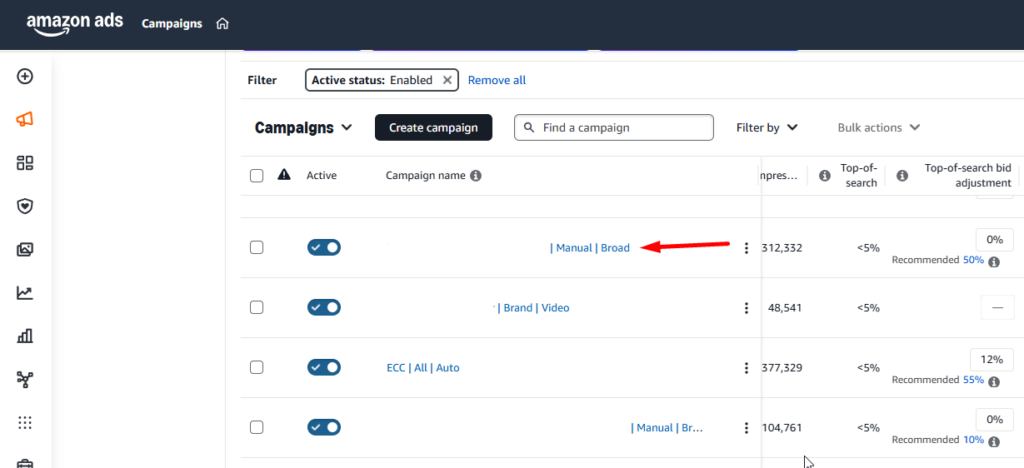
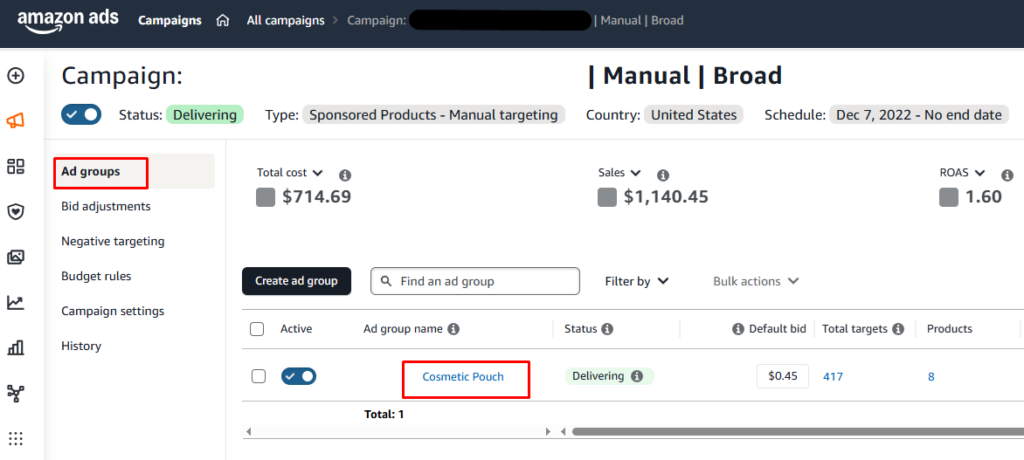
This process helps identify where your ad budget is leaking.
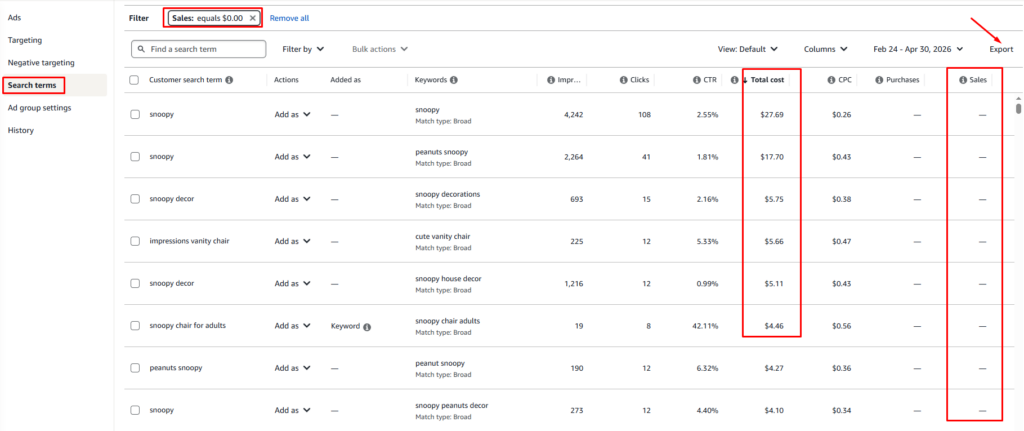
If your goal is to improve ROAS and lower ACoS, this is the first place to start.
Apply an Amazon Negative Keyword Strategy
Once wasted search terms are identified, block them.
A strong negative keyword strategy helps stop irrelevant traffic from draining your budget.
- Negative phrase for completely irrelevant terms
- Negative exact for underperforming search queries you want to block precisely
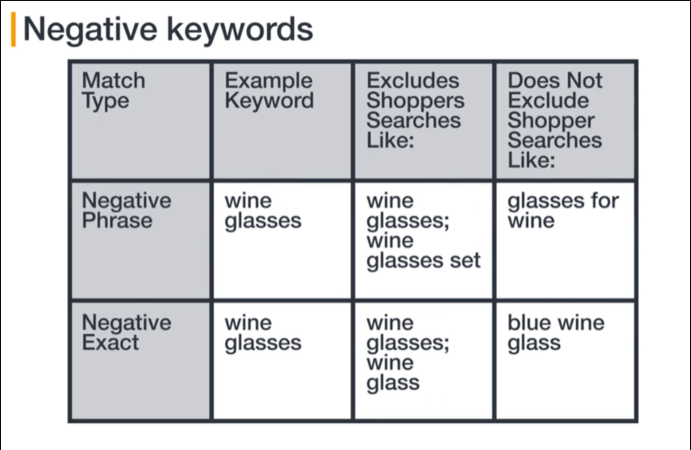
This step supports long-term waste reduction and helps keep campaigns cleaner.
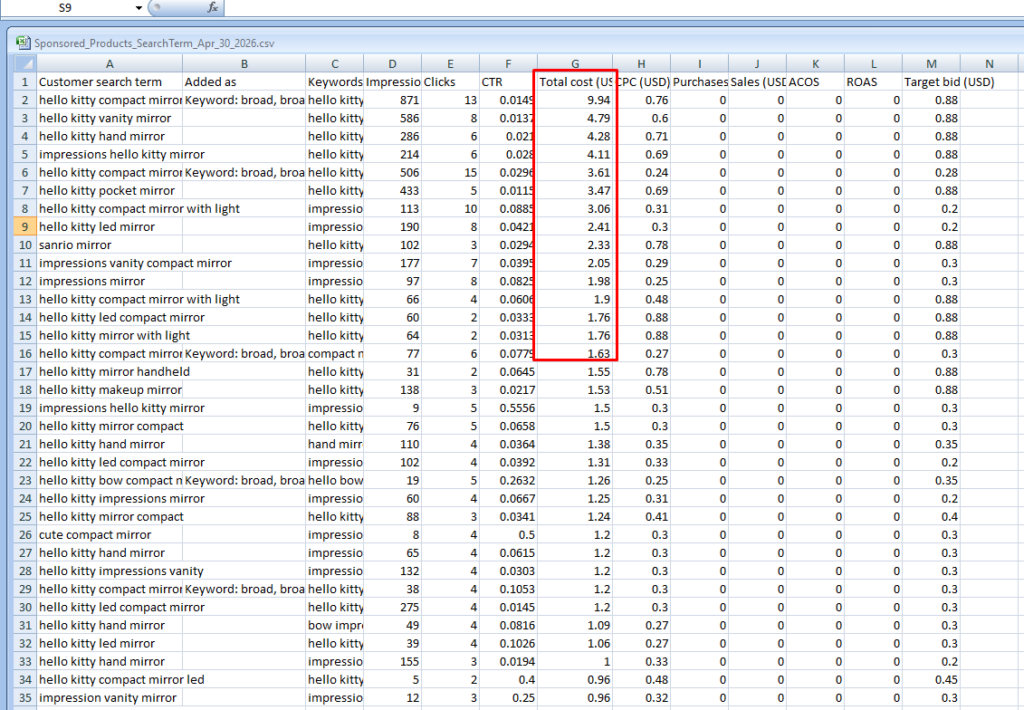
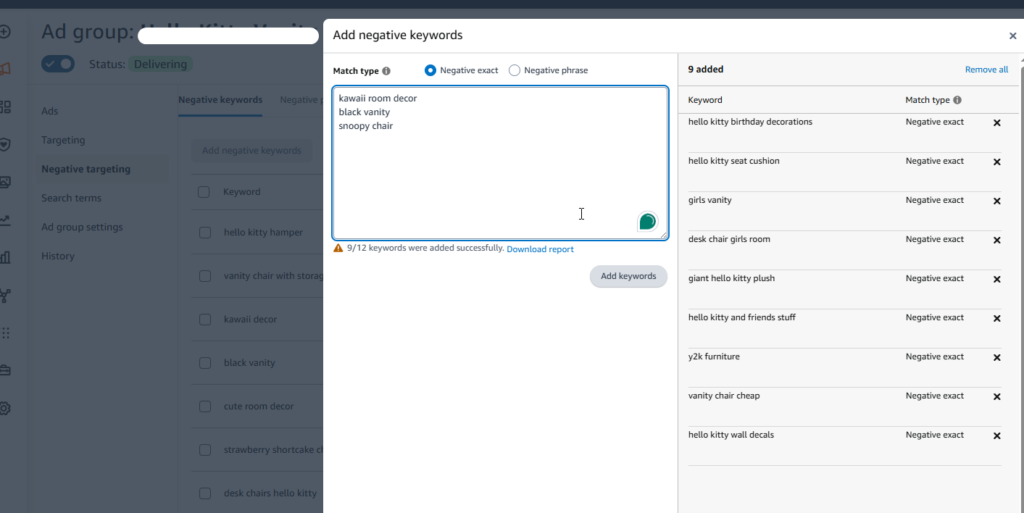
For example, if the product is a shoe item. The search term report surfaced words like “child,” “blanket,” “chair,” and “car”. Those are not relevant, so they were added as negative phrase keywords.
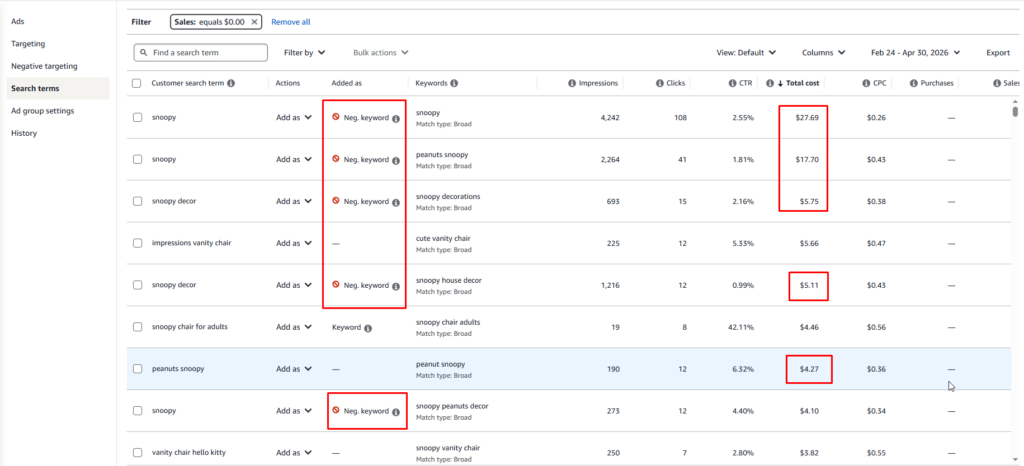
That distinction is important. If a word has nothing to do with your item, phrase negative is the cleaner choice because it blocks broader wasted traffic. If the query is somewhat related but the exact search does not convert, negative exact gives you more control.
This simple table shows how to think through the action:
| Search term type | Spend | Sales | Best action |
| Clearly irrelevant word | Over $10 | 0 | Add as a negative phrase |
| Partly related exact query | Over $10 | 0 | Add as a negative exact |
| Relevant but weak term | Over $10 | 0 | Lower bid or pause temporarily |
Irrelevant terms eat your budget fast.
For sellers comparing broad match vs exact match, this is where broad campaigns often reveal poor traffic quality that exact match campaigns can avoid.
Optimize Bids for Weak Keywords
Not all underperforming keywords are irrelevant. Some are highly related but still fail to convert. That is where bid optimization matters.
Instead of immediately pausing them:
- Lower bids first
- Test for better CPC efficiency
- Pause only if performance stays weak
This helps reduce ACoS without killing potentially valuable traffic.
Not all product-related keywords convert. Your decisions should follow performance, not assumptions.
That point matters because many sellers keep weak keywords alive for too long simply because the keyword sounds relevant. But Amazon PPC is not about whether a term matches your product in theory. It is about whether it drives profitable conversions in your account.
Use this order of action:
- Sort keywords or campaigns by zero sales.
- Review whether the term is irrelevant or relevant-but-weak.
- Lower bids on relevant terms that may still deserve more testing.
- Pause terms temporarily when spending keeps rising with no sales.
- Shift more budget toward proven converters.
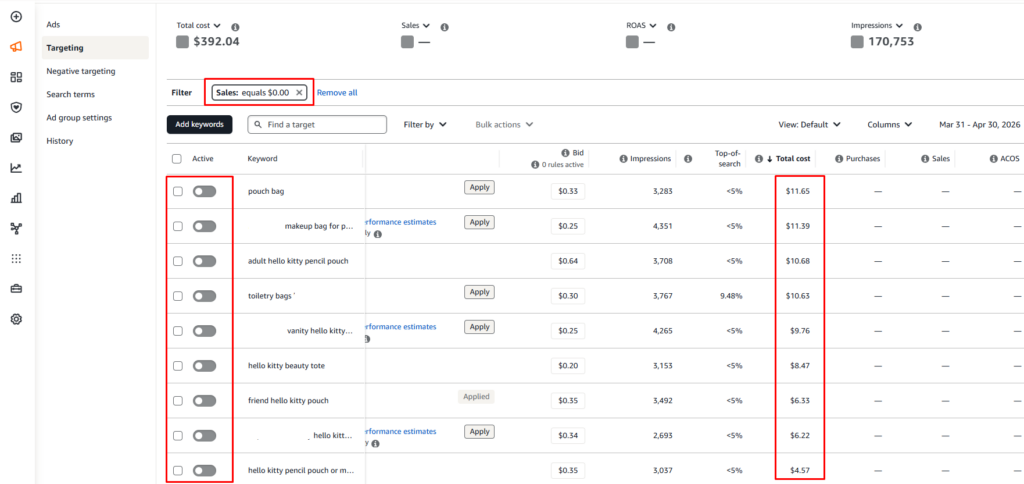
When you remove weak search terms, the rest of the campaign gets cleaner. Your click-through data becomes easier to read. Your spend goes toward higher-intent traffic. And because less money is lost on dead weight, your overall ROAS has room to improve.
Build Better Amazon Campaign Structure Before Scaling
A cleaner campaign structure creates better data and stronger decision-making.
Before moving into ad campaign scaling, focus on:
- Auto campaign optimization for keyword discovery
- Better keyword targeting strategy
- Smarter product targeting optimization
- Stronger sponsored ads management
This creates a healthier foundation for scaling.
A good ROAS depends on your margins, but reducing waste is always the fastest path to better profitability.
Before scaling winning keywords with keyword harvesting or exact match campaigns, cleanup must come first.
That is how sellers build stronger performance, cleaner data, and more profitable ads in 2026.
Strategy 2: Increase Profitable Sales by Scaling Winning Amazon PPC Campaigns
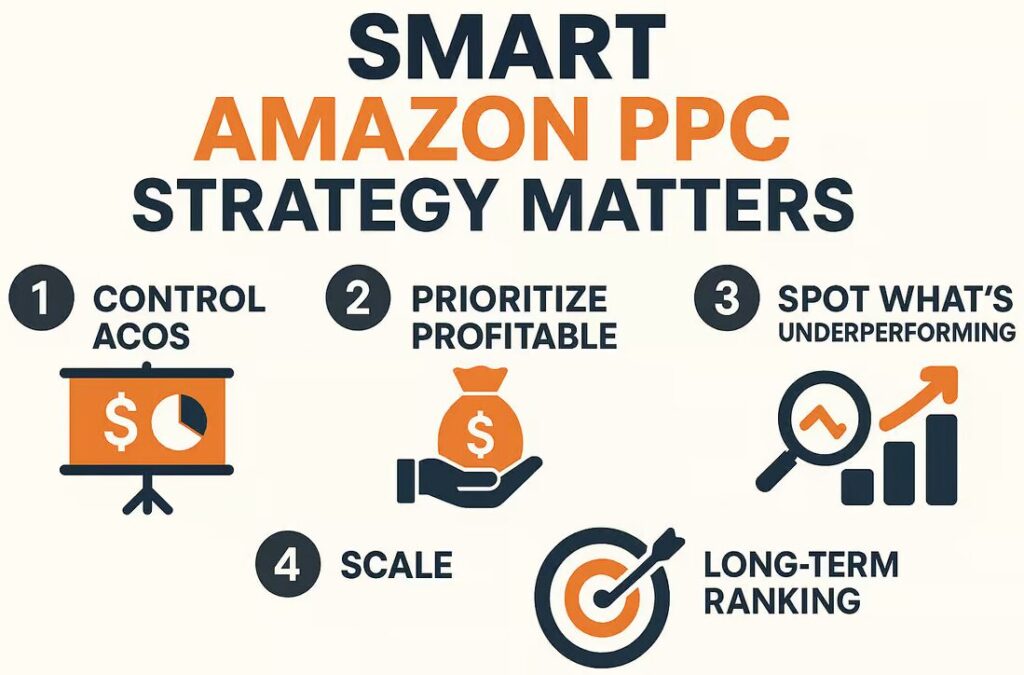
Cleaning up wasted spend is only half of the process. While reducing waste improves efficiency, real growth comes from scaling what already works. A strong strategy focuses on finding profitable campaigns, isolating winning keywords, and increasing budget where performance already proves success.
This is one of the most effective ways to improve ROAS and build stronger long-term profitability.
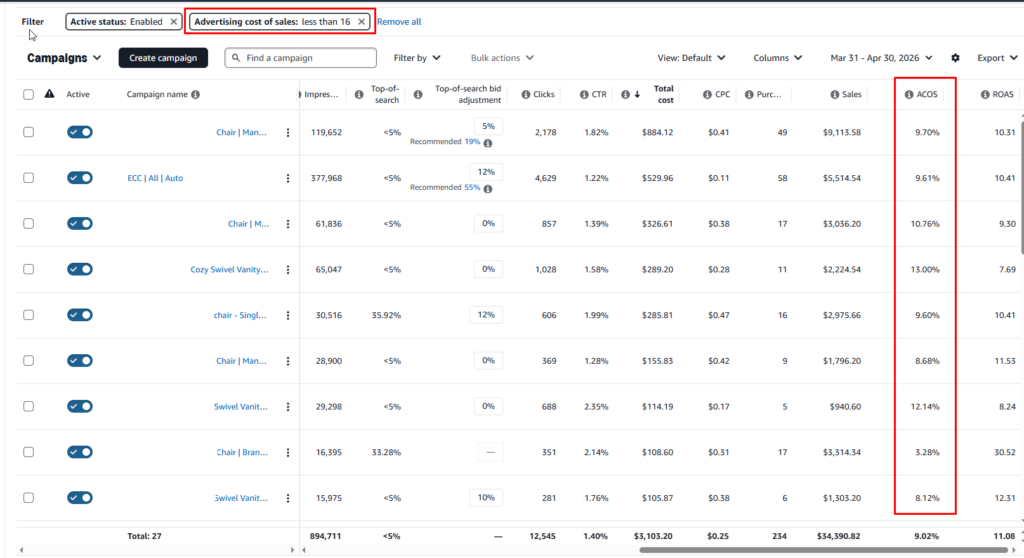
Filter Campaigns by Low ACoS and Strong ROAS
A smart optimization process starts by identifying your best-performing campaigns.
Look for campaigns with:
- Low ACoS
- High ROAS
- Consistent conversions
These campaigns often represent your strongest opportunities for growth. A good ROAS depends on margins, but lower ACoS and higher ROAS usually indicate stronger profitability.
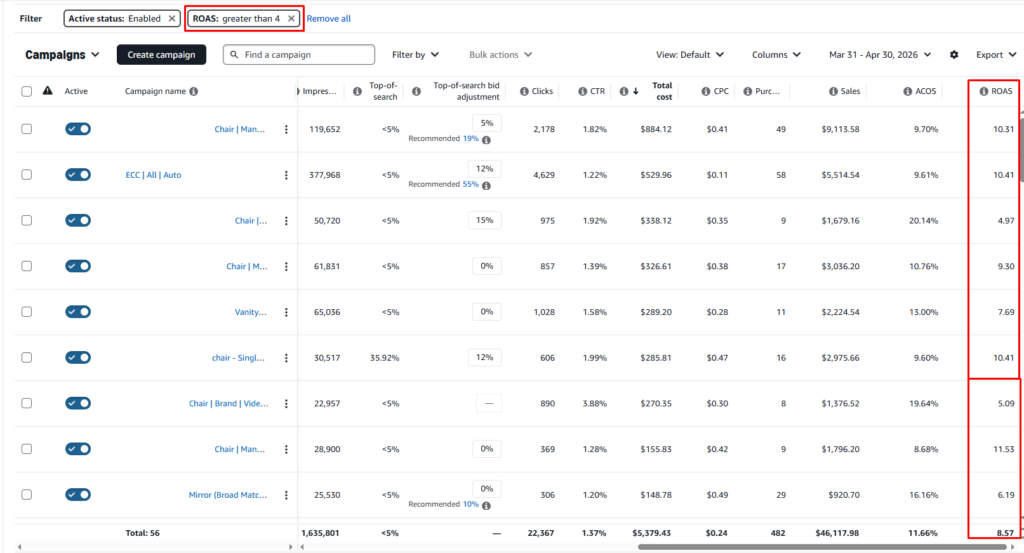
Review performance across:
- Amazon auto campaign optimization campaigns
- Broad match campaigns
- Phrase match campaigns
- Amazon product targeting optimization campaigns
This helps uncover winning keywords already performing inside your account.
For example, the search term report may use a range of the last 30 days. Then the data can be filtered again for ACoS below 16–20%. In one example, this surfaced six keywords with strong performance. The reported ROAS values included 10 to 11. Those are the kinds of search terms worth isolating.
This step gives you a short list of proven winners. Instead of guessing which keywords deserve more attention, you are working from conversion data that already exists in your account.
The fastest way to scale is to give proven search terms their own campaign, not to keep them buried in mixed traffic.
Harvest converting Keywords into Exact Match Campaigns
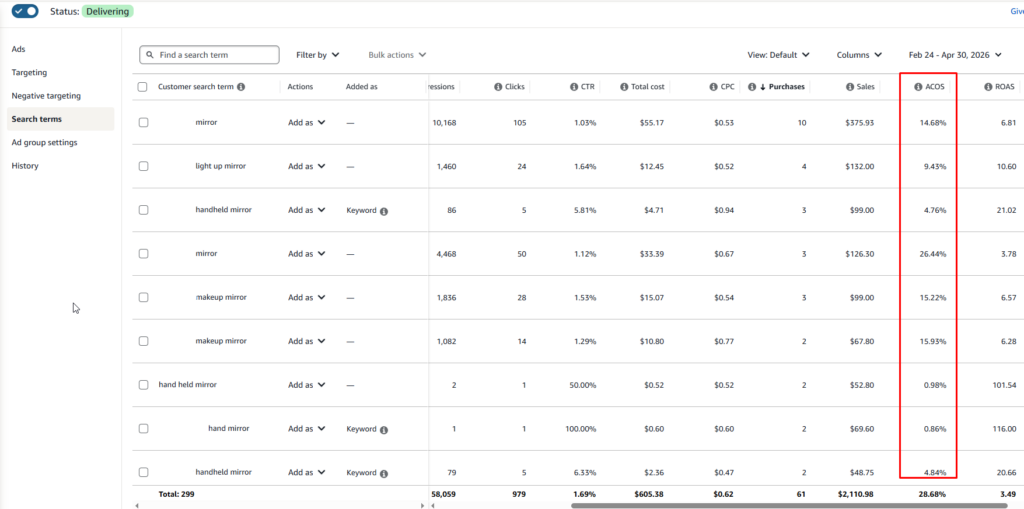
One of the best campaign improvement tactics is isolating proven search terms into exact match campaigns.
Instead of keeping high-performing keywords buried inside mixed campaigns, move them into dedicated campaigns for stronger control.
Once you find high-performing search terms, pull them out and build a dedicated exact match campaign. That is the core scaling method.
This process improves:
- Bid control
- Budget allocation
- Conversion efficiency
- Keyword targeting precision
A dedicated campaign structure gives you better control and cleaner performance data.
The process looks like this:
- Review good campaigns and extract the best converting search terms.
- Create a new exact match campaign with those keywords.
- Set bids higher than your exploratory campaigns.
- Watch the campaign closely and keep budgets available.
- Compare ACoS and ROAS against the source campaigns.
Dedicated exact match campaigns give you better control over high-intent traffic.
Strong campaign structure separates discovery campaigns from scaling campaigns, making it easier to push profitable traffic without increasing waste.
Use Amazon PPC Bid Optimization for Better Placement
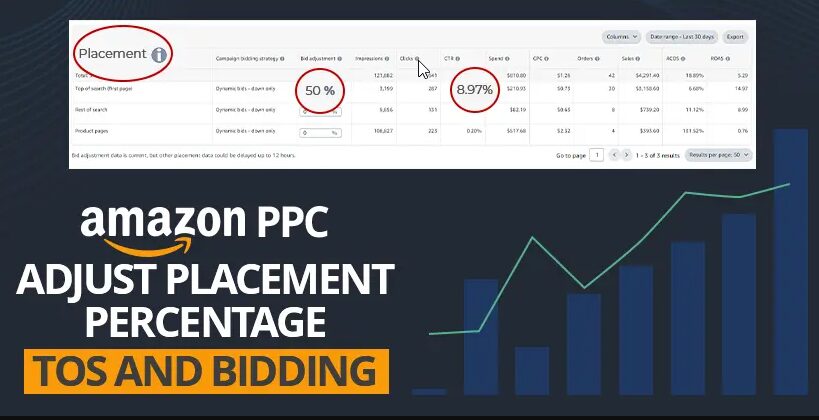
Once you isolate winning keywords, apply stronger bid control.
Higher bids on proven converters can improve top-of-search placements and increase profitable visibility.
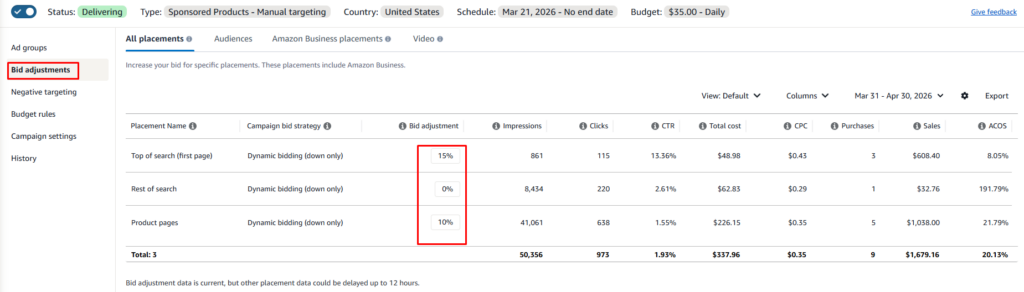
A strong keyword targeting strategy means bidding aggressively only where conversion data supports it. This approach helps sellers:
- Scale profitable traffic
- Increase sales volume
- Maintain efficiency
- Reduce ACoS over time
Understanding the ideal ACoS depends on product margins, but profitable campaigns should always justify a higher investment
Increase Budgets Only on Proven Winners
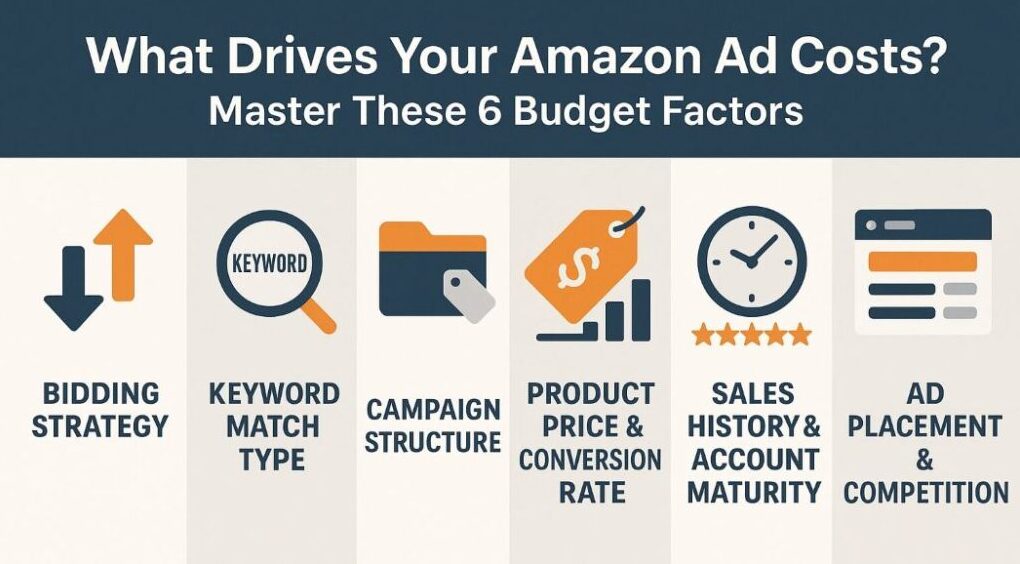
One of the biggest mistakes in ad campaign scaling is increasing budgets across all campaigns.
That often increases waste.
That mistake is common. A seller sees sales coming in, raises the account budget, and hopes the whole account grows. But some campaigns deserve more spending, while others still need cleanup. If you scale both groups together, the weak campaigns absorb money that should have gone to the winners.
A smarter rule is simple: increase budgets for campaigns that already produce profitable sales, especially the new exact match campaigns built from top search terms. For lower-performing campaigns, fix targeting and bids first. If ACoS drops and ROAS improves, then consider giving them more room.
This summary shows the logic:
| Campaign type | Current performance | Best next move | Budget action |
| New exact match campaign with proven keywords | Low ACoS, strong ROAS | Scale carefully | Increase budget |
| Auto or broad campaign finding new terms | Mixed results | Keep mining data | Hold or modest increase |
| A campaign with spending but weak sales | High ACoS, low ROAS | Fix bids and targeting first | Do not increase yet |
| Campaign with zero-sale terms | Wasted spend | Add negatives or pause terms | Reduce waste before scaling |
Instead, scale budgets only for campaigns with:
- Strong ROAS
- Low ACoS
- High conversion rates
For weaker campaigns, focus on waste reduction first before increasing spend. This disciplined scaling method improves profitability and supports better long-term growth.
What Happens When You Combine Both Amazon PPC Strategies
The best results come when you combine both strategies: first, reduce waste, then scale profitable winners. This balanced approach helps sellers build stronger, cleaner, and more profitable campaigns.
The process is simple. First, remove wasted spend by identifying search terms and keywords that generate clicks but no sales. Then, take your best-performing search terms and move them into dedicated exact match campaigns for better control.
This approach is one of the most effective ways to improve ROAS while also helping sellers reduce ACoS.
A Simple Amazon PPC Optimization Routine
To improve long-term performance, follow this repeatable workflow:
- Review search term reports for zero-sale spend.
- Use negative phrase and exact negatives to reduce waste.
- Lower bids on weak keywords.
- Filter campaigns with low ACoS and strong ROAS.
- Move winning search terms into exact match campaigns.
- Increase budgets only on proven performers.
This workflow strengthens your campaign structure by separating discovery from scaling.
Use auto campaigns for finding new search terms and exact match campaigns for scaling proven winners. A smart keyword targeting strategy combined with better product targeting helps create cleaner data and stronger profitability.tter Amazon product targeting optimization helps create cleaner data and stronger profitability.
Better Data Leads to Better Scaling
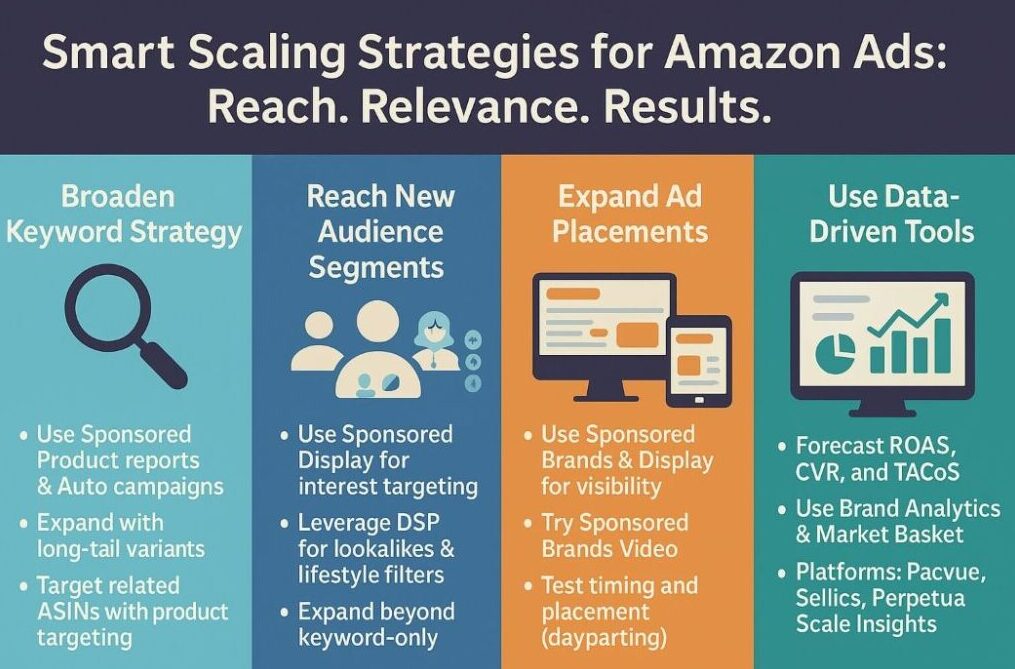
Strong account management is built on better data. When you focus on waste reduction, your campaigns become more efficient and easier to scale.
Less wasted spend means:
- Better conversion signals
- More accurate performance data
- Better budget decisions
- More effective ad campaign scaling
Understanding the ideal ACoS depends on your margins, but cleaner campaigns almost always lead to better profitability.
In the long run, combining waste reduction with winning keyword scaling creates a stronger system for sustainable growth, better ROAS, and more profitable ads.
Final Thoughts
Improving low ROAS starts with understanding that not all clicks have the same value. Some search terms create waste and should be blocked, some need better bid control, and others deserve more budget because they already drive profitable sales.
The most effective strategy is simple: reduce waste first, then scale what already converts. Strong optimization begins with search term analysis, better keyword targeting, and a smarter campaign structure.
By focusing on waste reduction, sellers can cut unprofitable traffic, reduce ACoS, and create cleaner campaign data. Once profitable keywords are identified, scaling them through exact match campaigns and strategic budget increases can help improve ROAS faster.
Better management and consistent campaign review make Amazon ads easier to control, more efficient, and more profitable over time. Whether you are improving auto campaigns or refining product targeting, the goal remains the same: spend smarter, scale stronger, and build long-term profitability.
In 2026, understanding your ROAS target, maintaining profitable ad performance, and hitting the right ACoS will depend on how well you manage waste and scale winners. That is the foundation of successful Amazon advertising and long-term growth.
Where to keep learning Amazon PPC
If you’re stuck with high spend, low sales, or rising ACoS, Ecomclips offers a free audit to help find the weak spot. That review can look at campaign setup, product issues, bidding, placements, and keyword targeting, so the problem gets defined before more money goes out the door.
You can contact the team at info@ecomclips.com. You can also learn more strategies from the Ecomclips blog, browse the Ecomclips YouTube channel, check the company’s LinkedIn page, follow updates on Facebook, or visit Boostontime for the related brand presence.
The hardest part of Amazon PPC is not getting traffic. It’s turning that traffic into sales. When post-click performance improves, the numbers usually start moving in your favor again.
If your campaigns keep getting clicks without orders, don’t rush to blame the keyword. Fix what the shopper sees after the click, and the ad account often follows.