

You’ve heard the stories. The next-door neighbor tells you that he or she is easily making $5,000 a month from their Amazon side hustle. One of my friends left his corporate job to be a full-time seller on the platform. You are still getting those TikTok videos of people who showcase their Amazon seller dashboards. And there you are, sitting at that, wondering whether this is really so, or it is another internet fantasy.
The crude reality here is that Amazon has earned upwards of 158 billion dollars in Q3 2024 alone, and has above 300 million active customers all over the world. This isn’t hype. It is the most reliable e-commerce site in the world and yes, ordinary citizens are creating massive revenues over it on a daily basis. What you are not being told in these glitzy social media posts, however, is that making money through Amazon is not about becoming wealthy through quick cash. It is all about taking the correct approach to your talents, working hard with it, and making it like a real business.
You may be a college student that needs beer money, a parent that needs a more flexible job, or a person who is willing to break the 9-to-5 cycle, Amazon has valid ways to go. The best part? You do not even require a business degree, thousands of start-up capital or years of experience to start.
We are deconstructing 15 of the most beginner-friendly how-to-make-money-on-Amazon methods with realistic income projections, step-by-step instructions, and true opportunities and downsides. When you are done reading, you will be in full knowledge of the direction that suits you and how to take your first step today.
Table of Contents
| Why Making Money on Amazon Still Makes Sense in 2026 |
| Method #1: Sell Products with Amazon FBA (Private Label) |
| Method #2: Publish Books with Amazon KDP |
| Method #3: Amazon Affiliate Marketing |
| Method #4: Become an Amazon Influencer |
| Method #5: Online Arbitrage on Amazon |
| Method #6: Sell Handmade Products on Amazon Handmade |
| Method #7: Merch by Amazon (Print-On-Demand) |
| Method #8: Amazon Wholesale Selling |
| Method #9: Retail Arbitrage (Flipping Products) |
| Method #10: Offer Services via Amazon Home Services |
| Method #11: Amazon FBA Prep Services |
| Method #12: Amazon Vine Reviewer Program |
| Method #13: Amazon Video & Creator Connections |
| Method #14: Amazon Coaching, Consulting & Education |
| How to Choose the Right Amazon Method for You |
| Frequently Asked Questions About Making Money on Amaz |
| Conclusion: Your Amazon Journey Starts Today |
Why Making Money on Amazon Makes Sense in 2026
Before diving into specific methods, let’s understand why Amazon continues dominating as a money-making platform for beginners and experienced entrepreneurs alike.
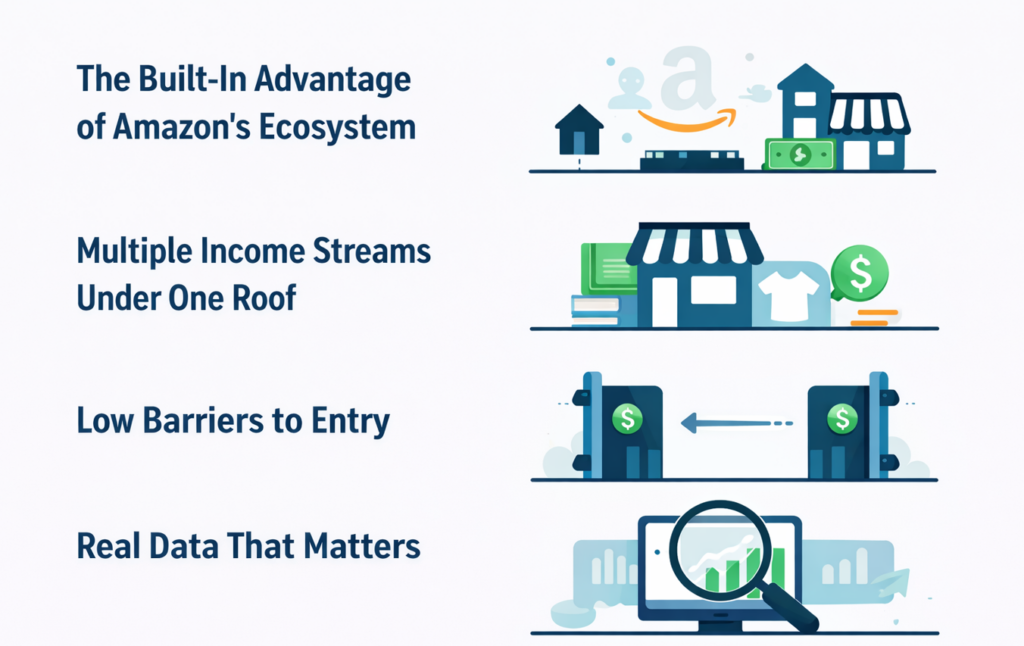
The Built-In Advantage of Amazon’s Ecosystem
Amazon isn’t just another marketplace. It’s a complete business infrastructure that handles the heavy lifting so you can focus on what matters—making money. With over 300 million active customers spanning 20+ countries, you’re tapping into a massive, ready-to-buy audience without spending years building your own following from scratch.
The trust factor matters enormously. When shoppers see products on Amazon, they’re not worried about payment security, shipping reliability, or return policies. That trust transfers directly to your offerings, making it exponentially easier to close sales compared to launching your own standalone website where you’d need to convince visitors you’re legitimate.
Multiple Income Streams Under One Roof
Unlike platforms that lock you into a single revenue model, Amazon offers incredible diversity. You can sell physical products, publish books, earn affiliate commissions, offer services, create custom merchandise, or combine multiple methods simultaneously. This flexibility means you’re not putting all your eggs in one basket, and you can pivot quickly if one approach isn’t working.
Low Barriers to Entry
Many Amazon money-making methods require minimal or zero upfront investment. Affiliate marketing costs nothing to start. Publishing books through Kindle Direct Publishing is completely free. Even private label selling—often seen as requiring substantial capital—can begin with as little as $500 if you’re strategic.
Amazon provides the infrastructure, tools, and support systems that would cost tens of thousands to build independently. Payment processing, customer service frameworks, fulfillment networks, marketing platforms—it’s all included. You’re essentially renting access to a billion-dollar infrastructure for a fraction of what it would cost to create yourself.
Real Data That Matters
Here’s a statistic that should get your attention: nearly 60% of Amazon sellers become profitable within their first year. That’s not luck or coincidence. It’s proof that with the right strategy, consistent execution, and willingness to learn, beginners can genuinely succeed on this platform.
How to Make Money on Amazon: Method #1 – Sell Products with Amazon FBA (Private Label)
Private label selling represents the most popular and potentially lucrative way to make money on Amazon. The concept is straightforward: source generic products from manufacturers, add your own branding, and sell them under your brand name. Amazon FBA (Fulfillment by Amazon) handles storage, shipping, customer service, and returns, allowing you to scale without managing complex logistics.
What You Can Realistically Earn
Income varies dramatically based on product selection, marketing skills, and time invested, but here’s what the data shows for private label sellers:
Beginners typically earn $500 to $2,000 monthly during their first three to six months as they learn the ropes and build initial traction. Intermediate sellers who’ve been at it for six to twelve months often reach $5,000 to $15,000 per month once they’ve optimized their listings and advertising. Advanced sellers can exceed $100,000 annually, with roughly 20% of serious sellers reaching this milestone.
Your actual earnings depend on factors like profit margins (typically 20-40% after all costs), product selection, inventory management efficiency, and advertising strategy effectiveness.
So first thing you need to know is how to sell on amazon private label. And then comes private label launch plan.
Your Step-by-Step Private Label Launch Plan
Step 1: Research Your Winning Product
Product research is where most beginners fail. They pick products based on personal preference rather than data. Don’t make this mistake. Use tools like Jungle Scout, Helium 10, or ZonGuru to identify opportunities with high demand and manageable competition.
Look for products selling between $15 and $50, as this price range offers the best balance of perceived value and profit potential. Target items with at least 300 monthly sales in your category, indicating healthy demand. Check competitor reviews—if top listings have fewer than 100 reviews, you can realistically compete. Most importantly, find products you can improve or differentiate in meaningful ways.
Avoid heavily saturated categories like phone accessories or generic supplements. Instead, explore niche products serving passionate buyer communities—think specialized fitness equipment, unique home organization solutions, or products for specific hobbies.
Step 2: Source Quality Products
Find manufacturers on platforms like Alibaba or Global Sources. Request samples from three to five suppliers, comparing quality, responsiveness, and pricing. Don’t just pick the cheapest option—quality matters enormously for reviews and long-term success.
Negotiate pricing and minimum order quantities. Most suppliers require 200 to 500 unit minimums for first orders. Calculate your total investment including product cost, shipping from overseas, Amazon fees, initial advertising budget, and professional photography. Make sure the math works before committing.
Step 3: Create a High-Converting Product Listing
Your product listing is your only salesperson on Amazon. Every element must work together to convert browsers into buyers.
But if you think the product listing is hard. You are wrong. Most sellers know how to create a high-converting product listing, but only by searching on YouTube.
So the first step is to write the title.
Write titles under 200 characters that include primary keywords naturally while remaining readable. Create bullet points that highlight benefits rather than just listing features—explain how your product solves problems or improves lives. Use all seven available image slots with high-quality photos showing your product from multiple angles, lifestyle shots demonstrating use, and infographics highlighting key features.
Write descriptions over 1,000 characters that tell your brand story, address customer pain points, and include secondary keywords for SEO. Fill out backend keywords using all available character space with hidden search terms customers might use.
Step 4: Launch Using Amazon FBA
Fulfillment by Amazon changes everything. Ship your inventory to Amazon’s warehouses, and they handle storage, order packing, shipping, customer service, and returns. Your products automatically receive the coveted Prime badge, dramatically increasing Buy Box winning percentage and conversion rates since most Amazon shoppers prefer Prime-eligible products.
Step 5: Run Strategic PPC Campaigns
Amazon PPC (Pay-Per-Click) advertising is non-negotiable for new products. Start with automatic campaigns at $10 to $20 daily, letting Amazon identify relevant keywords. After gathering data, launch manual campaigns targeting your highest-converting keywords.
Monitor your ACoS (Advertising Cost of Sales). Aim for 25-35% initially, then optimize toward 15-20% as your organic ranking improves. Don’t stop advertising too early—even after ranking organically, PPC helps maintain visibility and defend market share against competitors.
Thinking About Hiring an Amazon Expert?
Ecomclips’ Partners Achieve an Average 85% Profit Increase!
The Reality: Pros and Cons
Advantages:
- Access to 300 million ready-to-buy customers without building your own audience
- FBA handles fulfillment, allowing you to scale without hiring staff or managing logistics
- Build a real brand asset you can eventually sell for 3-4x annual profit
- Potential for passive income once systems and advertising are optimized
Disadvantages:
- Competitive marketplace requires continuous optimization and adaptation
- Amazon fees typically consume 30-40% of revenue (referral fees plus FBA costs)
- Requires upfront investment of $500 to $3,000 minimum for most products
- You’re subject to Amazon’s ever-changing policies and rules
- Cash flow management can be challenging during growth phases
Method #2: Publish Books on Amazon KDP (Kindle Direct Publishing)
If you enjoy writing or can hire ghostwriters, Amazon’s Kindle Direct Publishing (KDP) platform lets you publish eBooks and paperbacks without traditional publishers, agents, or upfront costs. This represents one of the most accessible ways to make money on Amazon for creative individuals.
Income Expectations for KDP Authors
KDP income varies dramatically based on niche selection, content quality, and marketing efforts. Casual authors publishing occasionally might earn $100 to $500 monthly. Serious authors with three to five books typically reach $1,000 to $5,000 per month. Established authors with 10+ books can exceed $10,000 monthly.
The key insight: multiple books in profitable niches generate compound income over time. Each book continues earning long after publication, creating true passive revenue streams.
Your KDP Publishing Blueprint
Choose Your Profitable Niche
Hot niches for 2025 include self-help, romance, productivity, health and fitness, parenting, personal finance, and how-to guides. Research Amazon’s Best Sellers lists to identify gaps and underserved audiences within these categories.
Write or Outsource Your Content
You can write books yourself or hire professional ghostwriters on platforms like Fiverr, Upwork, or Reedsy. Costs typically range from $500 to $3,000 depending on length and quality. Start with shorter books (10,000 to 20,000 words) to test market interest before investing in full-length manuscripts.
Invest in Professional Cover Design
Never skimp on your cover—it’s the first thing potential readers see and heavily influences purchasing decisions. Use Canva for DIY designs with professional templates, or hire designers on Fiverr for $20 to $100 for polished, category-appropriate covers.
Format and Upload to KDP
Use Amazon’s free formatting tools or software like Vellum for professional layouts. Upload to KDP, set pricing between $2.99 and $9.99 (the sweet spot for most genres), and publish. Your book goes live within 24-48 hours.
Market Your Book Actively
Don’t expect sales without promotion. Run Amazon Ads starting at $5 daily to gain visibility. Build an email list offering free chapters to potential readers. Use social media and BookBub for exposure. Get reviews through honest outreach to readers—reviews dramatically impact sales velocity.
Weighing the Pros and Cons
Advantages:
- Zero upfront costs to start publishing
- Earn up to 70% royalties on each sale
- True passive income potential—books earn indefinitely
- No inventory, shipping, or customer service responsibilities
Disadvantages:
- Takes significant time to write quality content
- Saturated market requires strategic positioning and differentiation
- Marketing falls entirely on you—Amazon won’t promote unknown authors
- Income builds slowly, requiring patience and persistence
Amazon Affiliate Marketing: Earn Commissions Without Inventory
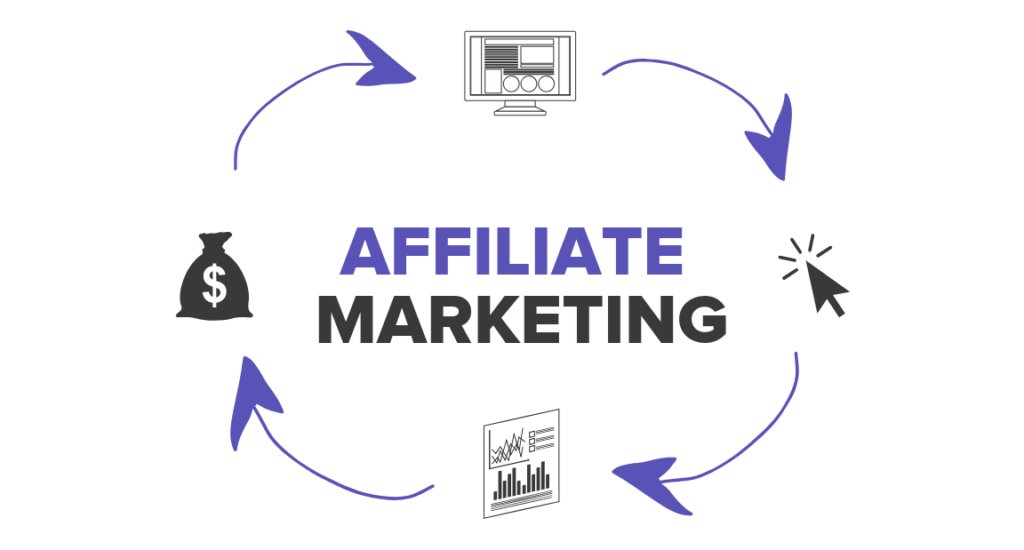
The Amazon Associates program lets you earn money on Amazon by promoting products through unique affiliate links. When someone clicks your link and purchases, you earn a commission—no inventory, fulfillment, or customer service required.
Realistic Affiliate Income Expectations
Commission rates vary by product category, ranging from 1% to 10%. Beginners typically earn $50 to $500 monthly while building traffic. Intermediate affiliates with consistent traffic reach $1,000 to $5,000 per month. Advanced affiliates driving high-quality traffic can exceed $10,000 monthly.
The determining factor is traffic volume and niche selection. High-ticket items in better commission categories naturally generate more income per conversion.
Getting Started with Amazon Affiliate Marketing
Sign Up for Amazon Associates
Visit affiliate-program.amazon.com and create your free account. You’ll need a website, blog, YouTube channel, or social media presence to be approved. Amazon reviews applications to ensure you have a legitimate platform for promotion.
Select Your Content Niche
Focus on evergreen niches with repeat buyers: tech gadgets, home improvement, beauty products, fitness equipment, kitchen tools, or pet supplies. These categories have passionate audiences making regular purchases.
Create Valuable Content
The most effective affiliate content includes detailed product reviews, comparison articles (Product A versus Product B), “best of” roundups (Top 10 Kitchen Gadgets for 2025), how-to guides featuring recommended products, and unboxing videos or tutorials.
Drive Targeted Traffic
Use these strategies to bring visitors to your content: SEO targeting long-tail keywords with buying intent, YouTube videos with product links in descriptions, Pinterest pins linking to blog posts, TikTok product showcases, and email newsletters with curated recommendations.
Remember, Amazon’s cookie lasts only 24 hours. Focus on high-intent buyers ready to purchase immediately rather than casual browsers.
Pros and Cons of Amazon Affiliate Marketing
Advantages:
- Completely free to join with no upfront investment
- Promote millions of products across all categories
- Amazon’s brand trust improves conversion rates significantly
- No customer service, fulfillment, or product creation needed
Disadvantages:
- Relatively low commission rates (1-10% depending on category)
- Short 24-hour cookie window limits earning potential
- Highly competitive space in popular niches
- Requires consistent traffic generation to earn meaningful income
Become an Amazon Influencer: Monetize Your Social Following

The Amazon Influencer Program is specifically designed for social media creators with engaged followings. Unlike regular affiliates, influencers receive custom Amazon storefronts showcasing their recommended products, making monetization more seamless.
Income Potential for Amazon Influencers
Earnings vary dramatically by audience size and engagement rates. Micro-influencers with 5,000 to 50,000 followers typically earn $500 to $5,000 monthly. Mid-tier influencers with 50,000 to 200,000 followers reach $5,000 to $20,000 per month. Established influencers with 200,000+ followers can exceed $10,000 to $100,000+ monthly through combined income sources including sponsored posts, affiliate commissions, brand partnerships, and exclusive content deals.
Launching Your Amazon Influencer Journey
Build Your Social Following
Focus on one primary platform—Instagram, TikTok, or YouTube—and create consistent, valuable content in your niche. Successful niches include fashion, beauty, fitness, tech reviews, home décor, and parenting.
Apply to Amazon Influencer Program
You’ll need an established audience, typically 5,000+ followers with solid engagement. Amazon reviews applications based on follower count, engagement rates, and content quality. Approval isn’t guaranteed but is achievable with consistent content creation.
Create Your Custom Amazon Storefront
Once approved, you receive a personalized Amazon storefront showcasing your recommended products. Share this link in your bio, videos, and posts. The storefront provides a better user experience than standard affiliate links.
Monetize Through Multiple Channels
Earn commissions on products you recommend, partner with brands for sponsored content, create exclusive discount codes for followers, and offer consulting or courses to your audience based on your expertise.
Making Money on Amazon Through Online Arbitrage
Online arbitrage is digital treasure hunting—buying products at discounted prices online and reselling them at higher prices on Amazon. This method requires minimal upfront investment and can generate quick returns.
The Income Reality
Income depends on time invested and deal-finding skills. Part-time hustlers earn $200 to $1,000 monthly. Serious flippers dedicating more time reach $2,000 to $5,000 per month. Full-time arbitragers can exceed $3,000 to $15,000+ monthly. Profit margins typically range from 20% to 40% per item after all Amazon fees.
Your Online Arbitrage Action Plan
Find Discounted Products
Hunt for deals on Walmart clearance sections, Target clearance (online and in-store), retail liquidation sites like BULQ and Direct Liquidation, seasonal sales and Black Friday events, and manufacturer closeouts.
Analyze Profitability Before Buying
Use tools like Keepa to track price history and sales rank, the Amazon Seller App to scan barcodes checking current prices, and the FBA Calculator to determine Amazon fees and net profit. Calculate: (Sell Price) minus (Cost plus Amazon Fees plus Shipping) equals Net Profit. Only buy products with acceptable profit margins.
Purchase and List Strategically
Buy profitable products, ship to Amazon FBA for faster fulfillment, and list competitively. FBA products win the Buy Box more frequently and convert better due to Prime eligibility.
Scale Your Operations
As you identify consistently profitable products, buy in larger quantities. Build relationships with liquidation wholesalers for more reliable inventory access and better pricing.
Sell Handmade Products on Amazon Handmade
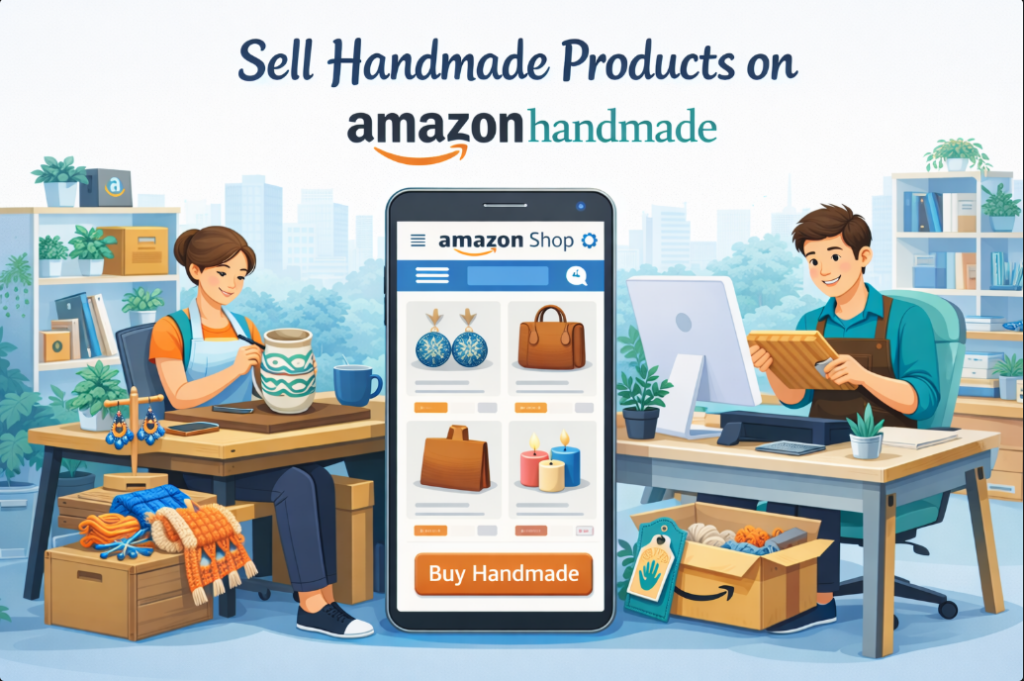
If you’re creative and enjoy crafting, Amazon Handmade connects artisans with millions of buyers seeking unique, handcrafted goods. This platform caters specifically to makers, separating handmade items from mass-produced products.
Realistic Earnings for Artisans
Income depends on product type, pricing strategy, and production capacity. Side businesses typically generate $300 to $2,000 monthly. Part-time artisans reach $2,000 to $5,000 per month. Full-time makers can exceed $3,000 to $10,000+ monthly. Success factors include product uniqueness, quality, competitive pricing, and effective marketing.
Launching Your Handmade Shop
Apply to Amazon Handmade
Unlike regular seller accounts, Handmade requires approval. Submit an application detailing your craft, production process, and products. Approval typically takes one to two weeks.
Create Your Compelling Shop Profile
Tell your story authentically. Buyers love supporting independent makers, so share your inspiration, process, and what makes your products unique. Personal stories create emotional connections driving purchases.
List Your Products Professionally
Use high-quality photos showcasing craftsmanship. Include multiple angles and close-ups, lifestyle images showing products in use, detailed descriptions highlighting materials and techniques, and customization options if available.
Price for Profitability
Factor in material costs, labor time (pay yourself fairly), Amazon’s 15% referral fee, shipping costs, and competitor pricing. Don’t underprice your work—handmade buyers value quality and willingly pay premium prices for unique items.
Create Custom Merchandise with Merch by Amazon
Got design skills? Merch by Amazon lets you create and sell custom T-shirts, hoodies, phone cases, and accessories without handling inventory or fulfillment. Amazon produces items on-demand after each sale.
Income Expectations for Designers
Earnings depend on design quality, volume, and niche targeting. Beginners with zero to 100 designs earn $100 to $500 monthly. Intermediate designers with 100 to 500 designs reach $1,000 to $3,000 per month. Experienced designers with 500+ designs can exceed $2,000 to $10,000+ monthly. The key is volume—more quality designs mean more earning potential.
Getting Started with Merch by Amazon
Request Your Invitation
Visit merch.amazon.com and request access. Approval isn’t guaranteed and may take weeks or months due to high demand, but persistence pays off.
Design Your Products
Once approved, upload designs for T-shirts (most popular), hoodies, sweatshirts, phone cases, and tote bags. Use Adobe Illustrator, Canva, or hire designers on Fiverr.
Optimize Your Listings
Write keyword-rich titles and descriptions. Research trending topics and keywords using Merch Informer or manual research tools. Better optimization means better visibility and more sales.
Promote Your Designs
Amazon handles production and shipping, but marketing falls on you. Share on social media, run Amazon Sponsored Ads, and build niche communities around your designs.
Amazon Wholesale Selling: Buy Bulk, Sell Retail
Wholesale selling involves buying products in bulk from manufacturers or distributors, then reselling them individually on Amazon at retail prices. This model can be extremely profitable with the right supplier relationships.
Income Potential
Wholesale can generate substantial income. Part-time wholesalers earn $1,000 to $5,000 monthly. Full-time wholesalers often reach $10,000 to $100,000+ monthly. Success depends on volume, supplier relationships, and category selection.
Your Wholesale Launch Strategy
Research Profitable Categories
Focus on categories with consistent demand: health and household products, beauty and personal care, pet supplies, electronics accessories, and home and kitchen items.
Find Reputable Suppliers
Source from manufacturers directly, wholesale distributors like Faire or Wholesale Central, trade shows and networking events, and industry contacts. Building supplier relationships is crucial for long-term success.
Order Inventory Strategically
Negotiate pricing—larger orders unlock better discounts. Start with moderate quantities (200 to 500 units) to test demand before committing to larger inventory investments.
Use FBA for Scalability
Ship your inventory to Amazon’s warehouses. FBA improves Buy Box winning percentage and allows you to scale without managing fulfillment logistics yourself.
Flip Pre-Owned Products Through Retail Arbitrage
Retail arbitrage involves finding undervalued items at thrift stores, garage sales, or clearance sections and reselling them on Amazon for profit. This method is sustainable, profitable, and surprisingly enjoyable for the right personality.
Earning Reality for Flippers
Income depends on sourcing skills and time invested. Casual flippers earn $300 to $1,500 monthly. Serious flippers dedicated to consistent sourcing reach $3,000 to $10,000+ per month. Best items include electronics, vintage clothing, collectibles, branded goods, and books.
Your Flipping Blueprint
Source Valuable Items
Hunt for deals at thrift stores like Goodwill and Salvation Army, garage sales and estate sales, liquidation stores, Facebook Marketplace and Craigslist, and library book sales.
Research Prices Before Buying
Scan barcodes with the Amazon Seller App before purchasing. Check current Amazon price, sales rank (lower numbers mean faster sales), number of competing sellers, and estimated fees and profit.
Clean and Refurbish Items
Many items just need cleaning or minor repairs to sell at premium prices. Test electronics thoroughly, fix minor defects, and present items professionally in your listings.
Offer Professional Services Through Amazon Home Services
Amazon Home Services connects service providers with customers needing help with cleaning, handyman work, furniture assembly, tech support, and more. If you have marketable skills, this platform provides steady client flow.
Income Potential for Service Providers
Earnings vary by location and specialty. Part-time providers earn $500 to $3,000 monthly. Full-time service providers reach $4,000 to $15,000+ per month. Popular services include house cleaning, furniture assembly, TV mounting, smart home installation, landscaping, and pet grooming.
Launching Your Service Business
Identify Your Service Offering
What are you skilled at? Common services include home cleaning, handyman repairs, furniture assembly, tech support and setup, and lawn care and landscaping.
Obtain Necessary Certifications
Depending on your service, you may need a business license, liability insurance, industry certifications, and background checks (Amazon requires these for approval).
Apply to Amazon Home Services
Create a professional profile highlighting your experience, certifications, and service area. Amazon reviews applications based on qualifications and local market demand.
Deliver Outstanding Service
Reviews are everything in the service industry. Provide excellent service, arrive on time, communicate clearly, and go the extra mile to earn five-star reviews that drive future bookings.
Additional Ways to Make Money on Amazon
Beyond the primary methods, Amazon offers several other opportunities worth exploring:
Amazon FBA Prep Services
If you’re organized and detail-oriented, offer FBA prep services to other Amazon sellers. Income ranges from $1,000 to $50,000+ monthly depending on scale. You’ll inspect products, apply labels, poly bag items, create bundles, and prepare shipments according to Amazon’s strict requirements.
Amazon Vine Reviewer
This isn’t direct income, but Vine reviewers receive free products worth $500 to $3,000+ annually in exchange for honest reviews. Amazon invites reviewers based on review quality and helpfulness.
Amazon Video Content (Creator Connections)
Amazon’s Creator Connections program connects video creators with brands for product promotions. Emerging creators earn $100 to $1,000 monthly, while established creators can exceed $2,000 to $10,000+ per month through flat fees, affiliate commissions, ad revenue, and sponsored content.
Amazon Coaching and Education
If you’ve mastered selling on Amazon, teach others through coaching, courses, or consulting. Part-time coaches earn $1,000 to $5,000 monthly, while full-time educators can reach $5,000 to $50,000+ per month.
Which Method Should You Choose to Make Money on Amazon?
Choosing the right approach depends on your unique situation. Here’s honest advice based on different circumstances:
Choose Private Label FBA If: You have $500 to $3,000 to invest upfront, want a scalable long-term business, are willing to learn marketing and advertising, can handle competition and adapt strategies, and want to build a valuable business asset.
Try Amazon KDP If: You enjoy writing or can outsource content, want passive income that compounds over time, are patient (results take six to twelve months), prefer low-risk entry with zero upfront costs, and want creative freedom and control.
Go with Affiliate Marketing If: You already have an audience or blog, want low-risk entry without handling products, are skilled at content creation and SEO, can drive consistent traffic, and prefer flexible, location-independent work.
Consider Handmade or Merch If: You’re creative and artistic, can produce unique quality items, want to build a brand, enjoy crafting or design, and are willing to invest time in production.
Try Arbitrage or Flipping If: You have limited startup funds ($200 to $1,000), enjoy the thrill of finding deals, want quick profit potential, are detail-oriented and organized, and don’t mind physical sourcing work.
FAQ: Common Questions About Making Money on Amazon
Can I really make money on Amazon as a complete beginner?
Yes. Methods like FBA, KDP, and affiliate marketing are beginner-friendly. Start small, learn as you go, and scale gradually with proven strategies.
How much money do I need to start?
It depends on the method: affiliate marketing and KDP can start under $50, private label $500–$3,000, wholesale $2,000–$10,000, arbitrage $200–$1,000, and handmade $100–$500.
How long before I see profits?
Affiliate marketing: 3–6 months, FBA: 1–3 months, KDP: 6–12 months, arbitrage/flipping: 1–2 weeks, handmade: 1–3 months. Consistency speeds results.
Is Amazon FBA worth it in 2025?
Yes, but success needs research, branding, optimized listings, smart ads, and excellent service. Treat it like a real business, not a lottery ticket.
Do I need an LLC to sell?
Not at first. Start as a sole proprietor, then form an LLC once you earn consistent income for legal protection and credibility.
What are Amazon’s fees?
FBA: referral (8–15%), fulfillment ($3–$5/unit), storage ($0.75–$2.40/ft³), $39.99/month pro account. KDP: 35–70% royalties. Affiliates: 1–10% commission. Handmade: 15% referral.
Can I do this part-time?
Yes. 10–15 hours/week can work. Start with low-maintenance methods and automate tasks to create semi-passive income.
What mistakes should I avoid?
Avoid emotional product choices, ignoring fees, skipping quality images, stopping ads too soon, neglecting reviews, poor differentiation, and overspending on inventory.
Is it too late to start in 2025?
Not at all. Competition is higher, but new opportunities, trends, and tools make success achievable with strategy and persistence.
Conclusion: Your Amazon Journey Starts Today
Making money on Amazon in 2025 is possible, but it takes realistic expectations, consistent effort, and smart strategy. Whether you sell products, publish books, or do affiliate marketing, stick to a few core principles.
Start small, think big. Begin with a manageable investment, learn through experience, and scale as you gain confidence. Focus on value—help customers solve problems, and the profits follow.
Keep learning. Amazon evolves constantly, so follow trends, join seller communities, and stay patient. Most successful sellers take six to twelve months to find their rhythm—don’t quit when it gets tough.
Track your numbers. Monitor sales, expenses, margins, and conversions. Make data-driven decisions and build repeatable systems. Automate where possible and hire help to free your time.
Diversify your income. Once you master one method, add complementary streams. FBA sellers can explore affiliate marketing, KDP authors can offer coaching, and multiple streams reduce risk.
Take action now. Research your chosen method, create your first listing, article, or product, and launch. One week from now, your first Amazon income stream could be live.
Success isn’t about talent or capital—it’s about action. Research, launch, fail, adjust, and persist. Treat Amazon like a business, invest strategically, and don’t let fear hold you back. Your first sale, your first $1,000 month, or even a six-figure business could start today.
How eComclips Can Help on the Issue
Optimizing your Best Buy listings for maximum visibility requires expertise, time, and continuous attention to evolving marketplace dynamics. That’s where eComclips makes the difference.
Our team specializes in comprehensive marketplace optimization that addresses every ranking factor covered in this guide. We don’t just fix surface-level issues—we perform deep analysis of your product data, competitive positioning, and performance metrics to identify exactly what’s holding your listings back.
eComclips delivers:
- Complete listing audits identifying missing attributes, weak titles, and optimization opportunities
- Professional product photography and video that meets Best Buy’s technical requirements while maximizing conversion
- Data-driven pricing strategies that balance competitiveness with profitability
- Review generation programs that ethically increase social proof and ranking signals
- Ongoing performance monitoring with regular optimization adjustments based on real results
Instead of spending months learning Best Buy’s complex ranking system through trial and error, you gain immediate access to proven strategies and experienced specialists who live and breathe marketplace optimization daily.
Watch how we help sellers to protect their Amazon Business:
STOP GUESSING! USE AMAZON DATA TO EXPLODE YOUR SALES in 2026
Amazon’s Rufus AI Prompts: The Future of Sponsored Products Optimization
Your Amazon Listing Is Losing Money
Amazon Brand Growth Secrets: Use Customer Data To Boost Sales Fast!
Amazon AI Update 2025: Why Sellers Are Losing Ranking Overnight
Amazon Listing Image Masterclass: How Top Sellers Boost CTR & Conversions
Ecomclips: Your Complete eCommerce Solution Under One Umbrella
At Ecomclips, we bring every eCommerce service you need under one roof — strategy, operations, design, marketing, and growth, all seamlessly connected to help your brand thrive across every marketplace.
Since 2012, we’ve been helping businesses of all sizes launch, scale, and dominate online. From Amazon, Walmart, eBay, and Etsy to Shopify and WooCommerce, our team of marketplace experts, designers, developers, and marketers works together to deliver measurable results.
Our services span the full eCommerce lifecycle:
Account Setup & Product Listing Management: We handle registrations, compliance, and product data optimization across all marketplaces.
- Amazon Optimization Service: From keyword-rich titles and A+ content to PPC campaigns and storefront design, we craft listings that convert.
- Creative Design & Content Production: A+ visuals, infographics, brand stores, and product videos built to boost engagement.
- Advertising & PPC Management: Smart, data-driven ad strategies for Amazon, Walmart, and Google that maximize ROI.
- Web Development & Store Design: Shopify, WooCommerce, and Magento websites built for performance and conversion.
- Data Management & Automation: Streamlined product feeds, catalog syncing, and inventory control for effortless scalability.
- Customer Service & Order Fulfillment: End-to-end support that enhances customer satisfaction and builds long-term loyalty.
- Analytics & Growth Strategy: Real-time insights and ongoing optimization to ensure consistent, profitable growth.
Whether you’re launching a new store or managing multiple global marketplaces, Ecomclips acts as your single strategic partner, simplifying complexity and driving sustainable revenue growth.
Ready to Start Growing Your Brand?
Ecomclips’ Partners Achieve an Average 85% Profit Increase!