
Over the last 5 years optimizing 100+ Amazon brands, I’ve learned a simple truth: 7-figure listings aren’t born, they’re built. Not by guessing, but by combining clean keyword architecture, conversion-first creative, and relentless iteration. Below is the exact blueprint I use to take a listing from “good” to “page-1, money-maker.”
Most Amazon sellers believe they need a better product to hit seven figures. In reality, the biggest leap comes not from what you sell, but how you present it. A high-converting product listing drives visibility, trust, and consistent revenue growth.
According to marketplace data, over 80% of Amazon’s success occurs on-page, meaning the difference between a $10,000 store and a $1 million brand is often just a few tweaks in copy, visuals, and structure.
If your listings aren’t strategically optimized, your product is invisible, even if it’s incredible. That’s why mastering Amazon product lisitng optimization essentials like A+ Content, Parentage Structure, and shipping strategy isn’t optional; it’s your competitive edge.
So, let’s dissect what a true 7-figure Amazon product listing looks like, and how you can start building one today.
Table of Contents:
| 1. Understanding Amazon’s A10 Algorithm (and Human Psychology) |
| 2. Keyword Research: The DNA of Visibility |
| 3. Title Optimization: The 7-Second Conversion Test |
| 4. Bullet Points: Selling with Psychology, Not Just Features |
| 5. Product Description & A+ Content: Where Emotion Meets Data |
| 6. Images That Rank: Visual SEO Is Real |
| 7. Backend Optimization: The Hidden Powerhouse |
| 8. Reviews, Q&A, and Customer Feedback: Social Proof That Converts |
| 9. Pricing, Fulfillment & Logistics: The Invisible Optimizers |
| 10. Analytics & Continuous Optimization: The 7-Figure Habit |
| 11. Common Mistakes That Keep You Below Page 1 |
| 12. The 7-Figure Listing Formula |
Understanding A10 + Human Psychology
The A10 algorithm of Amazon has developed beyond the simple matching of keywords. Nowadays, it ranks listings with a combination of relevance, engagement, and conversion performance, which means that the better you serve both the algorithm and the shopper, the better you are ranked in the list.
The A10 focuses on converting listings and not existing ones. This is why two of the listings with the same keywords can radically differ. Keyword indexing can be utilized to make you visible, and conversion ranking is what keeps you around.
Equally important is the human factor: metrics like Click-Through Rate (CTR), Conversion Rate (CVR), and visual trust signals directly influence A10’s decisions. A listing that looks trustworthy, with clear images, persuasive copy, and consistent branding, signals to Amazon that buyers love it.
What Amazon actually rewards (operationally):
- Visibility signals: Relevant titles, attributes, and consistent indexing across variations.
- Click signals: Main image quality + price perception → CTR.
- Conversion signals: Bullet clarity, A+ scannability, reviews sentiment → CVR.
- Reliability signals: Prime, OOS avoidance, low defect/return rates.
Ecomclips note: When we lifted a client’s main image CTR by 18%, their primary keyword rank moved from #19 → #7 in 11 days—with zero copy changes. Visuals are not decoration; they’re ranking levers.
Keyword Research: The DNA of Visibility
Every 7-figure Amazon listing begins with strong keyword intelligence. Successful sellers go beyond guesswork, they master organic keywords, Amazon-recommended terms, and opportunity keywords that align with real buyer intent.
Organic and recommended keywords respectively, indicate how Amazon currently perceives your product and what shoppers are presently interested in. The true privilege is in opportunity keywords: the keywords that are not currently utilized, are high-converting, and that your competitors are not using.
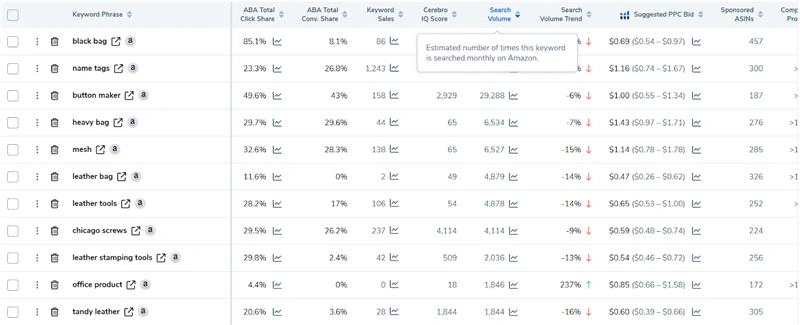
Keyword Research with Helium 10 for Amazon
With the help of such tools as Helium 10, DataDive, or Jungle Scout, find all those winning keywords and incorporate them into your title, bullets, and A+ content organically. Keep in mind: the A10 algorithm of Amazon now favors listings that do not sound robotic, but human.
The 3-Layer Keyword Stack
- Core Buyer Terms (what the product is)
- Attribute Modifiers (size, material, use-case)
- Intent Boosters (for, compatible with, gift, travel, pain-relief, etc.)
AI prompt you can add:
“Cluster these 150 keywords into Core/Attribute/Intent buckets; return a CSV with columns: keyword, bucket, search intent (compare/learn/buy), suggested placement (title/bullets/backend).”
Title Optimization: The 7-Second Conversion Test
Your title is the first thing shoppers and Amazon’s algorithm see. A well-crafted title should clearly describe the product while incorporating your primary keyword. Keep it natural, keyword-rich, and concise.
A strong title formula usually includes:
- Brand name
- Product name or key feature
- Size, quantity, or unique identifier
- Target keyword
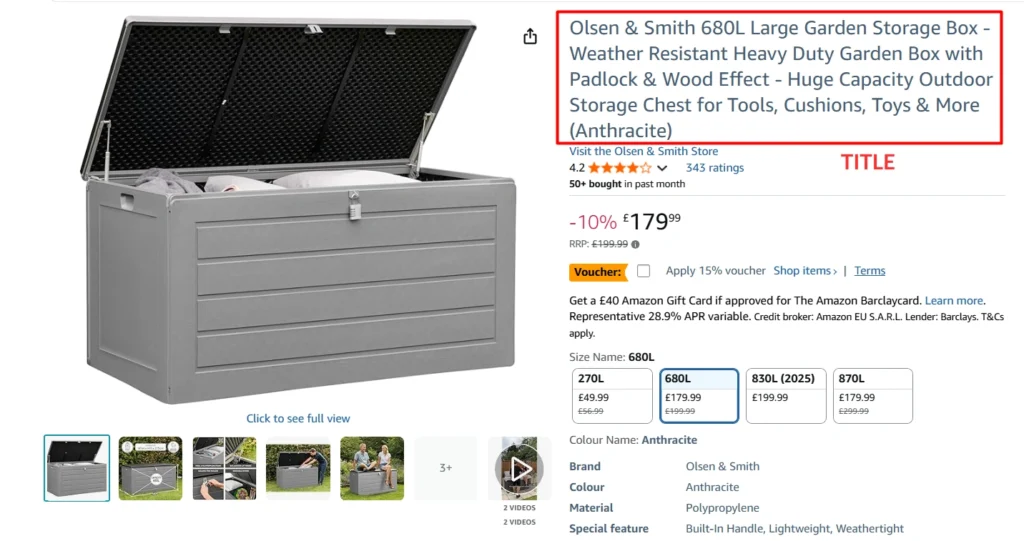
Amazon Product Listing Title
Title formula (safe, high-performing):
Brand – Core Term + Key Attribute/Benefit, Size/Count, Fit/Variant (Prime Use-Case)
Example:
Olsen & Smith 680L Large Garden Storage Box – Weather Resistant Heavy Duty Garden Box with Padlock & Wood Effect – Huge Capacity Outdoor Storage Chest for Tools, Cushions, Toys & More (Anthracite)
Tip: Keep the most valuable phrase within ~70 characters for mobile. Avoid junk words and duplication that don’t help discovery.
This title is a great example of an ideal Amazon product title. It is descriptive, rich in relevant keywords, and maintains a natural flow of ideas. Each part adds clarity and value, helping both shoppers and Amazon’s algorithm understand exactly what’s being offered. The right title doesn’t just inform, it converts browsers into buyers
Bullet Points: Selling with Psychology, Not Just Features
Your bullet points aren’t just for listing features; they’re for selling benefits. The best listings tell a story of why the product matters. Focus on customer pain points and how your product solves them.
For example, instead of writing “Made of durable materials,” try: “Built with premium-grade stainless steel to ensure years of reliable performance, even with daily use.”

Amazon Product Listing Bullet Points
When you are writing bullet points, focus on these:
- Outcome: What improves in the buyer’s life (benefit).
- Proof: Material/spec/data (“80% cotton… lab-tested…”)
- Use-case: When/where/how to use.
- Differentiator: What you do better than top competitors.
- Risk reducer: Warranty/guarantee/care/support.
Ensure that your bullet points underline selling points that make you stand out from the crowd. Give all the essential details so that customers are able to see the benefits. The points of the bullet points must be clear, concise, informative, and easy to read.
Product Description & A+ Content: Where Emotion Meets Data
Your product description is not just filler text, it is your secret conversion engine. This segment allows you to elaborate on the benefits by using convincing narratives and little use of keywords that enhance SEO. It is something that many sellers do not consider since they think that A+ Content takes the place of the description. In fact, the two work together.
Even what is described remains important since it provides indexing to the backend of Amazon and is shown when the internet connection of the buyer is too slow to display A+ visuals. At the same time, A+ Content creates emotional trust by design, images, and narratives. The combination of them forms the most ideal harmony, information to the algorithm, and feeling to the buyer.
Thinking About Hiring an Amazon Expert?
Ecomclips’ Partners Achieve an Average 85% Profit Increase!
Images That Rank: Visual SEO Is Real
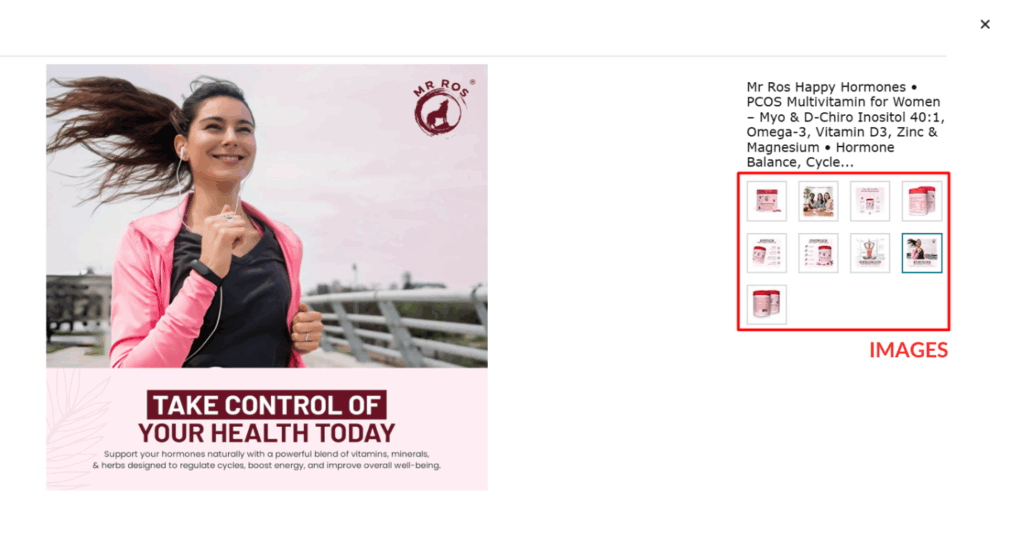
Your images are the powerful SEO assets that influence both ranking and conversion. Amazon’s algorithm tracks engagement metrics like click-through rate (CTR), zoom rate, and dwell time, all of which depend heavily on visuals.
A high-performing image set starts with a clear, scroll-stopping hero image followed by a mix of lifestyle shots, infographics, and feature highlights. These visuals not only build buyer trust but also signal listing quality to Amazon’s A10.
For extra, optimize filenames and alt text with relevant keywords, which we call Visual SEO. Plan a cohesive seven-image layout that tells a story and guides buyers toward action.
Amazon Product Listing Bullet Points
Here is a 7-Image Set Plan
- Hero (clean, zoom-worthy; packaging optional if premium)
- Top-3 Benefits (infographic)
- How It Works / Setup (steps)
- Lifestyle 1 (primary use-case, model fit)
- Lifestyle 2 (secondary use-case / demographic)
- Specs & Sizing (charts, dimensions)
- Social Proof (badges, awards, review snippets—no claims violations)
Backend Optimization: The Hidden Powerhouse
Though your images and text make people buy, but the backend keywords makes the Amazon algorithm actually know what your product is all about. The backend section is where you can quietly add relevance and visibility, without making a mess to your listing by adding irrelevant search terms, subject matter, and attributes.
Utilize this area to the best of your ability by adding in secondary and long-tail keywords that do not fit well in front-end content. Enter all the fields as accurately as possible, brand, material, size, and target audience all are indexed.

ALT TEXT/Backend Keywords of Amazon A+ Content
Imagine your silent sales team, whereby the backend data operates 24/7 to have the listing ranked on page 1. When you get it right, it will maximize your visibility, ranking, and at the end, your journey to 7-figure success.
Backend → Search Terms (example, ~490–500 chars):
non slip pilates socks women, yoga socks grip, barre socks cotton, ankle pilates socks, grippy socks for reformer, studio socks women, sticky socks workout
Attributes to fill accurately:
- Target audience: Women / Adults
- Material: Cotton blend
- Style/Length: Ankle
- Use: Pilates, Yoga, Barre
- Pattern: Dots grip
- Occasion: Fitness/Gym
(These improve relevance in filters and search facets.)
Compliance tip: Avoid competitor brand names and prohibited medical claims anywhere (front or back). Suppressions can silently kill indexing.
Reviews, Q&A, and Customer Feedback: Social Proof That Converts
No matter how optimized your listing is, buyers trust people more than products. Reviews, Q&A, and customer feedback serve as your social proof engine, directly influencing both conversions and Amazon ranking. The A10 algorithm values authentic engagement, positive reviews, helpful Q&A responses, and consistent feedback trends, all signal trust.
Encourage satisfied buyers to share honest reviews through post-purchase follow-ups and excellent service. Use AI tools to analyze review sentiment and identify recurring themes, both good and bad. Address negative reviews with transparency, and Amazon rewards responsiveness.
There is also the SEO hidden in your Q&A section. Answer the buyer questions in a way that contains useful and keyworded answers will increase the visibility and decrease the indecisiveness to purchase. When managed strategically, social proof doesn’t just validate your brand; it converts browsers into believers.
Pricing, Fulfillment & Logistics: The Invisible Optimizers
Behind every high-converting listing lies a trio that most sellers underestimate: pricing, fulfillment, and logistics. These factors may not appear in your copy, but they silently shape how Amazon’s algorithm ranks and rewards your product.
Your price perception directly affects click-through rate; even a small difference compared to competitors can shift buyer behavior. Listings with Prime-eligible FBA fulfillment enjoy higher visibility and stronger conversion rates thanks to faster delivery and buyer trust.
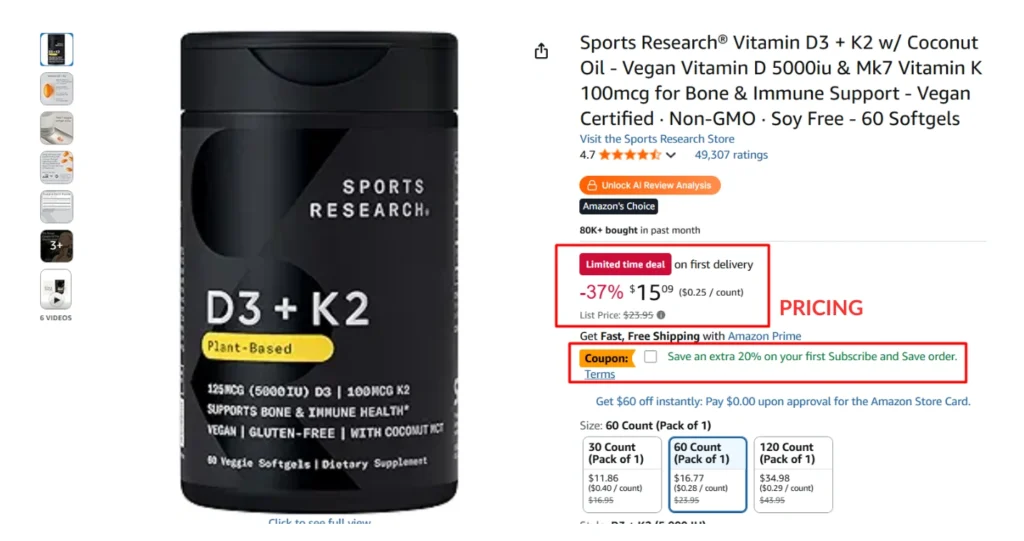
Amazon Product Listing Pricing Strategy
Additionally, maintaining consistent inventory and shipping performance helps protect your Buy Box position and organic ranking. Amazon’s A10 favors listings that deliver reliably, literally.
You can’t out-optimize poor logistics. Pair strategic pricing with fast, dependable fulfillment to make your listing algorithm-friendly and customer-loved, key ingredients for sustainable 7-figure growth.
Pricing, Fulfillment, Inventory (one neat checklist)
- Price within ±5–10% of top competitors unless you justify premium visually
- Maintain > 25–30 days of cover to avoid OOS rank drops
- Prefer FBA + Prime for most categories; ensure defect rate stays low
- Audit Buy Box % weekly; diagnose dips (price, handling time, shipping region)
Analytics & Continuous Optimization: The 7-Figure Habit
Reaching 7 figures on Amazon isn’t luck, it’s the result of consistent measurement and smart iteration. The most successful sellers treat analytics as their daily habit, not an afterthought. By tracking data like CTR, CVR, BSR, and keyword ranking, you gain clear insight into what’s working and what’s silently holding you back.
Use Brand Analytics and Search Query Performance reports to identify your top-converting keywords, underperforming listings, and new opportunities. Then follow a simple 30-day optimization cycle, review, test, refine, repeat.
30-Day Optimization Cycle:
- Weekly: Track CTR, CVR, sessions, top 10 keywords rank
- Bi-weekly: A/B test main image or first bullet (not both)
- Monthly:
- Pull Search Query Performance → add 3 opportunity keywords
- Review Brand Analytics → adjust title/bullets/A+ for the top 3 queries
- Sentiment pass on reviews → update 1 visual or 1 bullet
- Re-crawl indexing (spot suppressions)
Establish an SOP or keyword tracking sheet to monitor changes over time. Optimization isn’t a one-time task, it’s an ongoing process that compounds results.
Free 3-Point Listing Audit:
I’ll review your title, main image, and A+ for quick wins, no strings. Request your audit by using this link: https://ecomclips.com/contact-us
Common Mistakes That Keep You Below Page 1
Many sellers unknowingly sabotage their own listings by repeating small but costly mistakes. One of the biggest offenders is keyword stuffing, cramming too many phrases into titles or bullet points, which confuses both shoppers and Amazon’s A10 algorithm. Inconsistent branding across images, A+ Content, and tone can also erode buyer trust and reduce conversion rates.
Oversized or poor-quality images, missing alt text, and incomplete backend fields are other silent killers that suppress ranking. Compliance oversights, like restricted keywords or misleading claims, can even trigger hidden listing suppressions without warning.
Common Mistakes (tight, scannable):
- Keyword stuffing in titles/bullets → kills readability and CTR
- Inconsistent branding across gallery/A+ → erosion of trust
- Skipping attributes/backend → missed indexing
- Claims violations → hidden suppression
- Thin images (only studio shots) → lower dwell/zoom rates
The 7-Figure Listing Formula
Every 7-figure Amazon listing follows a precise formula. It’s not luck or guesswork, it’s a repeatable process built on data and strategy. Your title captures attention with core keywords and clarity. Bullet points persuade through benefits and proof. A+ Content turns emotion into conversion. Reviews build trust. FBA pricing and fulfillment drive buy-box dominance. Backend fields fuel indexing, while continuous analytics ensure your listing keeps evolving.
When each part aligns, your listing becomes more than just an online page, it becomes a conversion ecosystem that Amazon loves to promote.
The secret isn’t doing more, it’s optimizing smarter. Follow the framework consistently, and your product won’t just rank higher; it will scale faster, predictably, and profitably.
At Ecomclips, we specialize in providing Amazon optimization services that drive real growth. From keyword-rich titles and A+ content design to complete Amazon parentage structure and SEO support, our team knows what it takes to help sellers scale from startup to 7-figure success. If you’re ready to take your Amazon business to the next level, contact us at info@ecomclips.com. We’re here to help you grow!
FAQs: How to Optimize Amazon Product Listings
1. How to Optimize Amazon Product Listings?
To optimize your Amazon product listings, start with keyword-rich titles, clear bullet points, and engaging product descriptions. Add professional images and A+ content to showcase your brand story. Finally, track key metrics like conversion rate and click-through rate to continuously refine performance.
2. What specific strategies have you used to improve the performance of Amazon product listings?
Our proven strategies include keyword research using Amazon tools, crafting compelling titles and bullet points, optimizing parentage structure for better visibility, and enhancing listings with A+ content and professional visuals. We also test and adjust pricing, copy, and images based on data insights to drive sustainable growth.
3. How do I make my listing more visible on Amazon?
Visibility depends on Amazon SEO. Focus on relevant keywords, high-quality images, and detailed descriptions. Encourage authentic reviews, maintain fast shipping, and use FBA when possible. These factors boost your organic ranking and improve your chances of winning the Buy Box.
4. Why is A+ Content important for Amazon listings?
A+ Content optimization on Amazon allows you to use enhanced visuals, brand stories, and comparison charts to better engage customers. It helps establish credibility, reduces bounce rate, and can increase conversions by up to 10%.
5. Where to put keywords in an Amazon listing?
Place your primary keywords in the title, bullet points, and description naturally. Use secondary keywords in backend search terms and A+ content where appropriate. Avoid keyword stuffing, Amazon rewards relevance, not repetition.
How Ecomclips Helps You Build a 7-Figure Amazon Business
Strategic Growth Planning: We craft customized growth blueprints for your Amazon brand, analyzing product potential, category trends, and competition to map the fastest route toward consistent 7-figure sales.
Product Listing Optimization: Our Amazon optimization service focuses on keyword-rich titles, persuasive bullet points, and conversion-driven descriptions designed to boost ranking and maximize visibility.
A+ Content & Creative Design
High-quality visuals make all the difference. From A+ content and brand stores to infographics and lifestyle imagery, our creative team ensures every element tells your brand story and drives conversion.
Advertising & PPC Management
We leverage advanced PPC strategies and data-driven campaign management to scale your brand profitably, improving ACOS and accelerating growth month over month.
Account & Catalog Management
Our experts handle every operational detail — from variation setups, parentage creation, and inventory synchronization to backend keyword enhancement — ensuring your account runs flawlessly.
Brand Store Development
We design and optimize your Amazon Storefront to engage shoppers, build brand loyalty, and increase repeat sales, all aligned with Amazon’s best UX practices.
Performance & Review Management
Ecomclips implements proven systems for maintaining high seller ratings and consistent feedback flow, helping your brand establish long-term credibility and trust.
Full-Service Amazon Management
From launch to scale, Ecomclips manages it all, product listing, advertising, analytics, and optimization — so you can focus on innovation and growth.
When you look at the ways Ecomclips helps brands grow on Amazon, you’ll see why reaching 7-figure success becomes faster, smarter, and easier with Ecomclips by your side.
Watch our in-depth video guide on Amazon here:
AMAZON PREMIUM A+ CONTENT TUTORIAL
Amazon Halloween Sales Strategy 2025
Amazon CTR Hacks: Boost Sales with Better Main Images
Win Big on Amazon with This Premium Product Strategy
How I Got My Amazon Product Recommended by ChatGPT
If you’re ready to take your Amazon business to the next level, let’s build your success story.
Ready to Start Growing Your Brand?
Ecomclips’ Partners Achieve an Average 85% Profit Increase!