

Introduction: Why Your Product Rankings Are Dropping in 2025
In 2025, thousands of Amazon sellers across the U.S. have experienced a shocking shift: products that once ranked on page one have now vanished deep into page five or beyond. The big question everyone’s asking is:
“Did Amazon break SEO again?”
Short answer? **No, it didn’t break—**but it did change.
What really happened is this:
- Amazon silently updated its A9 algorithm.
- Most sellers didn’t adapt their listings fast enough.
- SEO mistakes—some small, some major—crept into listings.
The good news? This blog will show you exactly what to fix.
From titles to backend terms, from bullet points to A+ content, you’ll discover what works right now to climb back up Amazon’s search rankings.
Table of Contents
| Why Amazon SEO Changed in 2025 |
| How Amazon’s Algorithm Understands a Listing |
| Fixing the Front-End: |
| 3.1 Titles |
| 3.2 Bullet Points with Purpose |
| 3.3 Product Details That Help Rank |
| Back-End SEO |
| A+ Content That Actually Boosts SEO |
| Hidden Power of Brand Story Alt Text |
| Ecomclips’ Proven Four-Phase SEO System |
| The Common SEO Mistakes Sellers Still Make |
| Case Study: How Ecomclips Turned a Rank-1000 Listing Into a Bestseller |
| Final Words: Your SEO Checklist for 2025 |
1. Why Amazon SEO Changed in 2025
Amazon doesn’t always announce updates, but we know something big changed this year. Here’s what our internal data and 1000+ clients revealed:
- Listings with image-only A+ content saw major ranking drops.
- Titles with keyword stuffing were flagged and demoted.
- Listings missing backend keywords no longer indexed properly.
- Alt text on brand stories and A+ images suddenly became more important than ever.
If your listings dropped off the map, you’re not alone. And you’re not powerless either.
Amazon’s search engine, known as A10, works like a smart robot. It reads your:
2. How Amazon’s Algorithm Understands Your Product (And Why Content Accuracy Matters)
Amazon’s A10 algorithm is more advanced than ever — it’s not just scanning for keywords anymore. It evaluates your listing holistically to determine if it truly matches the customer’s search intent.
Here’s how Amazon’s algorithm reads your listing:
Title: The most important real estate. It tells Amazon what your product is and who it’s for. If you’re missing key descriptors or keywords, you’re missing ranking opportunities.
Bullet Points: This is where you outline core features, benefits, and unique selling points. Amazon scans these to match against customer queries — clarity and keyword usage are crucial here.
Backend Search Terms: These hidden terms help Amazon categorize your product better. They must be relevant, keyword-rich, and non-repetitive. No need for brand names or keywords already in the title.
A+ Content: When properly optimized, this section supports your listing’s authority and helps with indexing long-tail keywords. Don’t waste this space on fluff — use it to educate and rank.
Product Details: Everything from dimensions to material to ingredient lists is scanned. These technical details help Amazon connect your product to specific filters shoppers use while browsing.
What Happens Next?
Once Amazon gathers all this data, the algorithm asks a simple but critical question:
“Is this listing relevant to what the shopper searched for?”
If the content on your page doesn’t clearly answer that question — either due to missing keywords, vague descriptions, or incomplete backend terms — your product won’t show up in search results, no matter how good it is.
What You Can Do Right Now
Start by fixing your title — make sure it’s keyword-rich, clear, and structured to appeal to both Amazon and human shoppers. Then audit the rest of your content using tools like Helium 10 or Jungle Scout to align with actual search behavior.
3. Fixing the Front-End
Title Optimization (Your #1 SEO Asset)
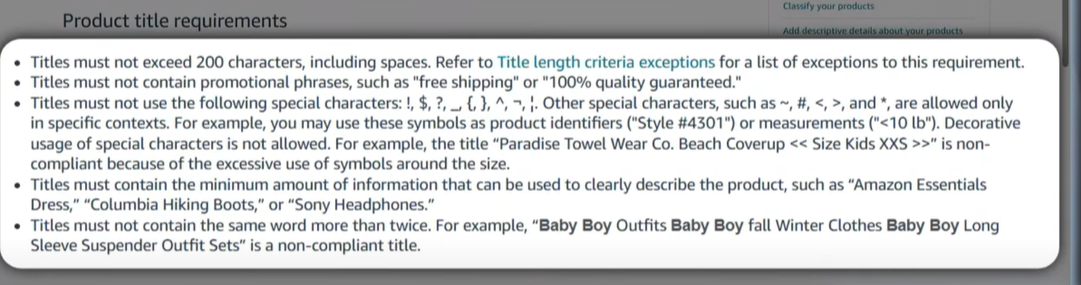
Your title is your biggest ranking weapon. But Amazon has rules:
- Keep it under 200 characters
- No promo words like “free shipping”
- No special characters (!, $, ?, _) unless necessary
- Don’t repeat the same keyword more than twice
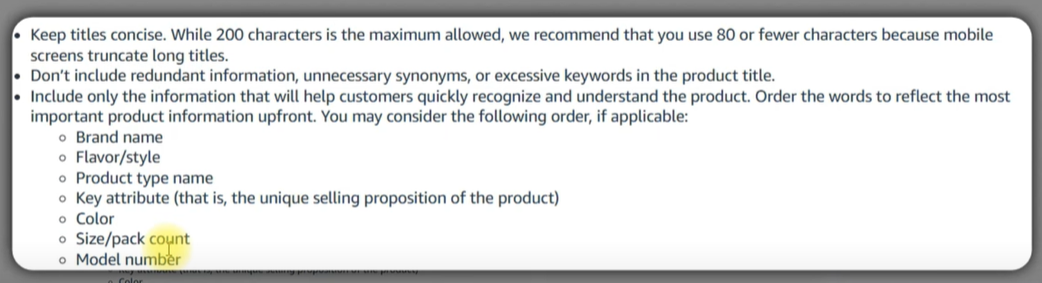
- Follow structure: Brand → Type → Feature → Color → Size
Example of a good title:
“AlphaBrain Supplement for Men & Women – Focus & Clarity Pills – 60 Capsules”
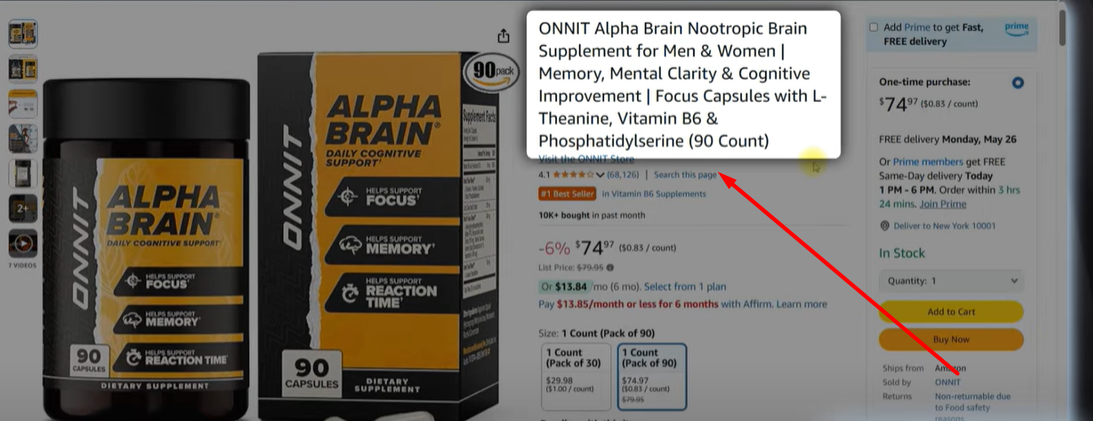
Why this works:
- Keywords like “brain supplement” and “focus pills” are high volume
- It’s clear, clean, and doesn’t overstuff
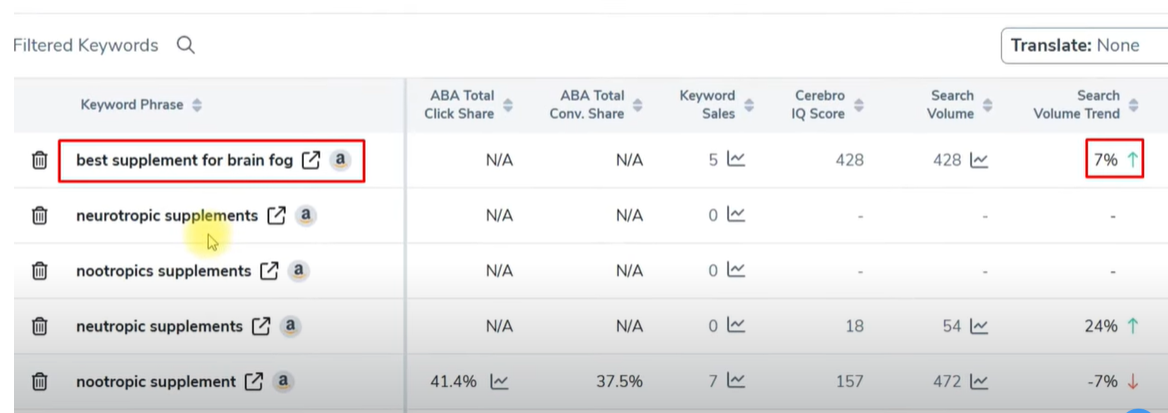
To optimize your Amazon titles and discover the most effective keywords, it’s essential to use the right tools. These platforms help you identify what shoppers are actually searching for, analyze competition, and prioritize high-converting terms. Whether you’re launching a new product or revamping an old listing, proper keyword research sets the foundation for success.
Some of the most effective keyword tools for Amazon SEO in 2025 include:
- Helium10 – Ideal for in-depth keyword research, trend tracking, and competitor analysis. Its Frankenstein and Cerebro tools are particularly powerful for building your master keyword list.
- Jungle Scout – Excellent for product research and keyword insights, especially for sellers looking to evaluate market demand and competition at a glance.
- Data Dive – A go-to tool for advanced sellers who want to reverse-engineer their top competitors’ listings and extract high-performing keyword combinations.
Pro Tip: Don’t just focus on keyword volume alone. The winning formula is always high search volume + high relevance. A keyword might get thousands of searches, but if it’s not closely tied to your product’s use or niche, it won’t convert—and may even hurt your ranking in the long term.
Bullet Points with Purpose
Your bullet points are not just for readability—they’re SEO gold.
Best Practices:
- Use all 5 bullet slots (or 10 if your category allows)
- Add long-tail keywords
- Include benefits + technical features
- Format them clearly for mobile users
Example bullet:
“Improves Focus & Concentration – Powered by clinically tested ingredients like Bacopa and Ginkgo to enhance memory and reduce brain fog.”
This includes both benefits and keywords like “focus,” “concentration,” and “brain fog.”
Product Details Section
Often overlooked, but powerful.
Amazon pulls search data from:
- Brand name
- Unit count
- Ingredients
- Material
- Item Dimensions
- Dietary info (e.g., Vegan, Keto)
Each field = another chance to show up in a filtered search.
4. Back-End SEO
Generic Search Terms
These don’t show on your public listing—but they supercharge indexing.
Do this:
- Fill all 250 characters
- No punctuation
- Include synonyms, slang, common typos
- Add Spanish keywords (e.g., “suplemento cerebral”)
Don’t waste space with:
- Brand names
- Words already in your title
- “and,” “for,” “with”
Hidden SEO Hacks
Add misspellings.
Yes, seriously. Amazon corrects user typos in searches—but indexes your backend terms separately.
Example:
- “focus pilss” → included in backend
“brain suplemment” → backend gold
5. A+ Content That Actually Boosts SEO
Most sellers make a critical mistake: they put all the text inside images.
Bad idea. Amazon can’t read it.
What to do instead:
- Use real, editable text modules
- Add keywords naturally into headings and descriptions
- Fill in alt text (100 characters per image!)
Remember:
“If Amazon’s algorithm can’t read it, it won’t rank it.”
6. Hidden Power of Brand Story Alt Text
Amazon allows up to 90 images in your brand story.
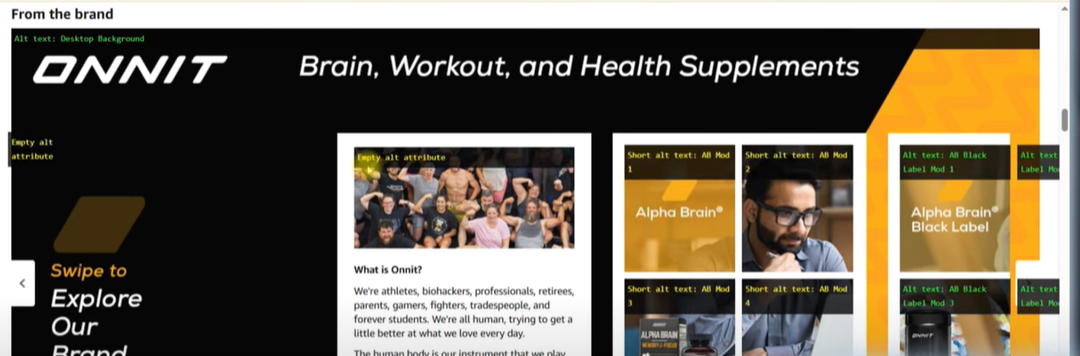
Each can hold 100 characters of alt text = 9,000 characters of SEO firepower.
Add:
- Long-tail keywords
- Variations of key terms
- Synonyms and use-case phrases
Avoid putting important text inside your brand story images.
7. Ecomclips’ Proven Four-Phase SEO System
At Ecomclips, we’ve developed a proven 4-step SEO process to help our clients dominate search rankings:
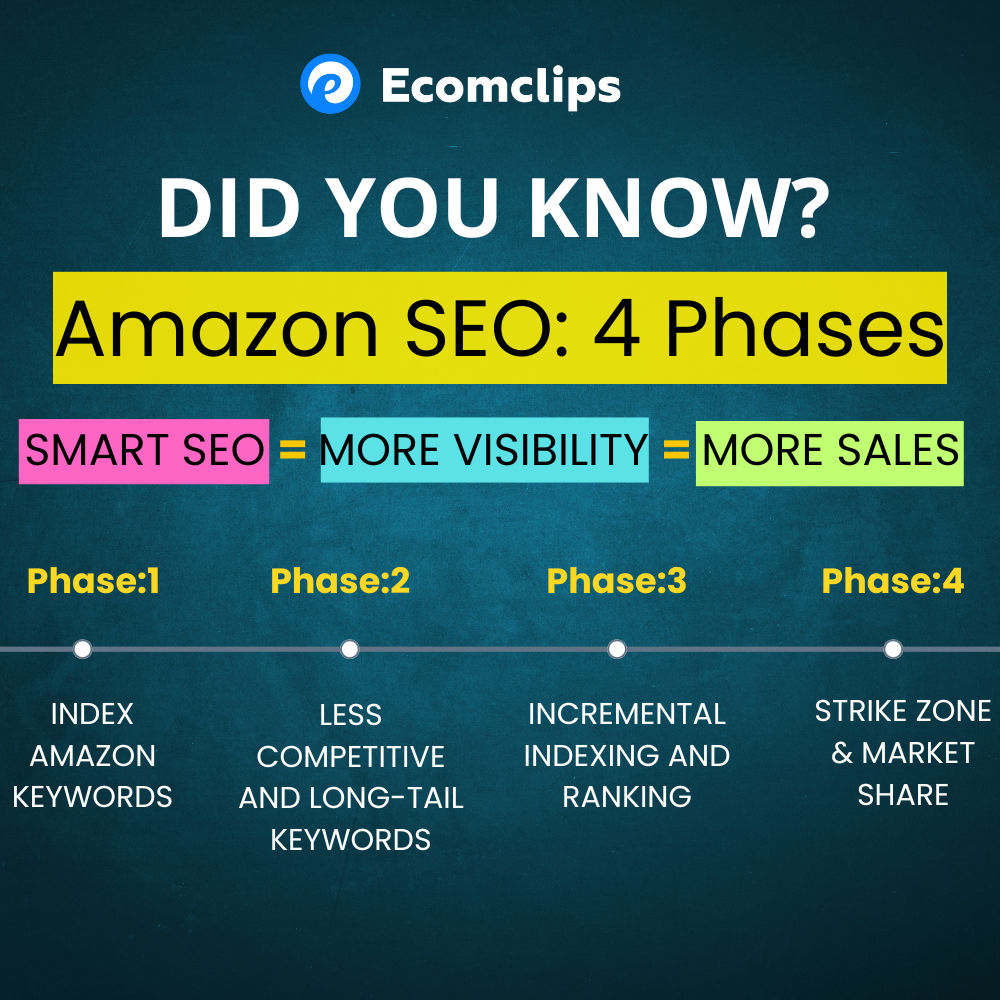
Phase 1: Keyword Indexing
- Use Helium10/Brand Analytics to find top-searched keywords
- Place them in title, bullets, description, backend
- Confirm indexing using keyword tracking tools
Phase 2: Long-Tail Domination
- Find low-competition keywords with high intent
- Add specific use-cases: “brain supplement for seniors”
- Target exact phrases that buyers are typing in
Phase 3: Ranking Up
- Use keyword tracking tools to monitor movement
- Focus on keywords stuck at positions 200–500
- Tweak content until they enter the top 50
Phase 4: Strike Zone & Market Share
- Push ranking keywords into the “strike zone” (rank 10–25)
- Use PPC, coupons, external traffic to boost visibility
- Constantly A/B test titles and bullet points
Amazon Listing Mistakes That Kill Your Ranking
“Success on Amazon isn’t just about having a great product — it’s about presenting it right.”
Here are six silent killers of your product visibility:
1. Keyword Stuffing
“More isn’t better — better is better.”
- Overloading your title or bullet points with too many keywords can confuse both the shopper and Amazon’s algorithm.
- Use only relevant keywords that match real search behavior — naturally and strategically.
2. Using ALL CAPS in Titles
“Shouting doesn’t sell — clarity does.”
- All caps reduce readability and trust. Stick to Title Case or Sentence Case for a clean, professional look.
3. Relying on Image-Only Content
“Pictures grab attention, but text closes the deal.”
- Amazon can’t read your product images. Without descriptive text, you’re missing key ranking signals.
- Always include SEO-rich bullet points, descriptions, and backend terms.
4. Leaving Backend Fields Blank
“Out of sight shouldn’t mean out of mind.”
- Many sellers skip the backend search term fields — and lose out on keyword indexing.
- Use the full 250 characters, focusing on long-tail and alternate keyword phrases.
5. Copy-Pasting Bullets Across Products
“Each product deserves its own spotlight.”
- Reusing the same bullet points across similar ASINs tells Amazon your listings aren’t unique — which hurts visibility.
- Customize your bullets to highlight product-specific features and benefits.
6. Ignoring Alt Text in A+ Content
“What the eye can’t see, search engines still can.”
- Skipping alt text in your A+ content images means Amazon can’t index them.
- Add keyword-rich alt text for every image to increase your discoverability.
Pro Tip:
Every content field on your Amazon listing is a chance to rank higher, convert better, and build customer trust. Use each one strategically.
Need help optimizing your listings for better performance?
Ecomclips has helped thousands of sellers grow with expert Amazon SEO and content strategies. Let’s talk.
9. Case Study: From Page 10 to Amazon’s Best Seller
“Stuck on page 10?” You’re not alone. Many great products fail to gain traction simply because the listing isn’t optimized. But the good news? That’s fixable — fast.
In January 2025, a seller approached us with a powerful brain supplement. The problem?
Despite great reviews and a solid product, they were buried on page 10 (rank #920). No visibility. No sales momentum.
What we did:
- Cleaned up the title with high-volume keywords
- Rewrote bullet points to include long-tails
- Optimized backend with Spanish keywords and common typos
- Swapped image text for real HTML text in A+ content
- Added 75 alt-tagged images in brand story
Result after 4 weeks:
- Ranking moved to page 1, position #9
- 3x increase in daily sessions
- 2.5x increase in conversions
- Became Amazon’s Choice for “memory booster pills”
Final Words: Your 2025 Amazon SEO Game Plan
If you want to stay ahead on Amazon in 2025, SEO isn’t optional — it’s essential. Whether you’re launching a new product or refreshing an old one, use this checklist to make sure your listing is set up for success:
- Use keyword-optimized titles that reflect exactly what buyers are searching for.
- Write bullet points that sell benefits, not just features. Speak to your customer’s needs.
- Fill out every product detail field — dimensions, materials, ingredients, and more. Every field helps you rank.
- Complete your backend search terms with relevant, non-repeating keywords (including Spanish or regional terms).
- Add alt text to every image in A+ Content and your Brand Story — this boosts visibility in search.
- Include long-tail keywords that target specific buyer phrases (especially for Phase 2 SEO).
- Track your keyword performance weekly, and A/B test titles and images to keep improving.
- Avoid using text inside images — Amazon’s algorithm can’t read them, so they won’t help your ranking.
Bottom Line:
Amazon SEO is about more than keywords — it’s about clarity, relevance, and consistency. Nail these basics, and you’ll be on your way to higher rankings, better visibility, and more sales.
Need help putting this into action? Ecomclips is here to guide you step by step.
Need Help With Your Amazon SEO?
Ecomclips has spent 12+ years helping over 1000 clients rise to the top of Amazon search results.
We don’t just work on listings.
We build success stories.
Whether you’re just starting or trying to regain your rank—we’re here to help.
📩 Email: info@ecomclips.com
🌐 Website: www.ecomclips.com

Let’s get your product ranked.
Let’s build your Amazon success story—starting today.