
Many Amazon sellers don’t realize they’re leaving money on the table, driving up ad costs, and slowing their growth by treating SEO and PPC separately.
SEO and PPC actually work best together. PPC brings traffic fast and tells Amazon what buyers want. SEO makes sure your listing converts that traffic and stays visible long-term. When done right, every click you pay for helps your organic ranking, and every organic visitor helps lower your ad costs.
The difference between an average listing and a top-selling one often comes down to how well SEO and PPC support each other. Even great products can remain invisible if they’re not optimized for both search and paid performance.
In this guide, we’ll walk through how to integrate Amazon SEO and PPC, step by step, so your listings rank higher, convert better, and spend less on ads.
Table of Contents:
| 1. Understanding the SEO–PPC Connection |
| 2. Keyword Synergy — One Data Source, Two Strategies |
| 3. The Conversion Loop — How PPC Supports Organic Ranking |
| 4. Optimizing Listings for PPC + SEO Alignment |
| 5. Lowering ACoS Through SEO Integration |
| 6. Building a Full-Funnel Strategy with PPC and SEO |
| 7. Data Feedback Loops — Using AI and Analytics to Refine Performance |
| 8. Common Mistakes Sellers Make When Running SEO and PPC Separately |
Understanding the SEO–PPC Connection
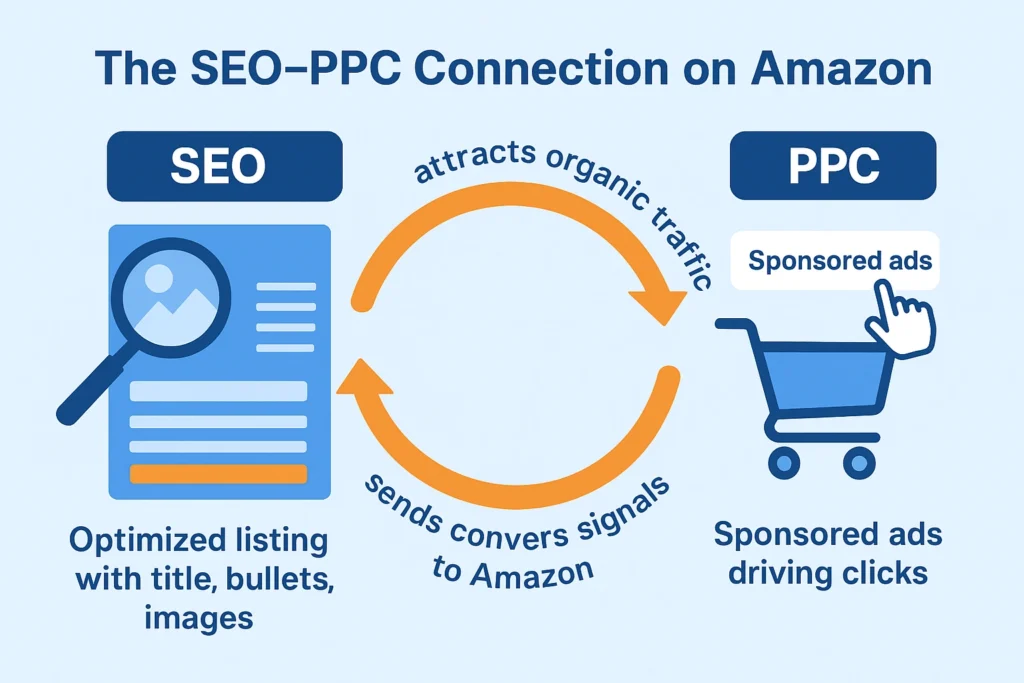
On Amazon, SEO and PPC aren’t separate worlds; they feed into each other. Understanding how they connect is the first step to turning clicks into sales and lowering your ad costs.
The Amazon A10 algorithm rewards listings that are both relevant and convert well. SEO ensures your listing matches what buyers are searching for, while PPC proves to Amazon that people actually want your product. Every paid click and conversion sends signals that can improve your organic ranking over time.
Think of it this way: SEO builds the foundation for long-term visibility, and PPC gives your listing an immediate boost. Combined, they create a feedback loop where ads drive traffic, traffic drives conversions, and conversions strengthen your ranking.
Pro Tip: Every PPC click isn’t just a potential sale, it’s also data that tells Amazon your listing is valuable. The more relevant clicks and conversions you generate, the faster your organic rank improves.
Mini Example:
A brand selling wireless headphones started ranking at #40 for “Bluetooth earbuds.” After a consistent PPC campaign targeting high-converting keywords, their organic rank jumped into the top 10 within weeks, without increasing their ad spend.
By understanding this connection, you can start seeing PPC and SEO not as separate tasks, but as two sides of the same growth engine.
Keyword Synergy — One Data Source, Two Strategies
Keywords are the bridge between SEO and PPC. The same keywords that make your listing discoverable organically also drive performance in your paid campaigns. Using them strategically across both channels creates a synergy that boosts rankings, conversions, and ROI.
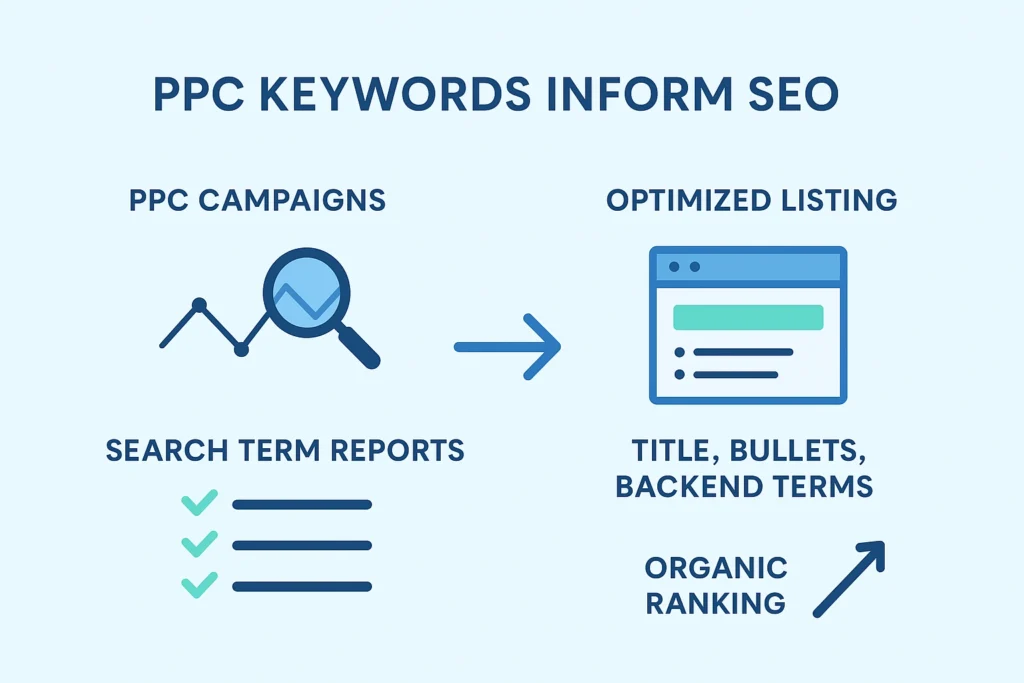
The key is data sharing. PPC campaigns generate search term reports showing which keywords actually convert. These high-performing terms are gold for your listing’s SEO. Integrating them into your product title, bullet points, backend search terms, and A+ content ensures your listing benefits from every click.
Step-by-Step Workflow:
- Start with broad PPC campaigns to gather keyword data.
- Identify high-converting terms from your PPC search term reports.
- Integrate those keywords into your listing copy, backend search terms, and enhanced content.
- Monitor performance and update regularly to keep SEO and PPC in sync.
Pro Tip: Tools like ChatGPT can help cluster converting PPC terms into high-intent keyword groups, making it easier to optimize your listing copy efficiently.
Mini Checklist for Keyword Synergy:
- Include top PPC keywords in your title, bullets, and descriptions
- Optimize backend search terms for high-CTR search phrases
- Regularly sync keyword insights between ad campaigns and organic content
When done correctly, PPC and SEO feed each other: paid traffic uncovers converting keywords, and SEO locks them into your listing for long-term visibility. This approach ensures that every dollar spent on ads also contributes to your organic growth.
Thinking About Hiring an Amazon Expert?
Ecomclips’ Partners Achieve an Average 85% Profit Increase!
The Conversion Loop — How PPC Supports Organic Ranking
PPC does more than drive immediate sales. It also helps your listings climb the organic ranks. Each click and conversion sends signals to Amazon that your product is relevant and desirable. Over time, this feedback loop strengthens your listing’s organic performance.
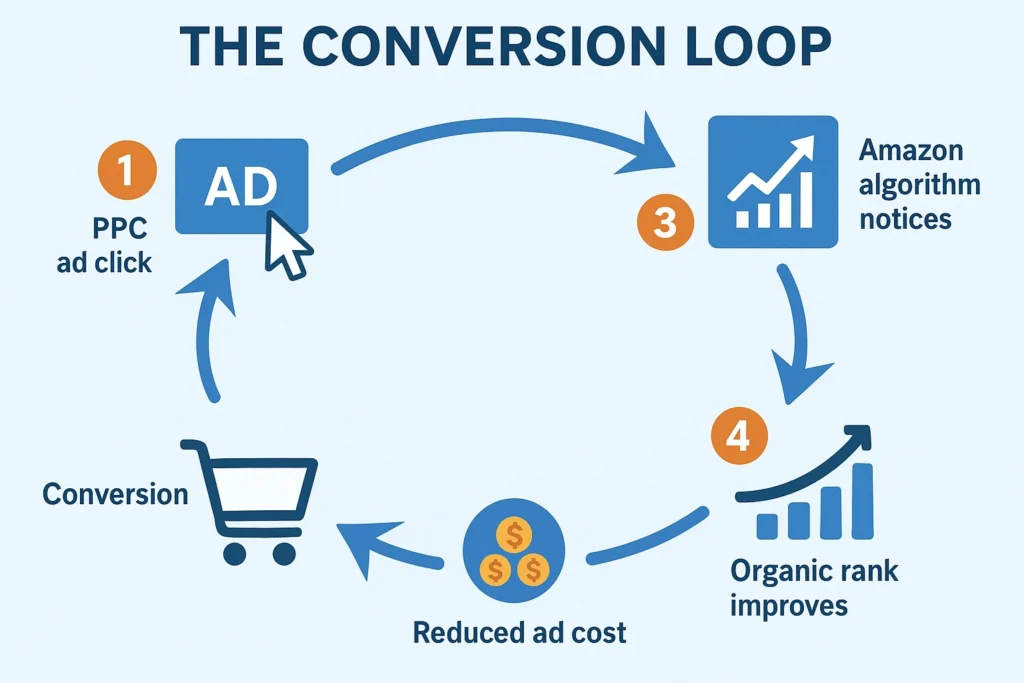
Here’s how it works: When a buyer clicks your PPC ad and converts, Amazon notes that the keyword led to a sale. The more conversions a keyword generates, the more weight it carries for organic ranking. Essentially, your paid campaigns are teaching the algorithm which keywords and listings are most valuable.
Why It Matters
Running PPC for high-value keywords accelerates ranking. Listings that might take months to climb organically can reach top positions much faster when supported by paid traffic. This not only increases visibility but also lowers your long-term ad spend, since higher organic ranks naturally reduce the cost of driving sales.
Mini Case Example
A home goods brand ran PPC campaigns targeting “ceramic planters” and “indoor plant pots.” Within a few weeks, consistent clicks and conversions pushed their organic ranking into the top 5 for both keywords. As a result, the brand was able to cut ad spend by 30% while maintaining the same sales volume.
Pro Tip: Focus PPC on keywords that are strategically important for your listing. The goal isn’t just immediate sales—it’s creating a conversion loop that continuously feeds your organic rank and reduces ACoS over time.
When SEO and PPC work together, each campaign supports the other. PPC drives sales and data, and SEO ensures that these gains translate into long-term visibility, creating a cycle of compounding growth.
Optimizing Listings for PPC + SEO Alignment
A high-performing listing is more than just keywords—it’s the foundation for both SEO and PPC success. If your listing isn’t optimized to convert traffic, even the best PPC campaigns will struggle, and your ad spend can quickly spiral.
Optimizing for both SEO and PPC means aligning your listing copy, visuals, and overall messaging with the keywords and ad campaigns you’re running. Every element of your listing should work together to attract clicks, convert visitors, and improve organic ranking.
Key Areas to Focus On
- Title and Bullets: Include high-converting keywords from your PPC campaigns and ensure the copy clearly communicates your product’s value.
- Main Image: Make it visually compelling and relevant to the ad copy to maximize click-through rates.
- A+ Content and Enhanced Brand Content: Use keywords naturally, highlight benefits, and maintain a consistent brand voice.
- Backend Search Terms: Include all relevant high-performing PPC keywords to ensure Amazon indexes your listing properly.
Pro Tip: If your listing doesn’t convert organically, PPC will only amplify the problem. Ads can bring traffic, but only a well-optimized listing turns that traffic into sales and signals Amazon that your product is relevant.
Checklist for PPC + SEO Alignment:
- SEO-optimized title and bullet points
- Ad-optimized main image and visuals
- Strong brand tone across all listing assets
- Backend search terms aligned with high-converting keywords
When your listing is fully aligned, every PPC campaign you run not only drives immediate sales but also strengthens your organic ranking. This creates a synergistic effect, reducing ad costs while improving long-term visibility.
Lowering ACoS Through SEO Integration
One of the biggest benefits of integrating SEO and PPC is how it naturally reduces your Advertising Cost of Sale (ACoS). When your listing ranks organically for the same keywords you’re bidding on, you don’t have to spend as much to get clicks and conversions.
This happens because Amazon rewards listings that are both relevant and high-converting. As your organic rank improves for top-performing keywords, you can lower your PPC bids while maintaining the same sales volume. Over time, this reduces your overall ad spend without sacrificing revenue.
How to Approach SEO-Driven ACoS Reduction
- Focus on hybrid keywords: These are keywords that perform well both in organic search and in paid campaigns.
- Monitor CPC trends: Track how your cost-per-click changes as your organic ranking improves.
- Adjust bids strategically: Lower bids on keywords where organic ranking starts driving consistent traffic and sales.
- Data Insight: For every 5-point improvement in organic rank, many brands see their average ACoS decrease by 10–15%.
Pro Tip: Think of SEO as a long-term investment in your ad efficiency. The more effort you put into optimizing your listings with high-performing keywords, strong visuals, and compelling copy, the less you’ll need to rely on expensive paid campaigns.
By combining SEO and PPC, you create a system where your ads don’t just drive sales—they accelerate organic growth and gradually make each click cheaper, more effective, and more profitable.
Building a Full-Funnel Strategy with PPC and SEO
Success on Amazon isn’t just about clicks or rankings; it’s about guiding customers through the entire buying journey. A full-funnel strategy aligns SEO and PPC to capture attention, build trust, and drive conversions at every stage.
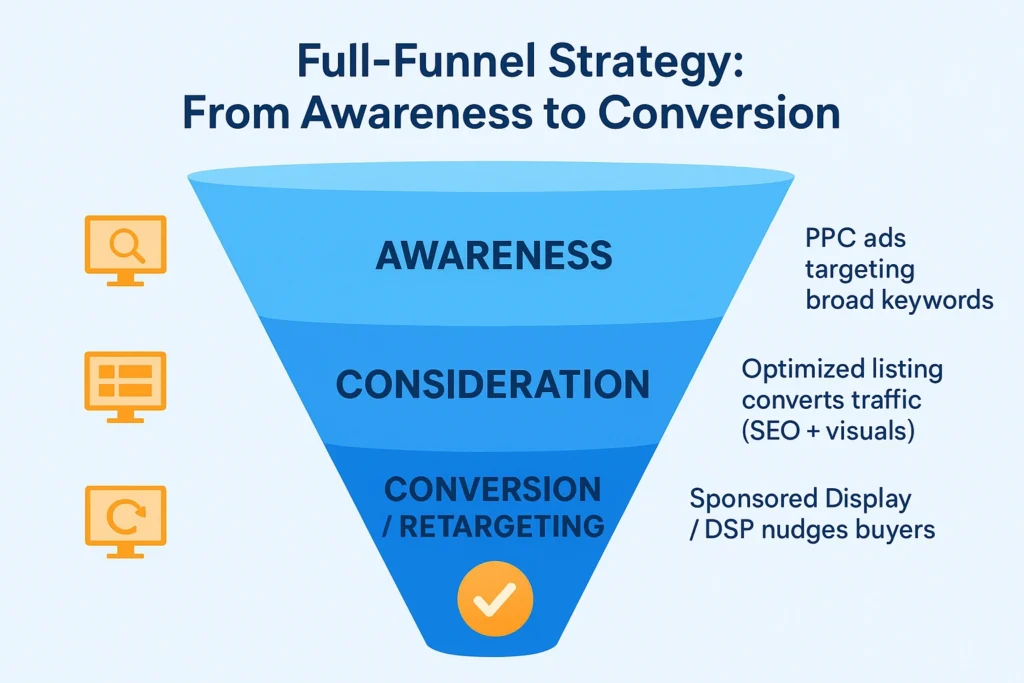
How the Funnel Works
- Top of Funnel (Awareness): Use PPC campaigns to reach potential buyers who are discovering products. Sponsored Products or Sponsored Brands ads target broad, high-traffic keywords to get your product in front of new audiences.
- Mid Funnel (Consideration): Your optimized listing, including title, bullets, images, and A+ content, ensures that the traffic from PPC converts. SEO plays a key role here, keeping your listing visible organically and reinforcing buyer confidence.
- Bottom of Funnel (Conversion & Retargeting): Retarget interested shoppers with Sponsored Display or DSP campaigns. These campaigns leverage past engagement to nudge buyers toward completing a purchase.
Example Funnel in Action
- Awareness ads target broad keywords to generate interest.
- Optimized listing converts the incoming traffic into sales and organic signals.
- Retargeting campaigns remind and persuade users who didn’t purchase initially.
- Organic ranking strengthens over time, reducing future reliance on ads.
Pro Tip: Treat SEO and PPC as two sides of the same strategy, not separate tasks. PPC drives fast results and data, while SEO locks in long-term visibility. Together, they create a continuous cycle where every click and sale fuels the next stage of the funnel.
By thinking in terms of a full-funnel strategy, you ensure that your efforts in PPC and SEO reinforce each other, maximizing ROI, lowering ACoS, and building lasting brand authority on Amazon.
Data Feedback Loops — Using AI and Analytics to Refine Performance
Integrating SEO and PPC isn’t a one-and-done task. The most successful sellers use data feedback loops to continually optimize performance. Every click, conversion, and keyword movement provides insights that can improve both your paid campaigns and organic rankings.
How Feedback Loops Work
- Collect Data from PPC Campaigns: Track which keywords drive clicks, conversions, and sales. Search term reports are particularly valuable for identifying high-performing keywords.
- Compare with Organic Performance: Monitor how your organic rankings change for the same keywords. Look for patterns where PPC-driven conversions accelerate organic rank.
- Adjust SEO and PPC Strategies: Update listing copy, backend search terms, and ad bids based on real performance data. This ensures both strategies are continuously aligned and optimized.
Tools to Make It Easier: Platforms like Helium 10, DataDive, Perpetua, and Intentwise can help sync SEO and PPC insights. AI tools like ChatGPT or Perplexity can summarize patterns, cluster converting keywords, and even suggest which terms to prioritize in your listing optimization.
Mini Workflow:
- Extract top converting PPC keywords weekly
- Compare with organic ranking data for the same terms
- Adjust bids and update listings based on insights
- Repeat continuously to improve conversions, lower ACoS, and strengthen organic performance
Pro Tip: Treat every campaign and optimization as part of a continuous feedback loop. Data from PPC informs SEO, and stronger SEO reduces dependency on paid ads, creating a self-reinforcing system of growth.
By leveraging AI and analytics, sellers can make informed decisions, optimize faster, and ensure their SEO + PPC integration is always driving maximum ROI.
Common Mistakes Sellers Make When Running SEO and PPC Separately
Many sellers treat SEO and PPC as separate silos, which can quietly sabotage growth and waste ad spend. Understanding these common mistakes can help you avoid pitfalls and build a more efficient strategy.
1. Disconnected Teams or Strategies
When SEO and PPC are managed independently, campaigns and listings often fail to support each other. PPC may drive traffic to a listing that isn’t optimized, while organic content doesn’t leverage high-performing ad keywords.
Fix: Align both strategies under a unified keyword and conversion dashboard. Share insights between teams regularly.
2. Bidding on Unoptimized Keywords
Running ads for keywords that aren’t included in your listing or backend search terms reduces conversion rates and drives up ACoS.
Fix: Ensure your listing is optimized for the same keywords you’re bidding on in PPC campaigns.
3. Over-Reliance on PPC
Some sellers think heavy ad spend can compensate for poor listings. While PPC can temporarily boost sales, it won’t fix underlying SEO issues. This often leads to high costs without sustainable growth.
Fix: Invest in listing optimization alongside PPC campaigns to ensure long-term visibility and conversions.
4. Ignoring Search Term Reports for SEO
PPC campaigns generate valuable keyword data that can improve organic rankings. Ignoring search term reports means missing opportunities to expand and refine your listing.
Fix: Regularly integrate high-converting PPC keywords into your listing copy, backend, and A+ content.
Quick Fix Tip: Treat SEO and PPC as parts of the same system. Every ad click, conversion, and keyword insight should inform your listing optimization and campaign strategy. When integrated properly, you reduce wasted spend, improve rankings, and increase ROI.
Frequently Asked Questions (FAQ)
Q. Can SEO really reduce my ad spend?
Yes. Once your listing ranks organically for high-converting keywords, you can lower PPC bids or even pause campaigns for certain terms. Organic traffic begins to carry part of the sales load, which naturally reduces ACoS.
Q. Should I start with SEO or PPC?
Both should be approached together. PPC provides immediate data on converting keywords, while SEO locks those keywords into your listing for long-term visibility. Running them in tandem accelerates growth and improves ROI.
Q. How long does it take to see results from integration?
Typically, sellers see noticeable improvements in 4–8 weeks, depending on niche competition, listing quality, and ad strategy. Consistency is key—continuous optimization ensures compounding benefits over time.
Q. What tools help combine SEO and PPC data?
Popular tools include Helium 10, DataDive, Perpetua, and Intentwise. AI tools like ChatGPT can cluster converting keywords, summarize trends, and suggest SEO updates for your listings.
Q. Can AI optimize both SEO and PPC?
Yes. AI can analyze large datasets, cluster keywords by intent, predict conversion potential, and even automate bid adjustments. When combined with human strategy, AI makes the integration of SEO and PPC faster and more effective.
The smartest Amazon brands don’t choose between SEO or PPC—they integrate both. When your ads and listings work together, every click costs less, every conversion counts, and your organic ranking grows faster.
Integrating SEO and PPC isn’t just about immediate sales. It’s about building a self-reinforcing growth engine: PPC drives traffic, conversions boost organic ranking, and optimized listings reduce ad costs over time. The result is a more efficient, profitable, and sustainable Amazon business.
How Ecomclips Helps Brands Maximize ROI by Integrating Amazon SEO and PPC
At Ecomclips, we bring every eCommerce solution under one umbrella — strategy, operations, creative, and marketing — to help brands grow smarter and faster on Amazon. By integrating SEO and PPC, we ensure your products not only rank higher but also convert better, reducing ad spend and increasing overall profitability.
What We Do:
- Amazon SEO Optimization – Keyword-rich listings, high-converting titles, bullets, descriptions, and A+ content designed to improve organic ranking and visibility.
- PPC & Advertising Management – Data-driven campaigns that complement your SEO strategy, lowering ACoS while driving more sales.
- Listing & Creative Design – Optimized images, infographics, and video content tailored to boost conversions and complement both organic and paid strategies.
- Account & Catalog Management – Backend keyword integration, inventory updates, and seamless catalog management to maintain peak performance.
- Analytics & Performance Tracking – Continuous monitoring of SEO and PPC metrics, creating actionable insights that refine campaigns and listings for maximum ROI.
With Ecomclips, your Amazon business benefits from a unified strategy where SEO and PPC work together, giving you lower ad costs, higher conversions, and sustainable growth.
Contact us today at info@ecomclips.com or book an appointment with our Amazon experts to get personalized guidance for your account setup.
Watch how we help new sellers launch successfully:
Profitable Amazon PPC Category Targeting Campaigns
Amazon Halloween Sales Strategy 2025
Amazon Sellers: Steal 30% of Competitor Sales with This Hack
How to Use Amazon Product Opportunity Explorer for Product Development
Ecomclips: Your Complete eCommerce Solution Under One Umbrella
At Ecomclips, we bring every eCommerce service you need under one roof — strategy, operations, design, marketing, and growth, all seamlessly connected to help your brand thrive across every marketplace.
Since 2012, we’ve been helping businesses of all sizes launch, scale, and dominate online. From Amazon, Walmart, eBay, and Etsy to Shopify and WooCommerce, our team of marketplace experts, designers, developers, and marketers works together to deliver measurable results.
Our services span the full eCommerce lifecycle:
- Product Listing Management: We handle registrations, compliance, and product data optimization across all marketplaces.
- Optimization Service: From keyword-rich titles and A+ content to PPC campaigns and storefront design, we craft listings that convert.
- Creative Design & Content Production: A+ visuals, infographics, brand stores, and product videos built to boost engagement.
- Advertising & PPC Management: Smart, data-driven ad strategies for Amazon, Walmart, and Google that maximize ROI.
- Web Development & Store Design: Shopify, WooCommerce, and Magento websites built for performance and conversion.
- Data Management & Automation: Streamlined product feeds, catalog syncing, and inventory control for effortless scalability.
- Customer Service & Order Fulfillment: End-to-end support that enhances customer satisfaction and builds long-term loyalty.
- Analytics & Growth Strategy: Real-time insights and ongoing optimization to ensure consistent, profitable growth.
Whether you’re launching a new store or managing multiple global marketplaces, Ecomclips acts as your single strategic partner, simplifying complexity and driving sustainable revenue growth.
Ready to Start Growing Your Brand?
Ecomclips’ Partners Achieve an Average 85% Profit Increase!