
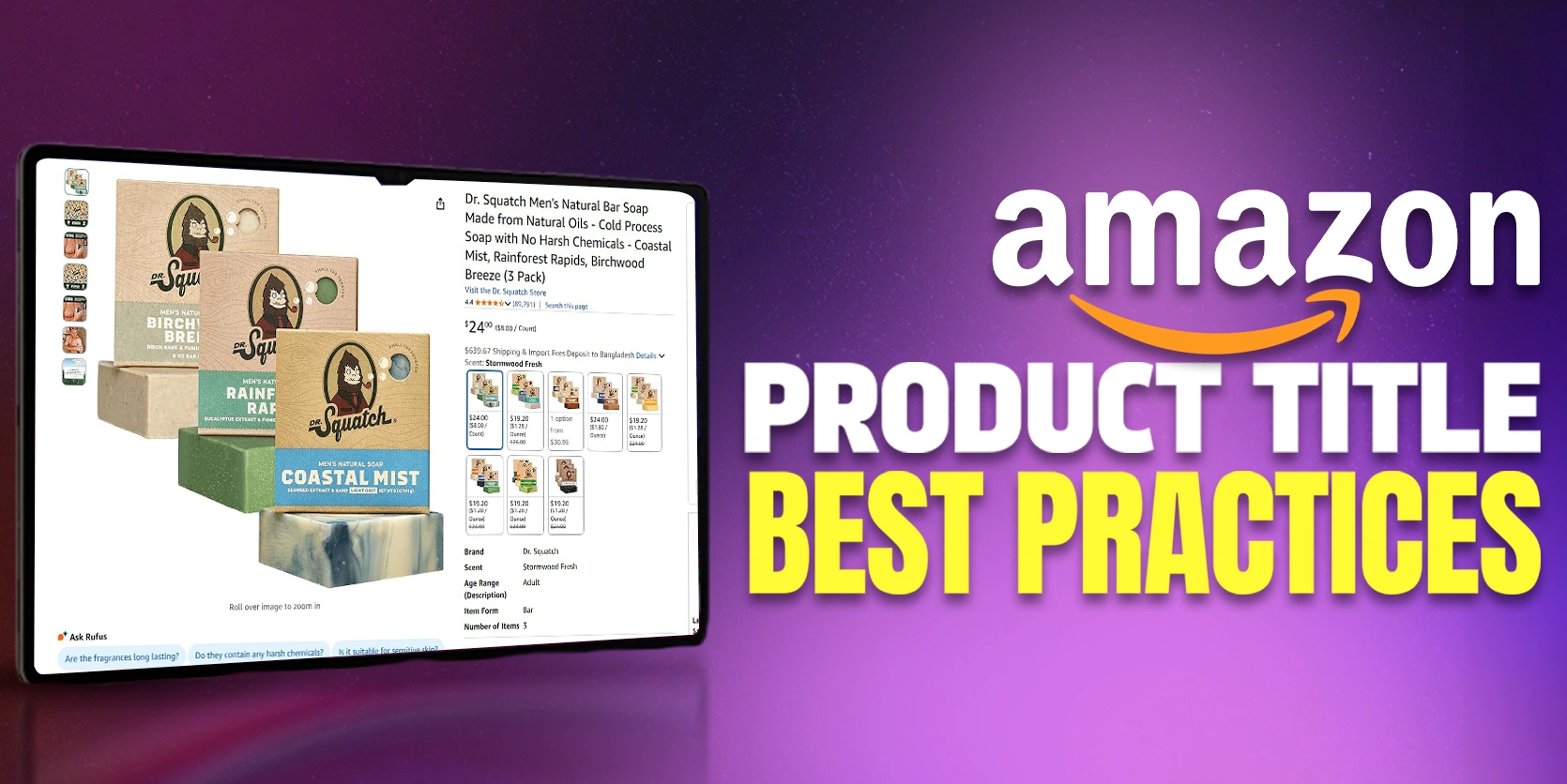
Creating a successful Amazon listing starts with one crucial element: the product title. An Amazon optimized title isn’t just about grabbing attention; it’s about ensuring your product is found in search results, resonates with potential buyers, and ultimately boosts your sales. At Ecomclips, we’ve perfected a process for crafting Amazon product titles that not only increase visibility but also drive conversions. Here’s how you can craft the perfect title for your Amazon listings and boost your sales in 2025 and Amazon title best practices.
Why Product Titles Matter on Amazon
Amazon product titles are a critical part of your listing. When customers browse, your title is one of the first things they see, along with your product image. A well-crafted title helps your product stand out and get discovered. It’s also one of the most effective tools in driving clicks, and ultimately, conversions.
“Amazon title is a concise, keyword-rich description of your product that helps it rank in Amazon’s search results and attract potential buyers.”
So, if done right, it will help you:
- Rank higher in Amazon search results by using targeted keywords.
- Clearly communicate your product’s benefits to potential buyers.
- Grab attention quickly in a crowded marketplace.
Key Elements of an Amazon Product Title
Creating an effective product title requires a strategic combination of keywords, descriptive details, and clarity. Here’s a breakdown of how to structure a high-ranking, informative product title.
1. Start with Descriptive Keywords
The first words of your title should immediately describe what the product is. These are the keywords customers are most likely to search for when looking for a product like yours. The goal is to capture their attention right away. For example:
- “Men’s Hand Soap Gift Set”
This short phrase immediately tells the customer what the product is and who it’s for.
Tip: Keep the first part of your title focused on your product’s core identity using 3–5 high-ranking keywords.

2. Avoid Putting Your Brand Name at the Front
If your brand is not yet well-known, avoid placing it at the beginning of the title. While established brands like Nike or Olay may put their names first, most sellers should focus on high-ranking keywords instead. For example, if your product isn’t recognized, you don’t need to lead with your brand name.
Tip: Place your brand name at the end of the title or use that space for other important details (like the number of items in the set or any additional features).
3. Incorporate Descriptive Features in the Middle
Once you’ve identified your product and who it’s for, it’s time to add descriptive details that enhance searchability. This section helps customers understand more about the product and why it’s worth buying. Examples of descriptive features include:
- “Cold-Process”
- “Natural Ingredients”
- “No Harsh Chemicals”
For example:
“Men’s Hand Soap Gift Set – 4 Bars, Cold-Pressed, Natural, No Harsh Chemicals”
By including these descriptors, you’re enhancing the title’s searchability and making it clear what benefits the product offers.
4. Highlight Unique Selling Points (USPs)
What makes your product stand out from the competition? Add features that will attract a niche audience and increase conversions. For example:
- “Eco-Friendly”
- “Vegan”
- “Organic”
For example:
“Men’s Hand Soap Gift Set – 4 Bars, Cold-Pressed, Natural, Vegan, Eco-Friendly”
This ensures your title speaks to a broader audience, helping it rank for a wide range of related search terms.
5. Keep It Clear, Concise, and Informative
While it’s essential to include keywords, it’s also important that your title is easy to read and understand. Don’t overload the title with too much information. Focus on the most critical features and benefits of the product that shoppers care about.
- Avoid overstuffing keywords: Too many keywords can hurt readability and affect your rankings.
- Keep it under 200 characters: Amazon limits titles to 200 characters, but shorter titles often perform better because they’re easy to read.
Why Big Brands Use Short Titles—and Why You Shouldn’t (Yet)
Let’s take a quick example from a real Amazon listing:
Olay Outlast Ultra Moisture Shea Butter Beauty Bar, 7.52 Ounce, Pack of 2

From the very first few words, the title tells you what it is—simple and clear. When you click into the listing, you’ll notice that there isn’t much more detail in the title itself. Why? Because Olay doesn’t need to say more.
This is where the major difference lies between a big-name brand like Olay and newer or lesser-known brands.
Established brands with strong recognition already have massive search volumes and brand trust. Customers already know who they are, what they sell, and what to expect. For them, product discovery is effortless—buyers type the brand name directly in the search bar or recognize it instantly among listings.
Why Olay Can Get Away with Minimal Titles
- Brand recognition: Olay has built a global reputation. Shoppers recognize the brand logo and trust the product without needing much explanation.
- High sales velocity: Olay’s listing might have over 8,000+ ratings and over 8,000 units sold just in the past month.
- Trust through reputation: Customers don’t need to read a long, keyword-stuffed title to be convinced. They already believe in the quality.
Now Compare This to a Lesser-Known Brand
A competing soap bar from a smaller or newer brand may have:
- Around 5,000 ratings (still good),
- But only 300 units sold in the last month.
Even though the product quality might be comparable, the lack of brand recognition affects visibility and conversion. That’s why the smaller brand can’t afford to use a short title like Olay does. Instead, they must leverage keyword-rich, descriptive titles to explain what the product is, highlight benefits, and improve visibility in search results.
The Key Takeaway for Newer Amazon Sellers
If your brand isn’t well-known, your title needs to work harder to get you discovered and clicked on. That means:
- Use high-performing keywords at the beginning of your title
- Clearly state what the product is, who it’s for, and its unique selling points.
- Don’t waste space on your brand name unless it has search demand—place it at the end of the title instead.
- Make sure the title helps a shopper understand and trust your product in a split second.
Example of an Optimized Amazon Product Title
Let’s say you’re selling a set of organic, eco-friendly soap bars. Here’s an example of a perfectly optimized title:
“Organic Men’s Hand Soap Set – 4 Bar Gift Pack, Cold-Pressed, Vegan, Eco-Friendly, No Harsh Chemicals”
This title includes:
- Descriptive keywords: “Men’s Hand Soap Set,” “4 Bar Gift Pack.”
- Relevant descriptors: “Cold-Pressed,” “Vegan,” “Eco-Friendly.”
- Unique selling points: “No Harsh Chemicals.”
It clearly defines the product, speaks to the target audience, and includes important search terms.
Additional Tips for Optimizing Your Title
1. Use a Keyword Research Tool
Using a keyword research tool like Helium 10’s Cerebro can help you identify high-ranking keywords that your competitors are using. These tools allow you to see which keywords are performing well and should be included in your title for optimal results.

2. Focus on Customer Intent
Think about how customers will search for your product. The goal is to align your product title with what buyers are most likely to type into Amazon’s search bar. For instance, if you sell men’s soap, customers might search for keywords like “men’s soap gift set,” “natural soap for men,” or “vegan soap for men.”
Tip: Always optimize your title for the customer’s search intent rather than just stuffing in keywords.
3. Monitor and Adjust
Once your title is live, use Amazon’s search analytics to track performance. If certain keywords aren’t driving traffic, consider tweaking your title over time to improve ranking and visibility.
Some Frequently Asked Questions (FAQ) About Amazon Product Titles
1. What are Amazon Guidelines for Product Titles?
Amazon has specific guidelines for crafting product titles, including rules regarding length, use of punctuation, and what information must be included. Generally, Amazon recommends:
- Titles should be between 50–200 characters (depending on category).
- Include important keywords and the product’s key features.
- Avoid using promotional phrases like “Best Seller” or “Discount.”
- Do not include the brand name at the start unless it’s well-known.
For example, a toy for 14+ years should have clear descriptors about the product type, features, and intended age group.
2. How Many Characters Should an Amazon Product Title Have?
Amazon product titles can be up to 200 characters long, but best practice is to aim for a title length of around 150-160 characters. This ensures your title is concise and easy to read while still being informative and keyword-rich.
3. Why Are Amazon Product Titles So Long?
Amazon product titles tend to be longer because they need to include key details that help customers and Amazon’s algorithm understand what the product is. Longer titles give sellers the chance to include relevant keywords and descriptive phrases that improve visibility in search results.
4. How Do You Optimize a Product Title?
To optimize an Amazon product title, start by including the top 3–5 keywords that best describe your product. Include key product features (like size, color, or material), and add unique selling points (USPs) like “eco-friendly,” “organic,” or “no chemicals.” Make sure your title is clear, informative, and follows Amazon’s guidelines.
5. How Long Should an Amazon Product Title Be?
The ideal length for an Amazon product title is between 150–160 characters. This length allows you to include enough detail without overwhelming the shopper, making it easy to read while still containing relevant keywords for search optimization.
6. What is the Meaning of a Product Title?
A product title is the primary text that describes a product on an online platform like Amazon. It provides essential details about the product, such as its name, features, intended use, and other key descriptors that help both shoppers and the search algorithm understand what the product is and who it’s for.
7. What are New Amazon Title Requirements
Effective January 21, 2025, Amazon updated its product title guidelines to enhance consistency and improve the shopping experience. Understanding and adhering to these requirements is crucial for sellers to ensure compliance and optimize product visibility.
Additional Tips for Optimizing Your Title
1. Use a Keyword Research Tool
Using a keyword research tool like Helium 10’s Cerebro can help you identify high-ranking keywords that your competitors are using. These tools allow you to see which keywords are performing well and should be included in your title for optimal results.
2. Focus on Customer Intent
Think about how customers will search for your product. The goal is to align your product title with what buyers are most likely to type into Amazon’s search bar. For instance, if you sell men’s soap, customers might search for keywords like “men’s soap gift set,” “natural soap for men,” or “vegan soap for men.”
Tip: Always optimize your title for the customer’s search intent rather than just stuffing in keywords.
3. Monitor and Adjust
Once your title is live, use Amazon’s search analytics to track performance. If certain keywords aren’t driving traffic, consider tweaking your title over time to improve ranking and visibility.
Final Thoughts on Crafting the Perfect Amazon Product Title
Crafting an Amazon product title is a strategic process that involves finding the right balance between descriptive keywords, product features, and clarity. Keep your title informative, keyword-rich, and focused on what matters most to your customers. This approach will ensure that your product stands out in Amazon’s crowded marketplace and attracts more potential buyers.
If you need expert help optimizing your Amazon listings or crafting product titles that convert, Ecomclips is here to assist. Our team specializes in Amazon SEO and can guide you in maximizing your product’s visibility and sales potential.
Contact EcomClips for Professional Amazon Listing Optimization
Reach out to us at info@ecomclips.com for expert assistance and to learn how we can help you scale your Amazon business. Let’s optimize your listings and take your Amazon sales to new heights!