
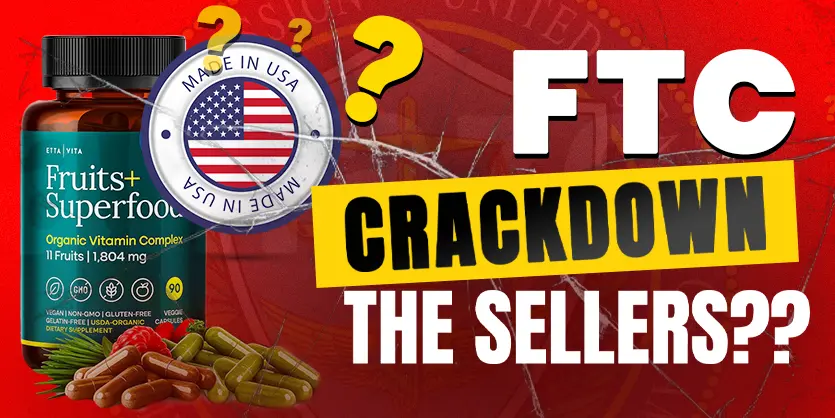
“Made in USA” Could Make or Break Your Listings in 2025—Are You 100% Sure You’re Compliant?
In today’s competitive eCommerce world, sellers will do almost anything to stand out. One of the most powerful conversion-boosting tactics? Claiming your product is “Made in the USA.” But in 2025, that simple label just got a lot more dangerous.
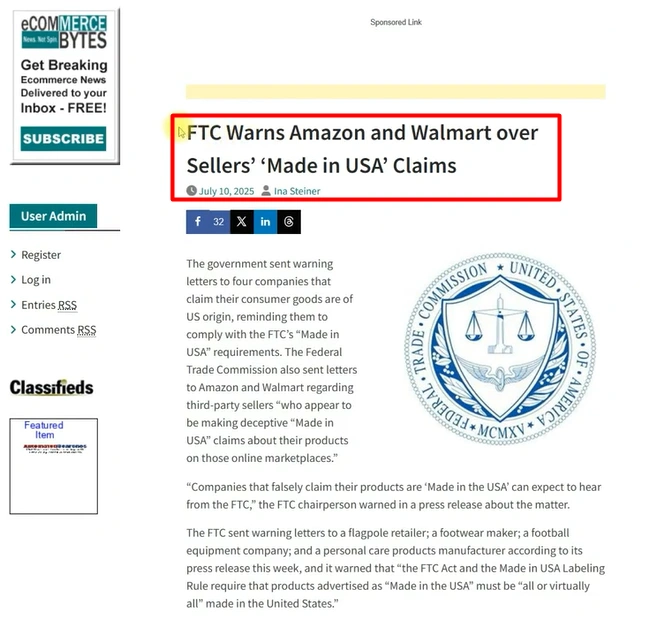
The Federal Trade Commission (FTC) has officially begun cracking down on false “Made in USA” claims, and they’re not just targeting sellers—they’ve already issued warnings to Amazon and Walmart. If you sell on either platform, your listings could be at risk.
Table of Contents:
| 1. Why “Made in USA” Labels Are So Powerful for Sellers |
| 2. Why the FTC Is Cracking Down in 2025 |
| 3. The FTC’s “Made in USA” Rule: What It Really Means |
| 4. How Sellers Are Abusing the “Made in USA” Claim |
| 5. Real Listing Examples & Loopholes Exposed |
| 6. What This Means for Sellers on Amazon & Walmart |
| 7. How to Stay Compliant & Protect Your Store |
| 8. Final Thoughts: This Is Just the Beginning |
Why “Made in USA” Labels Are So Powerful for Sellers
The phrase “Made in USA” carries strong emotional and economic value for U.S. consumers. It signals trust, quality, and local pride, and it’s known to increase conversion rates in competitive markets. Especially in 2025, with tariffs, global supply chain issues, and rising consumer awareness, buyers are more drawn to locally-made products.
Sellers often highlight this claim on their Amazon or Walmart listings as a powerful selling point. But what seems like a great marketing strategy can quickly become a legal risk if misused. Understanding why this label works is the first step to using it responsibly.
Why the FTC Is Cracking Down in 2025
The FTC’s enforcement has reached a new level in 2025, and it’s no longer just about warnings—it’s about accountability. Both Amazon and Walmart recently received official FTC letters warning them about sellers making misleading Made in USA claims. What triggered this? A growing number of third-party sellers were using this claim without proof, and the FTC had enough.
They now expect platforms and sellers alike to adhere to strict guidelines, and the consequences of noncompliance could include fines, listing removals, or even account suspensions. This is no longer a gray area—action is being taken.
The FTC’s “Made in USA” Rule: What It Really Means
Many sellers don’t fully understand what qualifies as “Made in USA.” According to the FTC Act and the Made in USA Labeling Rule, a product must be “all or virtually all” made in the United States to qualify. That means everything—from raw materials to manufacturing and assembly—must occur within the U.S. If even a small part of the production happens overseas, you can’t legally use the claim. The rules are clear and non-negotiable, and the FTC is now pushing platforms to enforce them. Don’t assume—it’s your responsibility to know and comply.
To legally claim “Made in USA,” your product must be “all or virtually all” made in the United States.
That includes:
- Raw materials
- Manufacturing
- Assembly
- Final processing
If only part of the product was handled in the U.S.—for example, final assembly—you’re not allowed to label it “Made in USA.”
Important note: On Amazon and Walmart, there’s no mandatory documentation to prove this claim (yet). That’s why some sellers get away with it—but that’s changing quickly.
How Sellers Are Abusing the “Made in USA” Claim
Many sellers don’t fully understand what qualifies as “Made in USA.” According to the FTC Act and the Made in USA Labeling Rule, a product must be “all or virtually all” made in the United States to qualify. That means everything—from raw materials to manufacturing and assembly—must occur within the U.S. If even a small part of the production happens overseas, you can’t legally use the claim. The rules are clear and non-negotiable, and the FTC is now pushing platforms to enforce them. Don’t assume—it’s your responsibility to know and comply.
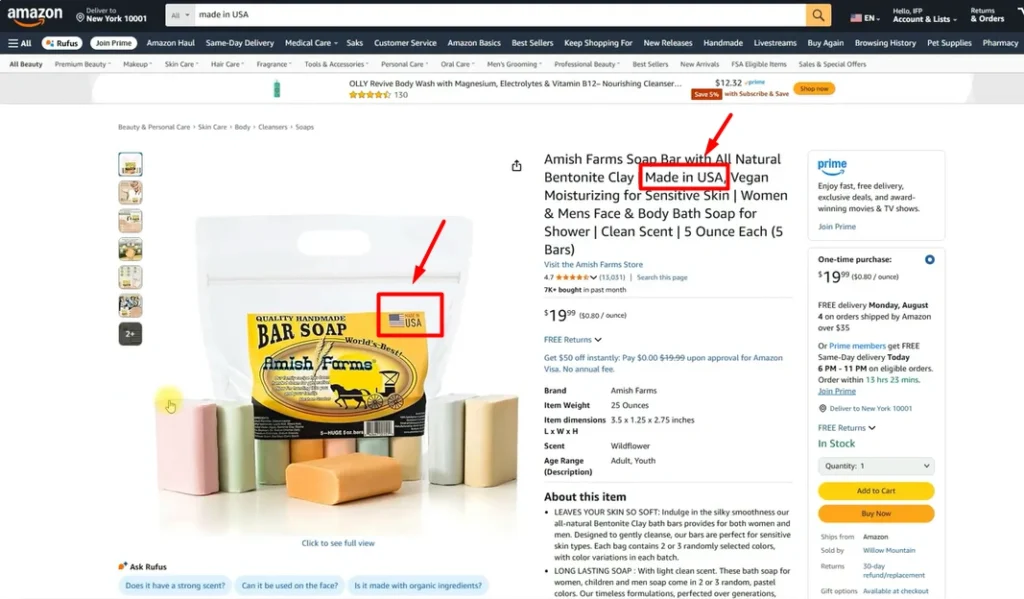
Sellers have been using “Made in USA” badges on main images, product titles, and even bullet points—often without providing any proof.
Some common tactics include:
- Using a U.S. mailing address or LLC to appear local
- Adding a flag or USA text overlay on listing images
- Claiming “made in the USA” when only packaging happens locally
You might see listings like this every day—tags and claims scattered across the page—but there’s no easy way to verify if those products were truly made in America.
Real Listing Examples & Loopholes Exposed
Take this example: A brand proudly displays a USA badge and emphasizes “natural ingredients” from the U.S.—but nowhere in the listing is there proof of country of origin.
Even with tools like Helium 10 or by scrolling to the “sold by” section, you’ll often hit a wall. Why? Because:
- Anyone can register a U.S. business or LLC
- A U.S. address ≠ U.S. manufacturing
- Many sellers rely on loopholes to justify the label
This lack of clarity has created a trust gap—and the FTC is now stepping in to close it.
What This Means for Sellers on Amazon & Walmart
For legitimate and non-compliant sellers alike, this change represents a major shift. The FTC’s crackdown is likely to push Amazon and Walmart to demand more documentation before allowing sellers to use the “Made in USA” tag. This means new listing requirements, stricter moderation, and potential suspensions for false claims. It also means a retroactive review of existing listings—which could impact thousands of products. Sellers who previously gamed the system are now on notice. Being proactive is the only way to avoid penalties.
With this new FTC enforcement effort, we may soon see:
- Amazon requiring documentation for Made in USA claims
- Listing takedowns or suspensions for false claims
- Stricter compliance checks for sellers using location-based marketing
Amazon has a track record of acting retroactively when pressured by regulators. That means even past claims could be reviewed and penalized.
If you’re using a “Made in USA” label anywhere in your listing—now is the time to double-check your compliance.
How to Stay Compliant & Protect Your Store
Staying compliant is not just about avoiding trouble—it’s about building long-term trust with customers and platforms. Start by auditing all your listings that use the “Made in USA” claim. Remove misleading elements and only keep claims you can back up with real documentation. If you can’t meet the FTC’s full requirement, consider switching to terms like “Assembled in USA” or “Designed in USA” (if true). Also, prepare documents like invoices, manufacturing certificates, or supply chain breakdowns in case Amazon or Walmart asks for proof. Compliance today avoids chaos tomorrow.
To protect your account and maintain shopper trust, here’s what you should do:
- Review every listing that includes a “Made in USA” claim
- Remove badges or keywords unless you’re 100% compliant
- Prepare documentation proving your product’s origin
- If in doubt, switch to claims like:
- “Designed in USA” (if only concept was domestic)
- “Assembled in USA” (if parts are imported)
- Stay updated with FTC and Amazon policy changes
“Honesty in branding isn’t just ethical—it’s now essential to avoid penalties.”
Final Thoughts: This Is Just the Beginning
This FTC crackdown marks a major shift for online sellers. As Amazon and Walmart face more regulatory pressure, we expect tighter enforcement, new policy updates, and increased demand for country-of-origin verification.
If you’ve been relying on “Made in USA” to boost sales—make sure your claim is bulletproof. Because when the FTC steps in, the consequences are real.
Related Reads from Ecomclips:
- [How to Avoid Getting Your Amazon Account Suspended in 2025]
- [Top Amazon Compliance Mistakes Sellers Still Make]
- [Ultimate Guide to Amazon Product Listing Optimization]
📣 Need Help Auditing Your Listings?
At Ecomclips, we help Amazon and Walmart sellers stay compliant while maximizing conversions. Whether it’s reviewing your “Made in USA” claims, updating your product images, or submitting documentation—we’ve got your back.
📩 Contact us at info@ecomclips.com or visit ecomclips.com to get started today.
