
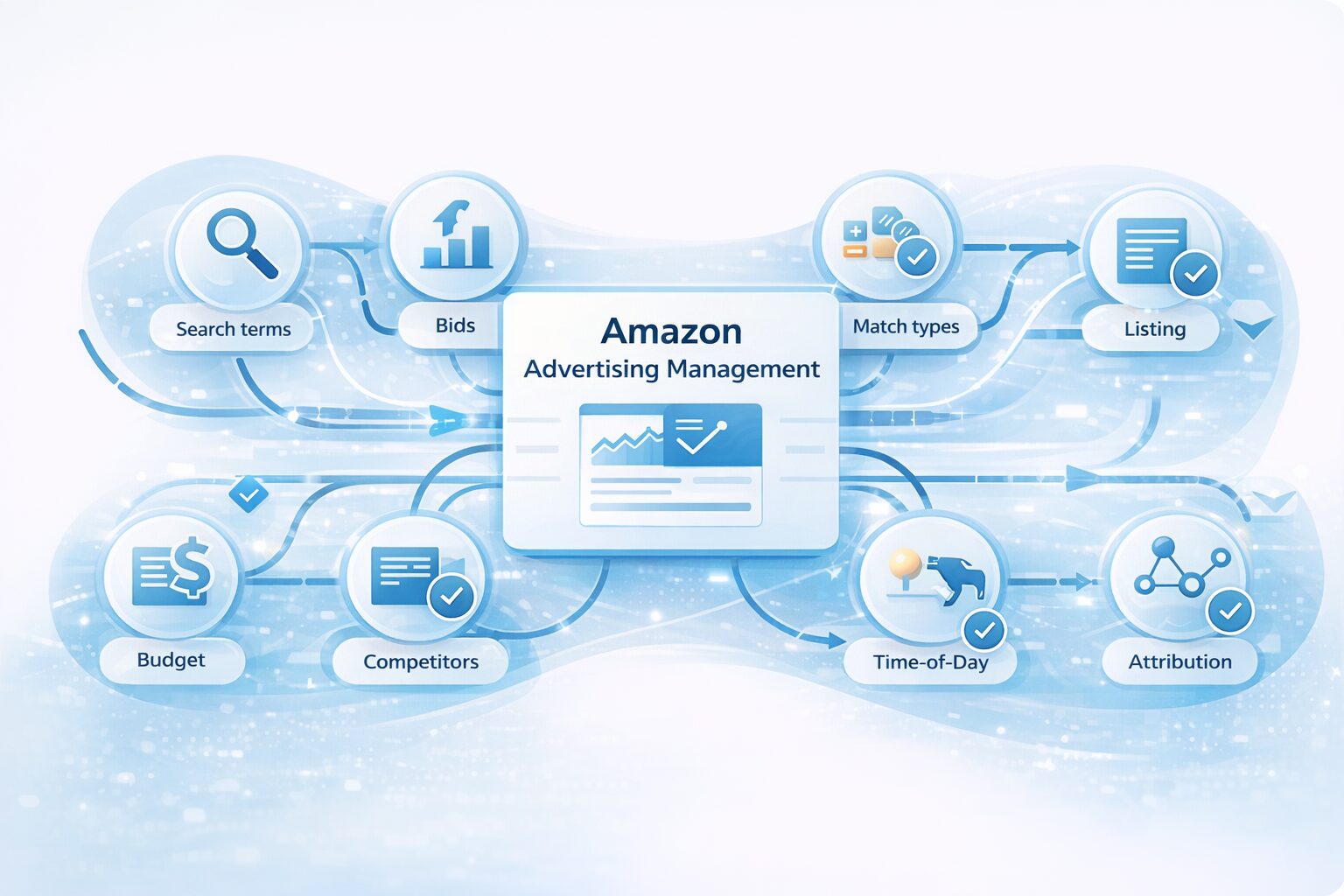
Are you running Amazon ads but not seeing the results you expected? You’re not alone. Many sellers invest in PPC with high hopes, only to realize later that a large portion of their budget is being wasted. In fact, it’s common for sellers to lose 30–60% of their ad spend due to poor campaign structure, weak targeting, and a lack of proper optimization.
The truth is, Amazon Advertising can be one of the most powerful growth drivers for your business, but only if it’s managed correctly.
This guide is designed to focus on practical execution rather than theory, helping you understand how Amazon PPC actually works and how to build campaigns that generate consistent and profitable results.
What is Amazon Advertising?
Amazon Advertising is a pay-per-click (PPC) platform that allows sellers to promote their products directly on Amazon and across its wider network. In simple terms, you only pay when a shopper clicks on your ad, making it a performance-driven way to generate visibility and sales.
Amazon uses a combination of bid amount, ad relevance, and conversion likelihood to determine which ads are shown. This means that even with a lower bid, a well-optimized listing with strong conversion potential can outperform competitors.
What makes Amazon Ads powerful is its access to high-intent shoppers. Unlike other platforms where users are just browsing, Amazon users are already in a buying mindset. In fact, studies show that over 70% of Amazon shoppers don’t go past the first page of search results, which is exactly where ads help your products appear.
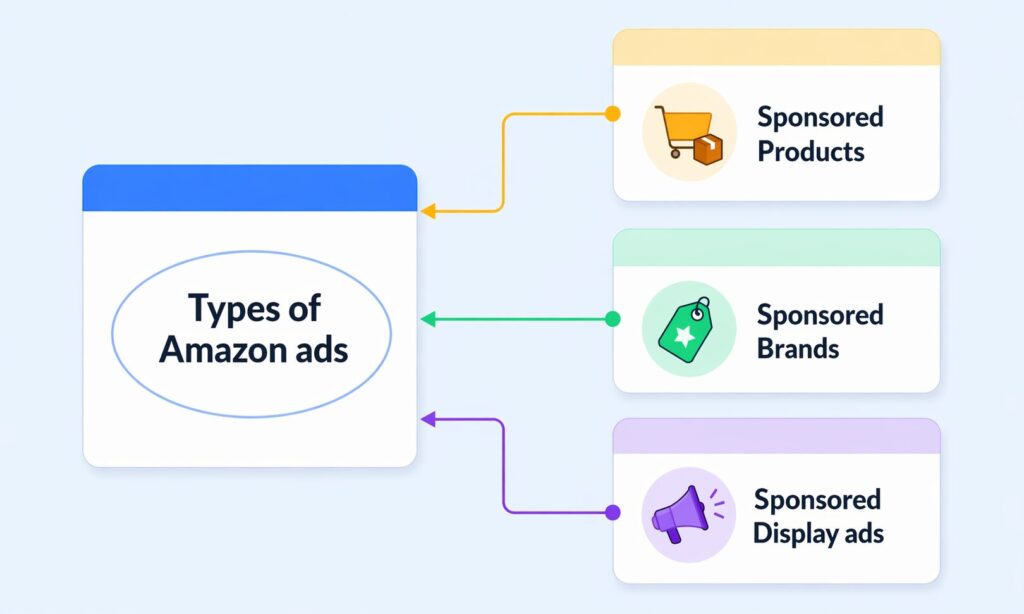
Types of Amazon Ads
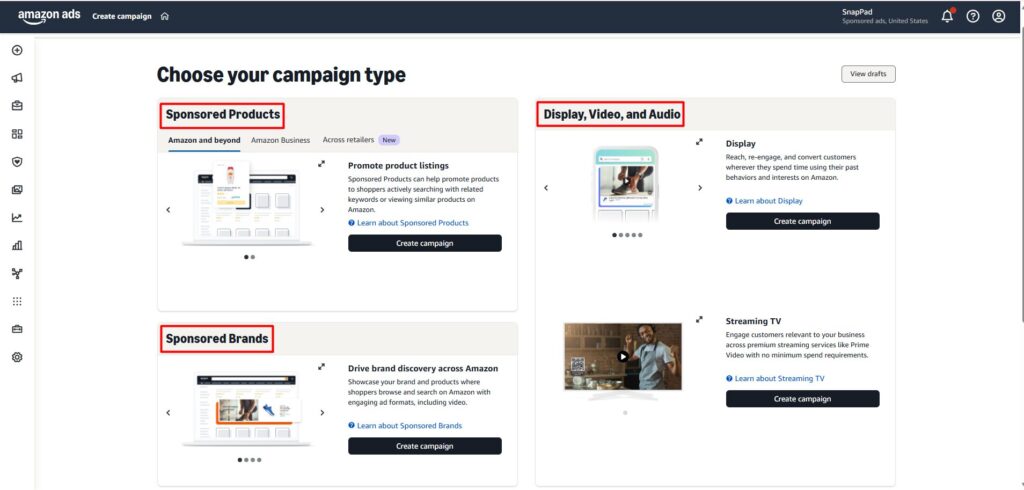
Before getting started with Amazon PPC, it’s important to understand the different ad types and how they can contribute to your business. The primary ad types include Sponsored Products, Sponsored Brands, and Sponsored Display.
Sponsored Products are the most commonly used ad type and typically account for the majority of ad spend in most accounts. These ads promote individual product listings and appear directly within search results and product detail pages. They are primarily used to drive immediate sales and are often the backbone of any PPC strategy.
Sponsored Brands, on the other hand, are designed to showcase your brand rather than just a single product. These ads appear at the top of search results and include your logo, a custom headline, and multiple products. They are especially useful for building brand awareness, improving keyword ranking, and protecting branded search terms from competitors.
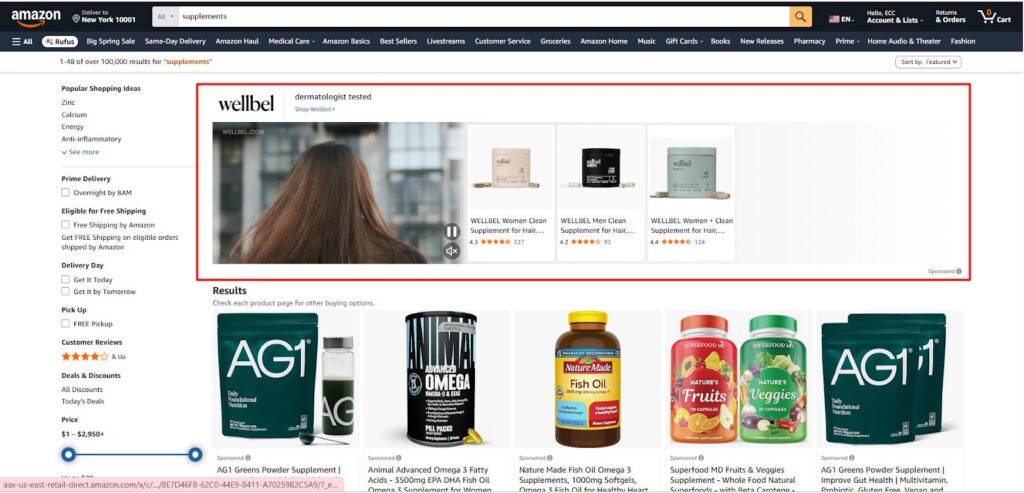
Amazon Sponsored Brand Ad
Sponsored Display ads take a slightly different approach. They allow you to reach shoppers both on and off Amazon, making them effective for retargeting users who have previously viewed your products or similar items. They are also commonly used for competitor targeting, helping you capture attention on competing product pages.
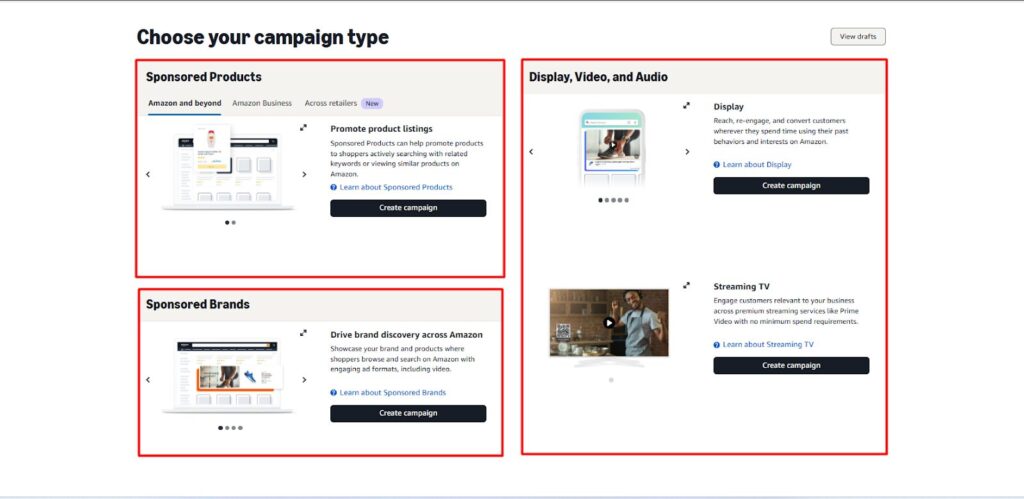
Amazon PPC Campaigns
How Amazon PPC Works
At its core, Amazon PPC operates as an auction system. Sellers bid on keywords or product placements, and Amazon decides which ads to display based on several factors.
These include the bid amount, how relevant the ad is to the search query, and how likely the product is to convert into a sale.
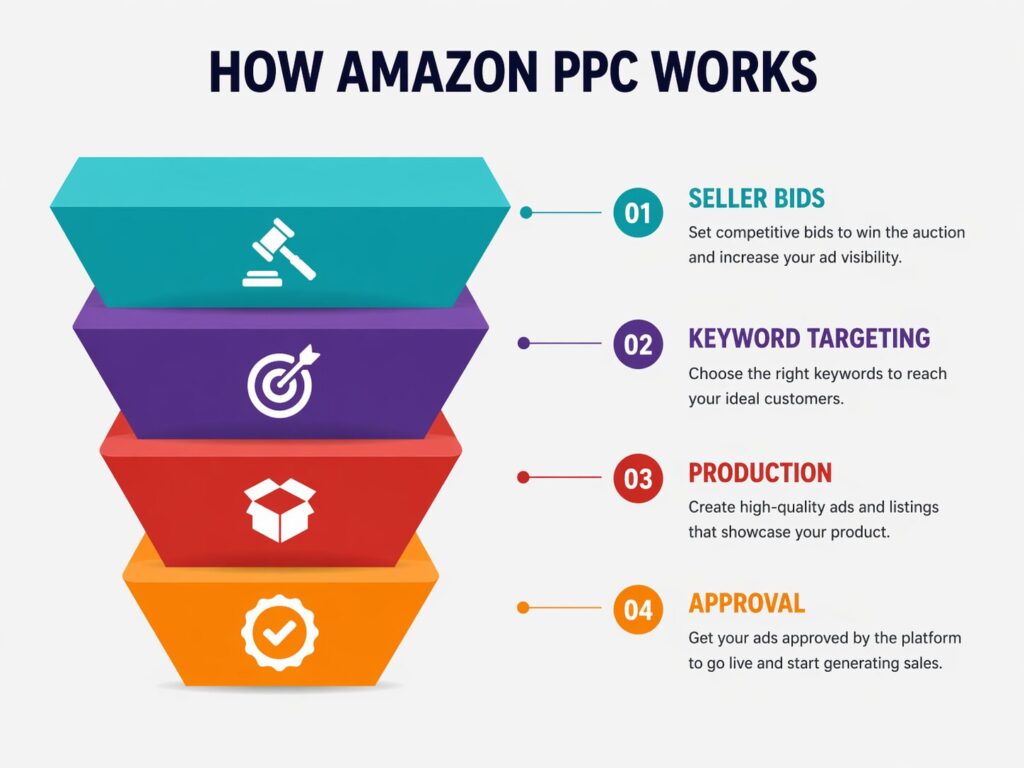
This is why two sellers bidding on the same keyword can experience completely different results. The seller with a better listing, stronger reviews, and more relevant targeting will often win better placements at a lower cost.
1. Setting the Right Campaign Goals
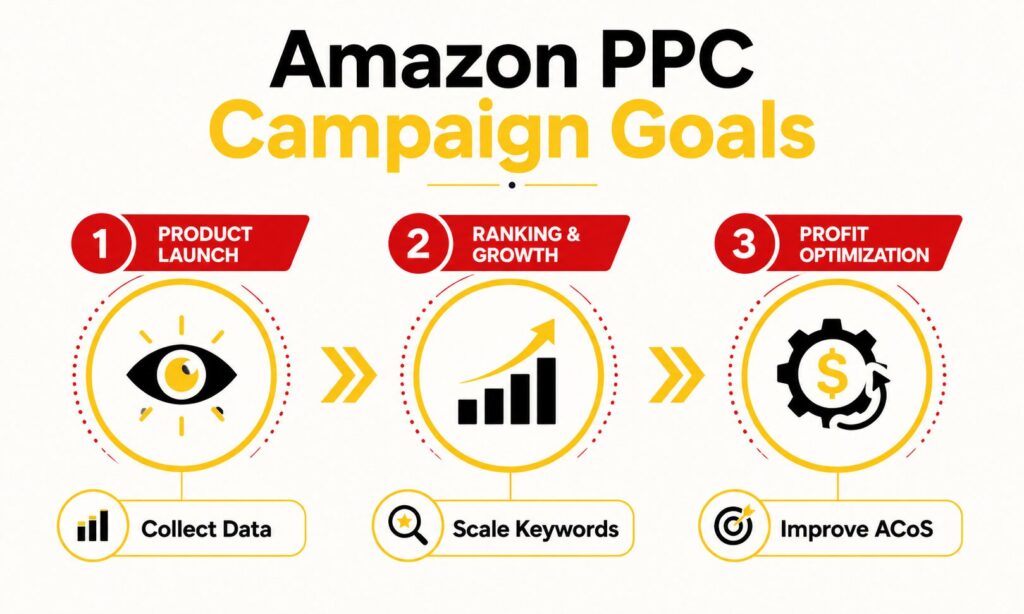
Before launching any campaign, it’s important to define your objective clearly. Amazon PPC is not a one-size-fits-all system. Your strategy should change depending on your business stage.
When launching a new product, the goal is usually visibility and data collection. During this phase, a higher ACoS is acceptable because you are investing in learning and gaining traction.
As the product starts gaining momentum, the focus shifts toward ranking and scaling. At this stage, you aim to increase sales velocity and improve keyword positions.
Finally, in the profitability phase, the goal becomes efficiency. Here, you focus on lowering ACoS and maximizing return on investment.
Understanding these stages helps you avoid one of the most common mistakes, which is expecting low ACoS from the very beginning.
2. Amazon Advertising Strategy Framework
One of the biggest mistakes sellers make with Amazon advertising is expecting every campaign to perform the same way from the start. In reality, successful Amazon Advertising Management follows a structured growth framework where campaign goals evolve as the product gains traction.
Understanding these stages helps sellers allocate budget correctly, avoid unrealistic expectations, and scale advertising profitably.
Stage 1: Product Launch: Visibility & Data Collection
When launching a new product, the main objective is visibility and data collection. At this stage, the product has limited reviews, weak keyword ranking, and little historical performance data.
Advertising during the launch phase focuses on:
- Generating initial sales velocity
- Collecting keyword data from automatic campaigns
- Testing different targeting strategies
- Increasing product visibility in search results
A higher ACoS is usually acceptable during this phase because the goal is learning and traction rather than immediate profitability.
Stage 2: Ranking & Growth: Keyword Dominance
Once the product starts gaining reviews and sales momentum, the advertising strategy shifts toward ranking for high-value keywords.
During this stage, sellers typically:
- Move converting search terms from automatic campaigns into manual campaigns
- Increase bids on profitable keywords
- Focus on Top of Search placements
- Expand targeting into related keyword variations
The goal here is to strengthen organic rankings while continuing to drive sales through advertising.
Stage 3: Profit Optimization: Efficiency & Scaling
In the final stage, the focus moves from aggressive growth to long-term profitability.
At this point, advertising campaigns are optimized to maximize return on ad spend while maintaining strong sales performance.
Typical actions in this stage include:
- Reducing bids on inefficient keywords
- Increasing budget on high-performing campaigns
- Adding negative keywords to eliminate wasted spend
- Improving listing conversion rates to reduce ACoS
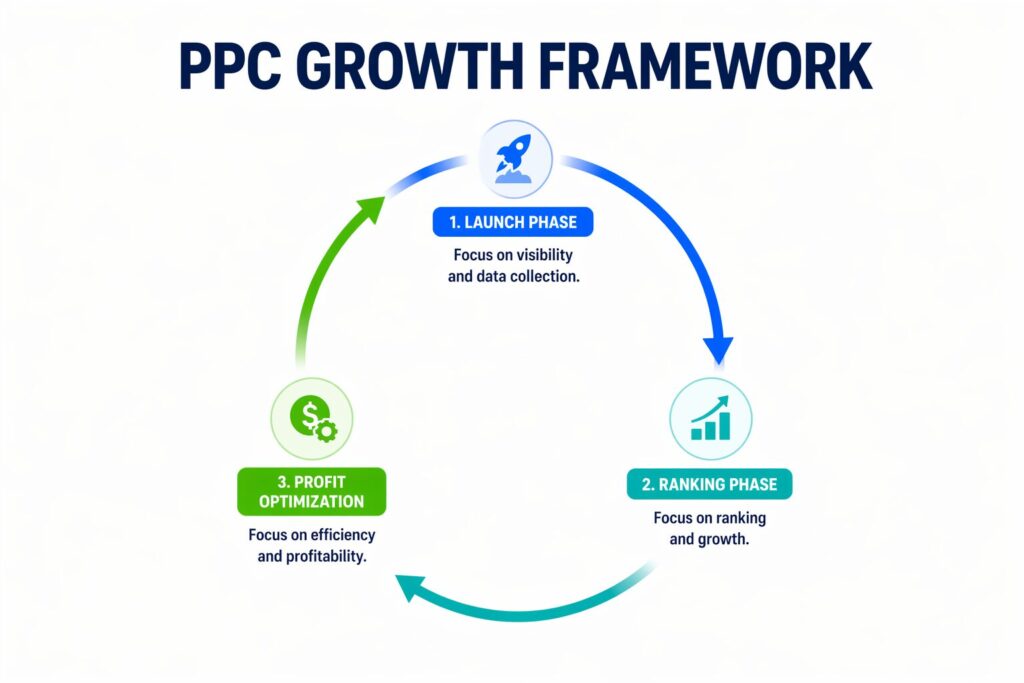
Effective Amazon Advertising Management is not about launching campaigns and leaving them unchanged. It is a continuous process of testing, learning, and optimizing as the product progresses through different growth stages.
| Phase | Focus | Key Actions |
| Launch Phase | Data Collection & Visibility | – Generate initial sales velocity- Collect keyword data from automatic campaigns – Test different targeting strategies – Increase product visibility in search results |
| Growth Phase | Keyword Ranking & Expansion | – Move converting search terms to manual campaigns – Increase bids on profitable keywords – Focus on Top of Search placements – Expand targeting into related keyword variations |
| Profit Phase | Optimization & Scaling | – Reduce bids on inefficient keywords – Increase budget on high -performing campaigns – Add negative keywords to eliminate wasted spend – Improve listing conversion rates to reduce ACoS |
3. Choosing the Right Products to Advertise
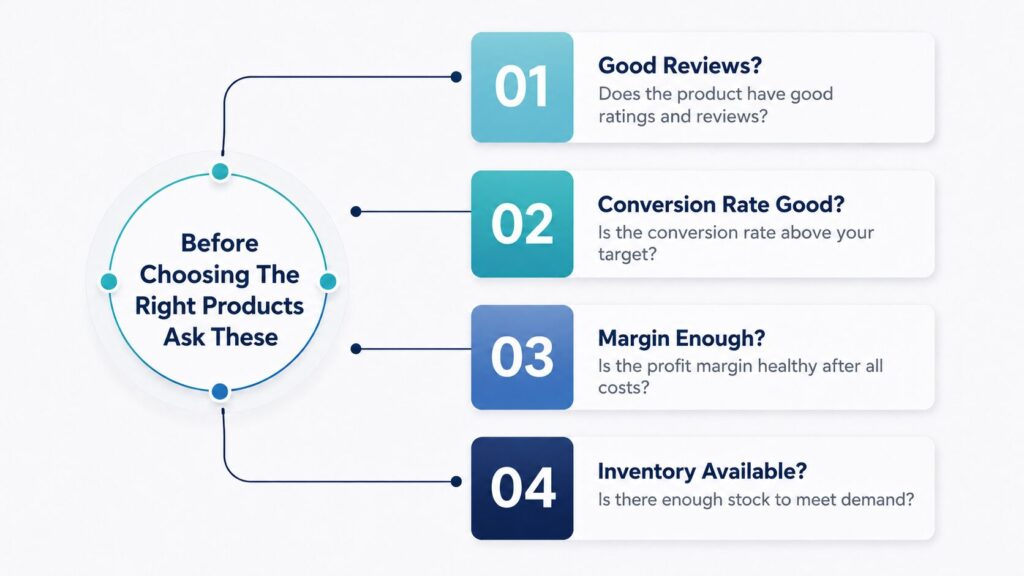
Not every product in your catalog should receive the same level of advertising support.
It’s important to prioritize products that already show strong potential. These typically include items with good reviews, competitive pricing, and a solid conversion rate.
At the same time, you should be cautious about aggressively advertising low-margin products, as ad costs can quickly eat into your profits.
Another critical factor that is often overlooked is inventory. Scaling ads without sufficient stock can lead to lost momentum and ranking drops, so always ensure your inventory levels can support increased demand.
4. Finding the Right Keywords
When setting up an Amazon PPC campaign, one of the first things to understand is how shoppers search for products like yours. This is where keyword research becomes essential.
The right keywords help your ads appear in front of high-intent shoppers, while the wrong keywords can quickly waste your budget on clicks that never convert.
Search volume is an important factor in keyword selection because it indicates how many shoppers search for a specific term each month. However, volume alone is not enough. A keyword should also be relevant to your product, match shopper intent, and have the potential to convert profitably.
Types of Keywords:
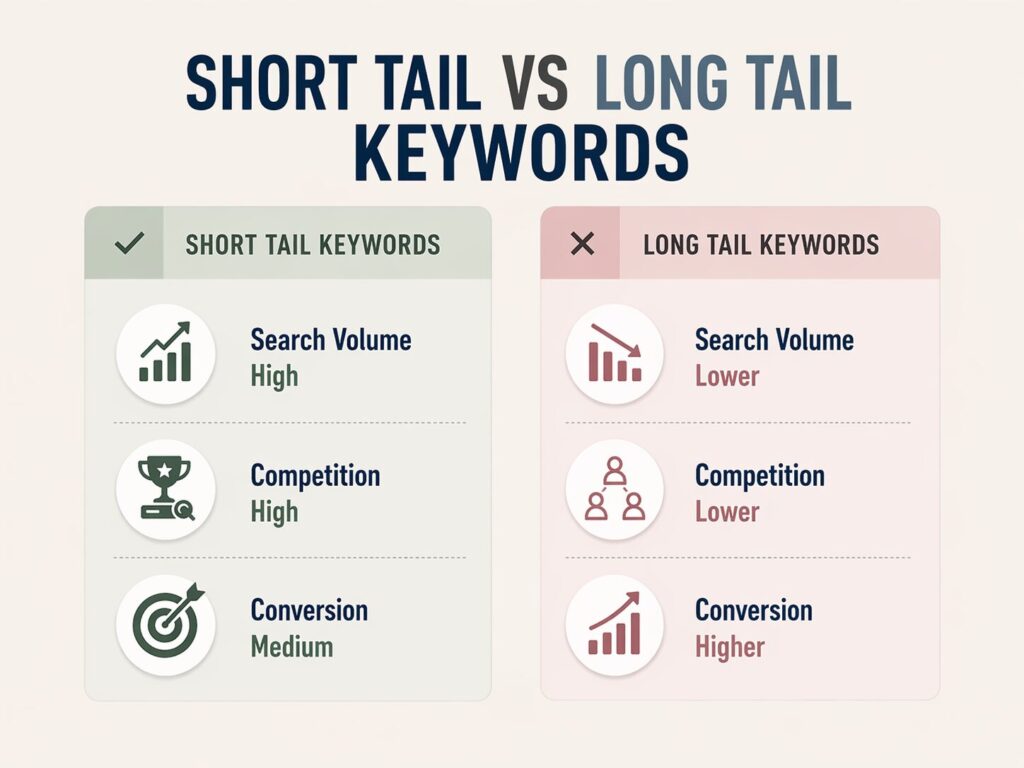
Short-tail keywords: Short-tail Keywords are broad search terms, such as “wireless headphones”. They usually have high search volume, but they are also more competitive and can have higher CPCs.
Long-tail keywords: Long-tail keywords are more specific search terms, such as “best wireless headphones for gaming”. They often have lower search volume, but they usually attract shoppers with stronger purchase intent and can deliver better conversion rates.
High Intent Keywords: Target high-intent keywords that indicate a shopper is ready to make a purchase, such as “buy wireless headphones” or “best ergonomic office chair.” These keywords generally convert better and lead to higher sales.
A strong Amazon PPC strategy should include a balanced mix of short-tail, long-tail, and high-intent keywords to improve both visibility and conversions.
Amazon PPC Keyword Strategy
Amazon PPC also uses different keyword match types to control how closely a shopper’s search term must match your target keyword:
- Broad Match: Ads can appear when the keyword is included in a search term, along with related terms and variations.
- Phrase Match: Ads appear when the search includes your keyword in the same order, with other words before or after it.
- Exact Match: Ads appear when the search term closely matches your keyword exactly.
To build a stronger campaign, sellers should use a mix of broad, phrase, and exact match keywords. Broad and phrase match campaigns help discover new search terms, while exact match campaigns are best for scaling proven keywords that already generate sales.
For a deeper breakdown of keyword match types, search intent, keyword research tools, and how to choose the best terms for Amazon PPC, check out our complete guide on Amazon PPC Keyword Strategy.
Keyword Research Tools
Use tools like Amazon Keyword Planner, Helium 10, or Jungle Scout to identify high-traffic, high-converting keywords. These tools help you discover keywords with the best potential for driving relevant traffic to your product.
Listing Readiness Before PPC
Before investing in Amazon PPC, make sure your listing is ready to convert traffic into sales.
- Title relevance: Make sure the product title is clear, relevant, and aligned with the main keywords shoppers are likely to search.
- Main image quality: Use a high-quality, visually clean main image that stands out in search results and encourages clicks.
- Benefit-led bullet points: Write bullet points that highlight customer benefits and buying reasons, not just technical product specifications.
- Competitive pricing: Ensure the product price is competitive within your category, since overpriced listings often struggle to convert even with strong traffic.
- In-stock status: Confirm that inventory levels are stable enough to support increased traffic and sales without going out of stock.
- Review maturity: Evaluate whether the listing has enough reviews and a strong enough rating to build buyer trust and improve conversion potential.
5. Setting Up Your First Amazon PPC Campaign
Creating efficient Amazon ads is important for attracting clicks and conversions. It’s not just about setting up a campaign, it’s about ensuring that your ad is engaging and optimized to convert visitors into buyers. Here’s how you can create effective ads that stand out:
1. Choose Your Ad Type: Choose the appropriate Amazon ad type based on your goals. Whether you’re using Sponsored Products to drive traffic to individual items, Sponsored Brands for brand awareness, or Sponsored Display to retarget customers, your ad type will influence how you structure your campaign.
Types of Amazon Ads
2. Set a Daily Budget: Create a daily or lifetime budget for your campaign. Make sure it aligns with your business goals and allows enough room for testing and scaling. Starting small, like $20 for new products, and gradually increasing your budget can help you control your ad spend while optimizing for performance.
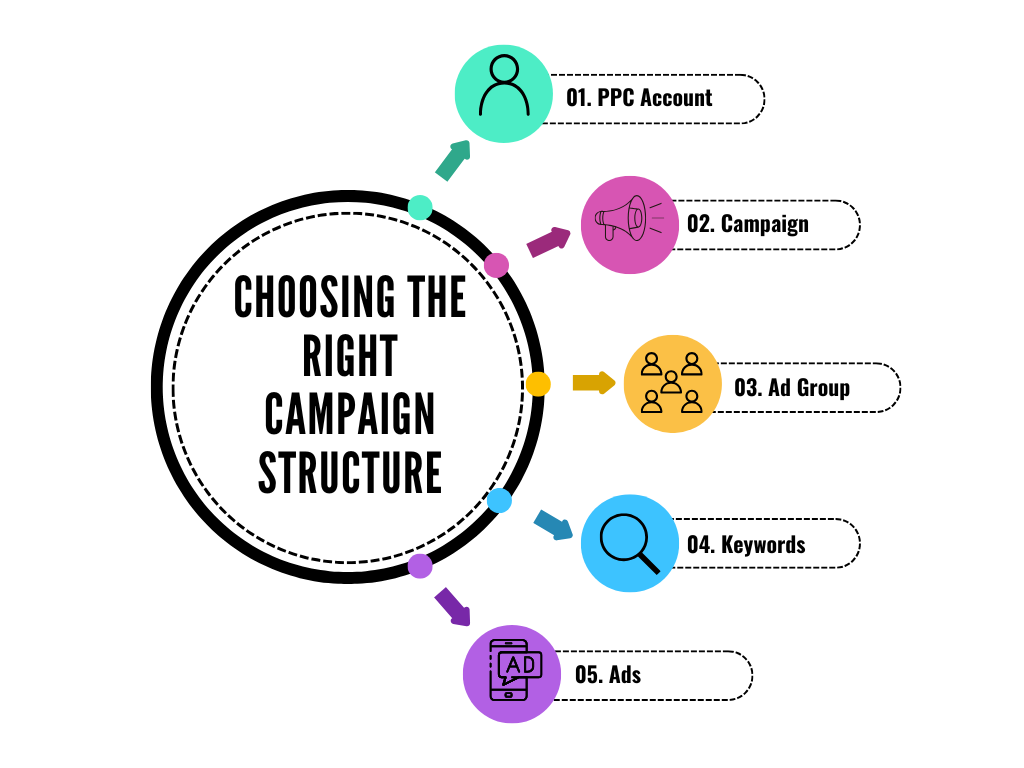
3. Choosing the Right Campaign Structure: Once you find the right keywords, the next step is to choose the appropriate campaign structure. One of the most effective approaches is to separate campaigns based on targeting type.
Automatic vs Manual Campaigns
Automatic and manual campaigns serve different purposes and should be used together strategically.
1. Automatic Campaigns: Automatic campaigns are useful for discovering new keywords because Amazon’s algorithm automatically matches your product to relevant search terms.
These campaigns are primarily used for keyword discovery before moving winning keywords into manual campaigns. .
Automatic Campaign
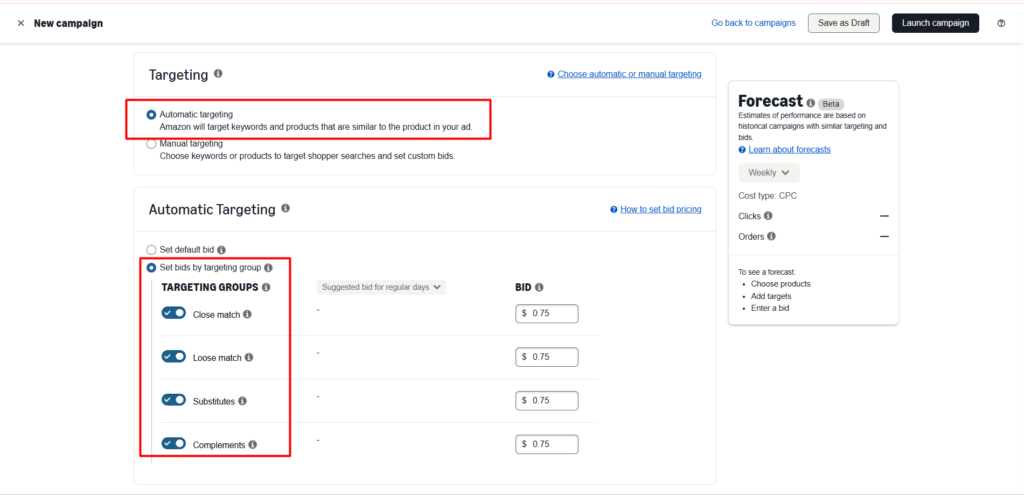
Amazon’s automatic campaigns make it easier to target keywords with high-performance search intent. You can even set up bids by targeting groups. There are four types of targeting groups:
- Close Match: Targets search terms closely related to your product. Ads appear when customer searches for terms related to your product.
- Loose Match: Appears when Amazon targets broader, relevant search terms, increasing visibility, but with less precision.
- Substitutes: Appears when Amazon targets products that can be alternatives to yours, reaching customers interested in similar options.
- Complements: Ads appear when Amazon targets products related to yours, like accessories, to reach customers looking for additional purchases. If you’re selling a smartphone, your ad may appear for phone cases or chargers.
2. Manual Campaigns: Manual campaigns, on the other hand, provide full control over targeting and bidding. Once you identify high-performing search terms from automatic campaigns, they should be moved into manual campaigns, especially under exact match targeting, to maximize efficiency.
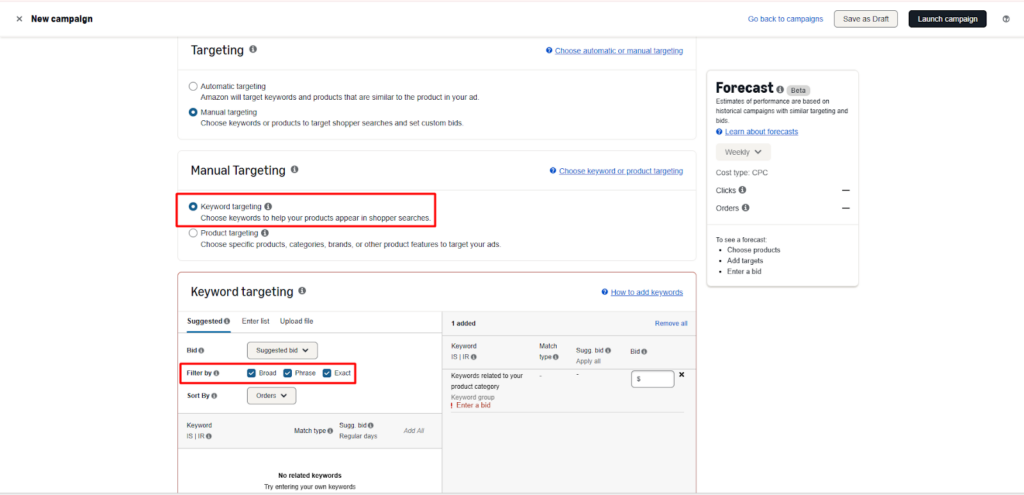
Manual Targeting Campaign
Effective keyword targeting requires a mix of all three types to reach the right audience at different stages of their shopping journey.
For example, creating separate campaigns for broad, phrase, and exact match keywords allows for better control and clearer performance tracking. It’s also important to avoid keyword overlap between campaigns, as this can lead to internal competition and inefficient spending.
3. Create Your Winning Campaign: Once your ad type is selected and your budget is set, it’s time to structure your campaign. Focus on creating high-quality ad creatives, including clear, engaging headlines and high-resolution images that showcase your product’s key features. Give your campaign a clear name that includes the product and targeting details. Choose the products you want to advertise by using their SKUs (Stock Keeping Units).
4. Targeting Options: Amazon offers several ways to target your audience, and choosing the right one is essential for your campaign’s success:
- Product Targeting: Target specific products, categories, or brands that are relevant to your offering. This method is particularly useful for retargeting or showing ads on competitor product pages.
- Automatic Targeting: Let Amazon select keywords for you based on your product’s information, ideal for those new to PPC or testing a new product.
- Audience Targeting: Focus on specific customer segments based on their shopping behavior, interests, or past interactions with your brand.
6. Amazon’s Bidding Strategies & Adjustments
Amazon offers multiple bidding strategies to help you control your ad spend and ensure maximum ad visibility. Your bidding strategy helps control how much you pay for each click and influences your ad placement. Amazon offers three main bidding options:
- Automatic Bidding: Automatic Bidding lets Amazon set your bids for each click based on your campaign goals. This makes it easy to get started without the need to manually adjust individual bids. It is best for new sellers or those who prefer a more hands-off approach while still driving traffic to their products.
- Manual Bidding: With manual bidding, you set the exact bid amount for your ads. You have full control over how much you’re willing to pay per click. Manual Bidding is best for experienced sellers who want to target specific keywords and optimize their campaigns for maximum return.
- Dynamic Bidding: With dynamic bidding, Amazon adjusts your bid in real-time based on the likelihood of your ad converting.
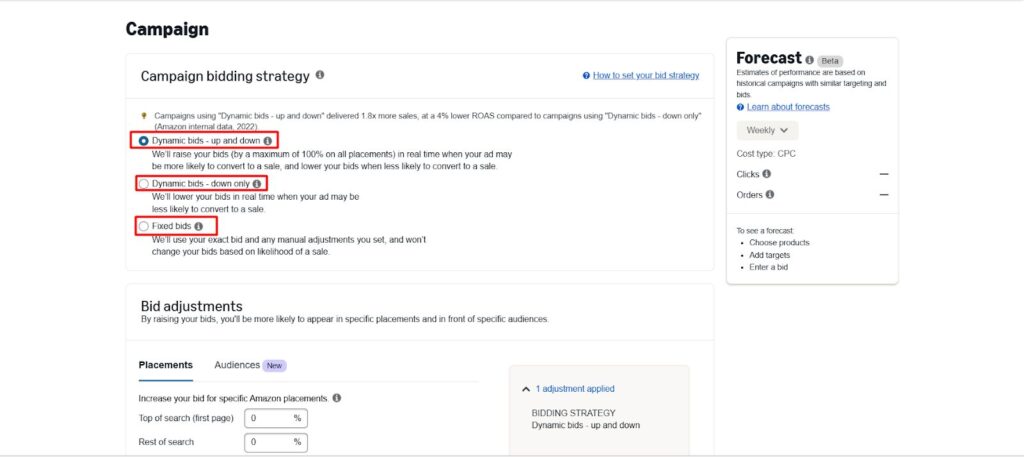
Campaign Bidding Strategy
1. Dynamic Bids – Up and Down: Amazon automatically increases your bid by up to 100% when your ad is more likely to convert, and decreases your bid when it’s less likely to convert.
2. Dynamic Bids – Down Only: Amazon lowers your bid in real-time when your ad is less likely to convert into a sale, but it won’t increase your bid.
For beginners, starting with dynamic bids set to “down only” is a safer approach, as it helps control costs. As you identify winning keywords, switching to “up and down” bidding allows Amazon to increase bids for high-conversion opportunities.
3. Fixed Bids: You set a fixed bid for your ad, and Amazon won’t adjust it based on the likelihood of conversion.
You can adjust your bids for specific placements (e.g., Top of Search, Rest of Search, Product Pages) to increase your ad visibility in high-converting areas. One of the most powerful optimization levers is placement adjustment, especially for Top of Search. This placement typically delivers the highest visibility and conversion rates, making it a key area to focus on when scaling successful campaigns.
By increasing bids for Rest of Search, you can target later pages in search results where competition is lower, making it more cost-efficient. This strategy helps capture long-tail keywords that may have less competition but still lead to valuable sales.
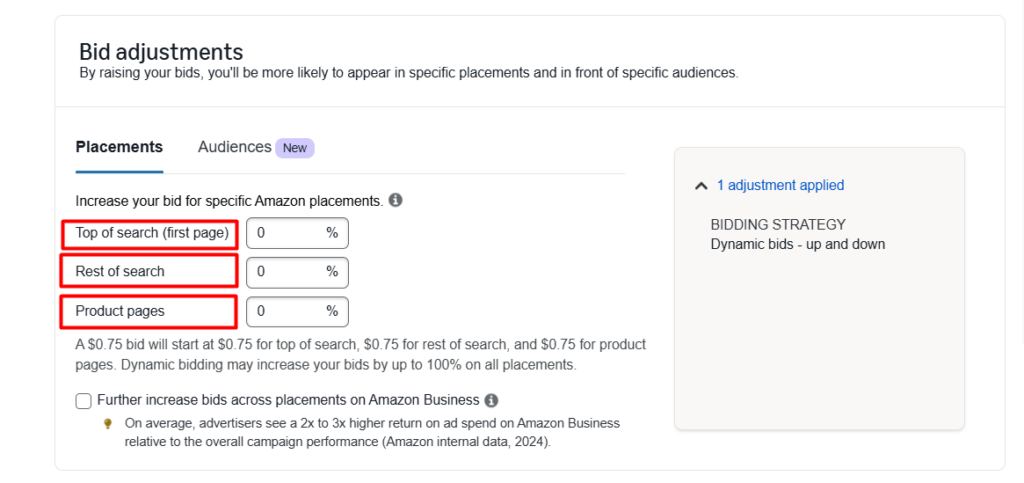
Bid Adjustments
7. Cost, Pricing, Monitoring, and Tracking Performance
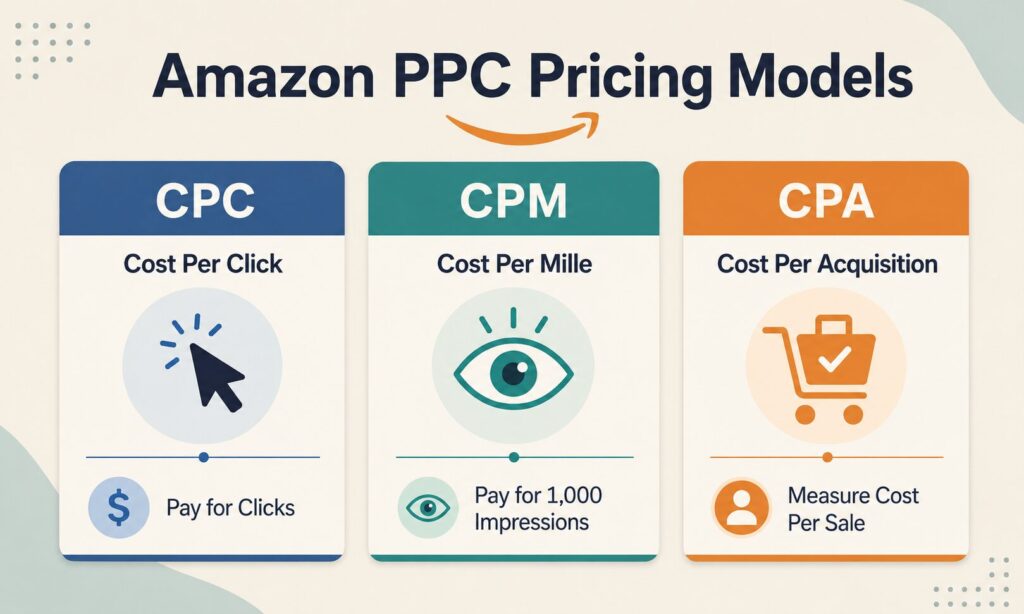
Understanding Amazon advertising cost is essential before you scale your PPC campaigns. Most Amazon ads work on a CPC model, meaning you only pay when a shopper clicks your ad. However, depending on the ad type and campaign goal, sellers may also come across other pricing models such as CPM for impressions and CPA for measuring acquisition cost.
Start with a daily budget that fits your comfort level and increase it gradually as performance data improves. For Sponsored Products ads, many sellers begin with around $10–$20 per day and scale once they identify profitable keywords, strong conversion rates, and manageable ACoS.
Amazon PPC Pricing Models
Amazon advertising costs can vary depending on the ad type and campaign goal. The main pricing models include:
- CPC (Cost-Per-Click): You pay when a shopper clicks your ad. This is the most common model for Sponsored Products and Sponsored Brands.
- CPM (Cost-Per-Mille): You pay for every 1,000 impressions. This is often used for awareness or retargeting campaigns.
- CPA (Cost-Per-Acquisition): This measures how much you spend to generate one sale or customer. It helps sellers understand true advertising efficiency.
To understand how Amazon ad costs are calculated in more detail, including CPC, CPM, CPA, ACoS, ROAS, and budget control, check out our complete guide on Amazon Advertising Cost Explained.
Once your campaigns are live, tracking performance is just as important as setting the budget. The most important Amazon PPC metrics include:
Key Performance Indicators for Amazon Ads:
- ACoS (Advertising Cost of Sale): The percentage of your sales spent on ads. A lower ACoS is preferable.
- ROAS (Return on Ad Spend): How much revenue you earn for every dollar spent on ads.
- CTR (Click-Through Rate): Measures how often people click your ads after seeing them.
- Conversion Rate: The percentage of clicks that result in a sale.
- TACoS (Total Advertising Cost of Sale): Measures ad spend against total revenue, providing a broader view of how advertising impacts your overall business performance.
These metrics are most useful when read together rather than in isolation. For example, a low CTR with a decent conversion rate usually means the product converts once shoppers click, but the ad may have weak search visibility or an ineffective main image. A high CTR with a low conversion rate often suggests an issue with the listing itself, such as pricing, reviews, or content quality. If TACoS declines over time, it can be a positive sign that advertising is contributing to stronger organic sales growth.
Regularly review ad reports and use the data to adjust bids, targeting, and keywords. This ongoing process helps improve campaign performance, reduce wasted spend, and maximize overall ROI.
Amazon PPC Optimization Strategies
Launching campaigns is only the beginning. The real results come from continuous optimization.
In the launch phase, review search terms and wasted spend weekly. Once campaigns become more stable, bid adjustments and targeting reviews can usually be done every two weeks or monthly, depending on campaign volume and data availability.
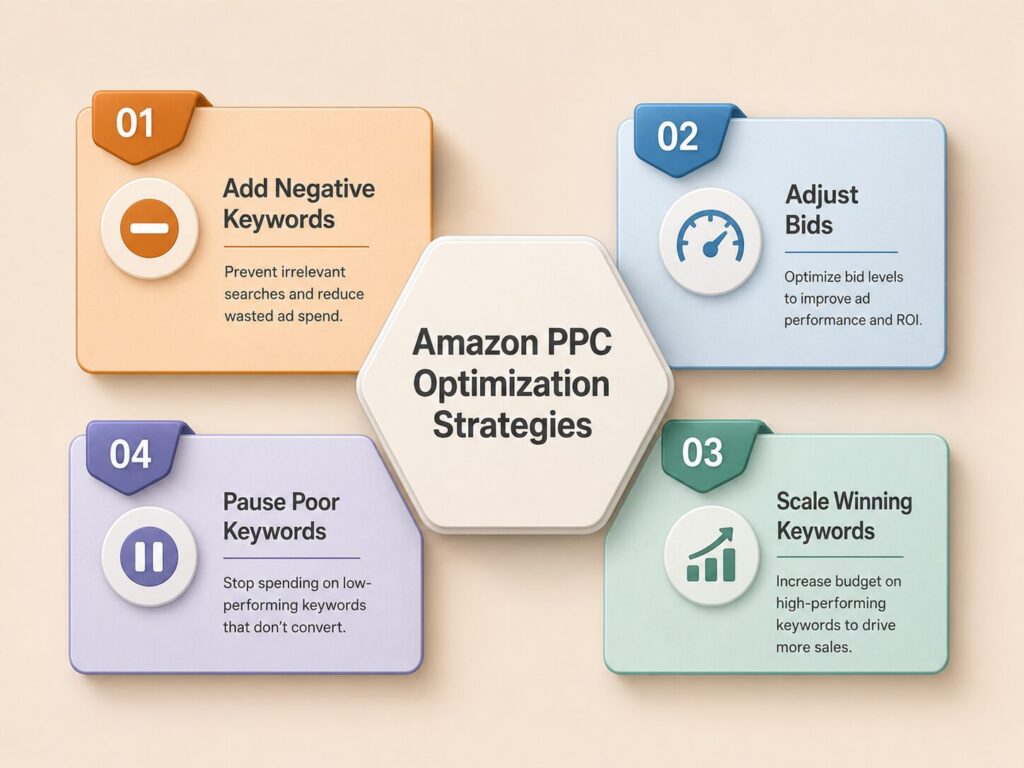
Regularly review search term reports, add negative keywords to prevent wasted spend, and adjust bids based on performance. High-performing keywords should be scaled, while underperforming ones should be reduced or paused.
Consistent optimization is a key to improving ad performance, increasing sales, and maximizing ROI. In many Amazon accounts we audit, sellers waste between 30–40% of their ad spend due to poor keyword structure, missing negative keywords, and inefficient campaign organization. Here are the optimization strategies to help you get the most out of your ad spend:
1. Add Negative Keywords: Regularly add negative keywords to avoid wasting ad spend on irrelevant searches and improve targeting.
2. Adjust Bids: Regularly review your ad performance and adjust bids for high-performing keywords to increase visibility and reduce bids on underperforming ones to maximize ROI.
3. Scale Winning Keywords: Focus on scaling the keywords that are driving the most conversions, moving them to manual campaigns to optimize performance.
4. Pause Poor Keywords: Continuously monitor keyword performance and pause underperforming keywords that aren’t generating the desired results.
Regularly monitor metrics and optimize actions to ensure your PPC campaigns are continually improving and aligned with your business goals. By focusing on these strategies, you can increase efficiency, drive more sales, and reduce wasted ad spend.
Check out our full guide on Amazon PPC Optimization Strategy to learn how to cut wasted spend, improve ACoS, scale winning keywords, and build smarter campaigns using real data.
Amazon PPC for Product Category
When creating Amazon PPC campaigns, targeting by product category is a powerful way to reach a broad yet relevant audience. By targeting specific categories, you can ensure your ads appear to customers interested in products like yours, even if they’re not directly searching for your specific brand or product.
This approach is particularly useful for reaching customers who are already browsing similar items. By targeting competitor listings, especially those with weaker reviews or poor optimization, you can position your product as a better alternative.
Using filters such as price range, brand, and ratings can further refine your targeting and improve results. How it Works:
- Category Targeting: It allows you to show your ads on the pages of related products within the same category. This helps you get your products in front of shoppers who are already browsing similar items and might be interested in your offering.
- Ideal for Complementary Products: If you’re selling phone accessories, for example, targeting the electronics category allows your ads to appear alongside other electronics or mobile devices, helping to increase visibility to relevant customers.
Common Amazon PPC Mistakes to Avoid
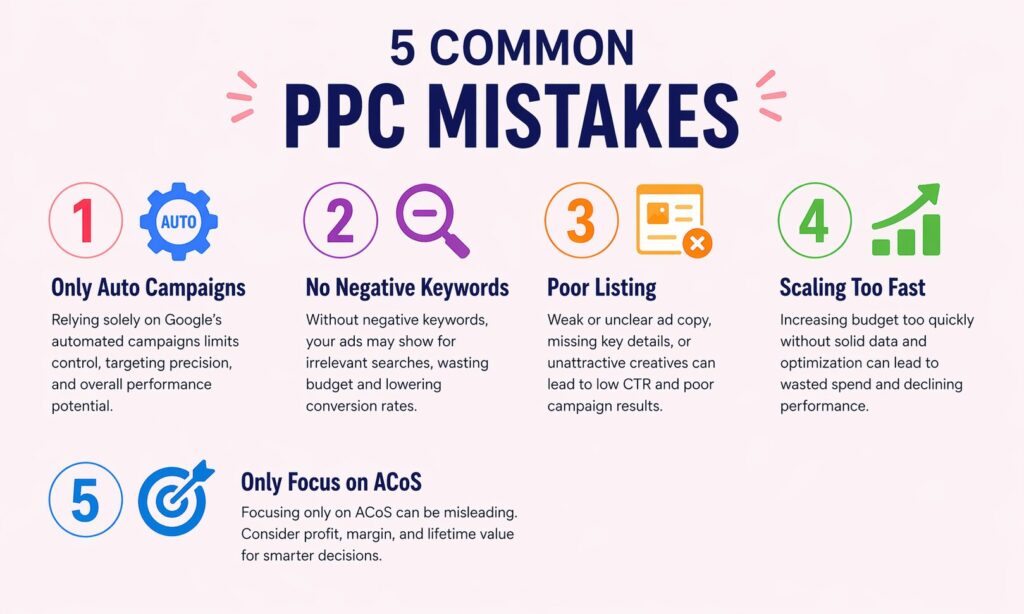
Many sellers struggle not because PPC doesn’t work, but because of avoidable mistakes.
Relying only on automatic campaigns, ignoring negative keywords, and running ads for poorly optimized listings are some of the most common issues. Others include scaling too aggressively without data and focusing only on lowering ACoS instead of growing overall sales.
Avoiding these mistakes can significantly improve your results.
Scaling Your Campaigns
Once you identify what works, the next step is scaling.
This involves increasing budgets on profitable campaigns, isolating high-performing keywords, and expanding into additional keyword variations. Improving visibility in high-converting placements like Top of Search can further accelerate growth.
Scaling should always be done strategically to maintain profitability while increasing sales.
Hiring an Agency vs Freelancer
As your business grows, you may consider outsourcing your PPC management.
Agencies are typically better suited for larger brands that require full-service management, while freelancers can be a more cost-effective option for smaller businesses or specific tasks. Before hiring, it’s important to review case studies and avoid anyone who promises guaranteed results or fixed ACoS, as PPC performance depends on multiple variables.
If you want expert support with Amazon Advertising Management, our team helps brands optimize PPC campaigns for profitability.
When Should I Consider Hiring an Amazon PPC Agency?
The decision regarding hiring an Amazon PPC agency depends on your business model and stage.
You should hire one if you are a brand that needs specialist help in a specific area, like PPC or creatives. It also makes sense for omnipresent brands with a strong business off-Amazon and that want to hand off the Amazon channel to a dedicated team.
- Specialized Help: If you’re a brand that needs expert help in specific areas like PPC management or ad creatives, an agency can offer the experience and expertise you may not have in-house.
- Omnipresent Brands: If your business is well-established off-Amazon and you want to fully hand off your Amazon advertising efforts to a dedicated team, an agency can help manage the complexities of Amazon.

Conclusion
Amazon Advertising Management is a powerful tool that can significantly boost your product visibility, drive traffic, and increase sales on the platform. By understanding the different ad types, selecting the right keywords, setting realistic budgets, and continuously optimizing campaigns, you can achieve meaningful results.
Whether you’re a beginner or an experienced seller, mastering PPC on Amazon is essential for long-term success. However, success does not come from simply launching campaigns. It requires continuous testing, analysis, and optimization.
Amazon PPC is not a set-and-forget system. It’s a compounding process where small improvements over time lead to significant results.
With the right strategies in place, you’ll not only enhance your ad performance but also build a stronger brand presence, ensuring that your products stand out in a crowded marketplace. Effective Amazon PPC management is an ongoing process of testing, analyzing, and refining, but with the right approach, it can be a game-changer for your business growth.
Frequently Asked Questions
1. What is Amazon PPC?
Amazon PPC (Pay-Per-Click) is an advertising model where sellers pay a fee each time their ad is clicked. It helps increase product visibility, drive traffic, and boost sales on Amazon.
2. What is Amazon Advertising Management?
Amazon Advertising Management is the process of creating, optimizing, and managing pay-per-click (PPC) campaigns on Amazon to increase product visibility and drive sales.
3. How does Amazon PPC work?
Amazon PPC operates as an auction system. Ads are displayed based on bid amount, relevance to the search query, and the likelihood of conversion. Well-optimized listings often outperform higher bids.
4. What are the types of Amazon Ads?
The main ad types are Sponsored Products, Sponsored Brands, and Sponsored Display. Each serves different goals like driving sales, building brand awareness, or retargeting potential customers.
5. Why is keyword research important for Amazon PPC?
Targeting the right keywords ensures your ads reach high-intent shoppers. Using tools like Helium 10 or Jungle Scout helps find keywords with high traffic and strong conversion potential.
6. What is Amazon PPC optimization?
Amazon PPC optimization involves continuously improving campaigns by adjusting bids, targeting high-performing keywords, adding negative keywords, and testing ad creatives to maximize ROI.
7. How much does Amazon PPC management cost?
The cost of Amazon PPC management varies, typically depending on factors like campaign size, complexity, and the agency’s pricing model, but most agencies charge a monthly fee or a percentage of ad spend.
8. How do I choose the right products for Amazon PPC?
Prioritize products with good reviews, competitive pricing, strong conversion rates, and adequate inventory. Avoid heavily promoting low-margin or poorly performing products.
9. What is the difference between automatic and manual campaigns?
Automatic campaigns let Amazon select keywords for you, ideal for discovery. Manual campaigns give you full control over keywords, targeting, and bids, ideal for scaling and efficiency.
10. How much should I budget for Amazon PPC?
Start with a daily budget you’re comfortable with, typically $10–$20 per day for new products. Gradually increase the budget as campaigns show profitable results.
11. Should I hire an Amazon PPC agency?
If you lack the time, expertise, or resources to manage PPC campaigns effectively, hiring an Amazon PPC agency can help optimize your ads for better results and higher ROI.
12. When should I hire an Amazon PPC expert or agency?
Hire a PPC expert or agency if you lack time, experience, or want to scale efficiently. Agencies suit larger brands needing full-service management, while freelancers can help with specific tasks.
13. What are common Amazon PPC mistakes to avoid?
Avoid relying only on automatic campaigns, ignoring negative keywords, running ads for poorly optimized listings, scaling too quickly, or focusing solely on lowering ACoS instead of increasing overall sales.
How Ecomclips Drives Real Amazon PPC Results
At Ecomclips, we focus on results, not promises. Our data-driven approach combines strategy, optimization, and continuous improvement to help your Amazon listings rank higher, convert better, and grow your brand.
- Deep Keyword Research: We identify high-intent, long-tail, seasonal, and high-converting keywords aligned with buyer behavior and PPC campaigns to maximize visibility.
- Conversion-Optimized Listings: Titles, bullets, descriptions, and backend fields are fully rewritten to boost discoverability, engagement, and purchase intent, while staying Amazon-compliant.
- High-Quality Images & A+ Content: Professional images, lifestyle photos, infographics, and Enhanced Brand Content create trust, engagement, and higher conversion rates.
- SEO + PPC Integration: Paid traffic accelerates organic ranking, while PPC insights refine keywords and listings, ensuring every click supports long-term growth.
- Weekly Audits & Optimization: We monitor rankings, CTR, and conversions, continuously identifying gaps and opportunities to stay ahead of algorithm changes.
With Ecomclips, sellers get transparent, data-driven strategies that turn clicks into measurable growth, combining keyword research, optimized content, A+ visuals, and PPC integration for maximum results.
Need Help Managing Amazon Ads?
Managing Amazon PPC campaigns requires continuous testing, keyword optimization, and bid adjustments. If you want expert help with Amazon Advertising Management, our team at Ecomclips helps brands scale profitable campaigns with data-driven strategies.
Contact us today at info@ecomclips.com or book an appointment with our e-commerce experts to start selling smarter on both marketplaces.
Watch how we help sellers maximize their Amazon PPC for better sales and ROI
Top 5 Amazon PPC Campaigns You Must Run to Win in 2026
Amazon Product Launch PPC Strategy in 2026 | How to Structure PPC Campaigns
Amazon PPC GUIDE 2026: Step-by-Step Strategies to Boost Sales & Lower ACoS
Most Amazon Sellers Forget This PPC Strategy on Prime Day!
Fix Your Amazon PPC Campaigns in 5 Minutes (Quick & Proven Method)
Ecomclips: Your Complete eCommerce Solution Under One Umbrella
At Ecomclips, we bring every eCommerce service you need under one roof — strategy, operations, design, marketing, and growth, all seamlessly connected to help your brand thrive across every marketplace.
Since 2012, we’ve been helping businesses of all sizes launch, scale, and dominate online. From Amazon, Walmart, eBay, and Etsy to Shopify and WooCommerce, our team of marketplace experts, designers, developers, and marketers works together to deliver measurable results.
Our services span the full eCommerce lifecycle:
- Account Setup & Product Listing Management: We handle registrations, compliance, and product data optimization across all marketplaces.
- Amazon Optimization Service: From keyword-rich titles and A+ content to PPC campaigns and storefront design, we craft listings that convert.
- Creative Design & Content Production: A+ visuals, infographics, brand stores, and product videos built to boost engagement.
- Advertising & PPC Management: Smart, data-driven ad strategies for Amazon, Walmart, and Google that maximize ROI.
- Web Development & Store Design: Shopify, WooCommerce, and Magento websites built for performance and conversion.
- Data Management & Automation: Streamlined product feeds, catalog syncing, and inventory control for effortless scalability.
- Customer Service & Order Fulfillment: End-to-end support that enhances customer satisfaction and builds long-term loyalty.
- Analytics & Growth Strategy: Real-time insights and ongoing optimization to ensure consistent, profitable growth.
Whether you’re launching a new store or managing multiple global marketplaces, Ecomclips acts as your single strategic partner, simplifying complexity and driving sustainable revenue growth.