

If you’re selling on Amazon and not winning the Buy Box on your own product listings, you’re essentially handing your revenue to competitors—sometimes on products you sourced, photographed, and listed yourself.
Here’s the frustrating reality: you can have the best product, perfect images, and glowing reviews, but if you don’t hold the Buy Box, most customers will never even see your offer. They’ll click “Add to Cart” and buy from whoever controls that coveted white box on the right side of the page.
The problem gets worse when you realize that most advice about winning the Buy Box is outdated. Amazon’s algorithm has evolved significantly, especially in the last 18 months. What worked in 2023 or early 2024 might be costing you the Buy Box today without you even knowing why.
This guide breaks down what actually matters today and how sellers can realistically improve their chances of winning more Featured Offer share. We’ll show you exactly what Amazon’s algorithm rewards in 2026, what’s changed recently, and most importantly what you can actually do about it, even if you’re a newer seller.
What Is the Amazon Buy Box or Featured Offer?
Let’s start with the basics because there’s already confusion in the terminology.
The Amazon Buy Box (now officially called the Featured Offer by Amazon) is that prominent white box on every product detail page that contains two critical buttons: “Add to Cart” and “Buy Now.”
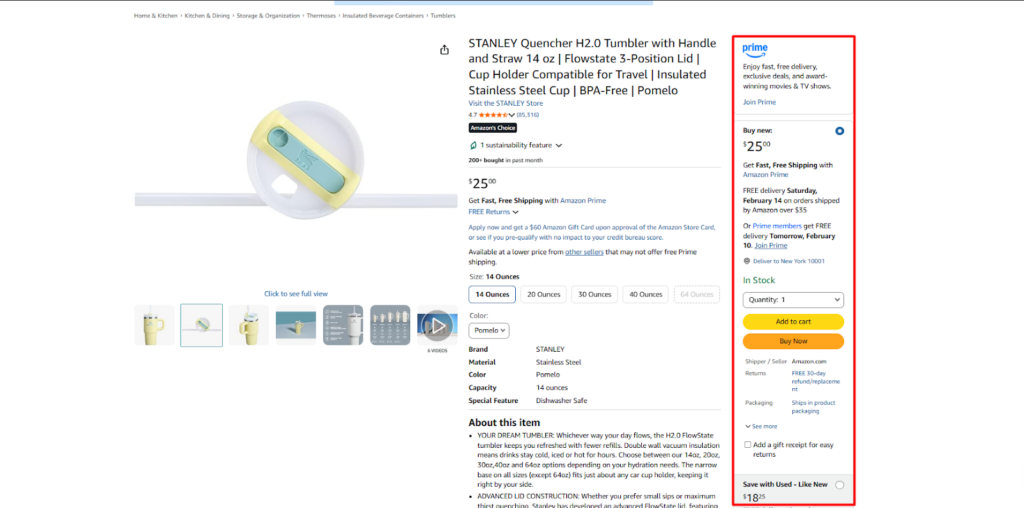
When a customer clicks either of these buttons, they’re purchasing from whichever seller currently holds that Featured Offer position. Not from you. Not from the seller with the best price necessarily. From whoever Amazon’s algorithm has chosen to feature in that moment.
Here’s why this matters so much: Studies consistently show that 80-90% of all Amazon sales go through the Buy Box. The remaining 10-20% come from customers who deliberately click “Other Sellers” to compare options, and most shoppers never do this, especially on mobile devices.
Think about your own shopping behavior. When you’re buying on Amazon, how often do you click around looking for alternative sellers? Probably almost never. You trust that Amazon is showing you a good option, and you click “Add to Cart.”
That’s exactly what your customers do too.
Amazon officially rebranded “Buy Box” to “Featured Offer” in their documentation and Seller Central interface, but you’ll see both terms used interchangeably throughout Amazon’s ecosystem. In reports, help documents, and even among Amazon staff, “Buy Box” is still common. They mean the exact same thing, we’ll use both terms in this guide to help you recognize them wherever you encounter them.
Why Many Sellers Lose the Buy Box
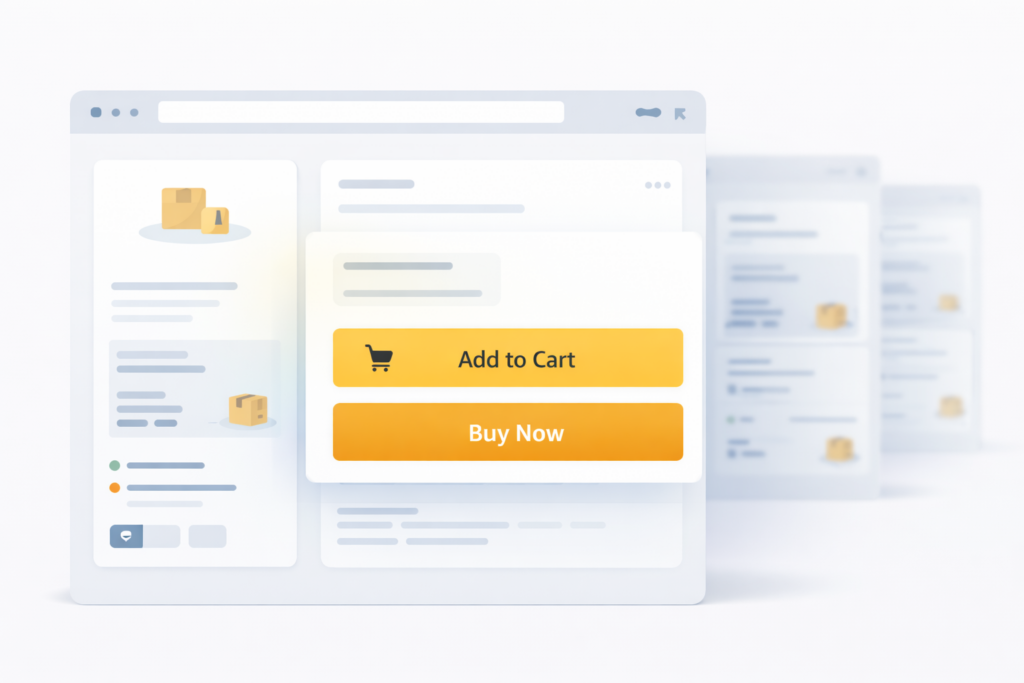
This is where it gets painful for many sellers: you can lose the Buy Box on your own product listings. Products you created, sourced, or have brand rights to.
Here’s how this happens:
- Third-party resellers find your product: Maybe they bought it at retail, found it through a distributor, or sourced it overseas. They create a listing (or match to your existing listing), price it competitively, and suddenly they’re rotating into YOUR Buy Box.
- Your pricing isn’t as competitive as you thought: You’re looking at your product price, but Amazon’s algorithm evaluates total landed price, your product price plus shipping. A seller with a slightly higher product price but lower shipping might beat you.
- Your fulfillment method puts you at a disadvantage: If you’re using Merchant Fulfilled (FBM) and competing against FBA sellers, you’re starting from behind unless your delivery speed and metrics are exceptional.
- Your account health metrics are borderline: You might be within Amazon’s stated thresholds, but if you’re hovering near the limits while your competitors have pristine metrics, the algorithm notices.
- You’re a newer seller with limited history: Even if you’re doing everything right on paper, Amazon’s algorithm hedges against sellers without established track records. This creates a frustrating catch-22 for new sellers: you need sales to build authority, but you need authority to win the Buy Box that generates sales.
The good news? Each of these issues is fixable once you understand what’s actually happening. Let’s start with knowing where you stand.
How to Check Amazon Buy Box or Featured Offer Eligibility
Before you can win the Buy Box, you need to know if you’re even eligible. Amazon doesn’t make this perfectly clear, but here’s where to look:
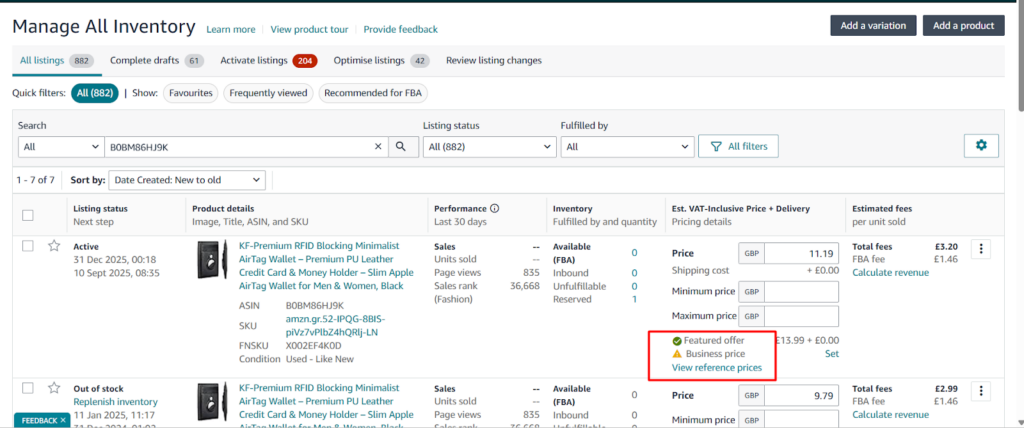
Method 1: Manage Inventory (Most Reliable)
- Go to Inventory → Manage Inventory in Seller Central
- Look for the “Featured Offer Eligible” column
- If you don’t see this column, click the Settings icon (gear icon) in the top right of your inventory table and enable it
You’ll see one of these statuses:
- Eligible: You meet the requirements and can win the Buy Box
- Not Eligible: You don’t currently meet Amazon’s requirements
- Ineligible: Your account or listing has issues preventing eligibility
Method 2: Account Health Dashboard
- Go to Performance → Account Health
- Scroll to the Product Policy Compliance section
- Check for any Featured Offer restrictions or warnings
Method 3: Featured Offer Eligibility Report
Some seller accounts have access to detailed eligibility reports under Reports → Fulfillment. This availability depends on your account type and category.
Pro tip: Don’t rely on just one method. Amazon has been reorganizing Seller Central, and the exact location of these tools sometimes shifts. The core information remains the same: you need to know if you’re eligible, and if you’re eligible but not winning, why.
The Core Factors That Determine Amazon Buy Box Eligibility in 2026
Amazon’s algorithm evaluates five major factors when deciding who wins the Featured Offer. Understanding these isn’t just helpful—it’s essential if you want to consistently win the Buy Box.
1. Total Landed Price
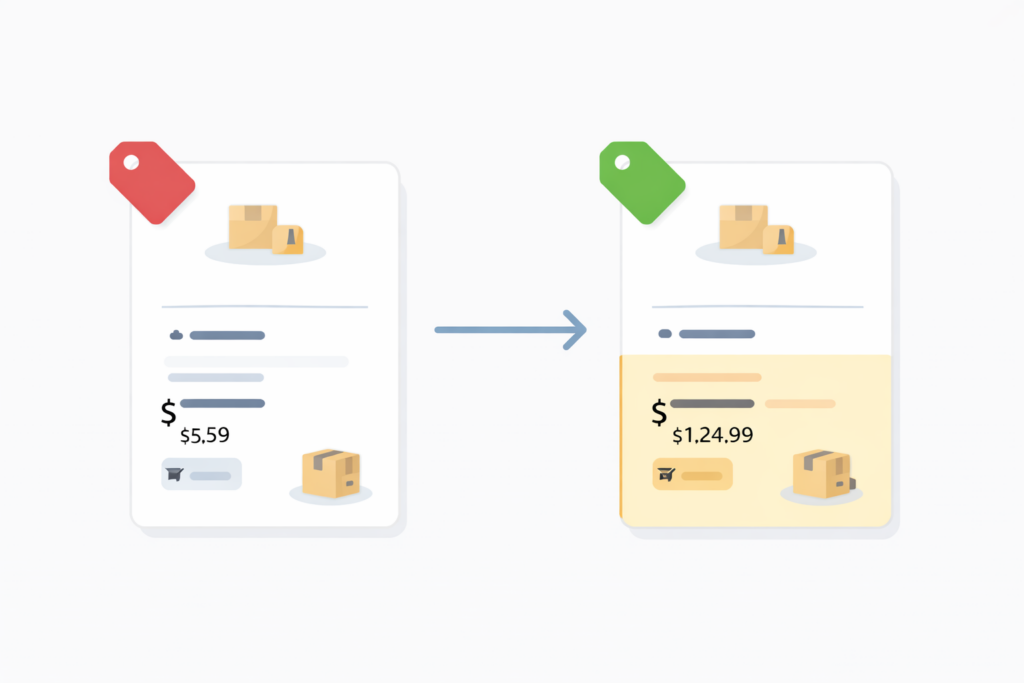
This is where most sellers get tripped up: Amazon doesn’t just look at your product price. The algorithm evaluates your total landed price—product price plus shipping cost.
Example: You’re selling a kitchen gadget for $24.99 with $4.99 shipping (total: $29.98). Your competitor prices it at $26.99 with free shipping (total: $26.99). Even though your product price is lower, they have a better landed price and will likely win more Buy Box time.
What’s changed in 2026: The competitive pricing window has gotten tighter. You used to be able to price a few percentage points above the lowest total landed price and still win decent Buy Box rotation. That tolerance has narrowed significantly.
In practical terms: if the lowest qualified offer has a landed price of $30, you might have been fine at $31.50 in 2023. In 2026, that same margin could cost you most of your Buy Box time. The algorithm now favors offers within a much tighter band around the lowest price.
What this means for you:
- Monitor your total landed price, not just your list price
- If you’re using FBM with shipping charges, calculate whether offering “free shipping” with a higher product price might be more competitive
- Watch for Amazon’s “unfair pricing” flags—if your price looks anomalous compared to the category or historical data, Amazon may suppress the Buy Box entirely, even if you’re the only seller
Action step: Check your product’s current lowest landed price weekly. If you’re more than 3-5% above it, you’re likely losing significant Buy Box share.
2. Fulfillment Method & Delivery Speed (FBA vs FBM vs SFP)
Let’s be direct: Fulfillment by Amazon (FBA) gives you the clearest path to Buy Box dominance. Amazon trusts its own fulfillment network, and that trust translates directly into algorithmic preference.
But here’s what’s changed, and it matters if you’re running FBM or considering your fulfillment strategy:
FBM sellers can now compete for the Buy Box if they deliver on two conditions:
- Fast delivery speed (1-2 day shipping to major population centers)
- Excellent metrics (tracking, on-time delivery, low defects)
Seller Fulfilled Prime (SFP) sits in between—you fulfill orders yourself but meet Amazon’s Prime delivery standards. This can win Buy Box time comparable to FBA if your operation is tight.
What’s new in 2026: Amazon’s algorithm now weights regional delivery speed more heavily than overall average delivery time. An FBM seller who can deliver next-day to major metros like New York, Los Angeles, Chicago, and Dallas may outperform an FBA seller whose inventory is staged in a single fulfillment center far from those markets.
Real example: If you’re FBM in New Jersey and can reliably deliver next-day to the entire Northeast corridor, you might win strong Buy Box share in that region even against FBA competitors. But customers in California might see the FBA seller’s offer more frequently.
What this means for you:
- If you’re using FBA, check your inventory placement. Having stock in multiple fulfillment centers across the country matters more than it used to.
- If you’re using FBM, audit your delivery speeds by region. Where can you actually deliver in 1-2 days? That’s where you’ll win Buy Box time.
- If you’re debating between FBA and FBM, understand that FBA is still the easier path—but it’s no longer the only path if you can match delivery speed and metrics.
Action step: Run a delivery speed audit. Pull your last 100 orders and map where you delivered in 1 day, 2 days, and 3+ days. This shows you where you’re competitive.
3. Account Health Metrics That Matter
Your account health metrics function as both gates and ranking signals. Fall below Amazon’s thresholds and you’ll lose Buy Box eligibility immediately. Hover near those thresholds and you’ll lose Buy Box rotation to sellers with stronger metrics.
Here are the critical metrics with Amazon’s stated thresholds and what actually matters:
Order Defect Rate (ODR) – Must stay below 1%
This combines:
- Negative feedback
- A-to-Z Guarantee claims
- Credit card chargebacks
Why it matters: This is your most important metric. Amazon views ODR as a direct measure of customer satisfaction. An ODR above 1% can trigger account suspension, not just Buy Box loss.
Real target: Don’t aim for “below 1%.” Aim for below 0.5%. Sellers with ODR under 0.3% have measurably better Buy Box performance.
Late Shipment Rate (LSR) – Must stay below 4%
Measures orders you shipped after the expected ship date (for seller-fulfilled orders).
Why it matters: Late shipments create delivery delays and customer frustration. Amazon penalizes this heavily.
Real target: Stay below 2%. Sellers consistently under 1% win more Buy Box time, especially in competitive listings.
Pre-Fulfillment Cancel Rate – Must stay below 2.5%
Tracks orders you canceled before shipping.
Why it matters: Cancellations signal inventory problems or listing inaccuracies. Too many cancellations make Amazon question your reliability.
Real target: Under 1% is ideal. Frequent cancellations on specific ASINs can trigger listing-level Buy Box suppression even if your account-wide rate is acceptable.
Valid Tracking Rate (VTR) – Must be at least 95%
Percentage of packages shipped with valid tracking that Amazon can verify.
Why it matters: Amazon needs tracking data to evaluate your delivery performance. Without it, the algorithm can’t confidently place you in the Buy Box.
Real target: 98%+ if you’re running FBM. Anything less suggests operational problems.
On-Time Delivery Rate (OTDR) – Target 97%+
Measures whether orders arrive by the promised delivery date.
Why this matters more in 2026: Amazon introduced OTDR as an explicit account health metric in 2024, but its impact on Buy Box rotation has increased significantly. This isn’t just about avoiding penalties—it’s actively weighted in Buy Box decisions.
Real target: 97% or higher. Sellers with 98%+ OTDR are seeing noticeably better Buy Box performance, especially in categories with tight competition.
Customer Response Time
While no longer emphasized as a standalone metric the way it once was, responding to customer messages within 24 hours remains best practice and contributes to your overall account health rating.
The reality: Meeting these thresholds doesn’t guarantee Buy Box placement. But missing them almost certainly costs you the position. Think of metrics as qualifying rounds—you need to clear them to compete, but the real competition happens among sellers who’ve already qualified.
Action step: Review your Account Health dashboard weekly. If any metric is trending toward the threshold, stop and fix the underlying problem before it costs you the Buy Box.
4. Seller History, Authority & Trust Signals
This is the factor that frustrates new sellers most—and it’s become more influential in 2026.
Amazon’s algorithm increasingly weighs:
- Account age and tenure
- Total feedback volume (not just recent feedback)
- Historical return rates across your catalog
- Category experience (how long you’ve been selling in specific categories)
Why this matters: Amazon hedges against uncertainty. A seller with 5,000 transactions and 500 feedback ratings over two years is a known quantity. A seller with 50 transactions and 10 feedback ratings over two months is a risk.
Even if the newer seller has perfect current metrics, the algorithm distributes Buy Box time conservatively until that seller builds a track record.
What’s changed in 2026: We’re seeing more emphasis on these “soft” authority signals and more Buy Box rotation among qualified sellers rather than winner-take-all allocation.
Translation: If you’re a newer seller competing against established sellers with similar prices and metrics, you’ll win some Buy Box time—but not as much as you might expect. The algorithm is splitting the Buy Box among multiple qualified sellers more than it used to.
For brand owners, this works in your favor. Your established account history becomes a competitive moat against unauthorized resellers with fresh accounts trying to undercut you.
For new sellers, this is about patience. You need to:
- Build transaction volume steadily
- Maintain excellent metrics from day one (you can’t recover from early mistakes as easily)
- Encourage feedback politely without violating Amazon’s policies
- Play the long game—your authority builds month by month
Action step: If you’re a new seller, focus on categories where you can build volume quickly with lower competition. Your goal in months 1-3 isn’t maximizing profit—it’s building the authority signals that unlock Buy Box access later.
5. Listing Quality & Conversion Signals
Your listing content doesn’t directly feed the Featured Offer algorithm the way pricing or metrics do. But it affects conversion rate, and conversion rate influences how Amazon values your offer over time.
Here’s the connection: Strong listing content → Higher conversion rate → Amazon interprets this as customers preferring your offer → Better Buy Box treatment over time.
What actually moves conversion rates:
Product Images (Especially Image 1)
- Your main image needs to show the product clearly against a pure white background
- Secondary images should demonstrate use cases, scale, and key features
- Mobile-first thinking: 70%+ of Amazon shoppers browse on phones—your images need to be clear on a 5-6 inch screen
Product Title & Bullet Points
- Front-load the most important information
- Answer the questions customers ask before they ask them
- Use natural language, not keyword-stuffed nonsense
A+ Content
- Focus on removing purchase hesitation, not just describing features
- Show the product in context
- Address common objections proactively
Mobile Experience
- Most Amazon customers browse on mobile devices
- If your content doesn’t render well on mobile, your conversion rate suffers
- Test your own listings on your phone regularly
The mistake sellers make: Treating listing optimization as a one-time task. Your conversion rate signals accumulate over time. A listing you optimized six months ago might be underperforming compared to recently improved competitor listings.
The 2026 update: Amazon’s algorithm seems to be weighting recent conversion trends more heavily. A listing with improving conversion rates may get better Buy Box treatment than one with flat or declining conversion, even if both sellers have similar prices and metrics.
Action step: Track your Detail Page Views and conversion rate in your Business Reports. If conversion is declining, audit your listing against top competitors and update accordingly.
What’s Changed in Amazon Buy Box Rules in the Last 12–18 Months
If you’re working from older guides or courses, these updates matter:
1. Tighter Pricing Tolerance Windows
The competitive pricing band around the lowest landed price has compressed. You used to have more room to price above the lowest offer and still maintain decent Buy Box rotation. That margin is now significantly narrower—typically 3-5% instead of 8-10%.
What to do: Monitor pricing more frequently (weekly instead of monthly) and be prepared to adjust faster.
2. More Featured Offer Rotation Among Qualified Sellers
Amazon is distributing Buy Box time more evenly among multiple qualified sellers rather than giving it almost exclusively to one dominant offer.
What this means: Even if you’re the strongest seller on a listing, you might see your Buy Box percentage drop from 90% to 60-70% as Amazon rotates in other qualified sellers. This isn’t necessarily because you’re doing worse—it’s because Amazon’s algorithm is deliberately sharing the position.
What to do: Don’t panic if your Buy Box percentage drops slightly. Focus on maintaining your competitive position, not chasing 100% share.
3. Regional Delivery Speed Weighting
Amazon’s algorithm now evaluates delivery speed by region, not just overall average.
Impact: An FBM seller strong in specific regions can win Buy Box share in those areas even against FBA competitors. Conversely, FBA sellers with inventory far from major population centers may lose Buy Box time they would have held automatically in previous years.
What to do: If you’re FBA, optimize inventory placement across multiple regions. If you’re FBM, identify your strongest delivery regions and potentially adjust inventory location or fulfillment strategy.
4. Increased Weight on Seller Authority Signals
Amazon is putting more emphasis on account tenure, feedback volume, and historical performance when distributing Buy Box time among otherwise qualified sellers.
Impact: Newer sellers need stronger price advantages to compete for Buy Box share against established sellers. The “new seller penalty” is real and has gotten more pronounced.
What to do: New sellers should focus on building authority systematically rather than expecting immediate Buy Box parity with established competitors.
5. Stronger FBM Competitiveness (If Metrics Are Excellent)
High-performing FBM and Seller Fulfilled Prime operations are winning more Buy Box share than they could in 2023-2024, especially in regions where they can match or beat FBA delivery speeds.
Impact: FBA is no longer the automatic winner it once was. FBM sellers with excellent operations have a real path to competitive Buy Box share.
What to do: If you’re committed to FBM, invest in systems that deliver consistent 1-2 day shipping with excellent tracking and on-time delivery. If you can’t match FBA speed, FBA becomes necessary for Buy Box competitiveness.
How Long Does It Take to Win the Amazon Buy Box?
This is one of the most common questions from new sellers, and the honest answer is frustrating: it depends.
For new professional seller accounts:
- Minimum timeline: 2-4 weeks after first sales
- Realistic timeline: 2-4 months for consistent Buy Box eligibility
- Strong Buy Box rotation: 4-6+ months
Why there’s no fixed timeframe:
Amazon’s algorithm needs data about your performance before trusting you with the Buy Box. That data accumulates based on your order volume, not calendar time.
A seller processing 100 orders per month builds authority faster than one processing 10 orders per month, even if both maintain perfect metrics.
What progress looks like:
Weeks 1-2: Focus on getting your first sales through any means (competitive pricing, PPC, promotions). You’re probably not winning the Buy Box yet.
Weeks 3-6: If your metrics are good, you might start seeing occasional Buy Box eligibility. Don’t expect consistent rotation yet.
Months 2-3: With steady sales volume and strong metrics, you should see more regular Buy Box rotation, especially during lower-traffic hours.
Months 4-6: Assuming you’ve maintained excellent metrics and competitive pricing, you should be rotating into the Buy Box regularly on your listings.
The catch-22 for new sellers: You need sales to build the authority that wins the Buy Box, but winning the Buy Box generates most sales. Breaking this cycle requires:
- Exceptionally competitive pricing early on (sometimes selling at minimal margin)
- Running PPC ads to generate sales even without the Buy Box
- Choosing less competitive products where you can build volume more easily
- Being patient and consistent rather than expecting immediate results
Action step: Set realistic expectations. If you’re a new seller, plan for 3-6 months of building authority before you achieve consistent Buy Box performance comparable to established sellers.
Common Amazon Buy Box Myths
Let’s clear up some persistent misconceptions:
Myth 1: “The lowest price always wins the Buy Box”
Reality: The lowest total landed price (product + shipping) gives you an advantage, but it doesn’t guarantee Buy Box dominance. A seller priced 2-3% higher with better metrics, faster shipping, or stronger authority can still win more Buy Box time.
Myth 2: “FBA guarantees the Buy Box”
Reality: FBA improves your chances significantly, but it’s not a guarantee. An FBA seller with poor metrics, uncompetitive pricing, or inventory problems can absolutely lose the Buy Box to better-performing sellers, including FBM sellers in some cases.
Myth 3: “A+ Content directly improves Buy Box eligibility”
Reality: A+ Content doesn’t directly influence the Buy Box algorithm. It indirectly helps by improving conversion rate, which over time signals to Amazon that customers prefer your listing. But you can’t fix Buy Box problems with better A+ Content if your pricing or metrics are the real issue.
Myth 4: “Once you win the Buy Box, it’s yours to keep”
Reality: Buy Box placement is dynamic and can change minute-by-minute based on price changes, stock levels, delivery speed, and Amazon’s rotation algorithm. Even dominant sellers rarely hold 100% Buy Box share anymore.
Myth 5: “New sellers can’t win the Buy Box”
Reality: New sellers absolutely can win Buy Box placement, but they need stronger fundamentals (better pricing, better metrics) to compete with established sellers who have authority advantages. It’s harder, not impossible.
A Simple Buy Box Strategy for New & Growing Sellers
Instead of chasing hacks or tricks, focus on this systematic approach:
Step 1: Get Eligible First
Before worrying about winning the Buy Box consistently, make sure you’re eligible:
- Enroll in Professional Seller account (Individual accounts have limited Buy Box access)
- Choose a fulfillment method (FBA for easiest path, FBM if you can deliver fast with excellent metrics)
- List your products with complete, accurate information
- Generate your first 10-20 sales to establish baseline metrics
Timeline: Weeks 1-4
Step 2: Build Bulletproof Metrics
Treat Amazon’s account health thresholds as minimums, not targets:
- Order Defect Rate: Under 0.5% (threshold is 1%)
- Late Shipment Rate: Under 2% (threshold is 4%)
- Pre-Fulfillment Cancel Rate: Under 1% (threshold is 2.5%)
- Valid Tracking Rate: 98%+ (threshold is 95%)
- On-Time Delivery Rate: 97%+ (recommended)
How to maintain these:
- Ship on time, every time
- Use reliable carriers with tracking
- Keep accurate inventory counts to avoid cancellations
- Respond to customer issues proactively before they escalate to claims
- Build systems, not habits (checklists, reminders, verification steps)
Timeline: Ongoing, starting from day 1
Step 3: Optimize Your Landed Price Position
Figure out where you actually stand on price:
- Check the current lowest total landed price on your listings
- Calculate your own total landed price (product price + shipping)
- Determine how much margin you can sacrifice while still being profitable
- Adjust pricing to stay within 2-3% of the lowest competitive offer
Important: Don’t race to the bottom. If your costs don’t support competitive pricing, you might be in the wrong product or need to add more value to justify higher prices.
Timeline: Weekly price monitoring once established
Step 4: Fix Listing Fundamentals That Impact Conversion
You can’t win the Buy Box with bad listings:
- Professional main image (white background, clear product display)
- Complete bullet points answering key customer questions
- Accurate title with primary keywords
- Detailed description
- A+ Content if you’re brand registered
- At least 6-7 lifestyle/detail images
Test on mobile: Most customers shop on phones. Does your listing look good on a small screen?
Timeline: Complete before running ads or promotions
Step 5: Build Authority Through Consistent Performance
This is the patience part:
- Maintain excellent metrics month after month
- Gradually increase sales volume
- Accumulate positive feedback (encourage politely, never incentivize)
- Expand your catalog in related categories to build category authority
Authority builds slowly. There’s no shortcut. Sellers who try to game the system (fake reviews, manipulated feedback, etc.) often end up suspended and lose everything.
Timeline: Months 3-6 and beyond
Step 6: Monitor and Adjust Regularly
Buy Box performance isn’t set-and-forget:
- Check Buy Box percentage weekly (Business Reports → Detail Page Sales and Traffic)
- Monitor competitor pricing and total landed price changes
- Watch your metrics for any declining trends
- Adjust inventory to avoid out-of-stocks (which immediately cost you Buy Box time)
What to do when you lose Buy Box share:
- Check if your price is still competitive
- Review metrics for any degradation
- Confirm you’re in stock with good inventory levels
- Look for new competitors on the listing who might have stronger offers
Timeline: Weekly monitoring once selling consistently
How ecomclips Supports Sellers in Winning the Buy Box
At ecomclips, we believe the Buy Box isn’t something you trick Amazon into giving you—it’s something you earn through consistent operational excellence.
We help sellers understand why they’re losing the Buy Box and what actually needs fixing. That means:
- Educational approach: We walk you through the specific metrics and competitive dynamics affecting your listings so you understand the root cause, not just the symptoms.
- Fundamentals-focused strategy: Instead of chasing quick fixes, we help you build the pricing strategy, fulfillment systems, and account health practices that win the Buy Box sustainably.
- Practical implementation: We show you where to look in Seller Central, what data to track, and how to make adjustments that actually move the needle.
Most importantly, we’re here to help you build an Amazon business that grows systematically rather than lurching from crisis to crisis. Winning the Buy Box consistently is part of that foundation.
If you’re struggling with Buy Box performance and want guidance on what’s actually fixable in your situation, we’re here to help.
The Buy Box Is an Outcome, Not a Hack
If there’s one thing to take away from this guide, it’s this: the Featured Offer isn’t something you trick Amazon into giving you. It’s something you earn through consistent operational excellence.
The sellers who win the Buy Box reliably aren’t using secret tactics or gaming the system. They’re running tight operations with:
- Competitive pricing that accounts for total landed cost
- Fast, reliable fulfillment with excellent tracking
- Spotless account health metrics maintained month after month
- Growing seller authority built through consistent performance
When you lose the Buy Box, the answer is almost always in one of those four areas. Figure out which one is dragging you down, fix it systematically, and the Buy Box follows.
Don’t panic when your Buy Box percentage fluctuates—some rotation is normal in 2026. Don’t chase perfection on metrics that are already strong while ignoring the one area that actually needs work. And most importantly, don’t expect overnight results if you’re a newer seller. Authority builds through time and consistent performance, not shortcuts.
Build the fundamentals, monitor your performance, adjust when needed, and trust the process. The Buy Box is waiting for sellers who earn it.
FAQs
Q. What is the difference between Buy Box and Featured Offer?
They’re the exact same thing. Amazon officially rebranded “Buy Box” to “Featured Offer” in its documentation, but you’ll still see “Buy Box” used throughout Seller Central, in reports, and in industry discussions. Both terms refer to the prominent “Add to Cart” placement on product detail pages.
Q. Can I win the Featured Offer without FBA?
Yes. Seller Fulfilled Prime (SFP) sellers and high-performing FBM (Merchant Fulfilled) sellers can win Featured Offer placement when their delivery speed, tracking compliance, and account health metrics match or exceed FBA standards. The algorithm evaluates customer experience outcomes, not fulfillment method. If you can consistently deliver 1-2 day shipping to major regions with excellent metrics, you can compete with FBA sellers for Buy Box share.
Q. Why am I Featured Offer eligible but not winning the Buy Box?
Eligibility means you’ve cleared the minimum requirements. Actually winning the Buy Box depends on how your offer compares to other eligible sellers across pricing, delivery speed, seller authority, and account metrics. If multiple sellers are eligible, Amazon rotates Featured Offer placement based on relative performance.
Q. Does A+ Content affect Buy Box eligibility?
Not directly. A+ Content influences conversion rate, which can indirectly affect how Amazon’s algorithm values your listing over time. Higher conversion rates signal that customers prefer your offer, and that preference factors into Buy Box decisions at the margin. But you can’t fix Buy Box problems with A+ Content alone if your pricing or account health metrics are the underlying issue. Think of A+ Content as optimization, not a Buy Box solution.
Q. What happens if my metrics fall below Amazon’s thresholds?
Falling below account health thresholds typically triggers immediate Featured Offer loss and can lead to listing deactivation or account suspension. Specific thresholds include: Order Defect Rate above 1%, Late Shipment Rate above 4%, Valid Tracking Rate below 95%, or other performance metrics outside acceptable ranges. Recovery requires improving the flagged metrics back above thresholds, which can take weeks depending on your order volume and the severity of the issue. Amazon uses these thresholds as hard gates, not suggestions.
Q. How do I increase my Buy Box percentage?
Focus on the core factors Amazon’s algorithm rewards: maintain competitive total landed price (product price + shipping), optimize fulfillment speed (FBA or fast FBM with excellent tracking), keep all account health metrics well above minimum thresholds (aim for ODR under 0.5%, LSR under 2%, OTDR above 97%), build seller authority through consistent performance over time, and ensure your listings convert well through quality images and content.
Q. Can private label sellers win the Buy Box?
Absolutely. Private label sellers often have advantages in winning the Buy Box because they control their listings and typically don’t face third-party competition on their own branded products. As long as you maintain competitive pricing, strong fulfillment, and excellent account health metrics, you should hold the Buy Box on your private label listings most of the time.
Q. Why does Amazon rotate the Buy Box?
Amazon rotates the Buy Box among qualified sellers to accomplish several goals: testing which offers convert best for customers, preventing monopolistic control of listings, rewarding multiple sellers who meet performance standards, and optimizing for customer experience across different regions and delivery speeds.
Q. Can ads help me win the Buy Box?
Running Amazon PPC ads doesn’t directly influence Buy Box eligibility or rotation. However, ads can indirectly help by generating sales volume that builds your seller authority faster, improving your conversion rate signals if your ads and listings are well-optimized, and keeping inventory moving which prevents out-of-stock issues that cost Buy Box time.
How Ecomclips Helps Sellers Win and Protect the Amazon Buy Box
At Ecomclips, we don’t treat the Buy Box as a mystery or a trick. We treat it as an outcome of strong fundamentals done consistently. Pricing, fulfillment, account health, listing quality, and seller authority all work together, and missing even one of them can quietly cost you Buy Box share.
- Buy Box Eligibility & Diagnostics: We audit your account, listings, pricing structure, and fulfillment setup to identify why you’re losing Buy Box share or failing to rotate consistently, even when you appear eligible.
- Pricing & Landed Cost Strategy: We analyze total landed price (product price + shipping) across competitors and help you stay within the competitive pricing band Amazon currently favors, without racing to the bottom.
- Fulfillment & Delivery Speed Optimization: Whether you’re using FBA, FBM, or Seller Fulfilled Prime, we assess delivery speed by region and help you optimize your fulfillment strategy to maximize Buy Box visibility where it matters most.
- Account Health & Performance Metrics Management: We help sellers stabilize and improve critical metrics like ODR, LSR, VTR, and OTDR — not just to meet Amazon’s thresholds, but to outperform competing sellers in Buy Box rotation.
- Listing & Conversion Optimization: Strong listings support Buy Box performance indirectly through higher conversion rates. We optimize images, titles, bullet points, A+ content, and mobile experience to ensure traffic converts once you win Buy Box placement.
- Ongoing Monitoring & Competitive Tracking: Buy Box performance changes constantly. We monitor pricing shifts, new competitors, stock levels, and performance trends so issues are caught early — before Buy Box loss turns into lost revenue.
With Ecomclips, sellers move away from guessing and reacting. Instead, they gain a clear view of why the Buy Box is changing and what actions actually improve Featured Offer share over time.
Contact us today at info@ecomclips.com or book an appointment with our Amazon experts to get personalized guidance for your account setup.
Watch how we help new sellers:
The AMAZON BuyBox Guide For New Amazon Sellers: Importance of BuyBox and BENEFITS 2023
How to Win the Buy Box on Walmart Marketplace & 10x Your Sales
Amazon Buy Box EXPLAINED | How To Get The Buy Box As A New Seller & Experienced Sellers
Amazon FBA in 2026: Dead or More Profitable Than Ever? (Real Truth)
Ecomclips: Your Complete eCommerce Solution Under One Umbrella
At Ecomclips, we bring every eCommerce service you need under one roof — strategy, operations, design, marketing, and growth, all seamlessly connected to help your brand thrive across every marketplace.
Since 2012, we’ve been helping businesses of all sizes launch, scale, and dominate online. From Amazon, Walmart, eBay, and Etsy to Shopify and WooCommerce, our team of marketplace experts, designers, developers, and marketers works together to deliver measurable results.
Our services span the full eCommerce lifecycle:
- Product Listing Management: We handle registrations, compliance, and product data optimization across all marketplaces.
- Optimization Service: From keyword-rich titles and A+ content to PPC campaigns and storefront design, we craft listings that convert.
- Creative Design & Content Production: A+ visuals, infographics, brand stores, and product videos built to boost engagement.
- Advertising & PPC Management: Smart, data-driven ad strategies for Amazon, Walmart, and Google that maximize ROI.
- Web Development & Store Design: Shopify, WooCommerce, and Magento websites built for performance and conversion.
- Data Management & Automation: Streamlined product feeds, catalog syncing, and inventory control for effortless scalability.
- Customer Service & Order Fulfillment: End-to-end support that enhances customer satisfaction and builds long-term loyalty.
- Analytics & Growth Strategy: Real-time insights and ongoing optimization to ensure consistent, profitable growth.
Whether you’re launching a new store or managing multiple global marketplaces, Ecomclips acts as your single strategic partner, simplifying complexity and driving sustainable revenue growth.