

Your Amazon seller account is your livelihood. One yellow banner, one blocked verification process, and suddenly your entire business grinds to a halt. No sales. No payouts. Just panic.
If you’re staring at an “Account At Risk” notification right now, you’re not alone. Thousands of Amazon sellers face business verification issues every month, and many don’t know where to turn. The good news? Most Amazon account verification problems can be resolved if you know the right steps to take.
In this comprehensive guide, we’ll walk you through exactly how to fix blocked Amazon business verification, handle account deactivation threats, and protect your selling privileges for the long term.
Understanding Amazon Business Verification Issues
Amazon’s business verification process exists to maintain marketplace integrity and protect customers. However, this same system can become a nightmare when legitimate sellers encounter technical roadblocks or delivery issues that prevent proper verification.
The most common Amazon account verification problems include:
- Business address verification failures
- Blocked verification status after three failed attempts
- Undeliverable verification postcards
- Missing or insufficient documentation
- Policy violations triggering additional verification requirements
- Identity verification complications
- Bank account verification delays
When your Amazon business verification is blocked, the consequences are immediate and severe. Your account health deteriorates, selling privileges get suspended, and most critically, your payouts freeze. For many sellers, this means thousands of dollars in limbo and no way to fulfill existing orders.
Why Amazon Business Verification Gets Blocked

Understanding why verification failures happen is the first step toward resolution. Amazon’s verification system is designed to confirm that you’re a legitimate business operating from a real, verifiable location. When the system can’t confirm this information, it defaults to blocking your account as a protective measure.
The Three-Strike Rule That Catches Sellers Off Guard
Amazon gives sellers three attempts to verify their business address using a postcard mailed to the registered location. This seems straightforward, but real-world complications make it surprisingly difficult:
Delivery restrictions in certain areas mean UPS simply cannot deliver the verification postcard. Rural locations, new developments, certain apartment complexes, and areas with access restrictions frequently experience this problem.
Mail theft or loss is more common than most sellers realize. The verification postcard looks like junk mail and can easily be discarded by mailroom staff, building managers, or even well-meaning family members.
Address formatting issues cause delivery failures even when the address is technically correct. Amazon’s system requires exact formatting, and small discrepancies between your business registration and the address Amazon has on file can result in undeliverable mail.
Timing problems create verification failures when sellers are traveling, relocating, or operating from temporary locations during the verification window.
Once you’ve exhausted all three attempts, Amazon blocks the entire postcard verification method. You can’t request another postcard. The system locks you out completely, and this is where most sellers panic and make mistakes that worsen their situation.
Step-by-Step Solution: How to Fix Blocked Amazon Business Verification
Let’s get your account back on track. Here’s the exact process that has successfully resolved verification blocks for hundreds of sellers.
Step 1: Access Your Account Health Dashboard
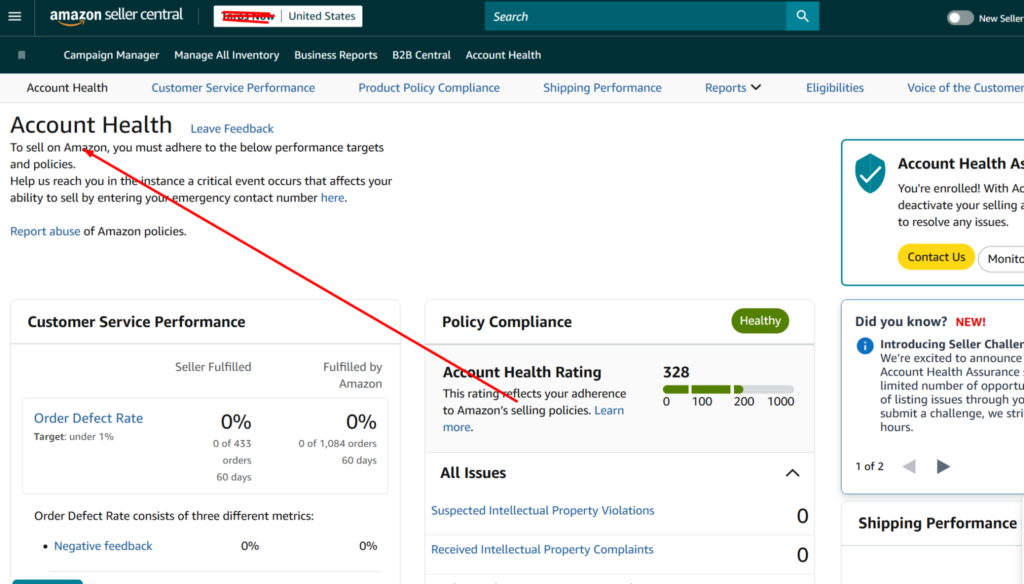
Navigate to your Seller Central account and locate the Account Health section. This is your command center for understanding exactly what Amazon needs from you.
Here’s how to find it:
- Log into Amazon Seller Central
- Click the Performance tab in the main navigation
- Select Account Health from the dropdown menu
- Review the notification banners at the top of the page
You’ll see specific details about why your verification is blocked and what compliance issues are affecting your account standing.
Step 2: Contact Amazon Seller Support Immediately
Time is critical when dealing with Amazon account verification problems. The longer you wait, the more complicated resolution becomes.
Navigate to the support contact method:
- From your Account Health page, look for the “Contact Us” button
- Select “Selling on Amazon” as your issue category
- Choose “Account Settings” as the specific issue
- Select “Business Verification” from the subcategory options
- Choose your preferred contact method (phone, chat, or email)
When you contact support, be clear and specific: “My business verification is blocked after three failed postcard delivery attempts. I need the verification method unblocked or an alternative verification option to restore my account.”
Step 3: Request Alternative Verification Documentation
When postcard verification fails, Amazon Seller Support can authorize alternative verification methods. This is the critical workaround that most sellers don’t know exists.
Amazon accepts these alternative documents for business address verification:
- Utility bills (electricity, water, gas, internet, or phone service) showing your business name and address, dated within the last 90 days
- Government-issued tax documents including business tax returns, property tax statements, or official tax correspondence showing the business address
- Business lease agreements with current dates and signatures from both parties
- Bank statements for business accounts showing the registered business address (must be recent)
- Government business registration certificates with address verification
The documentation must meet specific requirements:
- Shows your exact business name as registered with Amazon
- Displays your complete business address matching your Amazon account
- Is dated within the last 90 days (for bills and statements)
- Is clearly legible with no blurred or obscured information
- Comes from an official source (government agency, utility company, financial institution)
Step 4: Submit Documentation to the Correct Amazon Email
This step is crucial. Amazon has specific email addresses for different verification issues, and sending documents to the wrong address delays resolution.
For business verification issues, send your documentation to:
Email formatting matters:
- Use a clear subject line: “Business Verification Documentation – Seller ID [Your Seller ID]”
- Attach high-quality scans or photographs of your verification documents (PDF format is preferred)
- Include a brief explanation in the email body describing your verification block and the attached documentation
- Reference any case numbers from your Seller Support conversations
Make sure your attached files are under 10MB total and in commonly accepted formats (PDF, JPG, PNG). Amazon’s system may reject oversized attachments or unusual file types.
Step 5: Monitor Your Email and Account Health Page
After submitting documentation, Amazon typically reviews verification materials within 24-48 hours, though complex cases may take up to 5 business days.
What to watch for:
- Email responses from Amazon Seller Performance or Seller Support
- Updates to your Account Health dashboard showing verification status changes
- Changes to your selling privileges or payment hold status
If you don’t receive a response within 48 hours, follow up with Seller Support referencing your original case number. Persistence is important, but maintain professional communication throughout the process.
Beyond Business Verification: Other Common Amazon Account Health Issues
Business verification problems are just one piece of the Amazon account health puzzle. Understanding the full landscape of potential account issues helps you maintain compliance and avoid future suspensions.
Intellectual Property Violations: The Tier-1 Threat
Intellectual property violations are among the most serious issues Amazon sellers face. One violation can trigger immediate listing removal, and repeated violations lead to permanent account suspension without appeal opportunities.
Common IP violation triggers include:
- Trademark text misuse in product titles, descriptions, or backend keywords
- Copyright infringement when using protected images, descriptions, or content
- Patent violations for products that infringe on protected designs or utility patents
- Counterfeit claims when rights owners allege you’re selling fake or unauthorized products
When you receive an IP violation notice, your response strategy is critical. Amazon doesn’t warn you twice. They suspend first and give you one chance to appeal with a comprehensive Plan of Action.
Your appeal must address three key elements:
- Root cause analysis – Identify exactly how the violation occurred (supplier issue, listing error, unauthorized use of protected content)
- Immediate corrective action – Document what you’ve already done to fix the problem (removed listings, changed suppliers, revised content)
- Prevention systems – Explain the processes you’ve implemented to prevent future violations (supplier vetting procedures, content creation protocols, IP rights verification steps)
Order Defect Rate (ODR): The Silent Account Killer
Your Order Defect Rate is Amazon’s most important customer satisfaction metric. It must stay below 1% to maintain healthy account standing.
ODR includes three components:
- Negative feedback rate – Customer feedback ratings of 1 or 2 stars
- A-to-Z Guarantee claim rate – Successful customer claims for refunds
- Chargeback rate – Credit card disputes filed by customers
Even if your products are excellent, operational issues like shipping delays, damaged inventory at Amazon warehouses, or customer service failures can push your ODR above the 1% threshold.
Prevention strategies that work:
- Implement quality control checks before sending inventory to FBA warehouses
- Use Amazon PPC and advertising services to attract qualified buyers less likely to return products
- Respond to customer inquiries within 24 hours to prevent escalation to A-to-Z claims
- Monitor your Account Health metrics weekly, not monthly
- Address negative feedback immediately with professional, solution-focused responses
Late Shipment Rate: A Preventable Problem
For merchant-fulfilled sellers, Late Shipment Rate must stay below 4%. This metric tracks the percentage of orders shipped after the expected ship date.
Common causes of high late shipment rates:
- Inaccurate handling time settings in your seller account
- Inventory management failures leading to stockouts
- Shipping carrier delays beyond your control
- Processing bottlenecks during high-volume periods
The solution often involves both operational improvements and better Amazon account management. Many sellers benefit from transitioning high-volume products to FBA or implementing order processing and fulfillment systems that automate shipping workflows.
Policy Violations: Know the Rules Before Breaking Them
Amazon’s seller policies cover everything from product authenticity to customer communication standards. Policy violations happen when sellers unknowingly cross lines they didn’t know existed.
High-risk policy areas:
- Product condition accuracy – Listing used items as new or misrepresenting product conditions
- Customer communication – Attempting to contact customers outside Amazon’s messaging system
- Review manipulation – Offering incentives for reviews or using review services
- Listing abuse – Creating duplicate listings, misusing variation relationships, or keyword stuffing
Each policy violation damages your account health rating and increases your risk of suspension. Some violations result in immediate account deactivation, while others generate warnings that escalate with repeated violations.
Food and Safety Compliance: Category-Specific Requirements
Sellers in restricted categories like food, supplements, cosmetics, and children’s products face additional verification requirements beyond standard business verification.
Food and safety compliance typically requires:
- Product testing from accredited laboratories
- FDA registration for certain food and supplement categories
- Safety data sheets (SDS) for chemical products
- Age-grading certifications for children’s products
- Ingredient disclosure documentation
These compliance issues don’t always threaten your entire account, but they do put specific listings at risk of removal. The key is acting quickly when Amazon requests verification and submitting complete documentation that meets all specified requirements.
Proactive Account Health Management: Prevention Over Reaction
The best approach to Amazon account issues is preventing them before they threaten your business. Reactive crisis management costs more, takes longer, and puts your entire livelihood at risk.
Implement Weekly Account Health Monitoring
Make account health review a non-negotiable part of your weekly routine. Set a specific day and time to:
- Review your Account Health dashboard for new notifications
- Check your performance metrics (ODR, Late Shipment Rate, Cancellation Rate)
- Scan for any policy compliance warnings or listing issues
- Verify that your business information remains current and accurate
- Monitor customer feedback and address negative experiences promptly
Document Everything From Day One
When issues arise, Amazon wants documentation. Sellers who maintain organized records resolve problems faster than those scrambling to find paperwork after receiving suspension notices.
Essential documentation to maintain:
- Supplier invoices and purchase orders
- Product authenticity certificates
- Trademark and IP rights verification
- Business registration and tax documents
- Quality control records and product testing results
- Customer service interaction logs
- Shipping and fulfillment records
Build Relationships With Your Supplier Network
Many account health issues trace back to supplier problems. Counterfeit claims, IP violations, and product quality issues often stem from unreliable suppliers providing unauthorized or substandard products.
Supplier vetting should include:
- Verification of their authorization to sell the brands you’re sourcing
- Documentation of their supply chain and product origins
- Quality assurance processes and testing protocols
- Clear agreements about product authenticity and IP rights
- Emergency contact procedures when issues arise
Create Standard Operating Procedures for Common Issues
When problems occur, having predetermined response protocols reduces stress and improves outcomes. Professional Amazon account management involves creating documented procedures for:
- Responding to IP violation notices
- Handling customer complaints before they escalate
- Managing inventory to prevent stockouts and shipping delays
- Addressing negative feedback within 24 hours
- Submitting appeals with complete Plans of Action
Understanding Amazon’s Appeal Process
If your account does get suspended despite your best prevention efforts, the appeal process becomes your lifeline. However, most sellers approach appeals emotionally rather than strategically, and this costs them their businesses.
What Amazon Looks for in Appeals
Amazon’s Seller Performance team reviews thousands of appeals daily. They’re not looking for apologies or promises. They’re evaluating whether you understand what went wrong and whether you’ve implemented systems to prevent recurrence.
Your appeal must demonstrate:
- Precise root cause identification – Vague explanations like “I’ll be more careful” get rejected immediately
- Evidence of immediate corrective action – Show what you’ve already done, not what you promise to do
- Systematic prevention measures – Describe specific processes, not general intentions
- Professional tone without emotion – Skip the sob stories and focus on facts
- Clear, concise communication – Amazon prefers one page of substance over three pages of padding
Common Appeal Mistakes That Guarantee Rejection
Most sellers make the same appeal errors repeatedly, and Amazon’s reviewers can spot these mistakes instantly.
Avoid these appeal killers:
- Blaming Amazon’s system or policies rather than taking responsibility
- Making excuses about circumstances beyond your control
- Submitting generic template appeals without customization
- Failing to address the specific violation cited by Amazon
- Including irrelevant information that obscures your main points
- Promising future actions without documenting completed steps
- Using emotional language or attempting to guilt Amazon into reinstatement
Multiple Appeals: When and How
If your first appeal gets rejected, don’t panic. Amazon allows multiple appeals, but each subsequent attempt must provide new information or address deficiencies in previous submissions.
Successful second appeals typically include:
- Acknowledgment of why the first appeal was insufficient
- Additional documentation that wasn’t available previously
- More detailed explanation of prevention systems
- Evidence of implemented changes with before/after comparisons
- Professional assistance from experienced eCommerce specialists who understand Amazon’s requirements
The Real Cost of Account Suspension
Understanding what’s at stake helps sellers prioritize account health before problems escalate to suspension level.
Financial Impact Goes Beyond Frozen Payouts
When Amazon suspends your account, the immediate financial hit from frozen payments is just the beginning. The true cost includes:
- Lost sales momentum – Suspended accounts lose Best Seller Rank, customer reviews, and search visibility that took months or years to build
- Stranded inventory – FBA inventory remains in Amazon warehouses while you pay storage fees without generating sales
- Advertising waste – Your PPC campaigns continue spending money on clicks that lead to suspended listings
- Opportunity cost – Prime selling seasons pass while you fight for reinstatement
- Customer trust damage – Negative impressions from canceled orders and unfulfilled promises
For full-time sellers, account suspension can mean immediate financial crisis. Mortgage payments, employee salaries, supplier obligations, and personal expenses don’t pause while Amazon reviews your appeal.
Psychological Toll and Business Stress
The emotional impact of account suspension extends beyond financial concerns. Sellers report:
- Sleep disruption and anxiety while awaiting appeal decisions
- Relationship strain as financial pressure affects family life
- Loss of confidence in Amazon as a viable business platform
- Fear of starting over with different marketplaces
- Difficulty maintaining motivation and focus on problem resolution
This psychological dimension makes it even more critical to work with experienced professionals who can guide you through the appeal process while managing your emotional stress.
FAQ: Amazon Business Verification and Account Health
Q: How long does Amazon business verification take?
Standard postcard verification takes 7–14 days. Alternative document verification can take 24–48 hours if everything is clean and compliant. Timeline depends on delivery speed and Amazon’s review queue.
Q: Can I sell while verification is pending?
New sellers usually cannot list until verification is complete. Established sellers may continue with restrictions depending on the issue. Always check your Account Health dashboard.
Q: What if I don’t have utility bills in my business name?
Amazon accepts alternatives like bank statements, lease agreements, tax documents, or registration certificates. Documents must clearly show your business name and address. Residential proof plus business registration often works.
Q: How many times can I appeal a suspension?
There’s no official limit, but success drops after each rejection. Your first appeal has the best chance. Later appeals must include new and stronger evidence.
Q: Do IP violations permanently damage my account?
One violation doesn’t mean permanent damage if handled properly. A strong corrective action plan can restore health. Repeated violations increase risk of permanent suspension.
Q: Can I open a new account if one gets suspended?
No. Amazon prohibits multiple accounts without approval. Trying to bypass suspension usually leads to permanent bans across linked accounts.
Q: How do I spot phishing vs real Amazon notices?
Legitimate notices appear inside Seller Central’s Account Health dashboard. Amazon doesn’t ask for sensitive info via random emails or texts. When unsure, log in directly to verify.
Q: Account-level vs listing-level issues?
Account-level issues threaten your entire selling privileges. Listing-level issues affect specific products only. Multiple listing problems can escalate into account-level risk.
Conclusion: Your Account Health Is Your Business Foundation
Amazon account verification issues and health problems can feel overwhelming, especially when your income depends on maintaining good standing. The difference between sellers who recover quickly and those who lose their businesses often comes down to knowledge, preparation, and strategic response.
Every notification Amazon sends is an opportunity to demonstrate professionalism and systematic problem-solving. Whether you’re dealing with business verification blocks, policy violations, performance metric issues, or IP complaints, the principles remain consistent: act quickly, communicate clearly, document thoroughly, and implement real prevention systems.
Your Amazon account health isn’t just about compliance checkboxes. It represents the trust you’ve built with Amazon, your customers, and the marketplace ecosystem. Protecting that trust requires ongoing attention, proactive management, and sometimes professional guidance when problems exceed your expertise.
Don’t wait until you’re staring at a suspension notice to take account health seriously. The strategies outlined in this guide work best when implemented before problems escalate. Start with weekly account health reviews, document your operations systematically, build quality supplier relationships, and create standard operating procedures for common issues.
And remember, you don’t have to navigate these challenges alone. The complexity of Amazon’s requirements and the stakes involved often justify bringing in experienced professionals who’ve successfully resolved hundreds of account issues across every category and violation type.
How Ecomclips Can Help on the Issue
When you’re staring at that yellow banner or worse, a suspension notice, every decision matters. One wrong move in your appeal can be the difference between reinstatement and permanent deactivation. This is where Ecomclips steps in as your strategic partner. We’ve successfully resolved hundreds of account health issues for Amazon sellers, from straightforward metric problems to complex intellectual property disputes. Our team understands Amazon’s internal review processes because we’ve navigated them countless times. We know what appeals officers look for, which documentation carries weight, and how to craft Plans of Action that get accounts reinstated. But our relationship with sellers doesn’t stop at crisis management. We work proactively to prevent issues before they escalate, implementing monitoring systems and compliance protocols that keep your account in good standing month after month. Whether you’re facing your first policy violation or dealing with a suspended account, Ecomclips brings the expertise to guide you through Amazon’s complex requirements and get your business back on track.
Ecomclips: Your Complete eCommerce Solution Under One Umbrella
At Ecomclips, we bring every eCommerce service you need under one roof — strategy, operations, design, marketing, and growth, all seamlessly connected to help your brand thrive across every marketplace.
Since 2012, we’ve been helping businesses of all sizes launch, scale, and dominate online. From Amazon, Walmart, eBay, and Etsy to Shopify and WooCommerce, our team of marketplace experts, designers, developers, and marketers works together to deliver measurable results.
Our services span the full eCommerce lifecycle:
- Account Setup & Product Listing Management: We handle registrations, compliance, and product data optimization across all marketplaces.
- Amazon Optimization Service: From keyword-rich titles and A+ content to PPC campaigns and storefront design, we craft listings that convert.
- Creative Design & Content Production: A+ visuals, infographics, brand stores, and product videos built to boost engagement.
- Advertising & PPC Management: Smart, data-driven ad strategies for Amazon, Walmart, and Google that maximize ROI.
- Web Development & Store Design: Shopify, WooCommerce, and Magento websites built for performance and conversion.
- Data Management & Automation: Streamlined product feeds, catalog syncing, and inventory control for effortless scalability.
- Customer Service & Order Fulfillment: End-to-end support that enhances customer satisfaction and builds long-term loyalty.
- Analytics & Growth Strategy: Real-time insights and ongoing optimization to ensure consistent, profitable growth.
Whether you’re launching a new store or managing multiple global marketplaces, Ecomclips acts as your single strategic partner, simplifying complexity and driving sustainable revenue growth.