

What if a simple fulfillment change could double your profit margins on Amazon? Many sellers don’t realize that becoming an Amazon FBM seller could mean better margins, more control, and greater flexibility than what they’re getting with FBA.
Here’s the thing: choosing between FBA and FBM isn’t just about logistics. It’s about your entire business strategy. The fulfillment model you pick determines how much you spend, how much control you have over your inventory, and how you interact with your customers.
FBA is convenient, no doubt. But it comes with rising fees and tight restrictions that can limit your growth. Amazon FBM sellers, on the other hand, get to control their inventory, customize their packaging, and usually keep more profit from each sale.
In this article, we’ll walk you through the types of sellers who benefit most from Amazon FBM. You’ll see which seller profiles work best with this model and why FBM could be your path to more sustainable, profitable growth on Amazon.
Table of Contents:
| What Is Amazon FBM and Why Sellers Are Choosing It in 2026 |
| Why FBM Is Growing Despite FBA’s Popularity |
| Amazon FBM vs FBA: Which Fulfillment Model Fits Your Business? |
| When FBM Makes More Sense Than FBA |
| Types of Sellers Who Benefit the Most from Amazon FBM |
| Pros and Cons of Amazon FBM |
| Challenges of Amazon FBM |
| Is Amazon FBM Right for You? |
| Common Mistakes FBM Sellers Should Avoid |
What Is Amazon FBM and Why Sellers Are Choosing It in 2026
Amazon FBM (Fulfilled by Merchant) is a fulfillment model where you, the seller, handle storage, packing, and shipping of your products directly to customers. Unlike FBA, where Amazon manages the entire fulfillment process, FBM puts you in the driver’s seat.
Here’s how Amazon FBM works step-by-step:
- Customer places an order on your Amazon listing
- You receive the order notification through Seller Central
- You pick and pack the product from your warehouse or home
- You ship the order using your chosen carrier
- You upload tracking information to Amazon
- Customer receives the product and you get paid
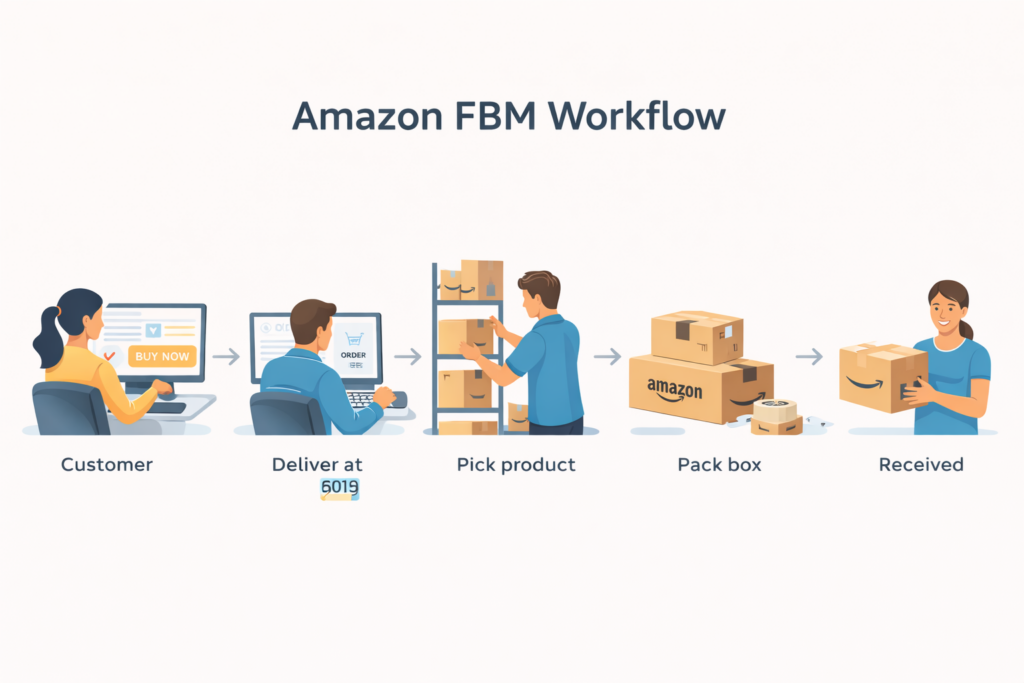
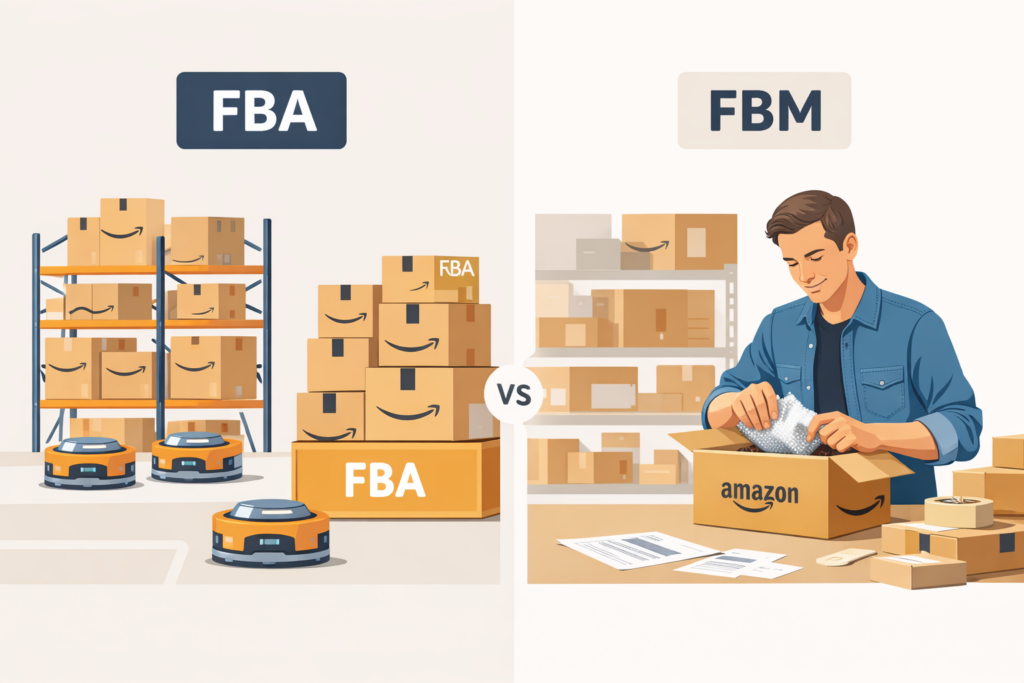
The fundamental difference between FBM and FBA comes down to control versus convenience. With FBA, Amazon handles everything but charges substantial fees and dictates storage terms. With FBM, you manage fulfillment yourself but keep more control over costs, branding, and inventory decisions.
Why FBM Is Growing Despite FBA’s Popularity
Despite FBA’s dominance, more sellers are shifting to or starting with the Fulfilled by Merchant model. The reasons are compelling:
Rising FBA fees: Repeated fee increases, long-term storage charges, and peak-season surcharges can consume 30–50% of revenue, making FBM a more profitable option for many sellers.
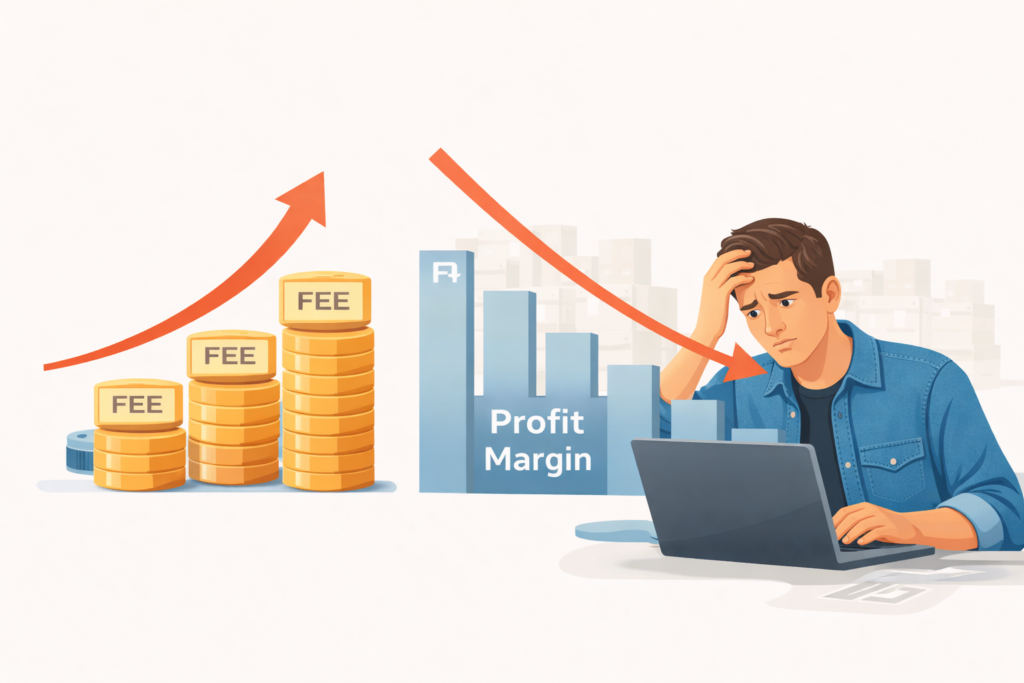
Greater inventory control: FBM sellers avoid Amazon’s storage limits and penalties, allowing full control over stock levels and restocking schedules.
Multi-channel selling advantages: With FBM, the same inventory can be used across Amazon, Shopify, eBay, Walmart, and direct websites without extra fulfillment fees.
Stronger brand ownership: FBM enables branded packaging, custom inserts, and personalized customer experiences—benefits not possible with standard FBA packaging.
Amazon FBM vs FBA: Which Fulfillment Model Fits Your Business?
Key Differences Between FBM and FBA
Understanding the Amazon FBM vs FBA decision requires looking at five critical areas:
- Cost structure: FBA includes fulfillment, storage, long-term storage, and removal fees. FBM costs mainly involve shipping and packaging, giving sellers greater control over expenses.
- Logistics responsibility: FBA handles picking, packing, and shipping after you send inventory to Amazon. FBM requires sellers to manage each order and shipping process themselves.
- Customer service control: Amazon manages customer support for FBA orders, while FBM sellers must handle inquiries promptly and maintain strong performance metrics.
- Returns management: FBA automates returns and refunds. FBM sellers manage returns, inspect products, and issue refunds as needed.
- Prime eligibility: FBA products qualify for Prime automatically. FBM sellers can earn Prime through Seller Fulfilled Prime by meeting strict delivery and performance standards.
When FBM Makes More Sense Than FBA
The Amazon FBM model becomes the smarter choice in specific scenarios:
- Tight profit margins: If FBA fees reduce your profit to less than 15-20% of the sale price, FBM often delivers better net earnings. Calculate your all-in FBA costs versus self-fulfillment expenses to see the real difference.
- Oversized or heavy products: Amazon charges premium fees for large or heavy items. A 50-pound product might cost $15-25 to fulfill through FBA but only $8-12 if you ship it yourself using commercial
- carrier rates.
- Custom or made-to-order items: Products that require customization, personalization, or are made after ordering don’t fit FBA’s model well. FBM gives you the flexibility to create each item on demand.
- Seasonal or slow-moving inventory: Items that sell slowly or only during specific seasons accumulate expensive storage fees in FBA. With FBM, you keep inventory locally and only ship what sells.
Thinking About Hiring an Amazon Expert?
Ecomclips’ Partners Achieve an Average 85% Profit Increase!
Types of Sellers Who Benefit the Most from Amazon FBM
Not every seller thrives with the Fulfilled by Merchant approach, but certain business models align perfectly with FBM’s advantages. Let’s explore who benefits most.
New Amazon Sellers Testing the Market
Starting on Amazon feels intimidating enough without committing thousands of dollars to FBA inventory. New Amazon sellers find FBM particularly valuable because:
- Low upfront costs: You don’t need to buy bulk inventory, prep it according to Amazon’s requirements, and ship it to multiple fulfillment centers before making your first sale. Start small, test products, and scale based on actual demand.
- No bulk inventory risk: What if your product doesn’t sell? FBA sellers end up paying long-term storage fees or removal fees to get stuck inventory back. FBM sellers simply stop listing products that don’t perform without additional penalties.
- Easier product validation: Test multiple products simultaneously without massive upfront investment. Ship orders as they come in, gather customer feedback, and identify winners before committing to larger inventory purchases.
- Better cash flow control: FBM lets you operate with less capital tied up in inventory. Buy or produce items in smaller quantities and reinvest profits faster as sales grow.
Sellers With Low-Margin or High-Cost Products
If your product’s profit margin lives or dies based on a few dollars of fulfillment costs, Amazon FBM might save your business:
- Avoid FBA storage and fulfillment fees: Products selling for $15-25 often see 40-50% of revenue go to Amazon fees with FBA. Self-fulfillment can cut those costs in half, dramatically improving profitability.
- Higher net profit per unit: Even saving $2-3 per unit adds up quickly. On 100 orders monthly, that’s $200-300 extra profit. Scale to 1,000 orders and you’re keeping an additional $2,000-3,000 monthly.
- Better pricing flexibility: Lower fulfillment costs give you room to price competitively and still profit. You can undercut FBA competitors on price while maintaining healthy margins, or keep prices similar and enjoy significantly better profit per sale.
Sellers Offering Oversized, Heavy, or Fragile Products
Large, heavy, or delicate products face particularly high FBA fees that make the service economically unviable:
- Reduced oversized FBA fees: Amazon’s oversized item fees often exceed $10-20 per unit. Negotiated commercial shipping rates through carriers like UPS, FedEx, or regional carriers frequently cost 40-60% less.
- Custom packaging options: Fragile items need special protection. FBM lets you use whatever packaging materials, bubble wrap, foam inserts, and box reinforcements are necessary to ensure products arrive safely.
- Lower damage risk: When you control packing, you can ensure items are properly protected. FBA warehouses handle millions of products daily, and oversized items sometimes suffer damage during internal handling or shipping.
Multi-Channel Sellers (Amazon + Shopify + eBay)
Sellers who view Amazon as one channel among many find FBM essential for operational efficiency:
Centralized inventory management: Maintain one inventory pool that serves Amazon, your Shopify store, eBay, Walmart, Etsy, and any other sales channels. No need to split inventory across platforms or constantly rebalance stock levels.
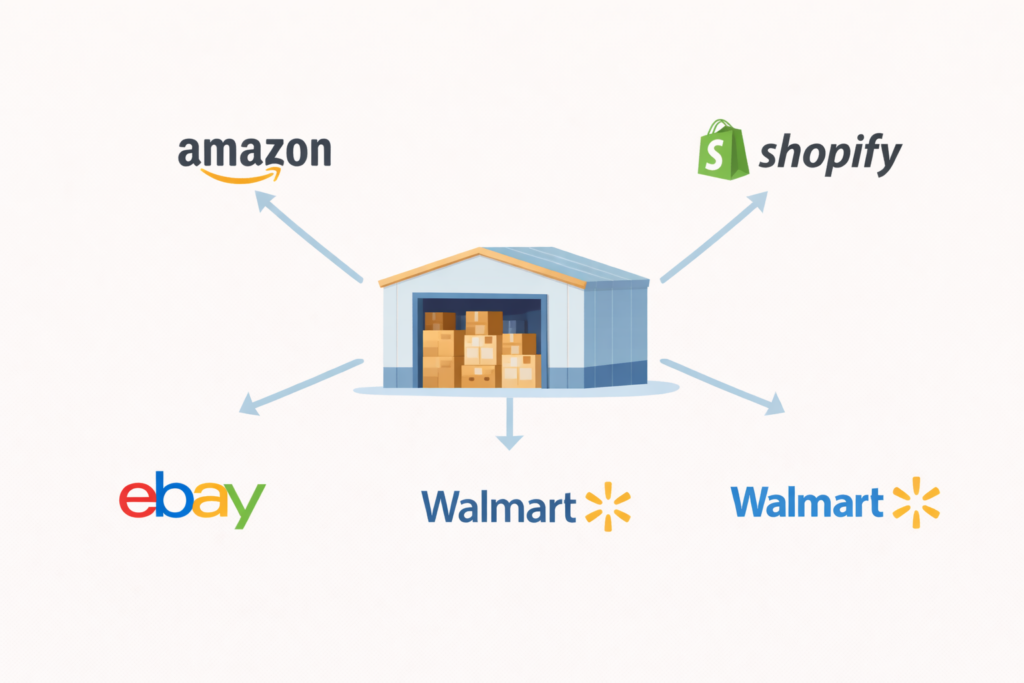
One fulfillment system for multiple platforms: Build or use a single fulfillment system that handles orders from every channel. Ship Amazon orders alongside Shopify orders in the same daily batch, maximizing efficiency.
Strong brand independence: Relying entirely on FBA makes you dependent on Amazon’s rules, fees, and policies. Multi-channel FBM sellers build businesses that could survive even if one platform becomes unprofitable or suspends their account.
Private Label & Brand-Focused Sellers
If you’re building a brand rather than just selling products, the Fulfilled by Merchant approach offers crucial branding advantages:
- Branded packaging: Ship products in boxes featuring your logo, brand colors, and custom designs. This professional presentation builds brand recognition and customer loyalty that generic FBA packaging never achieves.
- Custom inserts and upsells: Include product guides, warranty cards, discount codes for future purchases, or QR codes linking to your website. These inserts turn one-time buyers into repeat customers and drive traffic to your owned channels.
- Direct control over customer experience: From the unboxing moment to the product quality check, you control every touchpoint. This hands-on approach helps premium brands maintain the high-quality experience their customers expect.
Seasonal and Print-On-Demand Sellers
Products with unpredictable demand patterns or made-to-order business models benefit enormously from FBM flexibility:
- No long-term storage fees: Holiday decorations, summer goods, or trending items sell intensely for short periods then sit idle for months. FBM eliminates the storage fee nightmare that destroys profitability for seasonal FBA sellers.
- Flexible inventory scaling: Ramp up production during peak season without worrying about Amazon’s storage limits or penalties. Scale down when demand drops without paying to remove inventory from fulfillment centers.
- Reduced dead stock risk: Print-on-demand and made-to-order sellers create products after receiving orders, eliminating dead stock entirely. This model simply doesn’t work with FBA but thrives with FBM.
Pros and Cons of Amazon FBM
Advantages of Amazon FBM
The Fulfilled by Merchant model delivers significant benefits for sellers who can execute it well:
- Lower fulfillment costs: For many products, especially those under $20 or over 3 pounds, self-fulfillment costs substantially less than FBA fees. Calculate your specific products to see the savings, which often range from $2-8 per unit.
- Inventory control: You decide storage conditions, stock levels, and inventory rotation. No surprise long-term storage fees, no forced removals, and no inventory limits constraining your growth.
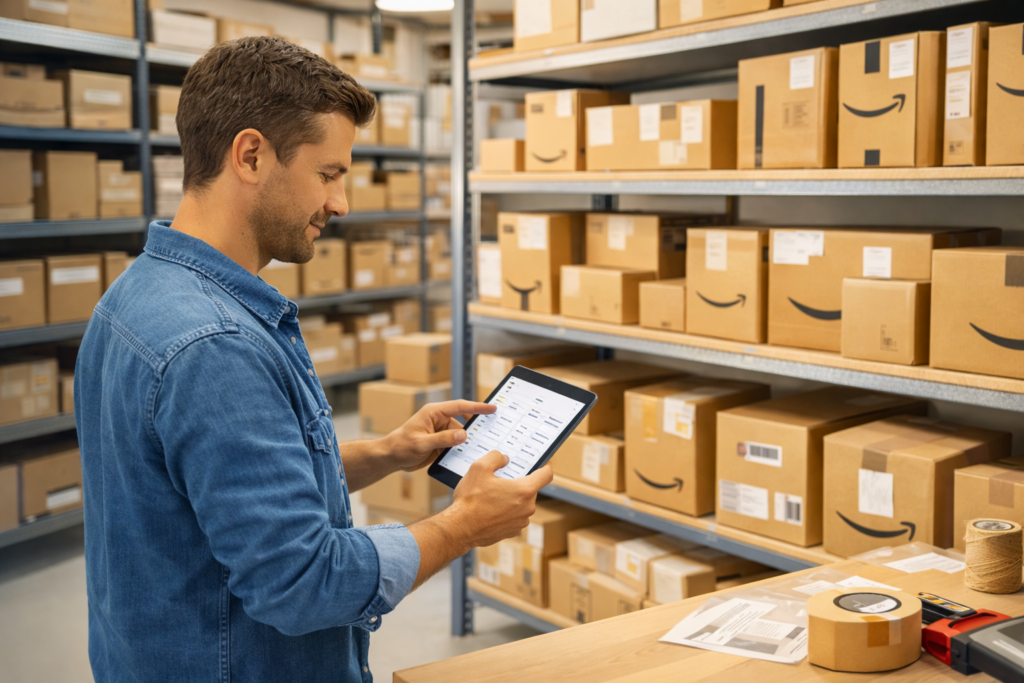
- Scalability for niche products: Unique, specialized, or low-volume products that don’t justify FBA economics can thrive with FBM. The model works for 5 sales monthly just as well as 500.
- Reduced Amazon dependency: Building fulfillment capabilities you control means Amazon’s policy changes, fee increases, or account issues don’t immediately cripple your business. You maintain operational independence.
Challenges of Amazon FBM
Being honest about FBM’s downsides helps you prepare for them or decide if FBA suits you better:
- Shipping responsibility: You must pack and ship orders promptly, typically within one business day. This requires systems, processes, and reliable access to your inventory even during weekends or holidays.
- Meeting Amazon performance metrics: Amazon holds FBM sellers to strict standards—order defect rate under 1%, pre-fulfillment cancel rate under 2.5%, and late shipment rate under 4%. Miss these targets and your account health suffers.
- Customer service handling: You’re responsible for answering customer questions within 24 hours and resolving issues. This ongoing communication burden surprises new FBM sellers who expected FBA’s hands-off approach.
- Logistics complexity: Managing shipping carriers, negotiating rates, printing labels, scheduling pickups, and tracking packages requires time, attention, and sometimes specialized software. The complexity increases with order volume.
Is Amazon FBM Right for You?
Before committing to the Fulfilled by Merchant approach, honestly evaluate your situation:
- Are FBA fees eating into your margins? Calculate your actual profit after all FBA fees (fulfillment, storage, long-term storage, removal, etc.). If you’re netting less than 20% profit, FBM deserves serious consideration.
- Can you ship orders reliably and on time? FBM success requires consistent, prompt shipping. If you travel frequently, work full-time elsewhere, or can’t dedicate time to daily fulfillment, FBM creates problems unless you hire help.
- Do you sell outside Amazon? Multi-channel sellers gain enormous efficiency advantages from FBM. If you have or plan to launch a Shopify store, sell on eBay, or operate any other sales channels, FBM makes managing everything far simpler.
- Do you want more brand control? If building a recognized brand matters to your business strategy, FBM’s packaging and insert opportunities outweigh FBA’s convenience. If you’re purely focused on moving products with minimal effort, FBA might suit you better.
Should I use Amazon FBM? You should use Amazon FBM if you sell high-cost or oversized products where FBA fees destroy margins, operate on multiple sales channels beyond just Amazon, prioritize brand building through custom packaging, or are a new seller testing products without large upfront inventory investments.
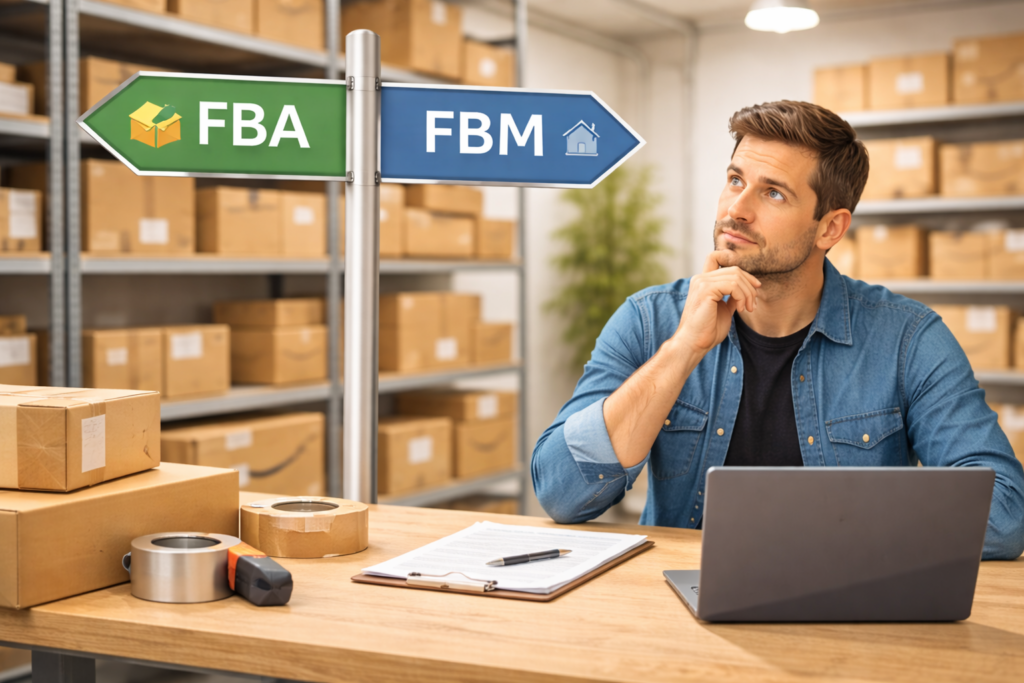
FBM works best when you can reliably fulfill orders quickly and maintain excellent customer service standards.
Common Mistakes FBM Sellers Should Avoid
Profit-Killing FBM Errors
Even experienced sellers make these critical mistakes when switching to or starting with FBM:
- Underestimating shipping costs: Retail shipping rates destroy profitability quickly. Set up a commercial carrier account with UPS, FedEx, or USPS to access discounted rates 30-50% below retail prices.Consider third-party shipping software like Shipstation or ShippingEasy for even better rates.
- Poor inventory forecasting: Running out of stock costs you sales momentum and Buy Box positioning. Stockpiling too much inventory ties up capital and risks obsolescence. Use inventory management software to track sales velocity and predict reorder points accurately.
- Missing Amazon performance targets: One week of delayed shipments can tank your late shipment rate and kill your Buy Box eligibility. Build buffer time into your processes, have backup plans for busy periods, and monitor metrics weekly through Seller Central.
- No automation or systems: Manually processing orders, printing labels individually, and managing inventory with spreadsheets works for 5-10 orders daily but collapses at higher volumes. Invest in inventory management and shipping software early to scale smoothly.
FAQ: Amazon FBM Seller Questions
Q. What types of sellers should use Amazon FBM?
Amazon FBM is ideal for new sellers testing products, low-margin sellers, multi-channel businesses, private label brands, and those selling oversized, fragile, or custom items where FBA fees reduce profitability.
Q. Is Amazon FBM profitable in 2025?
Yes. With rising FBA fees, many sellers earn 15–40% higher margins using FBM when shipping is managed efficiently and products are chosen strategically.
Q. Can FBM sellers get Amazon Prime?
Yes, through Seller Fulfilled Prime, but sellers must meet strict delivery, tracking, and on-time performance requirements before qualifying.
Q. Is FBM better than FBA for beginners?
FBM is often better for beginners with limited budgets or those testing products, while FBA suits sellers prioritizing convenience and small, lightweight items.
Q. Can I switch from FBA to FBM later?
Yes. Sellers can convert listings to FBM at any time, though existing FBA inventory must be removed and fulfillment handled independently.
Q. How do FBM sellers win the Buy Box?
FBM sellers win the Buy Box by offering competitive pricing, fast shipping, strong seller metrics, and consistent inventory availability.
Q. Does Amazon FBM work for private label sellers?
Absolutely. FBM allows branded packaging, custom inserts, and full control over the customer experience, helping build loyalty and repeat sales.
How eComclips Helps Amazon FBM Sellers Stay Profitable
Amazon FBM sellers enjoy greater control and higher margins—but that control also comes with responsibility. Amazon’s AI systems continuously scan FBM listings, websites, ads, and external brand content for inconsistencies, policy violations, and risky claims. Even a small mismatch can result in listing suppression, Buy Box loss, reduced ad reach, or account warnings, directly impacting profitability.
That’s where eComclips supports FBM sellers—helping you protect your account, maintain visibility, and maximize profits while staying compliant in Amazon’s AI-driven ecosystem.
Here’s How eComclips Protects Your Brand
- Cross-Platform Product Data Auditing: We audit your Amazon FBM listings, website, social media pages, and advertising content to identify inconsistencies that trigger AI enforcement. Product specifications, claims, pricing, and visuals are aligned to ensure consistency across all platforms.
- Content Optimization: Our team rewrites titles, bullet points, descriptions, and website copy to meet Generative Engine Optimization (GEO) standards. We remove risky or exaggerated claims, standardize terminology, and preserve a strong, trustworthy brand voice—critical for FBM sellers relying on visibility and Buy Box performance
- Listing and Website Synchronization: Every update made to your Amazon FBM listing is mirrored across your website and marketing channels. This eliminates data mismatches that often cause automated suppressions and helps your listings pass Amazon’s AI scans smoothly.
- Claims, Keywords, and Image Compliance Checks: We review listings for medical, health, performance, or unverifiable claims—common triggers for FBM listing issues. Images, lifestyle visuals, and promotional graphics are checked for compliance and consistency. Pricing and promotions are aligned to protect Buy Box eligibility.
- Proactive Monitoring and AI Policy Updates: Amazon’s AI rules evolve constantly. eComclips continuously monitors your brand presence and flags potential compliance risks early—allowing corrections before your listings are suppressed or your account is penalized.
Contact us today at info@ecomclips.com or book an appointment with our e-commerce experts to start selling smarter on both marketplaces.
Watch how we help sellers to protect their Amazon Business:
STOP GUESSING! USE AMAZON DATA TO EXPLODE YOUR SALES in 2026
Amazon’s Rufus AI Prompts: The Future of Sponsored Products Optimization
Your Amazon Listing Is Losing Money
Amazon Brand Growth Secrets: Use Customer Data To Boost Sales Fast!
Amazon AI Update 2025: Why Sellers Are Losing Ranking Overnight
Amazon Listing Image Masterclass: How Top Sellers Boost CTR & Conversions
Ecomclips: Your Complete eCommerce Solution Under One Umbrella
At Ecomclips, we bring every eCommerce service you need under one roof — strategy, operations, design, marketing, and growth, all seamlessly connected to help your brand thrive across every marketplace.
Since 2012, we’ve been helping businesses of all sizes launch, scale, and dominate online. From Amazon, Walmart, eBay, and Etsy to Shopify and WooCommerce, our team of marketplace experts, designers, developers, and marketers works together to deliver measurable results.
Our services span the full eCommerce lifecycle:
- Account Setup & Product Listing Management: We handle registrations, compliance, and product data optimization across all marketplaces.
- Amazon Optimization Service: From keyword-rich titles and A+ content to PPC campaigns and storefront design, we craft listings that convert.
- Creative Design & Content Production: A+ visuals, infographics, brand stores, and product videos built to boost engagement.
- Advertising & PPC Management: Smart, data-driven ad strategies for Amazon, Walmart, and Google that maximize ROI.
- Web Development & Store Design: Shopify, WooCommerce, and Magento websites built for performance and conversion.
- Data Management & Automation: Streamlined product feeds, catalog syncing, and inventory control for effortless scalability.
- Customer Service & Order Fulfillment: End-to-end support that enhances customer satisfaction and builds long-term loyalty.
- Analytics & Growth Strategy: Real-time insights and ongoing optimization to ensure consistent, profitable growth.
Whether you’re launching a new store or managing multiple global marketplaces, Ecomclips acts as your single strategic partner, simplifying complexity and driving sustainable revenue growth.
Ready to Start Growing Your Brand?
Ecomclips’ Partners Achieve an Average 85% Profit Increase!