

Most agencies promise Page 1 rankings. Very few will tell you what you are actually paying for.
Amazon SEO in 2026 is not just keyword stuffing or rewriting a title. The A10 algorithm cares about conversion signals, buyer intent, product relevance, and structured data. This means real SEO is no longer a one-time listing refresh; it is a continuous process of testing, optimization, and aligning your listing with buyer behavior.
Yet many sellers still fall into the same trap — they purchase “SEO services” without understanding what’s included, what actually drives ranking, and what results they should expect. The truth is, Amazon SEO has evolved into a data-driven system where keywords alone are not enough. You need better content, better visuals, better backend optimization, and better alignment with PPC and customer signals.
If you’ve ever wondered why your listing doesn’t rank even after adding keywords, or why competitors with fewer reviews outperform you, this guide will show you the real reasons.
Let’s break down what Amazon SEO services truly include, what works, what doesn’t, and how to invest your money wisely for long-term ranking and conversions.
Table of Contents:
| 1. What Amazon SEO Really Means Today |
| 2. What You Think You’re Paying For vs. What You Actually Get |
| 3. Keyword Research That Actually Works |
| 4. Title Optimization — Your Make-or-Break Ranking Signal |
| 5. Bullet Points That Sell With Psychology |
| 6. Product Description & A+ Content That Boost Conversions |
| 7. Image SEO — The Most Overlooked Ranking Factor |
| 8. Backend Optimization — The Hidden Powerhouse Behind Amazon SEO |
| 9. SEO + PPC Integration — The Ranking Combo That Actually Works |
| 10. Analytics, Indexing Checks & Continuous Optimization |
| 11. What Agencies Don’t Tell You About Amazon SEO |
What Amazon SEO Really Means Today
Amazon SEO in 2026 is not the simple keyword game it used to be. The A10 algorithm has evolved into a performance engine that looks at how real shoppers behave, not just what words you place in your title.
Modern Amazon SEO is built on three core pillars: visibility, relevance, and buyer behavior. If your listing doesn’t earn clicks, convert consistently, and retain customers, it won’t rank, even if you use every “right” keyword.
Here’s what Amazon SEO truly means today:
1. Amazon SEO Is Not Google SEO: Google rewards informational content. Amazon rewards products that sell. Google ranks based on backlinks and authority. Amazon ranks based on:
- Click-through rate
- Conversion rate
- Customer satisfaction signals
- Price competitiveness
- Listing completeness
- Structured data accuracy
Amazon doesn’t care how pretty your writing is. It cares whether shoppers click and buy.
2. SEO = Visibility + Relevance + Buyer Behavior: To rank, your listing must:
- Appear in search results (visibility)
- Match what the shopper is looking for (relevance)
- Convert consistently (buyer behavior)
- Miss even one of these and your ranking collapses.
3. Modern SEO Includes AI, Multimedia, and Compliance: Amazon’s AI now analyzes:
- Images for accuracy and category relevance
- A+ layout for clarity
- Backend attributes for structured data
- Claims and wording for compliance
If any component is weak, Amazon’s algorithm de-prioritizes your listing.
Amazon ranks listings that sell, not listings filled with keywords. Conversions beat keywords every time.
What You Think You’re Paying For vs. What You Actually Get
Many Amazon sellers hire SEO agencies expecting magic: a keyword list, a few rewrites, and Page 1 rankings. Unfortunately, what they get often looks very different from what they imagined.
- Common Misconceptions: Keyword Lists Alone: Some agencies sell “keyword research” as the entire service. They provide hundreds of keywords without guidance on placement, intent, or conversion potential.
- Cookie-Cutter Templates: Others deliver generic listing templates that ignore your product’s unique features, buyer psychology, or category requirements. These often hurt conversions instead of helping.
- One-Time Updates: SEO isn’t a set-it-and-forget-it process. Listings need testing, continuous optimization, and alignment with changing Amazon algorithms.
What You Should Actually Be Paying For
- Intent-Driven Keyword Research: Keywords mapped to buyer intent, indexed properly, and aligned with PPC campaigns.
- Full Listing Optimization: Titles, bullets, descriptions, A+ content, images, and backend fields rewritten to maximize relevance and conversion.
- Compliance and AI Alignment: Ensuring your content meets Amazon’s rules and passes AI analysis.
- Continuous Monitoring & Iteration: Ongoing audits to track performance, adjust keywords, and improve conversion metrics.
If your agency only gives you a keyword list or generic template, you’re overpaying and under-delivering. True SEO is strategy plus execution.
Thinking About Hiring an Amazon Expert?
Ecomclips’ Partners Achieve an Average 85% Profit Increase!
Keyword Research That Actually Works
Keyword research is the foundation of any successful Amazon SEO strategy. But most “SEO services” stop at providing a long list of keywords, and that’s where many sellers go wrong. Real keyword research goes beyond quantity; it focuses on intent, discoverability, and conversion potential.
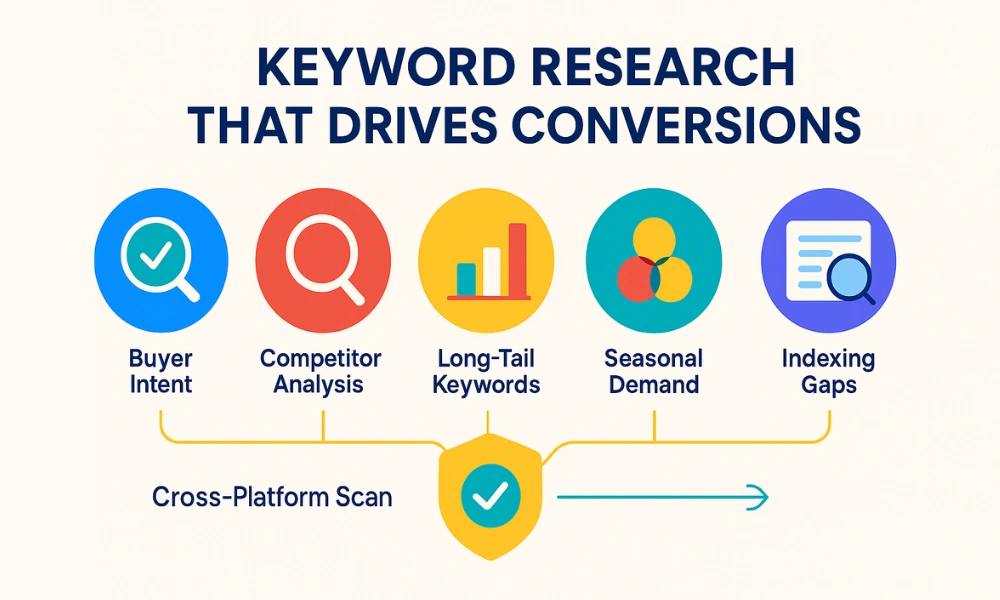
1. Understand Buyer Intent: Not all keywords are equal. Some are informational, some are transactional, and others are niche-specific. Identifying which keywords indicate a strong buying intent is critical. Targeting the wrong terms can drive traffic but never sales.
2. Analyze Competitors and Indexing Gaps: Top-performing competitors offer valuable insights. By analyzing which keywords they rank for and identifying gaps where your product could appear, you can uncover untapped opportunities to increase visibility.
3. Include Long-Tail, Seasonal, and High-Conversion Keywords:
- Long-tail keywords: Lower competition, higher conversion.
- Seasonal keywords: Capture spikes during holidays or trends.
- High-conversion keywords: Terms buyers use when they’re ready to purchase.
4. Map Keywords Strategically: Keyword placement matters for both SEO and PPC:
- Title: Highest priority, clear and relevant.
- Bullets & Description: Support search relevance and conversion.
- Backend fields: Hidden keywords for indexing without cluttering visible copy.
- PPC campaigns: Test and validate high-converting keywords.
Good keyword research leads to discoverability. Great keyword research drives conversions and informs your entire listing strategy.
Title Optimization — Your Make-or-Break Ranking Signal
Your product title is the first thing buyers see and the strongest signal for Amazon’s A10 algorithm. A well-optimized title can dramatically improve both search ranking and conversions, while a poorly crafted one can kill visibility, even if the product itself is great.
1. The Importance of the First 70 Characters: Amazon gives the most weight to the first 70 characters of your title. These should include:
- Primary keyword
- Key product attributes (size, color, quantity, model)
- Core benefit or use case
Anything beyond 70 characters carries less ranking weight and can dilute clarity.
2. Balance Keywords with Readability: While it’s important to include relevant keywords, stuffing your title with every possible term can confuse buyers and hurt click-through rates. A title must be searchable, readable, and compelling.
3. Clarity Over Stuffing: Amazon rewards clarity. Titles that clearly communicate the product, its function, and a key benefit often outperform keyword-heavy, convoluted titles.
Your title is not just an SEO anchor, it’s your #1 conversion driver. If buyers don’t understand your product at a glance, they won’t click, no matter how optimized your backend is.
Bullet Points That Sell With Psychology
Bullet points are more than a list of product features. Most buyers skim, so every word must capture attention, communicate value, and persuade quickly. Well-crafted bullets combine buyer psychology, clarity, and scannability.
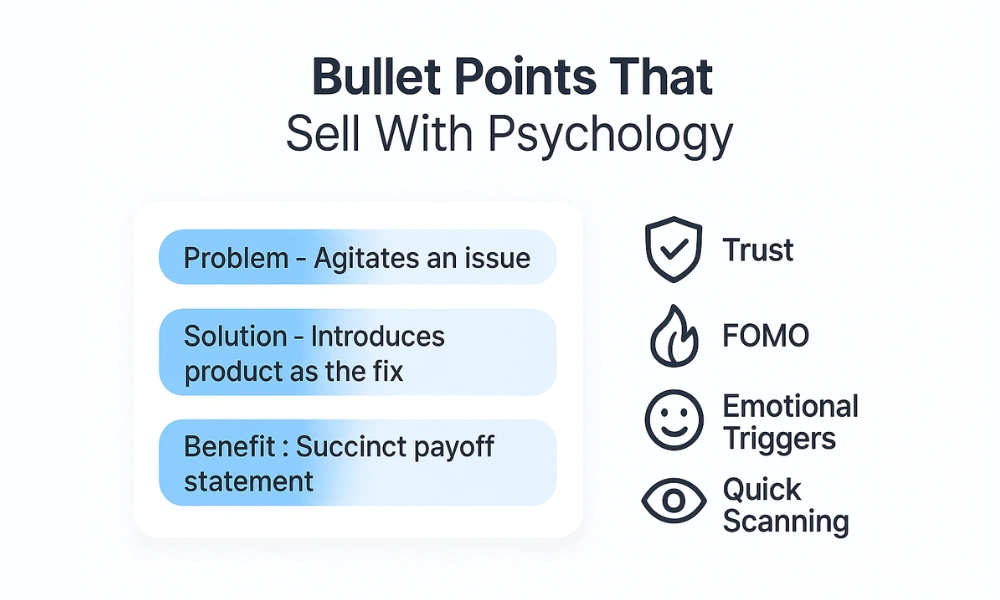
1. Structure Bullets Around Buyer Intent: Each bullet should address:
- Problem your product solves
- How it solves it
- The result or benefit
For example, instead of saying “Stainless steel construction,” say “Durable stainless steel ensures long-lasting performance for everyday use.”
2. Use Emotional Triggers
- Trust: “Backed by a 2-year warranty for peace of mind.”
- FOMO (Fear of Missing Out): “Limited stock available — order now to secure yours.”
- Problem-Solution: “Keep drinks hot for 12 hours with our insulated design.”
3. Format for Skimmability
- Short sentences
- Clear, concise language
- Highlight key terms with capitalization or numbers when allowed
Shoppers skim. Your bullets must convince fast. The first three bullets carry the most weight for conversion, so make them count.
Product Description & A+ Content That Boost Conversions
Your product description and A+ Content are not just for aesthetics — they play a direct role in ranking and conversion. They help Amazon understand your product, reduce bounce rates, and convince shoppers to buy.
1. Product Description: Clarity and Persuasion: A well-written description should:
- Expand on the bullet points with more detail
- Explain the benefits in everyday language
- Include relevant long-tail keywords naturally
- Address common objections and questions
Shoppers often scroll to the description for reassurance before buying, making this a critical point for conversions.
2. A+ Content: Visual Storytelling
- A+ Content (Enhanced Brand Content) allows you to showcase:
- Your product’s features through images and infographics
- Comparisons with similar products
- Brand story and credibility signals
A+ Content alone can lift conversions by 5%–12%, but it also indirectly affects SEO because improved engagement signals Amazon that your listing satisfies buyers.
3. Trust and Authority: Including structured layouts, consistent branding, and clear visuals builds trust, which encourages purchases and repeat sales.
Always ensure that your description and A+ Content align with your title, bullets, and backend keywords — consistency reinforces relevance signals for the A10 algorithm.
Image SEO — The Most Overlooked Ranking Factor
Images are not just for aesthetics, they are a critical part of Amazon SEO and conversion strategy. The A10 algorithm uses image data to understand your product and its relevance, while shoppers rely on visuals to make quick buying decisions.
1. Primary Image Compliance and Click-Through Impact: Your main image must meet Amazon’s requirements:
- White background
- High resolution
- Correct product presentation
This image heavily influences click-through rate (CTR), which directly impacts your ranking. A poor primary image can reduce both clicks and sales, no matter how strong your title or bullets are.
2. Lifestyle and Infographic Images
- Lifestyle images: Show the product in use to help buyers visualize benefits.
- Infographics: Highlight features, dimensions, or usage instructions.
- Comparison charts: Communicate why your product outperforms competitors.
These images improve engagement metrics, reduce bounce rates, and indirectly boost SEO.
3. AI-Driven Relevance Signals: Amazon now uses image recognition AI to interpret:
- Product type
- Materials
- Function
- Compliance
If images contradict your text or contain non-compliant content, it can negatively affect indexing and relevance.
Images influence ranking because they influence clicks. Invest as much time optimizing images as you do optimizing keywords.
Backend Optimization — The Hidden Powerhouse Behind Amazon SEO
The backend of your Amazon listing is where many sellers leave ranking potential untapped. While visible content like titles, bullets, and images capture attention, backend optimization ensures your listing is fully indexed and discoverable by the A10 algorithm.
1. Key Backend Elements
- Search Terms: Hidden keywords that don’t appear on your listing but improve indexing.
- Subject Matter & Item Type Keywords: Help Amazon categorize your product correctly.
- Attributes: Include color, size, material, and other relevant specs.
2. Rules That Matter in 2026
- Byte Limits: Each field has strict character or byte limits. Exceeding them can truncate keywords.
- Indexing Compliance: Avoid using competitor names, prohibited terms, or irrelevant keywords.
- Keyword Placement: Place high-intent, high-conversion terms in fields Amazon actually indexes.
3. Why Backend SEO Matters: Backend optimization supports your front-end copy. If your visible title and bullets are optimized but your backend is neglected, your listing may miss long-tail searches and hidden buyer intent.
Backend SEO fixes what your title and bullets cannot cover. It’s the hidden engine that keeps your listing discoverable and competitive.
Reviews, Q&A, and Customer Signals That Affect SEO: Amazon SEO isn’t just about keywords and images. Customer interactions play a huge role in ranking because the A10 algorithm measures how shoppers respond to your listing. Reviews, Q&A, and other buyer signals directly impact your visibility and credibility.
1. Review Velocity and Quality
- Velocity: How quickly your listing gains reviews influences ranking. Faster accumulation signals high demand.
- Quality: Positive, authentic reviews increase trust and conversions. Negative reviews can lower conversion rates and hurt ranking.
2. Q&A Section Impact
- Q&A content helps Amazon identify long-tail keywords naturally used by buyers.
- Answering questions promptly shows engagement, which improves buyer confidence.
3. Customer Engagement Metrics
- Click-through rate (CTR) from search results
- Conversion rate (CVR)
- Bounce rate and time on listing
These behavioral signals tell Amazon whether your product satisfies buyers. Poor engagement can negate even perfectly optimized titles and bullets.
A beautifully optimized listing can still fail if customer signals are weak. SEO and conversion are inseparable.
SEO + PPC Integration — The Ranking Combo That Actually Works
Many sellers treat Amazon SEO and PPC as separate strategies, but the real growth comes when they work together. Paid campaigns not only drive immediate traffic but also provide valuable data that can strengthen your organic ranking.
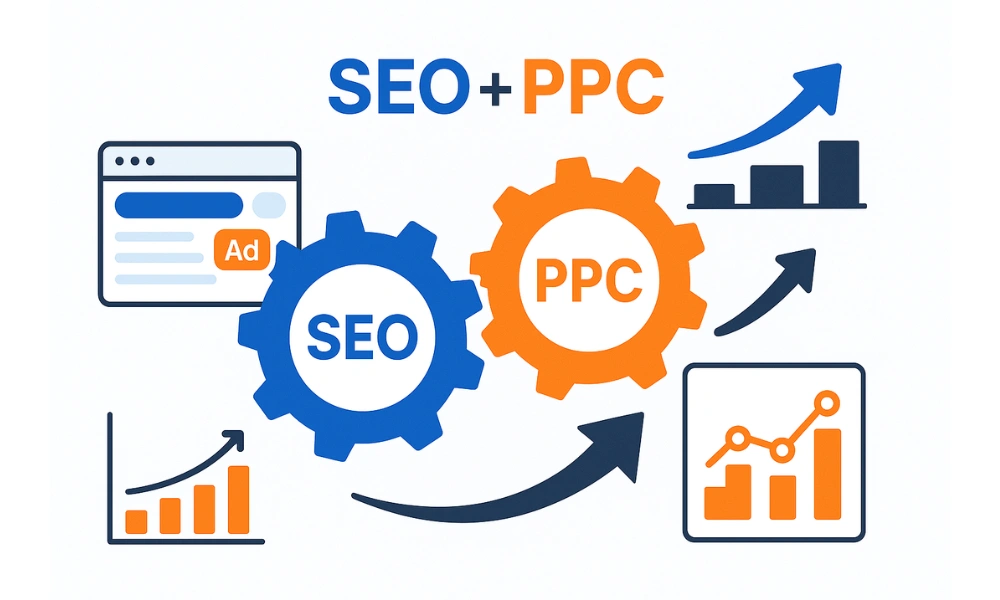
1. PPC Reinforces SEO: Every click and conversion from a PPC campaign signals to Amazon that your listing is relevant and engaging. This can accelerate indexing and improve organic ranking over time, especially for competitive keywords.
2. Using PPC Data to Refine Keyword Targeting
- Analyze which search terms convert best in your campaigns.
- Feed these high-performing keywords into your title, bullets, description, and backend fields.
- Continuously test and adjust to optimize for both paid and organic traffic.
3. Organic Ranking Lift from PPC Sales: Paid traffic boosts sales velocity, which is a core factor in Amazon’s algorithm. As your sales increase, organic rankings improve, reducing long-term dependency on ads and lowering ACoS.
Every paid click should support your organic growth. Treat SEO and PPC as one continuous system rather than isolated efforts.
Analytics, Indexing Checks & Continuous Optimization
Amazon SEO is not a one-and-done task. The A10 algorithm evolves constantly, and buyer behavior changes, so continuous monitoring and optimization are essential to maintain and improve ranking.
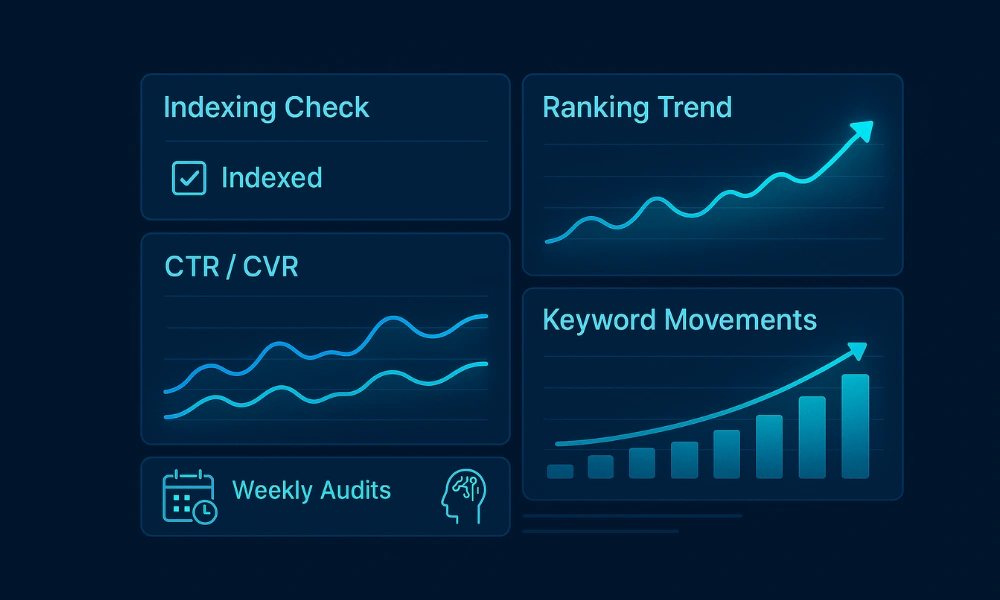
1. Weekly Indexing Audits
- Check which keywords your product is currently indexed for.
- Identify missing or underperforming terms.
- Correct indexing errors quickly to prevent lost visibility.
2. Track Keyword Movement
- Monitor ranking changes for primary and long-tail keywords.
- Adjust listings based on trends and seasonality.
- Use PPC data to confirm which keywords drive both clicks and conversions.
3. Monitor Listing Performance Metrics
- CTR (Click-Through Rate)
- CVR (Conversion Rate)
- Traffic health and bounce rates
These metrics indicate if your listing is meeting customer expectations and whether your SEO strategy is effective.
4. Continuous Optimization
- Update titles, bullets, backend fields, and A+ content regularly.
- Refresh images or infographics based on customer engagement.
- Test new keywords and variations to stay competitive.
Insight: Amazon SEO is never finished. Continuous auditing and iteration separate average listings from top performers.
What Agencies Don’t Tell You About Amazon SEO
Many sellers fall into the trap of believing every SEO agency promise. However, some common truths about Amazon SEO are rarely shared openly — and understanding them can save time, money, and wasted effort.
1. Guaranteed Page 1 Rankings Are a Red Flag: No agency can promise Page 1 for competitive keywords without continuous work. Amazon’s A10 algorithm factors in conversions, reviews, and relevance signals that are constantly changing.
2. Writing vs. Optimizing: Some agencies provide polished copy but fail to optimize for indexing, conversion, or A10 ranking factors. Good writing does not automatically equal good SEO.
3. Compliance and Suppression Prevention Are Often Overlooked: Cheap services may ignore restricted keywords, prohibited claims, or backend compliance. This can lead to listing suppression or account flags — turning “cheap SEO” into a costly mistake.
4. SEO is a Continuous Process: Many agencies treat SEO as a single deliverable. In reality, ranking requires ongoing monitoring, testing, and iteration across titles, bullets, images, backend fields, and PPC data.
If an agency focuses only on writing or a one-time setup, your listing may never reach its full potential — or worse, get flagged by Amazon.
What Actually Works (Backed by Data and Real Seller Results)
After years of analyzing successful Amazon listings, certain strategies consistently outperform the rest. These are the tactics that actually drive ranking, visibility, and conversions — not just buzzwords or promises.
1. Clean, Keyword-Smart Titles and Bullets
- Titles that balance primary keywords with readability.
- Bullets that highlight benefits, solve problems, and trigger emotional responses.
- Focused copy that aligns with search intent and buyer behavior.
2. High-Quality Images and A+ Content
- Primary image compliance ensures CTR and indexing.
- Lifestyle and infographic images boost engagement and conversions.
- A+ Content improves dwell time, reduces returns, and signals listing relevance to Amazon’s algorithm.
3. Keyword-Aligned PPC Campaigns
- Paid traffic signals boost organic ranking.
- High-converting PPC keywords feed back into listing optimization.
- Every ad click becomes an investment in long-term visibility.
4. Continuous Auditing and AI-Based Optimization
- Regular indexing checks and performance audits.
- Adjusting keywords, backend fields, and content based on real-time data.
- Leveraging AI to cluster keywords, predict trends, and identify conversion opportunities.
There is no magic trick. Consistent, data-driven optimization across titles, bullets, images, backend, and PPC is what drives real Amazon success.
Amazon SEO is not just about keywords, it’s about alignment, consistency, and continuous optimization. Every element of your listing, from titles and bullets to images and backend fields, contributes to your ranking and conversions. Neglecting any part can quietly hurt visibility, reduce sales, or slow growth.
With a data-driven, fully integrated SEO strategy, you turn Amazon’s algorithm from a challenge into an advantage. Optimized listings, aligned PPC, engaging visuals, and continuous audits ensure your products stay visible, credible, and highly converting, giving your brand the competitive edge it deserves.
How Ecomclips Delivers Real Amazon SEO Results
At Ecomclips, we don’t sell promises — we deliver measurable, data-backed results. Our approach combines strategy, optimization, and continuous improvement to ensure your listings rank higher, convert better, and grow your brand.
- Deep Keyword Research: Intent-driven keywords mapped to buyer behavior and conversion potential, identification of long-tail, seasonal, and high-converting terms, aligned with PPC campaigns to reinforce SEO efforts.
- Fully Rewritten, Conversion-Optimized Listings: Titles, bullets, descriptions, and backend fields optimized for relevance and discoverability, copy written to maximize clarity, engagement, and purchase intent, fully compliant with Amazon policies.
- High-Quality Images & A+ Content: Professional image optimization including lifestyle photos and infographics, Enhanced Brand Content to boost engagement and conversions, visual storytelling that reinforces trust and credibility.
- SEO + PPC Integration Strategy: Paid traffic used to accelerate organic ranking, PPC data feeds directly into keyword refinement and listing updates, continuous monitoring ensures every click supports long-term growth.
- Weekly Indexing and Ranking Audits: Track keyword performance, CTR, and conversion trends, identify gaps and opportunities for improvement, continuous iteration to stay competitive as algorithms change.
Transparent, data-driven strategies that deliver measurable results — not just templates or generic advice.
At Ecomclips, we help sellers implement this unified approach, combining keyword research, conversion-focused content, A+ design, and PPC integration so every click counts toward growth.
Contact us today at info@ecomclips.com or book an appointment with our e-commerce experts to start selling smarter on both marketplaces.
Watch how we help sellers to protect their Amazon Business:
STOP GUESSING! USE AMAZON DATA TO EXPLODE YOUR SALES in 2026
Amazon’s Rufus AI Prompts: The Future of Sponsored Products Optimization
Your Amazon Listing Is Losing Money
Amazon Brand Growth Secrets: Use Customer Data To Boost Sales Fast!
Amazon AI Update 2025: Why Sellers Are Losing Ranking Overnight
Amazon Listing Image Masterclass: How Top Sellers Boost CTR & Conversions
Ecomclips: Your Complete eCommerce Solution Under One Umbrella
At Ecomclips, we bring every eCommerce service you need under one roof — strategy, operations, design, marketing, and growth, all seamlessly connected to help your brand thrive across every marketplace.
Since 2012, we’ve been helping businesses of all sizes launch, scale, and dominate online. From Amazon, Walmart, eBay, and Etsy to Shopify and WooCommerce, our team of marketplace experts, designers, developers, and marketers works together to deliver measurable results.
Our services span the full eCommerce lifecycle:
- Account Setup & Product Listing Management: We handle registrations, compliance, and product data optimization across all marketplaces.
- Amazon Optimization Service: From keyword-rich titles and A+ content to PPC campaigns and storefront design, we craft listings that convert.
- Creative Design & Content Production: A+ visuals, infographics, brand stores, and product videos built to boost engagement.
- Advertising & PPC Management: Smart, data-driven ad strategies for Amazon, Walmart, and Google that maximize ROI.
- Web Development & Store Design: Shopify, WooCommerce, and Magento websites built for performance and conversion.
- Data Management & Automation: Streamlined product feeds, catalog syncing, and inventory control for effortless scalability.
- Customer Service & Order Fulfillment: End-to-end support that enhances customer satisfaction and builds long-term loyalty.
- Analytics & Growth Strategy: Real-time insights and ongoing optimization to ensure consistent, profitable growth.
Whether you’re launching a new store or managing multiple global marketplaces, Ecomclips acts as your single strategic partner, simplifying complexity and driving sustainable revenue growth.
Ready to Start Growing Your Brand?
Ecomclips’ Partners Achieve an Average 85% Profit Increase!