

Think about it, a few years ago, shoppers typed short phrases like “wireless earbuds” into Amazon’s search bar. Today, many simply ask, “Alexa, what are the best wireless earbuds for running?” This small change has sparked a major transformation in how products are discovered, ranked, and sold.
Voice search is no longer a futuristic idea. With millions of Alexa-enabled devices in homes worldwide, talking to Amazon has become second nature for many shoppers. And that means sellers must start thinking beyond traditional SEO.
Voice queries are more conversational, natural, and intent-driven. They reveal what customers truly mean when they search, not just what they type. To stay visible, brands need to optimize their listings so they sound as natural as real conversations.
In this blog, we’ll uncover how voice search and AI are reshaping product discovery on Amazon, and how you can adapt your SEO strategy to stay ahead of the curve.
Table of Contents
| 1. Understanding the Voice Search Revolution on Amazon |
| 2. The Rise of Conversational Commerce on Amazon |
| 3. How Voice Search Changes Keyword Strategy |
| 4. Optimizing Product Listings for Voice Search |
| 5. AI Search Ranking Factors You Can’t Ignore |
| 6. How Alexa and Smart Devices Are Changing Discovery |
| 7. Voice Search Meets Advertising — A New Frontier |
| 8. Common Mistakes Sellers Make in the Age of Voice Search |
| 9. Future-Proofing Your Amazon SEO with AI Integration |
Understanding the Voice Search Revolution on Amazon
Voice search is more than just a convenience; it’s a complete shift in how customers interact with Amazon. Unlike traditional typed queries, spoken searches tend to be longer, conversational, and highly intent-driven. A buyer isn’t just searching for a product; they’re asking a question and expecting a direct, helpful answer.
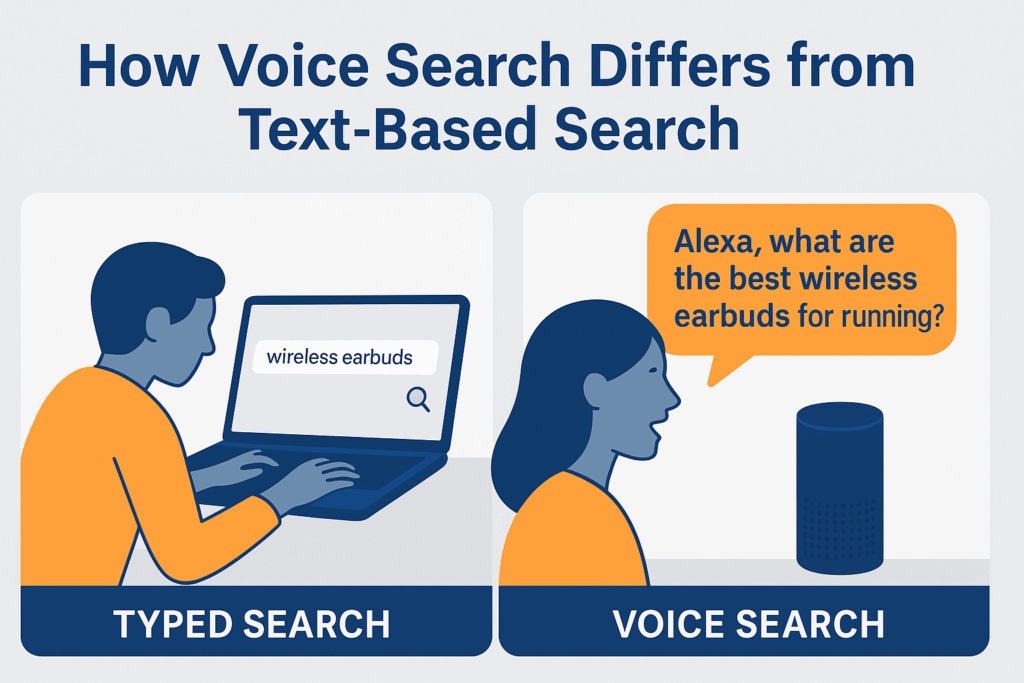
How Voice Search Differs from Text-Based Search
Text-based searches are often concise, keyword-focused, and fragmented. For example, someone might type “wireless headphones under $100.” Voice searches, on the other hand, sound natural and question-like: “Alexa, what are the top-rated wireless headphones under $100?” This difference isn’t trivial. It changes the way Amazon interprets relevance, ranking, and user intent.
The Role of AI, NLP, and Alexa Algorithms
At the core of voice search is Artificial Intelligence and Natural Language Processing (NLP). Amazon’s algorithms, including Alexa’s voice assistant, analyze spoken queries to understand context, synonyms, and the user’s underlying intent. This means that listings optimized for traditional keywords may not always match what voice search is looking for.
Example in Practice
Instead of targeting short fragments like “best wireless headphones,” sellers now need to consider full, conversational phrases:
- “Alexa, what are the best wireless headphones for running?”
- “Which wireless headphones have the longest battery life under $100?”
Voice search isn’t replacing text search; it’s reshaping how Amazon understands context, intent, and relevance. Brands that optimize for voice queries position themselves to capture a new layer of high-intent traffic that many competitors are overlooking.
The Rise of Conversational Commerce on Amazon
The rise of voice search is fueling a new era of conversational commerce, where buyers interact with Amazon as if it were a personal shopping assistant. This shift changes the game for organic visibility, keyword strategy, and product discovery.
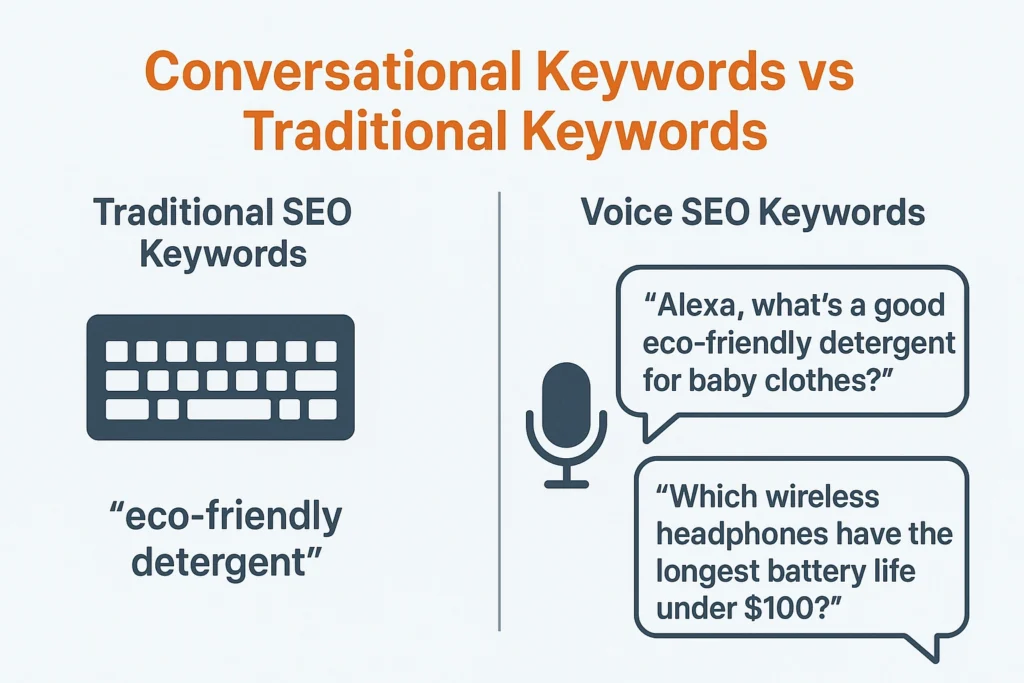
Conversational Keywords Are the New Battleground: Traditional SEO focuses on short, fragment-style keywords. Voice search, however, favors natural, question-based phrases that reflect how real people speak. For example:
- Text query: “eco-friendly detergent”
- Voice query: “Alexa, what’s a good eco-friendly detergent for sensitive skin?”
Brands that fail to adapt risk losing visibility, as voice-driven queries demand contextual relevance rather than exact keyword matches.
Long-Tail, Question-Based Terms Are Key: Voice queries tend to be longer and highly specific. Optimizing your listings for these long-tail, conversational phrases allows your products to appear for queries that reflect actual buyer intent. This is especially important for niche products, where the competition for broad keywords can be fierce.
Impact on Ranking and Ad Targeting: Voice-driven searches influence Amazon’s algorithm differently. Listings that are clear, concise, and intent-focused are more likely to be recommended by Alexa. Even sponsored campaigns must consider conversational phrases to align with voice-triggered discovery.
If your listing doesn’t sound natural when read aloud, it’s not ready for voice search. Take a step back, read your titles, bullet points, and descriptions aloud, and refine them until they feel like a helpful, human response to a shopper’s question.
How Voice Search Changes Keyword Strategy
Voice search isn’t just changing how customers search; it’s transforming the very foundation of Amazon’s keyword strategy. To capture traffic from voice-driven queries, sellers must shift from short, fragmented keywords to conversational, intent-focused phrases.
From Fragments to Full Sentences: Traditional keyword research focuses on single words or short phrases like “wireless headphones” or “eco-friendly detergent.” Voice search, however, favors full, natural sentences that mirror how people speak. Examples include:
- “Alexa, what are the best wireless headphones for working out?”
- “Which eco-friendly detergents are safe for baby clothes?”
By targeting full-sentence keywords, brands align their listings with how buyers actually ask questions, improving the likelihood of being suggested by Alexa.
Targeting Intent Clusters: Instead of thinking purely in terms of keywords, consider intent clusters — groups of phrases that reflect a buyer’s underlying goal. For example, a cluster for “wireless headphones” might include:
- “best headphones for running”
- “headphones with noise cancellation under $100”
- “comfortable wireless headphones for small ears”
Optimizing for clusters ensures your listing answers multiple buyer questions, increasing relevance for voice search.
Semantic SEO and Entity-Based Optimization: Voice search relies heavily on semantic understanding. This means Amazon’s algorithms focus on meaning, not just exact words. Optimizing your content around concepts and entities — like product type, use-case, or benefits — allows AI to match your listing with more varied, conversational queries.
Takeaway: Voice search is more than a trend; it demands a strategic shift in keyword research and listing optimization. Brands that embrace long-tail, intent-focused, and semantically rich keywords will capture new traffic that competitors are missing.
Optimizing Product Listings for Voice Search
Voice search is changing how shoppers discover products on Amazon, which means your listings need to speak the buyer’s language. To succeed, they must be conversational, clear, and intent-focused. Listings that sound robotic or overly stuffed with keywords will struggle to rank in voice-driven queries. By making your content natural and easy to understand, you increase the chances that Alexa and your customers will select your product.
- Readable and Conversational: Voice search favors listings that sound natural when spoken. Short, simple sentences in titles, bullet points, and descriptions make it easier for Alexa to interpret your content.
- Quick Scanability: Shoppers want fast answers. Use short paragraphs, clear headings, and bullet points to deliver concise, helpful information.
- A+ Content Optimization: Keep your tone human and informative. Think of your listing as a script Alexa would read — smooth, natural, and helpful.
Pro Tip: Read your listing aloud. If it doesn’t sound like a natural answer to a question, simplify and rephrase. A voice-friendly listing not only improves discoverability but also builds trust with buyers, increasing conversions and long-term loyalty.
Thinking About Hiring an Amazon Expert?
Ecomclips’ Partners Achieve an Average 85% Profit Increase!
AI Search Ranking Factors You Can’t Ignore
Voice search changes more than how customers ask questions; it also influences how Amazon ranks products. The A10 algorithm increasingly relies on buyer intent signals and AI-driven insights to surface the most relevant listings.
Key Factors for Voice Search Ranking
- Brand Reputation: Trusted brands are more likely to be suggested in voice queries.
- Review Quality and Recency: Positive, recent reviews show buyers and AI that your product is reliable.
- Conversion Rates from AI-Suggested Queries: Listings that consistently convert when surfaced in voice results gain algorithmic preference.
Voice search SEO isn’t about stuffing keywords — it’s about building trust and relevance. Amazon’s AI uses behavioral data to understand which listings answer spoken queries best, rewarding those that combine high-quality content, engagement, and buyer satisfaction.
Takeaway: Optimizing for voice search means focusing on both human and AI signals. Listings that answer questions naturally, maintain strong reviews, and deliver a seamless shopping experience will dominate the next generation of Amazon search.
How Alexa and Smart Devices Are Changing Discovery
Voice search isn’t limited to Amazon’s search bar; Alexa and smart devices are creating a new layer of product discovery. With millions of Echo devices, Fire tablets, and Alexa-enabled smartphones in use, shoppers can ask for products without ever opening an app or typing a query.
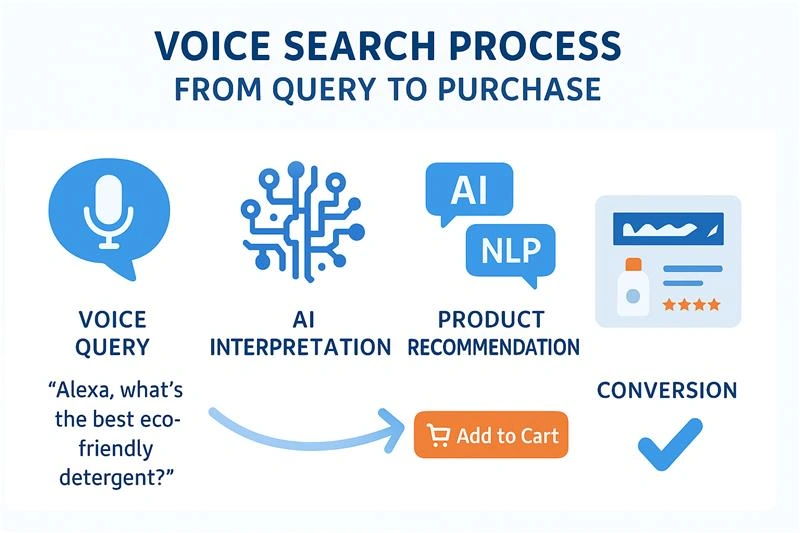
Personalized Recommendations: Alexa doesn’t just match words; it considers user behavior, past purchases, and preferences. For example, if a customer frequently buys cruelty-free products, Alexa prioritizes similar listings when asked for recommendations. This makes personalization a key factor in visibility.
Impact on SEO: Listings optimized for voice need to account for this personalization. Clear, natural language and conversational phrasing help Alexa understand intent and match your product to the right user.
Example:
Instead of a generic search like “protein powder,” a customer might ask:
“Alexa, what’s the best vegan protein powder for weight loss?”
A listing that matches this intent, with proper phrasing and relevant product details, is more likely to be surfaced.
Takeaway: Voice search personalization is the future of product discovery. Brands that understand how smart devices interpret queries and prioritize recommendations can capture high-intent traffic that competitors may miss.
Voice Search Meets Advertising — A New Frontier
Voice search is not only changing organic visibility, it’s opening new opportunities for Amazon advertising. As more shoppers rely on Alexa and smart devices, brands need to rethink how they approach Sponsored Products, Sponsored Brands, and DSP campaigns.
- Adapting Campaigns to Voice Queries: Voice-driven searches favor conversational, intent-rich phrasing. Ads that align with these natural queries are more likely to appear in voice-assisted recommendations. This requires integrating voice-friendly keywords and understanding how Alexa interprets intent.
- The Rise of Voice-Triggered Product Ads: Brands can now target predictive intent: what a shopper is likely to ask next, based on past behavior and trends. AI tools like DataDive and Perpetua help uncover how buyers phrase voice queries, enabling advertisers to optimize campaigns for voice discovery.
Pro Tip: Don’t just reuse text-based ad copy. Read it aloud. If it doesn’t sound natural or helpful, it won’t perform well in voice-assisted contexts.
Takeaway: The intersection of voice search and advertising is a new frontier. Early adopters who optimize campaigns for conversational queries can gain an edge over competitors still relying on traditional keyword targeting.
Common Mistakes Sellers Make in the Age of Voice Search
As Amazon voice search grows, many sellers make errors that limit visibility and conversions. Understanding these pitfalls can help you stay ahead of the competition.
- Over-Optimizing with Robotic Text: Some listings are stuffed with keywords or unnatural phrases. Voice search favors natural, human-sounding language. If your listing reads like a keyword list, Alexa may skip it.
- Ignoring Conversational Keywords: Failing to include question-based, long-tail phrases means missing out on the very traffic voice search generates. Short, fragmented keywords are no longer enough.
- Neglecting Listing Readability: Listings with dense paragraphs or complex phrasing are hard for AI and shoppers to interpret quickly. Voice search prefers concise, clear, and easy-to-read content.
- Forgetting Mobile and Echo Compatibility: Many sellers optimize only for desktop layouts. But voice queries often come from mobile devices and Echo speakers, requiring listings that display and read well in multiple formats.
Read your listing aloud. If it sounds unnatural, simplify and rephrase. Ensure your titles, bullets, and descriptions answer real buyer questions.
Takeaway: Avoiding these mistakes helps your products perform better in voice search, improving discoverability, trust, and conversions.
Future-Proofing Your Amazon SEO with AI Integration
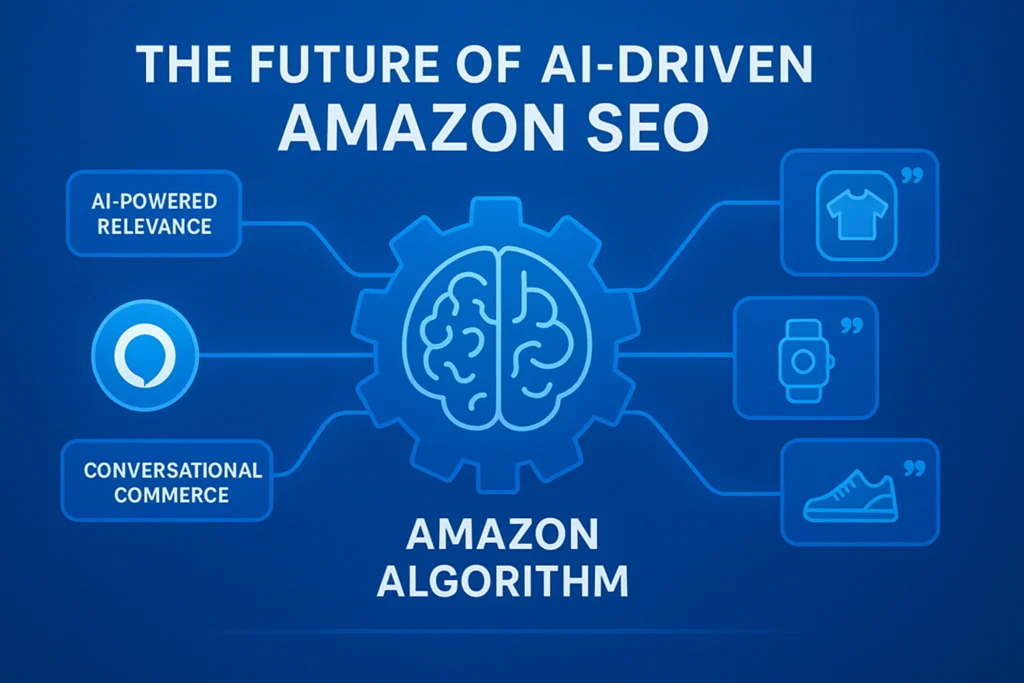
The evolution of voice search highlights a bigger trend: AI is becoming central to Amazon SEO. Sellers who integrate AI into their strategy can anticipate buyer behavior, optimize listings for conversational queries, and stay ahead of the competition.
- Forecasting Trending Voice Queries: AI tools can analyze search patterns to predict which questions and phrases are gaining popularity. This allows brands to create listings before competitors catch on, capturing early traffic from emerging trends.
- AI Tools for Conversational Optimization: Tools like ChatGPT, Perplexity, and Helium 10 AI Assist can detect natural, question-based patterns in customer searches. They help generate voice-friendly keywords, long-tail phrases, and semantic clusters that align with buyer intent.
- Workflow Example: Combine keyword volume data (e.g., from Helium 10) with AI clustering (via ChatGPT) to identify phrases most likely to appear in voice queries. Integrate these phrases naturally into titles, bullet points, and product descriptions.
The fusion of AI and SEO is not optional; it’s inevitable. Brands that leverage AI to understand how people speak, search, and buy will dominate in the next era of Amazon SEO.
Frequently Asked Questions (FAQ)
Q. Will voice search replace typed searches on Amazon?
Short answer: No — but voice search will significantly change how Amazon interprets intent and prioritizes results.
Q. How should I change my keyword strategy for voice search?
Actionable steps: add conversational long-tail phrases, question-based queries, and optimize for intent clusters rather than single keywords.
Q. Do reviews and ratings matter more for voice search rankings?
Yes — trust signals like review quality and recency are more heavily weighted for voice recommendations.
Q. Should I rewrite my A+ Content for voice?
Yes — use concise, conversational blocks and short answers that can be read aloud clearly.
Q. Can I use AI tools to generate voice-optimized content?
Absolutely — use AI for clustering phrases and testing read-aloud naturalness, but always human-edit for brand voice and accuracy.
Q. How do we test voice search performance?
Methods: track ranking for conversational queries, run read-aloud usability tests, and monitor behavior from voice-originated traffic via Brand Analytics / Amazon Attribution.
The next era of Amazon SEO belongs to brands that understand how people speak, not just what they type. Voice search and AI-driven queries are reshaping product discovery, emphasizing clarity, authenticity, and intent over traditional keyword stuffing.
Brands that adapt early, optimizing listings for conversational search, leveraging AI insights, and designing content that reads naturally aloud, will capture high-intent traffic and build stronger trust with buyers.
How Ecomclips Helps Brands Stay Ahead in the Age of Voice Search
At Ecomclips, we bring every eCommerce service under one umbrella, strategy, operations, creative, and marketing, to help brands thrive on Amazon and beyond. As voice search and AI-driven discovery reshape how customers find products, our team ensures your listings are optimized for both traditional search and voice queries, so you never miss a sale.
What We Do:
- Voice & AI Search Optimization: Tailored keyword strategies for conversational search queries, natural language, and intent-based shopping.
- Product Listing & A+ Content Design: Conversion-focused listings with clear, compelling copy and visuals that satisfy both voice and visual shoppers.
- Advertising & PPC Management: Data-driven campaigns that align with changing search behaviors and AI algorithms.
- Account & Catalog Management: Backend optimization, inventory control, and seamless catalog management to keep your products discoverable.
- Analytics & Growth Strategy: Real-time insights and ongoing optimization to maintain high visibility and sales in the evolving Amazon ecosystem.
With Ecomclips, your brand is positioned for success in the AI-driven future of eCommerce. We handle every detail, so you can focus on growth, innovation, and staying ahead of the competition.
Watch how we help Amazon sellers identify profitable niches →
Amazon A+ Content Full Guide: All 19 Modules Broken Down
How to List Products on Amazon Step-by-Step
How to Win Q4 on Amazon: Proven PPC Strategies that Work!
Why Your A+ Content Is Killing Amazon Sales (Fix It Fast!)
The Shady Truth About Amazon Basics
Ecomclips: Your Complete eCommerce Solution Under One Umbrella
At Ecomclips, we bring every eCommerce service you need under one roof — strategy, operations, design, marketing, and growth, all seamlessly connected to help your brand thrive across every marketplace.
Since 2012, we’ve been helping businesses of all sizes launch, scale, and dominate online. From Amazon, Walmart, eBay, and Etsy to Shopify and WooCommerce, our team of marketplace experts, designers, developers, and marketers works together to deliver measurable results.
Our services span the full eCommerce lifecycle:
- Account Setup & Product Listing Management: We handle registrations, compliance, and product data optimization across all marketplaces.
- Amazon Optimization Service: From keyword-rich titles and A+ content to PPC campaigns and storefront design, we craft listings that convert.
- Creative Design & Content Production: A+ visuals, infographics, brand stores, and product videos built to boost engagement.
- Advertising & PPC Management: Smart, data-driven ad strategies for Amazon, Walmart, and Google that maximize ROI.
- Web Development & Store Design: Shopify, WooCommerce, and Magento websites built for performance and conversion.
- Data Management & Automation: Streamlined product feeds, catalog syncing, and inventory control for effortless scalability.
- Customer Service & Order Fulfillment: End-to-end support that enhances customer satisfaction and builds long-term loyalty.
- Analytics & Growth Strategy: Real-time insights and ongoing optimization to ensure consistent, profitable growth.
Whether you’re launching a new store or managing multiple global marketplaces, Ecomclips acts as your single strategic partner, simplifying complexity and driving sustainable revenue growth.
Ready to Start Growing Your Brand?
Ecomclips’ Partners Achieve an Average 85% Profit Increase!